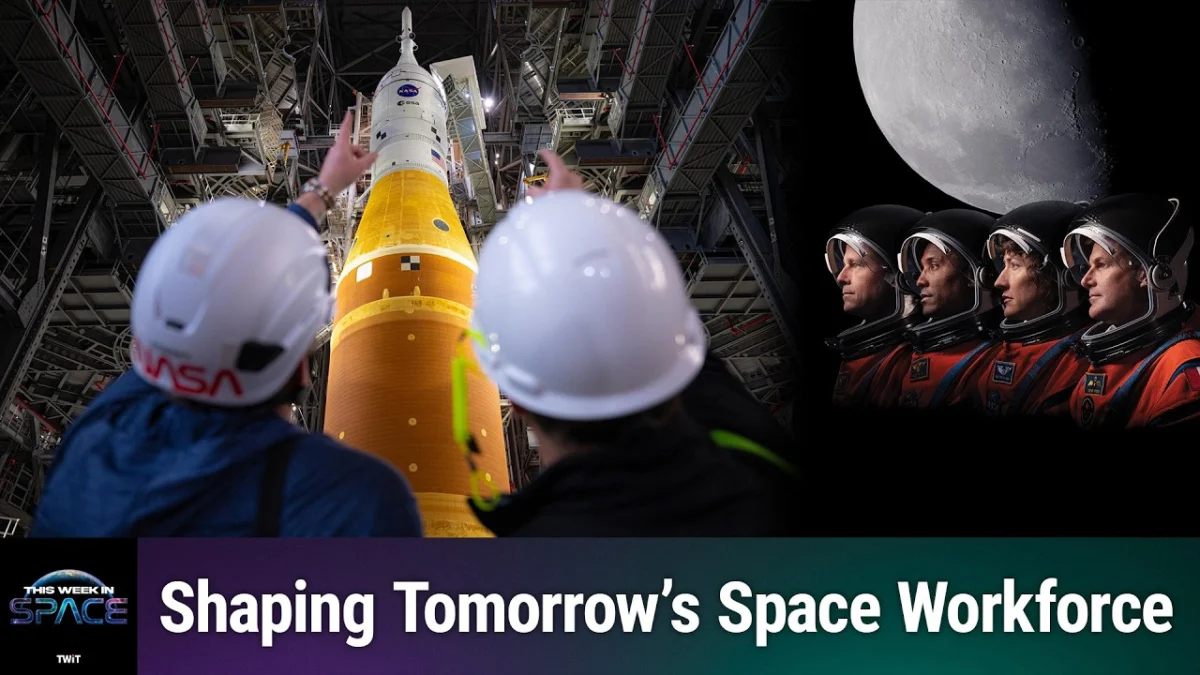
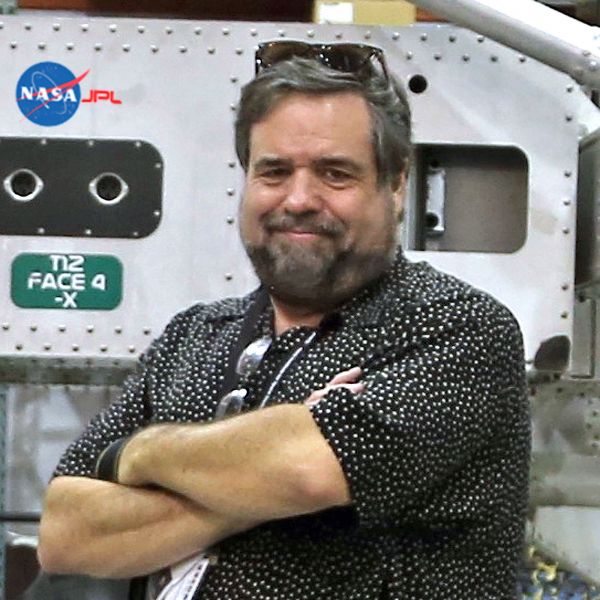
The rapid expansion of the commercial aerospace sector, propelled by global lunar exploration initiatives and an increasingly congested low-Earth orbit, has triggered an unprecedented demand for skilled technical talent. As national space agencies and private enterprises push deeper into the cosmos, the imperative to cultivate a robust Science, Technology, Engineering, and Mathematics (STEM) pipeline has never been more urgent. This evolving landscape of workforce development took center stage on Episode 233 of the podcast This Week in Space, where hosts Tariq Malik and guest host Rick Jenet explored the mechanisms driving the "Artemis Generation" alongside Dr. Amanda Smith-Hackler, Director of Education for the Universities Space Research Association (USRA) and Principal Investigator for the Air Force Research Laboratory (AFRL) Scholars and STEM Workforce Development Programs.
The conversation illuminated a critical paradox in the modern aerospace economy: while public enthusiasm for space exploration is at an all-time high, the educational infrastructure required to transition students from curious learners to aerospace professionals faces significant hurdles. With major spacefaring nations targeting sustained lunar habitation and commercial entities scaling up satellite constellations, suborbital tourism, and manufacturing, the "NewSpace" economy is hiring at a velocity that traditional academic pipelines struggle to match.
The Evolution of the NewSpace Economy and Hiring Pressures
The aerospace industry has fundamentally transformed over the past two decades. Historically dominated by government agencies like NASA and a small oligopoly of defense contractors, the sector now features a dynamic ecosystem of private companies ranging from multi-billion-dollar launch providers to agile startups specializing in in-space manufacturing, Earth observation, and asteroid prospecting.
This democratization of space has decentralized operations and created a diversified job market. Engineers, software developers, data scientists, materials experts, and project managers are in high demand across a multitude of specialized domains. According to industry labor reports, the global space economy surpassed $500 billion, with projections indicating exponential growth over the next decade. However, this economic acceleration has exposed structural deficits in workforce readiness. Employers frequently report a mismatch between traditional classroom curricula and the rapid prototyping, agile software development, and cross-disciplinary problem-solving required in contemporary aerospace environments.
To bridge this gap, organizations like the USRA and AFRL are spearheading targeted initiatives designed to immerse students in hands-on research and engineering challenges before they graduate. Programs such as the AFRL Scholars initiative provide undergraduate and graduate students with direct access to cutting-edge defense and commercial aerospace laboratories, pairing them with veteran mentors who guide them through real-world mission development.
Cultivating the Artemis Generation: Educational Pathways and Early Intervention
The term "Artemis Generation" refers to the cohort of students who will design, build, and fly the systems that return humanity to the Moon and eventually journey to Mars. Preparing this generation requires a multi-tiered educational strategy that begins long before university enrollment.
Educational specialists emphasize the necessity of early intervention in middle and high school to maintain student interest in STEM subjects. Mathematics and physics, often viewed as intimidating gatekeepers, must be reframed as creative tools for exploration. Programs that incorporate rocketry, robotics, and coding competitions have proven effective in demonstrating the practical applications of theoretical science.
During their appearance on This Week in Space, Dr. Smith-Hackler detailed how structured mentorship and paid internships serve as critical linchpims in student retention. When young adults from diverse socioeconomic backgrounds are given equitable access to state-of-the-art facilities and meaningful research projects, completion rates in STEM degree programs rise significantly. Furthermore, these pipelines actively work to diversify the aerospace workforce, drawing on talent pools that have historically been underrepresented in engineering and physical sciences.
Timeline of Modern Space Workforce Development Initiatives
The current focus on aerospace workforce development is the culmination of decades of shifting educational priorities and commercial milestones:
- 2004: The Ansari X PRIZE is won by Scaled Composites’ SpaceShipOne, proving the viability of private human spaceflight and sparking the modern "NewSpace" movement.
- 2010s: NASA transitions from the Space Shuttle era to the Commercial Crew Program, relying on private industry to ferry astronauts to the International Space Station and accelerating private-sector hiring needs.
- 2017: Space Policy Directive 1 officially establishes the directive for NASA to return American astronauts to the Moon, solidifying the framework for what would become the Artemis program and inspiring a new wave of educational outreach.
- 2020: The COVID-19 pandemic accelerates virtual learning tools, prompting space agencies and educational non-profits to develop robust online STEM portals, remote-access laboratory experiments, and virtual mentorship networks.
- Present Day: Programs like the USRA and AFRL STEM initiatives scale up operations to meet the acute hiring demands of lunar infrastructure development, cislunar commerce, and orbital sustainability missions.
Engaging the Public: From Professional Labs to Backyard Launchpads
While institutional programs secure the high-end technical pipeline, public engagement remains a vital component of fostering a scientifically literate society that supports long-term space exploration. Cultivating enthusiasm for rocketry and aerospace engineering often begins with tangible, hands-on experiences outside the formal classroom environment.
A prime example of bridging aerospace engineering with consumer accessibility is the continued popularity of scale-model rocketry. Model rocket manufacturer Estes has long served as an entry point for amateur rocketeers, many of whom later pursue professional careers in aerospace engineering. The company’s detailed scale model of the SpaceX Falcon 9 rocket offers enthusiasts a tangible connection to contemporary commercial launch technology. Retailing for $149.99, the launchable recreation provides hobbyists with insights into multi-stage rocket staging, recovery systems, and aerodynamics, serving as a functional educational tool that translates complex aerospace concepts into accessible weekend projects.
Broader Implications and Future Outlook
The concerted push to expand the STEM pipeline carries profound implications for geopolitical competitiveness, economic development, and scientific discovery. As nations vie for leadership in the cislunar economy, access to a highly competent, adaptable technical workforce is increasingly viewed as a matter of national security and economic sovereignty.
Nations and corporations that successfully modernize their educational pipelines will likely dominate the intellectual property and operational capabilities of the 21st-century space economy. Conversely, failure to address labor shortages and skills gaps could constrain mission cadences, inflate project costs, and delay critical milestones in deep-space exploration.
Ultimately, the success of the Artemis Generation will be measured not merely by footprints left in the lunar regolith, but by the sustainable, inclusive educational ecosystems built on Earth. By uniting government research laboratories, academic institutions, private industry, and community outreach programs, the aerospace sector is working to ensure that the engineers and scientists of tomorrow are prepared to meet the boundless challenges of the final frontier.