The quest for legal accountability regarding the global climate crisis has entered a transformative and high-stakes chapter in the American judicial system. At the center of this shift is a novel lawsuit in Washington state that seeks to establish a direct causal link between the operational decisions of multinational fossil fuel corporations and the tragic death of an individual during an unprecedented meteorological event. Misti Leon, a Washington resident, is leading a wrongful death action against industry titans including Exxon Mobil, BP, Chevron, and Shell, alleging that their corporate conduct directly contributed to the extreme heat dome that claimed her mother’s life in June 2021. This case, which recently cleared a significant procedural hurdle in King County, represents a burgeoning legal frontier where "attribution science" meets tort law, potentially exposing the oil industry to billions of dollars in liabilities.
The Human Cost of the 2021 Pacific Northwest Heat Dome
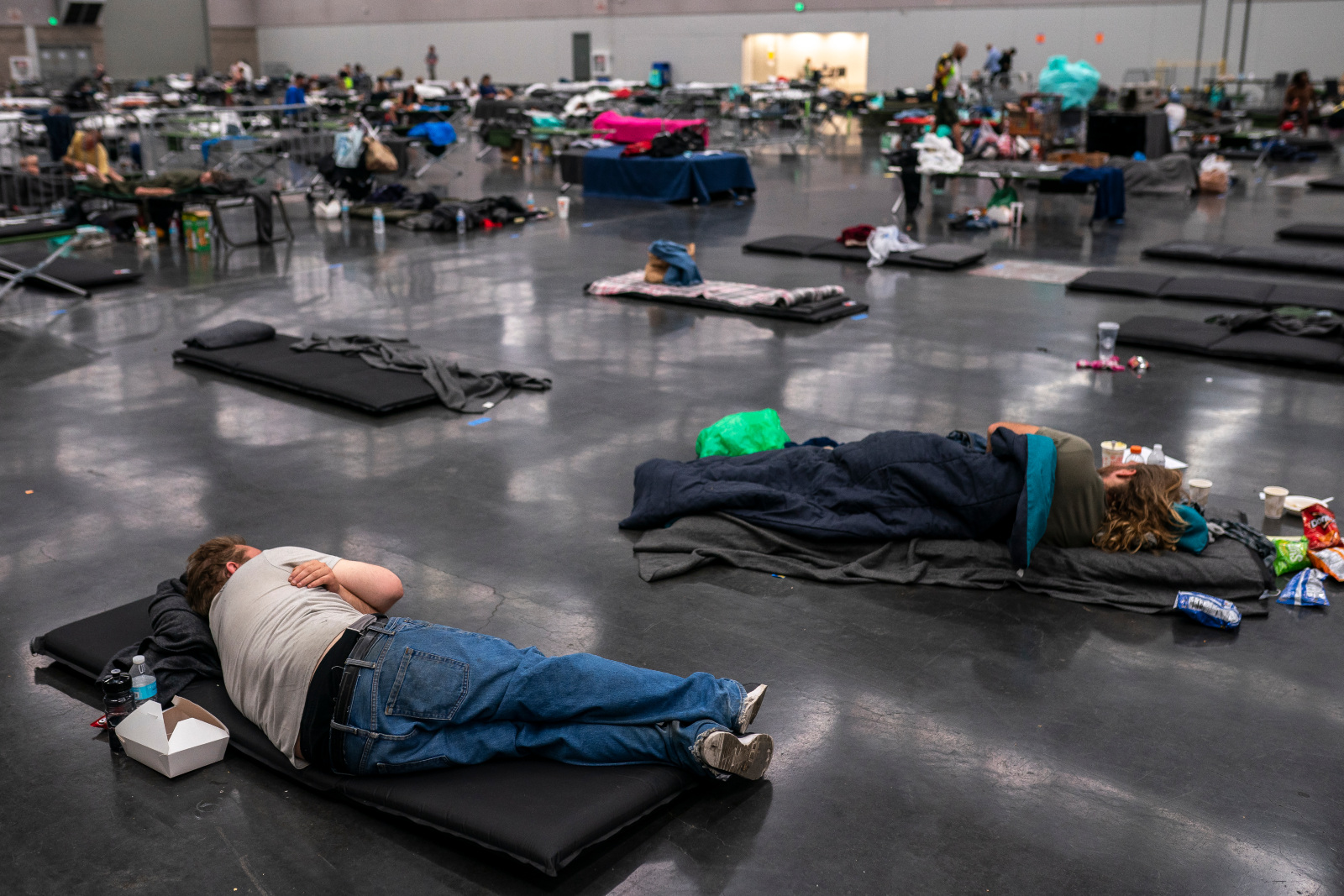
In June 2021, a "heat dome" of historic proportions descended upon the Pacific Northwest, shattering temperature records and straining the region’s infrastructure to its breaking point. In Washington state, temperatures soared to a staggering 108 degrees Fahrenheit—the highest ever recorded in the state’s history. The human toll was catastrophic; an estimated 1,200 people across the region perished during that single simmering week. Among them was the mother of Misti Leon, who died from overheating as the mercury rose to levels the region was never designed to withstand.
The scientific consensus following the event was unusually definitive. Research from the World Weather Attribution group and other climatologists concluded that such an extreme heat event would have been "virtually impossible" in a world without human-induced climate change. This scientific certainty provided the foundation for Leon’s lawsuit, filed last year, which alleges that the defendant oil companies were not merely passive contributors to global warming but active architects of a disinformation campaign. The complaint argues that these companies have known for decades that fossil fuel emissions would lead to destructive atmospheric consequences but chose to deceive the public and delay policy action, thereby directly resulting in the conditions that killed Leon’s mother.
In a pivotal ruling earlier this month, a King County judge denied the oil companies’ motions to dismiss the lawsuit. By allowing the case to proceed toward trial, the court signaled that the legal theory of wrongful death in the context of climate change has sufficient merit to be heard. Mike Meno, communications director at the Center for Climate Integrity, noted that this ruling represents a "new type of legal liability" that has sent shockwaves through the industry, as it moves the conversation from abstract environmental damage to concrete personal loss.
A Decades-Long Timeline of Corporate Knowledge and Legal Conflict
The current wave of litigation is the culmination of a timeline that stretches back to the mid-20th century. To understand the gravity of the Leon case, one must examine the chronological evolution of the industry’s internal research and its subsequent public messaging:
- 1970s–1980s: Internal documents and investigations, such as those famously uncovered by Inside Climate News and the Los Angeles Times, revealed that Exxon Mobil’s own scientists warned the company about the "catastrophic" potential of global warming caused by fossil fuel combustion.
- 1990s–2000s: Critics allege the industry shifted toward a strategy of public skepticism, funding think tanks and advertising campaigns to downplay the severity of climate science and prevent regulatory intervention.
- 2010s: State and local governments began filing "public nuisance" lawsuits, seeking compensation for the costs of sea-level rise and infrastructure damage. Many of these cases were stalled by jurisdictional disputes as oil companies fought to move them from state to federal courts.
- 2020–2024: A second wave of litigation emerged, focusing on consumer fraud, racketeering, and now, wrongful death. Currently, nearly 40 such cases are pending across the United States.
- 2025–2026: At least five major lawsuits—originating from Massachusetts, Vermont, Connecticut, the District of Columbia, and Honolulu—have successfully moved into the "discovery" phase. This is a critical juncture where plaintiffs gain the legal right to demand internal corporate emails, memos, and testimonies, potentially exposing further evidence of what the companies knew and when they knew it.
The Role of Attribution Science in the Courtroom
The success of the Leon case and others like it hinges on "attribution science," a rapidly maturing field that quantifies how much human-caused climate change intensifies specific weather events. Traditionally, scientists were hesitant to link a single storm or heat wave to global warming. However, a new report from the National Academies of Sciences, Engineering, and Medicine suggests that the science is now robust enough to draw these links with high confidence, particularly regarding extreme heat and heavy precipitation.
This scientific advancement is the "bridge" that allows lawyers to argue for proximate cause in a wrongful death suit. If a plaintiff can prove that a specific death would not have occurred but for the atmospheric changes driven by carbon emissions, the legal shield of "act of God" or "unpredictable weather" begins to crumble. Carly Phillips, a senior scientist at the Union of Concerned Scientists, emphasizes that the industry’s pushback is no longer directed at the science itself—which is considered sound—but at the legal process that allows this science to be presented to a jury.
The Industry Counter-Offensive: Liability Shields and Political Maneuvering
Facing what some analysts call "panic mode," the fossil fuel industry has mobilized a comprehensive counter-attack. The American Petroleum Institute (API), the industry’s primary lobbying arm, has identified the cessation of "extreme climate liability policy" as a top priority for its 2026 agenda. The strategy is multi-pronged, involving legislative lobbying, federal executive intervention, and challenges to the scientific community.
In several Republican-led states, "liability shield" laws have been enacted to protect energy companies from climate-related litigation. Utah, Iowa, Tennessee, Oklahoma, and Louisiana have passed statutes that specifically immunize fossil fuel companies from lawsuits related to greenhouse gas emissions. In Montana and Utah, existing laws were reformed to narrow the definition of "public nuisance," effectively closing the door on local governments seeking damages for climate impacts.
The effort has also moved to the federal level. This spring, Republican members of Congress introduced legislation, backed by the API, that would provide broad immunity to oil companies against climate accountability suits. An investigation by ProPublica recently linked these legislative efforts to a coordinated campaign involving conservative activist Leonard Leo and organizations like the American Legislative Exchange Council (ALEC) and the American Tort Reform Association, with Koch Industries and Exxon cited as major stakeholders.
Federal Intervention and the Shift in Executive Policy
The legal landscape has been further complicated by the intervention of the federal government. Following an executive order from President Donald Trump directing the Department of Justice (DOJ) to prioritize the blocking of state-level climate lawsuits, the federal government has taken an adversarial stance against local plaintiffs.
In May, the DOJ filed a lawsuit against the state of Minnesota, which had been pursuing its own case against Big Oil. The federal government argued that Minnesota’s lawsuit undermines "American energy dominance" and attempts to regulate greenhouse gases in a way that should be reserved for federal law. This move mirrors the industry’s long-standing argument that climate change is a global issue that cannot be litigated through the "patchwork" of state courts.
Internal shifts within the DOJ have also drawn scrutiny. Robert Levy, a veteran attorney for Exxon, recently joined the department’s newly renamed "Energy and Natural Resources Division" (formerly the Environment and Natural Resources Division). Critics argue this rebranding and the hiring of industry insiders signal a fundamental shift from environmental protection to industry preservation.
Comparative Analysis: The Big Tobacco Precedent
Legal scholars frequently draw parallels between the current climate litigation and the landmark battle against Big Tobacco in the 1990s. For decades, tobacco companies successfully fought off individual lawsuits by arguing that smokers chose to take a known risk. The tide only turned when state attorneys general filed massive lawsuits seeking to recover the public health costs associated with smoking, eventually leading to the $206 billion Master Settlement Agreement.
Justin Anderson, a lawyer for Exxon, acknowledged the industry’s precarious position during a recent Federalist Society panel. He noted that while the industry must "win every time" to survive, plaintiffs only need one significant breakthrough to set a precedent that could lead to industry-wide settlements. The "discovery" phase is particularly dangerous for the industry, as it was internal documents—the "smoking guns"—that ultimately brought down Big Tobacco by proving they had intentionally misled the public about the addictive and lethal nature of their products.
Broader Implications and Future Outlook
The outcome of the Leon case and its contemporaries will have profound implications for the global economy and the future of energy production. If oil companies are held liable for wrongful deaths or infrastructure damage, the resulting financial burden could force a radical restructuring of the industry. Conversely, if the Supreme Court or federal legislation grants the industry immunity, it may solidify the current energy status quo for decades to come.
As the Boulder, Colorado, case heads to the Supreme Court this fall, the nation’s highest court may soon decide whether these cases belong in state or federal court—a decision that could effectively end or accelerate the current wave of litigation. For Misti Leon and the families of the 1,200 people who died in the 2021 heat dome, the legal battle is not just about policy or economics; it is about seeking a measure of justice for a loss they believe was entirely preventable.
In the words of Mike Meno, the industry’s aggressive lobbying for immunity raises a fundamental question for the public: "If these companies have done nothing wrong and they think the law is on their side, why are they lobbying Congress for immunity?" As these cases move toward trial, the answer to that question may finally be decided in the presence of a jury.