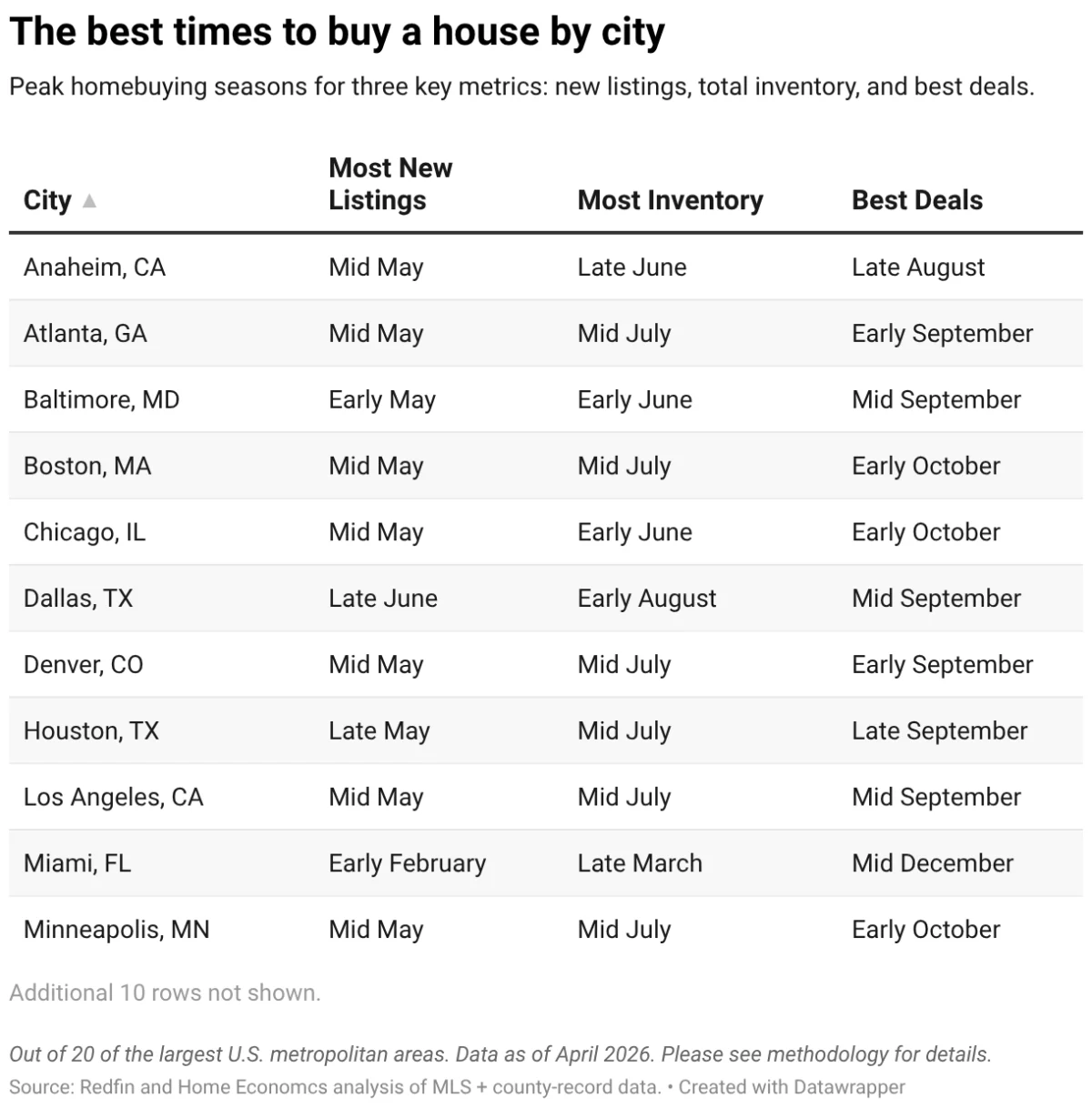
Navigating the residential real estate market requires balancing a delicate matrix of personal financial readiness, seasonal inventory fluctuations, and broader macroeconomic indicators. For prospective homebuyers, identifying the ideal moment to purchase a property has always involved weighing competing priorities: securing the lowest possible price, finding the widest selection of homes, or facing the least amount of competition from rival buyers. However, unique macroeconomic pressures—marked by lingering affordability constraints, elevated mortgage rates, and shifting inventory levels—have transformed the calculus of residential real estate.
According to comprehensive real estate data analyses from industry experts, the overarching window for the optimal time to buy a home reliably settles in the late summer months, with peak advantageous conditions frequently crystallizing in August. Yet, macro-level seasonality tells only part of the story. Real estate remains an intensely local and deeply personal endeavor, meaning that the absolute best time to secure a mortgage and close on a house depends heavily on geographic location, regional climate dynamics, and an individual buyer’s unique financial timeline.
Understanding the Mechanics of Real Estate Seasonality
Seasonality has historically served as the heartbeat of the housing market. Throughout the harsh winter months, both buyers and sellers frequently retreat indoors, resulting in a sluggish market characterized by low inventory, slower sales velocities, and reduced buyer activity. As the weather warms, market momentum accelerates.
The flow of newly constructed and previously owned homes hitting the market typically reaches its apex during the late spring and early summer. This vibrant period offers prospective buyers the most expansive selection of fresh listings. However, this surge in inventory historically correlates with heightened buyer demand, sparking intense bidding wars, driving up prices, and shrinking the buyer’s leverage at the negotiating table.
As the peak spring selling season transitions into mid-to-late summer, market dynamics begin to shift in favor of the patient purchaser. By August, inventory remains robustly stocked from the spring influx, yet the frantic pace of competition begins to cool. Sellers who listed their properties earlier in the season and failed to secure a quick contract often become increasingly motivated to negotiate. Consequently, August emerges as a sweet spot where high inventory converges with growing buyer concessions, creating an optimal environment for those equipped to make a move.
Geographic Variations: Why Latitude Dictates Market Timing
While national trends point consistently toward late summer and early fall as prime buying windows, the degree of seasonal fluctuation varies dramatically depending on regional geography and local climate.
In warmer southern and southwestern metropolitan areas, the housing market exhibits significantly less seasonality. Cities like Tampa, Miami, and Fort Lauderdale experience more consistent supply and demand curves year-round, cushioned by a steady influx of migrating residents and milder winter weather that keeps open houses active through December and January.
Conversely, northern and northeastern markets display pronounced seasonal swings. Cities such as Boston, Philadelphia, Cleveland, and Detroit experience stark activity peaks in the spring and summer, followed by dramatic contractions in the late fall and winter. In these northern hubs, sellers facing the impending winter months are often exceptionally motivated to drop asking prices or offer valuable concessions by early autumn. For example, while early fall triggers widespread price adjustments in Boston, warmer southern markets like Tampa often see pricing adjustments delayed until late autumn or early winter.
The Four Seasons of Real Estate: Evaluating the Trade-Offs
Breaking down the real estate calendar reveals distinct strategic advantages and disadvantages for buyers operating within each season:
The Spring Market: Maximum New Listings
Spring is traditionally celebrated as the official launch of the homebuying season. The primary advantage of entering the market during this window is the sheer volume of brand-new listings. Buyers seeking newly built homes or meticulously maintained properties will find the widest array of choices. However, this advantage comes with a steep price tag: heightened competition. Bidding wars are most prevalent in the spring, leaving minimal room for purchase price negotiations or inspection contingencies.
The Summer Market: Peak Inventory and Late-Summer Leverage
By mid-to-late summer, housing inventory reaches its absolute peak. This period combines the lingering unbought inventory from the spring rush with fresh late-season additions. Buyers benefit from a massive selection while simultaneously enjoying the leverage that develops as the frantic spring momentum wanes. Late August, in particular, delivers prime buying conditions across major metropolitan areas, including Anaheim and Austin, while early September signals optimal entry points in cities like Seattle, Denver, and Atlanta.
The Fall Market: Prime Time for Price Drops and Concessions
As autumn takes hold, the market pivots toward the buyer. Price drops, closing cost assistance, home warranty inclusions, and other seller concessions reach their annual peak in early to mid-fall. Sellers eager to finalize transactions before the holiday season and winter weather set in are far more willing to compromise. Buyers targeting the Midwest and Northeast will find exceptional value during this period.
The Winter Market: Minimal Competition, Limited Selection
Winter represents the slowest operational period for the residential housing market. Most buyers and sellers defer their housing plans until the new year, resulting in prolonged days on market and sparse inventory. While bargain hunting is generally difficult because stubborn sellers prefer to wait for the spring thaw rather than slash prices, specific exceptions exist. The late-fall and winter holiday season often serves as the most advantageous window for acquiring a property in southern coastal markets like Miami, Fort Lauderdale, and West Palm Beach, as well as select industrial Midwestern hubs like Detroit.
Shifting Power Dynamics in Today’s Market
The contemporary housing landscape is defined by unique economic pressures. Affordability remains a formidable hurdle for millions of Americans, with typical monthly mortgage payments hovering near $2,700 and median home prices pushing toward the $400,000 threshold. These elevated costs have sidelined a significant portion of potential purchasers, creating an asymmetric market where sellers vastly outnumber active buyers nationwide.
Current real estate data indicates that there are over 70 percent more sellers than buyers in many parts of the country. Furthermore, sellers are offering concessions at near-record frequencies to attract scarce qualified buyers. Price reductions and seller-paid closing costs have become powerful tools for savvy purchasers, shifting the balance of power decisively toward a buyer’s market across the majority of U.S. metros.
Despite these clear advantages, many prospective buyers remain hesitant, choosing to stay on the sidelines in anticipation of dramatic drops in mortgage rates or significant home price corrections. Economic uncertainty regarding inflation and employment further complicates consumer sentiment.
Expert Insights and Economic Analysis
Industry leaders emphasize that attempting to precisely time the macroeconomic housing cycle is fraught with risk. Daryl Fairweather, Chief Economist at Redfin, notes that while late summer offers ideal seasonal confluence, the decision to purchase a home must remain fundamentally personal and financial rather than purely speculative.
"August is the prime time for home buyers," Fairweather explains. "When late summer rolls around, sellers are beginning to offer more concessions, inventory is still well stocked from spring, and there are enough new listings to keep things fresh. But buying a house is local and personal, and different priorities produce different timelines."
Fairweather cautions against the dangers of waiting indefinitely for ideal market conditions, pointing out that if mortgage rates fall significantly or broader economic indicators improve, sidelined buyers will flood back into the market. This resurgence in demand would inevitably reignite fierce competition, drive up home prices, and neutralize the current negotiating leverage that buyers enjoy.
"My best advice for cost-conscious buyers is to focus on the long term and buy when they’re personally and financially ready," Fairweather adds. "Housing is a major investment, and timing the market to score a discount is difficult and may not make sense for everyone. Housing is expensive, and while affordability is improving, it’s unlikely to substantially move until economic uncertainty eases and homebuilding improves. Don’t stretch your budget or rush the process if you don’t need to."
Strategic Takeaways for Modern Homebuyers
For buyers who have achieved financial readiness—possessing a stable income, a healthy credit profile, and adequate cash reserves for a down payment and emergency fund—current market conditions offer rare opportunities. To maximize these advantages, prospective buyers should consider several key strategies:
- Leverage Seller Concessions: Capitalize on the current buyer-friendly environment by negotiating for seller-paid rate buydowns, home repairs, or closing cost credits rather than focusing solely on reducing the purchase price.
- Partner with Local Expertise: Because real estate is intensely hyper-local, working with an experienced local real estate agent is essential. Local agents understand whether early fall, mid-summer, or winter represents the historical low-point for competition and pricing in a specific neighborhood.
- Prioritize Long-Term Stability: Avoid the temptation to stretch financial limits to secure a larger home or time a speculative market bottom. Financial comfort and lifestyle alignment should always supersede short-term market fluctuations.
Conclusion
Ultimately, the best time to buy a house is not dictated by a single universal calendar date or a perfect macroeconomic forecast. While late summer—specifically August—offers a statistically optimal intersection of high inventory, fresh listings, and motivated sellers offering generous concessions, the definitive deciding factor remains individual circumstances. For those who are financially prepared, have identified a property that meets their long-term needs, and possess the stability to weather market cycles, the current buyer-friendly climate presents a compelling window of opportunity that can be capitalized upon regardless of the season.