A federal appeals court has delivered a consequential ruling stemming from the decades-long water crisis in Jackson, Mississippi—one of the nation’s most prominent majority-Black cities—concluding that the United States Constitution does not secure a fundamental right for citizens to access clean and safe drinking water.
The decision, handed down by the Fifth U.S. Circuit Court of Appeals, addresses a multi-layered legal challenge brought by residents who alleged that local and state officials systematically ignored lead contamination, provided false assurances about the safety of the municipal water supply, and diverted critical federal funds away from the capital city toward predominantly white communities. Furthermore, the appellate court ruled that the Constitution does not establish a legal obligation protecting the public’s right to receive truthful, uncompromised information from government officials during a public health emergency.
This ruling underscores a sobering reality for marginalized communities across the United States: while systemic environmental degradation and failing public infrastructure disproportionately impact Black neighborhoods, judicial avenues for constitutional remediation are increasingly restricted. The decision arrives as civil rights advocates and environmental justice groups continue to grapple with broader systemic inequities, compounding previous determinations by the federal Environmental Protection Agency (EPA) that Jackson could not secure legal relief through specific mechanisms under the Civil Rights Act of 1965.
The Legal Challenge and the Court’s Rationale
The litigation behind the Fifth Circuit’s decision originated in 2022, when a group of Jackson residents filed a federal lawsuit against the city and former Mayor Chokwe Antar Lumumba. The plaintiffs asserted that municipal leaders violated their constitutional right to bodily integrity, protected under the 14th Amendment, by knowingly distributing lead-contaminated water and reassuring the public that the supply was safe for consumption.
Plaintiffs described a harrowing daily reality, noting that residents frequently encountered brackish, discolored, impure, or entirely absent water flowing from their taps. In addition to claims regarding bodily integrity, the lawsuit accused state authorities of racial discrimination, alleging a pattern of diverting federal drinking water infrastructure grants away from Jackson—which is more than 80 percent Black and maintains a poverty rate more than double the national average—and directing them toward wealthier, white jurisdictions.
A lower federal court initially dismissed the lawsuit, prompting the plaintiffs to appeal to the Fifth Circuit. In the September 4 ruling, a majority panel affirmed the lower court’s dismissal. Writing for the majority, Judge Kurt Engelhardt acknowledged that access to safe drinking water is an important societal goal, but concluded it does not constitute a right "deeply rooted in our Nation’s history and tradition"—the prevailing judicial standard for determining fundamental constitutional protections.
Addressing the plaintiffs’ assertions regarding deceptive official communications, Judge Engelhardt rejected the argument that misleading the public about heavy metal contamination infringed upon constitutional liberties. He wrote that "lying about the presence of lead in the water is a far cry from the state’s physically extracting evidence from a criminal suspect or conducting an invasive medical procedure without consent," adding a concluding sentiment that "the Constitution does not provide redress for every governmental wrongdoing."
The decision was not unanimous. In a partial dissent, Judge Catharina Haynes argued that the plaintiffs had successfully presented plausible claims that city officials violated their right to bodily integrity by deliberately exposing them to known environmental hazards.
Chronology of a Deferred Infrastructure Collapse
The legal battle in Jackson is inseparable from a generational history of infrastructural neglect, economic strain, and administrative turnover. Long before national media spotlighted the city’s water woes in 2021, generations of families had lived with the consequences of an aging, fragile municipal utility network.
The roots of the current crisis trace back decades, driven by a shrinking municipal tax base, suburban flight, deferred maintenance, acute staff shortages at treatment plants, and a crumbling network of aging water mains and pumps. As industrial and residential tax revenues dwindled, the city lacked the fiscal capacity to modernize its facilities.
The timeline of structural failures intensified significantly in March 2020, when the EPA issued an emergency order warning that conditions at Jackson’s water treatment plants presented an "imminent and substantial endangerment" to human health due to widespread treatment and distribution vulnerabilities.
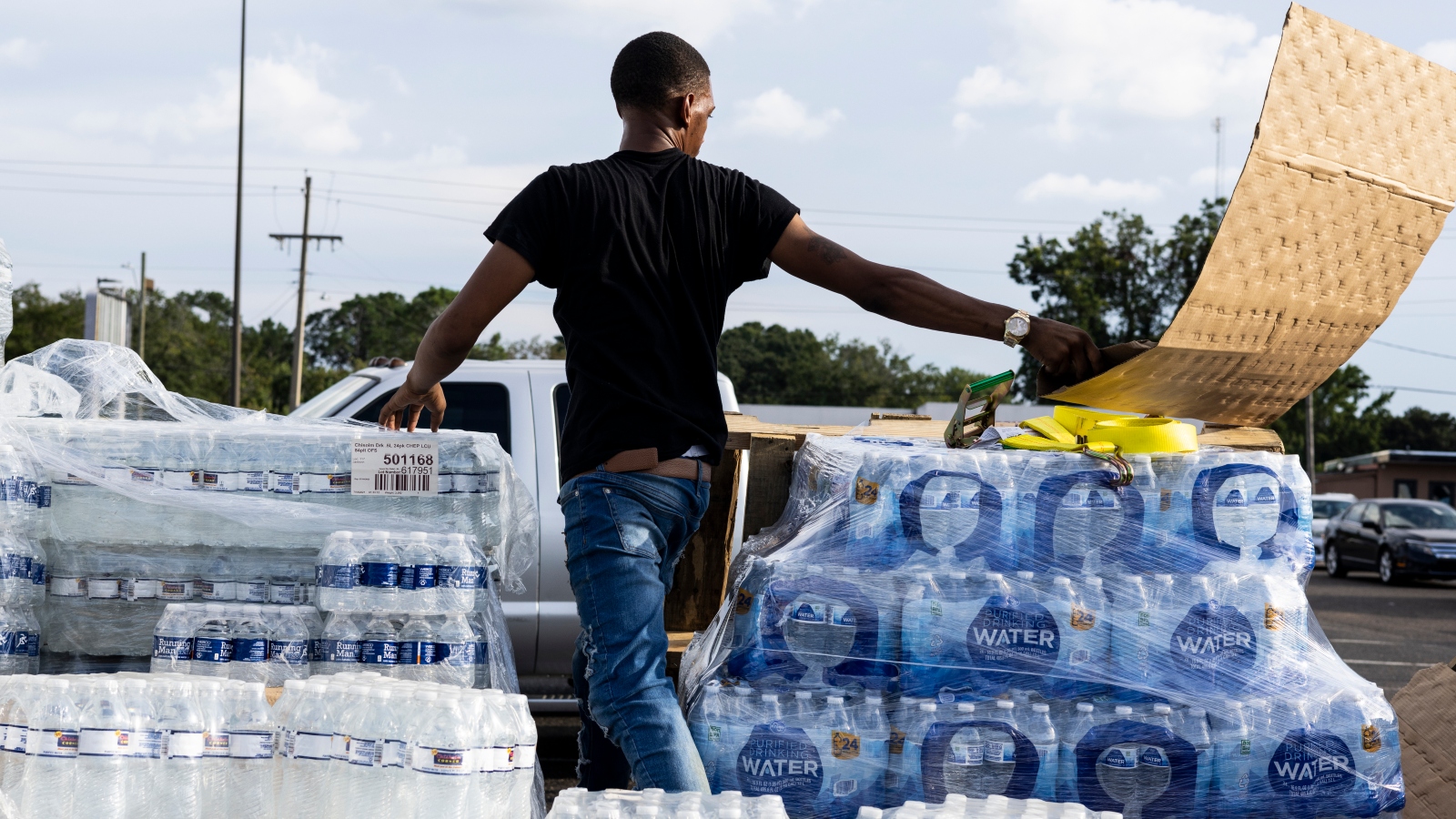
Less than a year later, in February 2021, a severe winter storm swept across the American South, freezing antiquated equipment and rupturing water lines across Jackson. The freeze left tens of thousands of residents without running water for weeks, forcing them to rely on bottled water distribution sites and emergency supplies.
The crisis reached a critical breaking point in August 2022, when heavy rainfall induced flooding that overwhelmed the already compromised O.B. Curtis Water Treatment Plant. The operational failure triggered a total collapse of the city’s water pressure, leaving nearly all 150,000 residents without safe tap water for drinking, bathing, or firefighting, and prompting direct intervention from the federal government.

Following the 2022 disaster, federal authorities intervened by appointing a third-party manager, JXN Water, to oversee the stabilization, repair, and long-term modernization of the city’s drinking water and wastewater infrastructure.
Broader Disparities: Race, Health, and Environmental Injustice
The legal outcome in Jackson highlights national systemic trends regarding environmental health and racial equity. Federal data compiled under the Safe Drinking Water Act consistently demonstrates that communities of color are statistically more likely than predominantly white communities to receive drinking water from systems flagged for health-based violations. Furthermore, academic research indicates that municipal water systems serving larger Black populations experience significantly longer delays before receiving necessary repairs, upgrades, or federal mitigation funding.
For Jackson residents, the consequences of prolonged exposure to contaminated water extend far beyond logistical inconveniences. Public health studies have firmly established that chronic exposure to lead—even at low levels—causes irreversible cognitive impairment, developmental delays in children, and long-term neurological damage. Local residents have also reported higher incidences of chronic health issues, including severe kidney infections and gastrointestinal illnesses, which they attribute to decades of reliance on compromised water.
The financial burden of remediation has added another layer of strain to an impoverished population. While JXN Water has reported operational improvements and increased revenue collection under federal oversight, the utility has implemented successive rate increases to fund critical capital projects. A court-approved 12 percent rate hike implemented earlier this year raised the average residential water and sewer bill, with additional rate increases scheduled through 2029. For a city where a significant portion of the population lives below the federal poverty line, these compounding utility costs present a severe economic challenge.
Official Responses and Civil Rights Implications
Reaction to the Fifth Circuit’s ruling has drawn sharp divisions between local leadership and community advocacy groups.
In an official statement following the decision, Jackson Mayor John Horhn responded to the appellate court’s verdict by emphasizing the city’s ongoing obligations: "We are pleased that the Fifth Circuit upheld the dismissal of these claims. The City remains committed to the health, safety, and well-being of every Jackson resident."
Conversely, community organizers and civil rights advocates view the ruling as a systemic institutional failure. Danyelle Holmes, a senior national organizer with Mississippi’s Poor People’s Campaign, criticized the judicial outcome for leaving vulnerable populations without legal recourse.
"Jackson residents did everything this country tells poor people to do. They organized, they testified, they boiled their water, they filed suit, they trusted the courts. And at every step the answer has been no," Holmes stated. "What it signals is that the law has told a majority-Black capital city that its suffering is real but its remedy does not exist."
Legal scholars and environmental justice advocates point out that the ruling establishes a stringent legal precedent. By determining that clean drinking water is not a constitutionally protected right, the federal appeals court effectively narrows the scope of federal civil rights litigation as a tool to combat environmental racism. Consequently, impacted communities seeking redress for municipal infrastructure failures may find themselves restricted primarily to statutory claims under environmental protection laws, rather than broader constitutional protections under the Bill of Rights or the 14th Amendment.
As federal oversight of Jackson’s water system continues and JXN Water pursues multi-year infrastructure upgrades, local advocates stress that community-led mobilization will remain the primary vehicle for accountability.
"We are organizing, we are marching to the polls, and we are not waiting on a court to tell us our lives are worth clean water," Holmes concluded. "This is not about left and right. It is about right and wrong."