For over half a century, the Endangered Species Act (ESA) has served as the bedrock of American wildlife conservation, pulling iconic species—such as the bald eagle, the American alligator, the humpback whale, and the Florida manatee—back from the precipice of extinction. Enacted in 1973 under strong bipartisan support and signed into law by President Richard Nixon, the statute has long been celebrated by environmental scientists as one of the most effective pieces of conservation legislation in global history. However, the foundational protections that have safeguarded vulnerable fauna for generations are undergoing a radical transformation.
In its boldest deregulatory push to date, the U.S. Fish and Wildlife Service (USFWS) has implemented a directive that effectively legalizes the unintentional killing of federally protected animals. According to the updated guidance, industrial activities, maritime transit, logging operations, and resource extraction projects that inadvertently result in the death or injury of an endangered animal will no longer constitute a violation of federal law, provided the act was not intentional. This major shift follows a separate regulatory revision determining that damaging or modifying an animal’s natural habitat no longer qualifies as "harming" the species. Together, these two administrative changes dismantle vital enforcement mechanisms of the ESA, introducing a sweeping reinterpretation of environmental law that critics argue prioritizes unchecked industrial development over biodiversity preservation.
The Evolution and Core Mechanism of the Endangered Species Act
To understand the profound weight of the administration’s recent policy shift, one must examine the mechanics that have driven the law’s success since its inception. At the center of the ESA’s enforcement power are two seemingly modest yet legally formidable words: "harm" and "take." Under Section 9 of the statute, it is unlawful for any person to "take" any endangered species within the United States. Within the statutory definitions, "take" is legally defined to mean harass, harm, pursue, hunt, shoot, wound, kill, trap, capture, or collect, or to attempt to engage in any such conduct.
Historically, conservationists, federal agencies, and federal courts interpreted "harm" to include significant environmental modification or degradation where it actually kills or injures wildlife by significantly impairing essential behavioral patterns, including breeding, feeding, or sheltering. This broad interpretation allowed the federal government and private citizens to challenge industrial projects that threatened to destroy the ecological foundations upon which endangered species depend.
A prominent example of this mechanism in action is the legal battle surrounding the northern spotted owl. Following decades of intensive commercial logging throughout the old-growth forests of the Pacific Northwest, the owl’s population plummeted, leading to its listing as a threatened species under the ESA in 1990. Environmental advocacy groups successfully utilized the statutory definition of "harm" to halt destructive logging practices, arguing that felling the trees where the owls nested destroyed their critical habitat and amounted to an illegal "take" under the law. For decades, this interpretation created a powerful legal shield for vulnerable ecosystems, frequently placing the ESA at odds with commercial interests in timber, mining, real estate development, and fossil fuel extraction.
A Chronology of Deregulation: The Path to the New Memo
The systematic rollback of the ESA’s protections did not occur in a vacuum; it is the culmination of a multi-year administrative campaign aimed at narrowing federal environmental oversight and accommodating corporate interests.
The timeline of these recent legal transformations highlights a deliberate strategy to reinterpret foundational environmental statutes:
- 1995: The Supreme Court issues a landmark ruling in Babbitt v. Sweet Home Chapter of Communities for a Great Oregon, affirming by a 6-3 margin that the secretary of the interior’s definition of "harm" properly includes habitat modification. The late Justice Antonin Scalia writes a sharp dissenting opinion, arguing that the word "take" should be strictly limited to direct, purposeful actions aimed at injuring or killing wildlife.
- July 2026: The Trump administration finalizes a regulatory revision narrowing the definition of "harm" under the ESA, asserting that there is a strict, traditional meaning of "take" that excludes indirect environmental impacts.
- September 2026: The U.S. Fish and Wildlife Service issues an internal policy memo, signed by USFWS Director Brian Nesvik, explicitly establishing that accidental or incidental killings—such as ship strikes on marine mammals or the felling of trees containing roosting bats—do not constitute a "take" unless the primary purpose of the activity was to kill or capture the animal.
- Fall 2026: Nearly two dozen state attorneys general file lawsuits challenging the administration’s alterations to the ESA, joined by prominent environmental coalitions preparing parallel legal challenges.
Parsing the Legal Arguments: Intent Versus Impact
The crux of the Fish and Wildlife Service’s new memo hinges on the specific intent of the actor. The directive explicitly outlines scenarios that regulators will no longer view as violations of federal law.
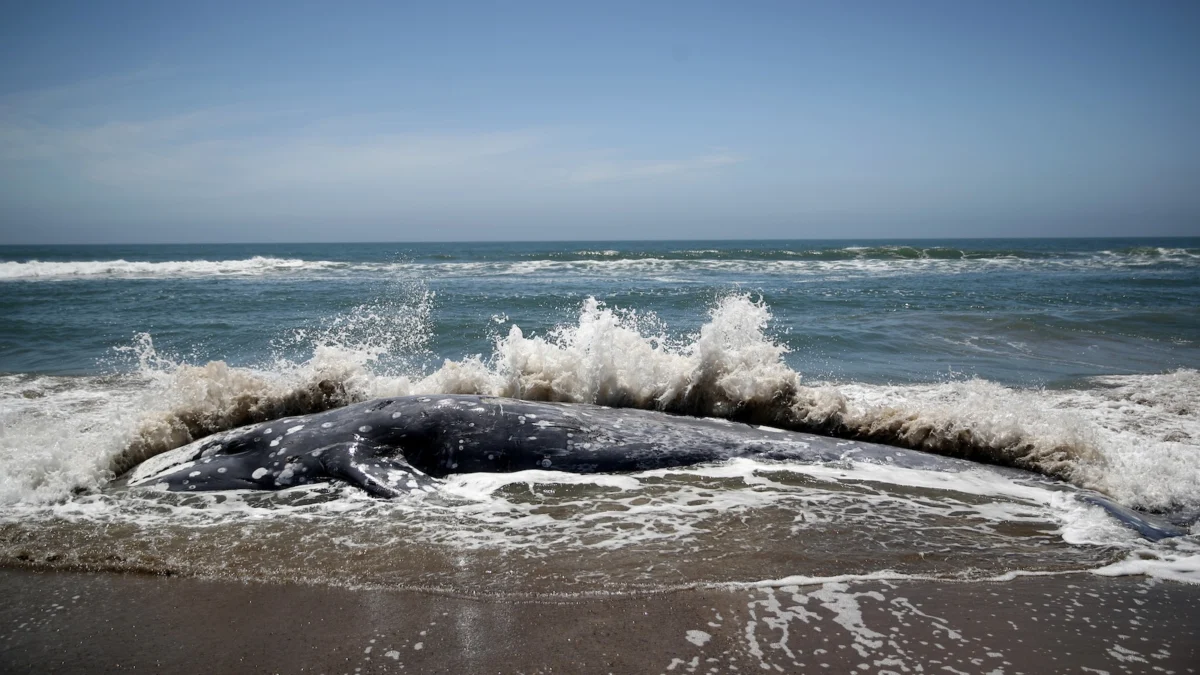
"A vessel that inadvertently strikes a whale has not taken it, because the vessel’s course was not set against the whale," the memo states. "Felling a tree is not a take of the bats roosting in it unless the tree was felled for the purpose of killing or capturing them."

Legal scholars and environmental attorneys argue that this standard introduces an impossible evidentiary burden for enforcement agencies and fundamentally misreads half a century of legislative intent and judicial precedent. Ryan Shannon, an attorney at the conservation nonprofit Defenders of Wildlife, noted the aggressive nature of the administration’s legal maneuver. "They are trying to disregard 50 years of the act, and how the agency—and everybody—has always interpreted this word," Shannon said. "This is not a bunt—they are really swinging for the fences with this."
Environmental advocates contend that focusing exclusively on the subjective intent of a corporation or individual ignores the biological reality of extinction. Andrew Wetzler, an executive at the Natural Resources Defense Council (NRDC), issued a stern critique of the policy shift. "The administration is telling every industry in America that killing endangered wildlife is fine as long as it wasn’t their primary goal," Wetzler stated. "But unintentional harm is exactly what is driving many species towards extinction."
The Judicial Landscape and the Shadow of Chevron
The legality of the USFWS memo is expected to face immediate and fierce opposition in the federal court system. Legal experts point out that the administration’s reliance on Justice Antonin Scalia’s 1995 dissenting opinion in Babbitt v. Sweet Home flies in the face of established Supreme Court precedent, which explicitly upheld the broader definition of "harm" advocated by the executive branch at the time.
Compounding the legal complexity is the Supreme Court’s monumental 2024 ruling overturning the Chevron doctrine, which historically required courts to defer to federal agencies’ reasonable interpretations of ambiguous statutes. While that ruling was widely interpreted as a severe blow to environmental regulations by stripping agencies of broad rule-making autonomy, legal analysts suggest it may now backfire on the Trump administration. Under the post-Chevron legal framework, federal courts—not administrative agencies—possess the ultimate authority to interpret the law. Consequently, judges may be far less inclined to defer to the Fish and Wildlife Service’s novel and restrictive interpretation of "take."
Brett Hartl, director of government affairs at the Center for Biological Diversity, dismissed the memo as legally vulnerable and politically motivated. The directive is "essentially performative cruelty for the sake of it" and is "barely worth the paper it’s printed on," Hartl remarked. "They’re trying to turn it into an anti-poaching statute, but it’s actually supposed to be the strongest conservation law in the world."
Unintended Consequences for Corporate Compliance
Ironically, while the administration’s regulatory rollback was designed to provide relief to commercial industries, some legal analysts suggest it may introduce a new wave of uncertainty for corporate boardrooms and compliance officers.
For decades, industries operating in sensitive ecosystems relied on established regulatory frameworks and consultation processes with federal wildlife officials to secure permits and ensure compliance with the ESA. By abruptly rewriting foundational definitions, the administration has destabilized settled legal expectations. Corporate legal teams now face a complex dilemma: whether to advise their clients to capitalize immediately on the relaxed enforcement guidelines, or to exercise caution in anticipation of inevitable judicial rulings or future administrations reinstating previous protections.
According to Shannon, for corporations that prioritize long-term regulatory stability—such as institutional timber companies and large-scale real estate developers—this aggressive deregulatory swing may ultimately prove to be "more than they ever really would have asked for," given the chaotic legal battles it guarantees.
Vulnerability of Early-Listed Species
If the courts ultimately uphold the administration’s interpretation, the ecological toll will not be distributed evenly across America’s wildlife. Species added to the endangered registry in more recent decades often benefit from mandatory "critical habitat protections," which provide an explicit layer of regulatory scrutiny for any commercial or public activity threatening their designated geographic areas.
However, many of the nation’s most iconic and vulnerable species—including the Florida panther and the California sea otter—were listed during the early years of the Endangered Species Act before critical habitat designations became standard protocol. These legacy species rely heavily on the broad statutory protections afforded by the general prohibitions against "harm" and "take." Without these foundational definitions intact, the animals that the United States initially committed to protect with the highest degree of urgency may now find themselves exposed to the greatest risks of industrial encroachment and unmitigated population decline.