The summer of 2026 will go down in meteorological history as a watershed moment for planetary warming. According to data released by the National Oceanic and Atmospheric Administration (NOAA) and analytical research groups, the meteorological summer spanning from June through August shattered historic temperature records across the contiguous United States and sent dangerous shockwaves through global climate systems. Surpassing previous milestone years like 1936 and 2021 by 0.4 degrees Fahrenheit, the summer averaged three degrees above the 20th-century baseline. August proved to be the most extreme month of the season, climbing an alarming 3.5 degrees above historical averages.
This punishing heat was not confined to North America. Across the Atlantic, European nations reeled under relentless, compounding heat waves that claimed more than 25,000 lives. The convergence of persistent high-pressure systems, shifting oceanic patterns, and the compounding footprint of human-driven greenhouse gas emissions created a public health emergency of unprecedented scale. As scientists analyze the cascading impacts of this extreme season, communities worldwide are confronting the reality of an accelerated climate trajectory that threatens public infrastructure, agricultural systems, and human survival.
A Chronology of Intensifying Extremes
The trajectory toward the record-breaking summer of 2026 has been decades in the making, driven by the steady accumulation of carbon dioxide and other heat-trapping gases in the atmosphere. However, the immediate timeline of this historic season began to take shape earlier in the year with the emergence of a potent El Niño cycle.
As warm Pacific waters expanded eastward from South America, climatologists warned that the climate pattern would supercharge global temperatures. By late spring, early-season heat domes began settling over parts of Asia and North America, signaling an unusually aggressive summer. Throughout June, temperatures climbed steadily higher than seasonal norms, prompting early heat advisories in regions unaccustomed to prolonged extreme weather.
By July, the crisis intensified into a multi-continental emergency. Europe faced successive heat waves that strained national electrical grids to their absolute breaking points, though widespread adoption of solar energy infrastructure successfully prevented catastrophic blackouts in several regions. In the United States, July transitioned into August with little relief, culminating in the NOAA confirmation that the three-month meteorological window was the hottest in modern observation history. Simultaneously, research organizations began publishing data models revealing that the cumulative burden of these temperatures had touched the vast majority of the global population.
Unprecedented Geographic Exposure and Statistical Impact
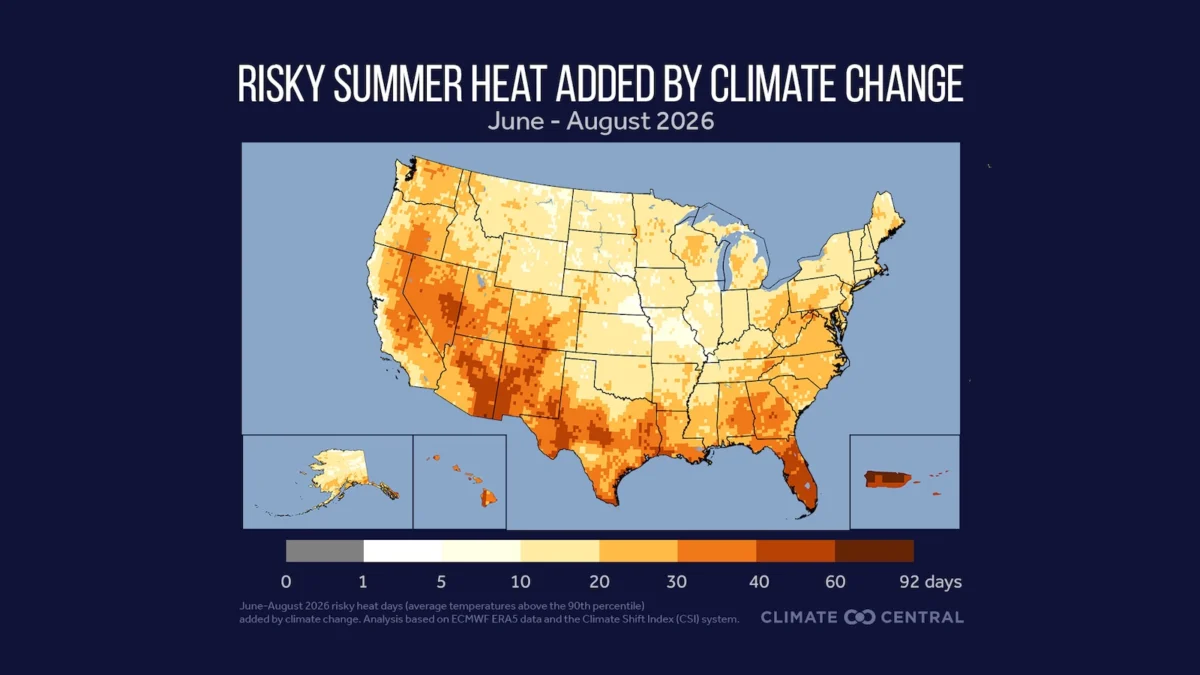
The scope of the 2026 heat crisis is best understood through the staggering reach of its population exposure. A comprehensive analysis released by the research group Climate Central revealed that an astounding 293 million Americans—representing approximately 86 percent of the nation’s total population—endured at least 30 days of "risky heat." In this context, risky heat is defined as temperatures surpassing the 90th percentile of historical norms for a specific region during a given time of year.

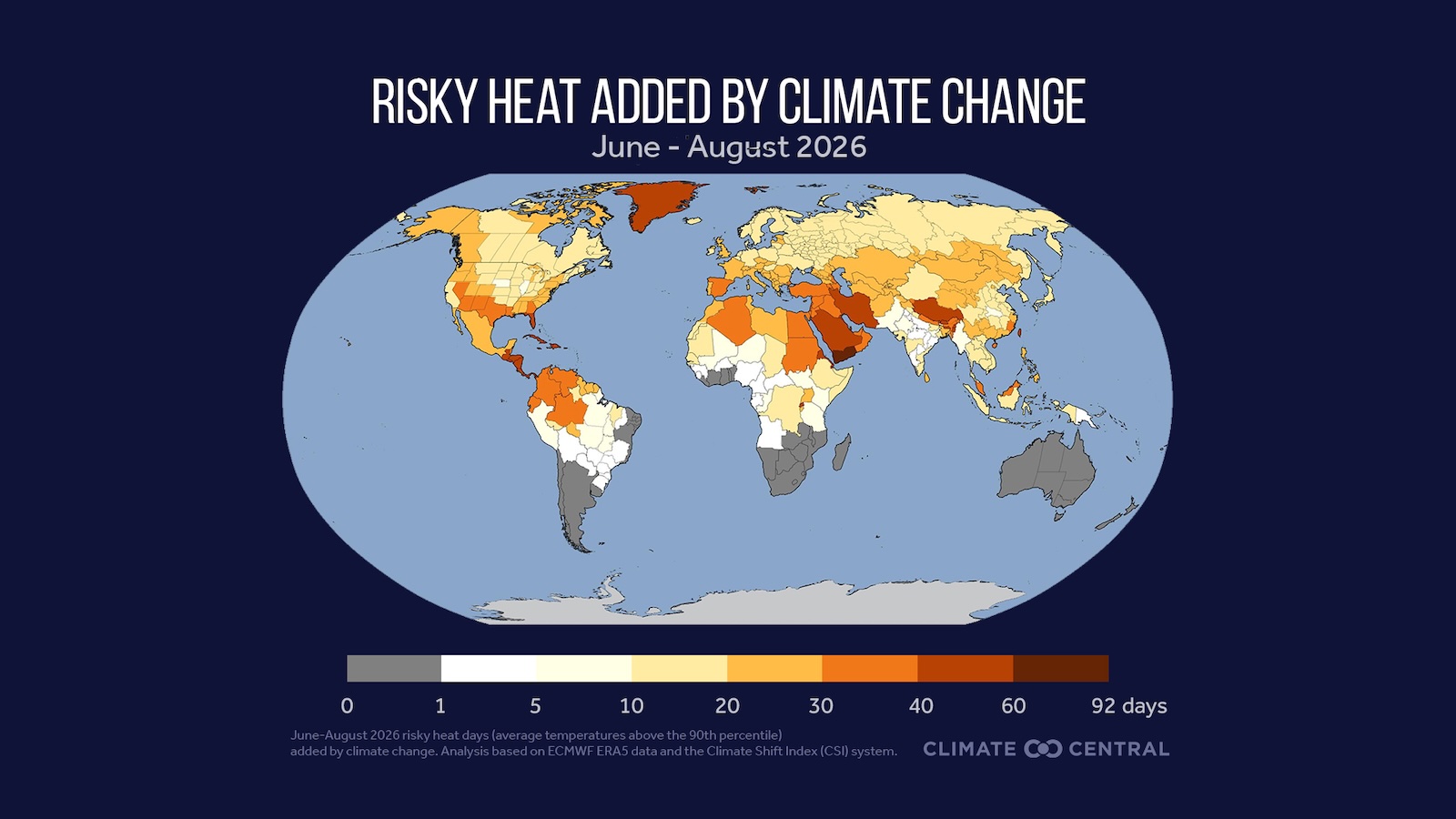
Globally, the scale was even more immense, with roughly 2.8 billion people across Asia facing equivalent exposure levels. Regionally, the burden within the United States was heavily concentrated in the West. Four of the five states logging the highest number of risky heat days were situated in the western half of the country: New Mexico, Nevada, Colorado, and Utah. Colorado bore the most glaring anomaly, registering summer temperatures that soared 4.4 degrees Fahrenheit above normal historical averages, closely followed by Utah and Nevada at 3.8 degrees above normal.
Globally, Europe solidified its status as the fastest-warming continent on Earth. Of the top ten most unusually hot nations tracked globally during the summer months, seven were located in Europe.
The European Paradox: Why Europe is Warming Faster
Europe’s alarming rate of temperature increase is driven by a unique confluence of geographical and environmental factors. First, the continent’s geographic proximity to the Arctic places it directly in the path of the fastest-warming region on the planet. As polar sea ice continues to retreat at accelerated rates, darker underlying ocean waters are exposed, absorbing significantly more solar radiation rather than reflecting it back into space—a phenomenon known as the ice-albedo feedback loop.
However, scientists have identified a second, counterintuitive factor contributing to Europe’s rapid warming: the success of clean air regulations. Over the past several decades, aggressive European environmental policies have drastically reduced industrial particulate matter and aerosol pollution. While this cleanup has yielded monumental benefits for human respiratory health, it has also inadvertently unmasked the underlying climate signal. Aerosols historically acted as a microscopic atmospheric shield, reflecting incoming solar energy back into space. With fewer aerosols present in cleaner skies, Europe is now experiencing the unmitigated brunt of greenhouse-gas-driven warming.
Public Health Implications and the Danger of Warm Nights
The physical toll of the 2026 summer extended far beyond discomfort, triggering a widespread public health crisis. Kristina Dahl, vice president for science at Climate Central, emphasized the compounding dangers of the season.
"The numbers are just really mind-boggling," Dahl said. "Extreme heat on its own can cause health problems, but it can also exacerbate a lot of underlying health conditions."
A primary driver of heat-related mortality this summer was the asymmetry of warming. While daytime temperatures soared, nighttime temperatures climbed at an even faster rate. Historically, cool nights provided a vital window for human physiology to recover from daytime thermal stress. Without this nocturnal cooldown, the human body fails to dissipate accumulated heat, leading to chronic physiological strain over consecutive days.
This sustained thermal pressure disproportionately endangered vulnerable populations. Outdoor laborers, including agricultural workers who form the backbone of food production systems, returned to grueling shifts while still carrying the unreleased heat load from the previous day. Similarly, elderly populations, whose physiological mechanisms for thermoregulation are naturally less efficient, faced heightened risks of heatstroke, cardiovascular collapse, and respiratory failure.
Official Responses and Future Projections
In the wake of the NOAA data release, public health officials, urban planners, and international policymakers are reevaluating emergency response frameworks. Municipalities across the United States and Europe expanded the deployment of public cooling centers, issued prolonged red-flag warnings, and implemented emergency labor protections for outdoor workers. Energy regulators praised the resilience of renewable energy grids—particularly solar generation—for meeting historic peak cooling demands, yet warned that future grid stability remains precarious without accelerated infrastructural investments.
Looking forward, the scientific community is expressing profound concern over what lies ahead. Because the current El Niño event is still developing and has yet to reach its meteorological peak, climatologists warn that its full warming potential will likely spill over into the coming year.
"It’s still an event that’s taking shape," Dahl noted, addressing the trajectory of the Pacific warming cycle, "so it’s nowhere near its peak."
As the world processes the sobering realities of the 2026 summer, the scientific consensus remains unequivocal. Without aggressive global emissions reductions and proactive climate adaptation strategies, the extreme conditions witnessed this year will soon transition from historical anomalies to standard expectations of the modern climate era.