The coastal city of Newport, Oregon, recently played host to an extraordinary gathering of minds, as several hundred scientists, environmental advocates, and government officials converged for a high-stakes, two-day symposium. The sole focus of the room was singular and deeply troubling: the precipitous and alarming decline of the eastern North Pacific gray whale.
For a species that has twice danced back from the brink of human-induced extinction, the current trajectory is setting off alarm bells across the marine science community. Over the past decade, the gray whale population along the United States West Coast has plummeted by nearly half. This staggering drop has transformed what was once a celebrated conservation success story into a complex environmental crisis, underscored by political tension, bureaucratic gridlock, and the cascading impacts of a rapidly warming planet.
A Gathering in the Shadow of Political Uncertainty
While the atmosphere inside the Newport conference rooms crackled with the urgency of shared data and collaborative resolve, it was simultaneously weighed down by palpable tension. Attendees walked on proverbial eggshells, acutely aware that the policy mechanisms traditionally relied upon to protect imperiled wildlife are currently under siege.
The event organizers established a strict boundary from the outset: the conference would focus strictly on empirical science and data, deliberately avoiding open political debate. According to conference participants, this cautious approach was largely driven by the heavy representation of government scientists in attendance, alongside independent researchers who rely heavily on federal grants and institutional funding.
The caution is far from unwarranted. Since taking office in 2025, the Trump administration has implemented sweeping staff reductions and budget cuts at the National Oceanic and Atmospheric Administration (NOAA). These administrative shifts have aligned closely with partisan agendas, drawing sharp criticism from conservationists who argue that vital environmental oversight is being dismantled. Furthermore, the administration has proposed the complete elimination of the Marine Mammal Commission, rolled back critical habitat protections mandated by the Endangered Species Act, and left a backlog of approximately 400 species awaiting federal listing decisions.
Against this backdrop, NOAA’s handling of the gray whale crisis has drawn intense scrutiny. The agency not only missed the legal deadline to respond to a formal petition to relist gray whales under the Endangered Species Act, but it is also several months behind schedule in releasing its annual count of newborn calves. While NOAA has declined to comment on these delays, conservation groups are losing patience. At the end of August, three prominent environmental organizations filed a formal notice of intent to sue, initiating a two-month countdown that will culminate in a federal lawsuit unless the administration acts on the listing petition.
A Century-Long Tug-of-War with Human Impact
To understand the gravity of the current crisis, one must examine the tumultuous history shared between humans and gray whales. During the 19th and early 20th centuries, commercial whaling decimated global populations. The Atlantic gray whale was hunted to extinction—marking the only complete extinction of a whale species in human history.
By the mid-20th century, eastern gray whales were reduced to fragile remnants. However, international bans on commercial whaling, coupled with rigorous federal protections under the U.S. Endangered Species Act enacted in the 1970s, sparked a remarkable recovery. By the early 1990s, the West Coast population had more than doubled, prompting federal wildlife officials to officially delist the species in 1994, deeming the conservation effort a triumph.
For decades, the population remained relatively stable, peaking between 2016 and 2017 with an estimated 25,000 to 30,000 individuals. Then, the tide turned once more.
The Arctic Connection: Climate Change and Malnutrition
The eastern gray whale undertakes one of the longest migrations of any mammal on Earth. Every year, these majestic creatures spend the summer months feeding on dense swarms of benthic crustaceans in the cold, nutrient-rich waters of the Arctic, particularly near Alaska. In the winter, they embark on a thousands-mile journey down the Pacific Coast to the warm, protected lagoons of Mexico to mate and calve.
However, anthropogenic climate change is unravelling this ancient routine. The Arctic is warming roughly four times faster than the rest of the planet, leading to unprecedented losses in sea ice. This rapid melting triggers a chain reaction in the marine ecosystem, disrupting the benthic food web and causing a sharp decline in the amphipods and other prey upon which gray whales depend.
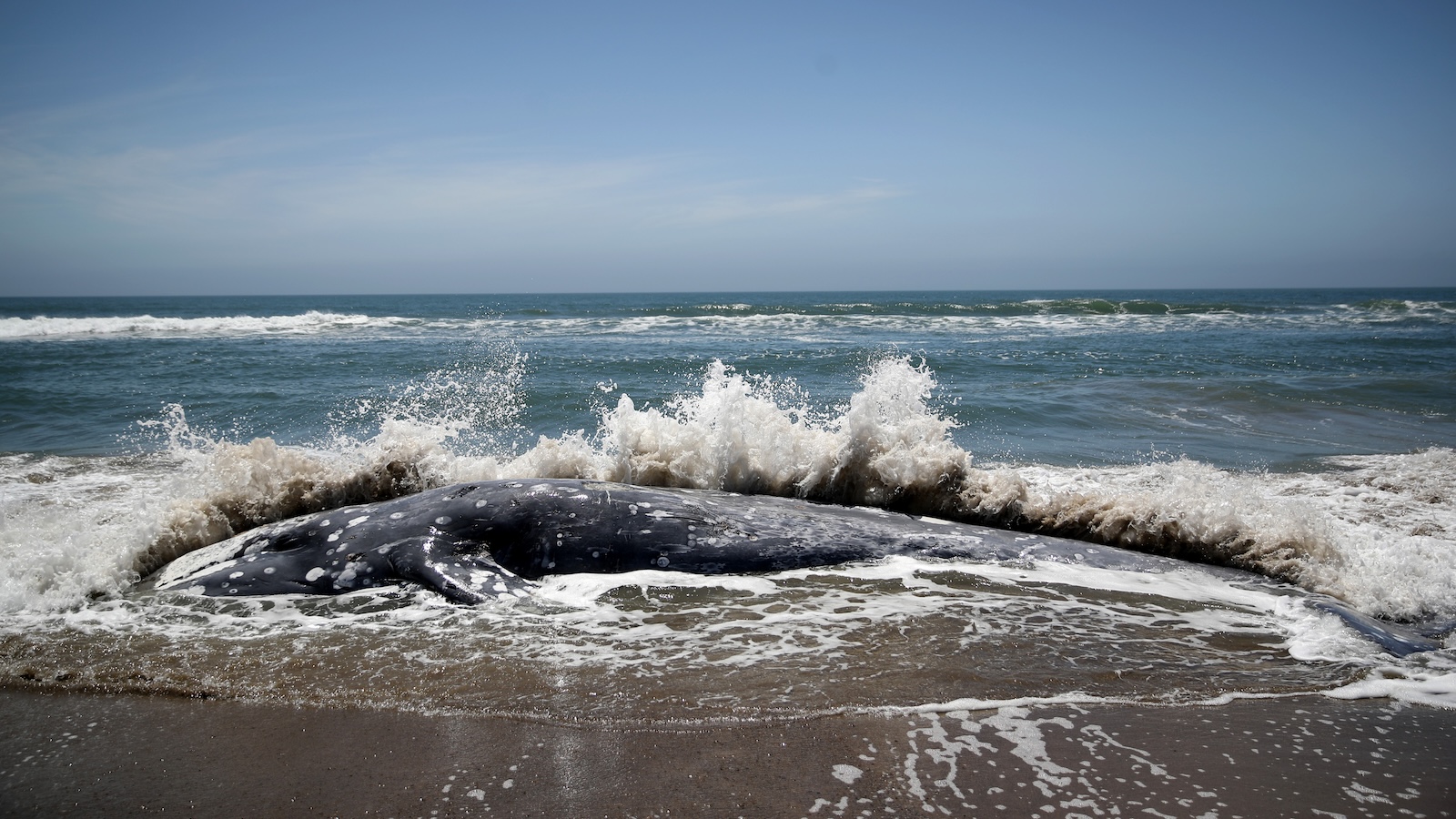
Scientists studying the population crash have found a direct correlation: as Arctic sea ice continues its long-term decline, the whales’ nutritional intake plummets. Arriving in northern feeding grounds to find sparse food supplies, whales are starting their grueling migrations with dangerously depleted energy reserves. The physiological toll is devastating, resulting in suppressed reproduction rates and soaring mortality.
The statistical evidence of this decline is stark. While a healthy gray whale population typically produces around 1,000 calves annually, scientists recorded a record-low birth rate last year, estimating a mere 85 surviving calves. Meanwhile, overall population estimates have cratered from their 2016 peak down to a range of 11,700 to 17,000 individuals over the last decade.
This widespread malnutrition is compounding existing threats along the whales’ migratory corridors. Starving whales are increasingly venturing into hazardous nearshore waters and busy commercial shipping lanes in search of food.
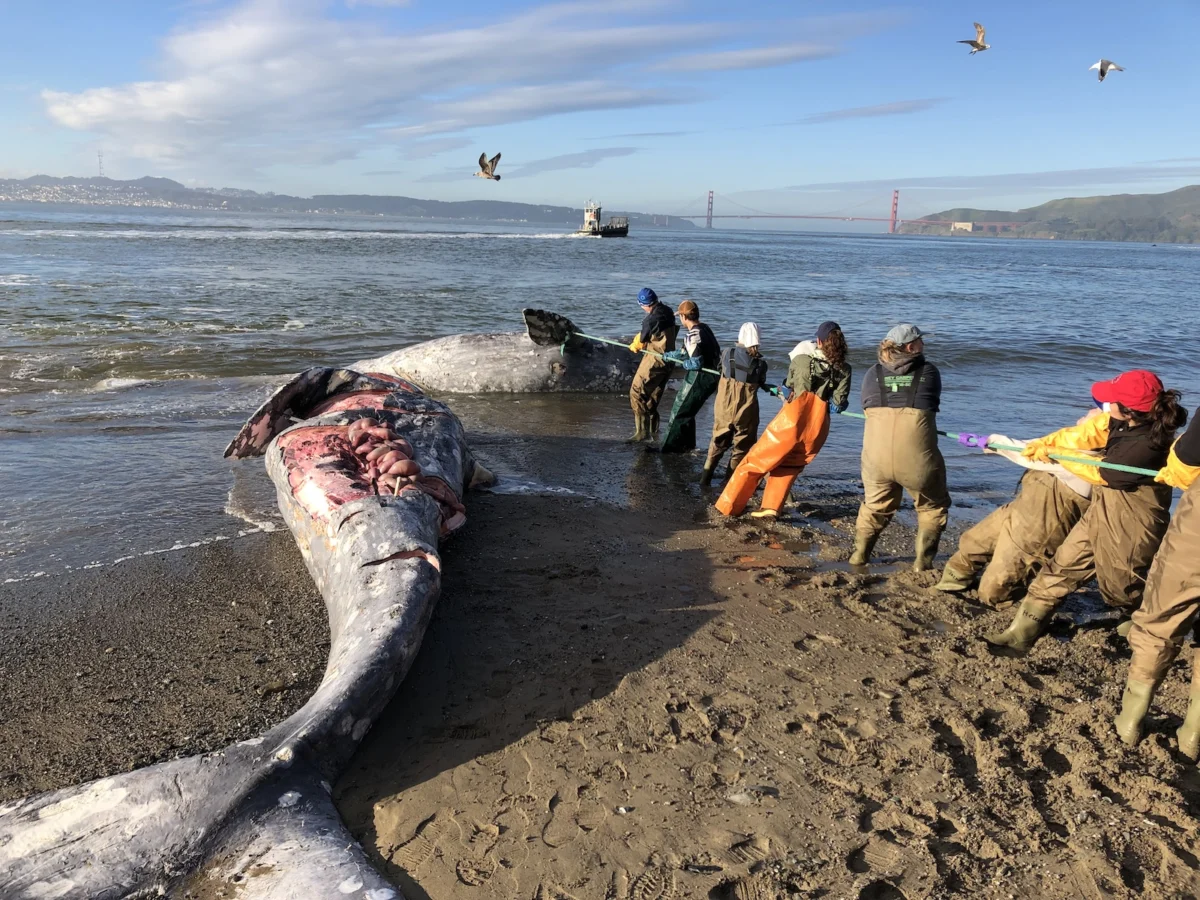
This behavioral shift is highly visible in regions like the San Francisco Bay Area, where researchers have documented a surge in whale strandings and mortality events in recent years. Scientists estimate that at least 20 percent—and potentially as high as 50 percent—of all whales entering the San Francisco Bay ultimately die from vessel strikes. During a single recent summer, 13 dead gray whales washed ashore in the region, though marine biologists note that many more likely sink in deep water before ever being recorded by researchers. Alongside ship strikes, weakened whales are increasingly vulnerable to becoming entangled in commercial fishing gear.
Conflicting Data and the Battle for a Federal Listing
The path forward remains heavily contested, particularly regarding how federal agencies interpret and report population data. Recently, NOAA released figures suggesting that the gray whale population rebounded by approximately 5,000 animals over the past year.
This optimistic projection has been met with widespread skepticism from independent scientists and conservation advocates. Given the documented low birth rates and high mortality numbers, critics argue that a population rebound of that magnitude in such a short timeframe is biologically and physically impossible.
For legal experts and environmental groups spearheading the push for renewed federal protections, the immediate priority is clear. Relisting the eastern gray whale as threatened or endangered under the Endangered Species Act is seen as a vital legal and logistical necessity. A formal listing would compel federal agencies to formulate a comprehensive recovery plan, unlock dedicated funding for ongoing research and population monitoring, and mandate the protection of critical habitats.
Advocates argue that this regulatory intervention could buy critical time while international policymakers grapple with the overarching challenge of global climate change. Legal representatives for the plaintiffs maintain that the administration has little legal ground to stand on, noting that the statute explicitly requires decisions to be anchored in the best available peer-reviewed science. Should the administration reject the petition, the ensuing court battles appear all but guaranteed.
Grassroots Solutions and the Path Forward
While the legal and political battles play out in federal courts and Washington hallways, researchers and local organizations are actively implementing on-the-water solutions to mitigate immediate threats to migrating whales.
One of the most promising initiatives centers on reducing vessel-strike mortality through voluntary and mandatory speed restrictions. Projects such as Whale Safe—led by researchers at the University of California, Santa Barbara’s Benioff Ocean Science Laboratory—utilize advanced technologies including real-time acoustic monitoring, thermal cameras, and satellite telemetry to track whale movements within major shipping corridors. By providing commercial shipping operators with precise mapping data, these programs advocate for voluntary speed reductions to 10 knots or less in high-risk zones, drastically improving a whale’s chances of surviving a potential collision.
While similar speed limits are mandatory for large vessels along the U.S. East Coast, West Coast regulations remain largely voluntary. Programs like Blue Whales Blue Skies have achieved notable success by offering financial incentives and public recognition to shipping companies that voluntarily slow their vessels. However, compliance remains inconsistent, with certain commercial vessels and cruise liners continuing to transit whale habitats at high speeds.
Ultimately, marine biologists emphasize that while grassroots mitigation efforts and technological monitoring are essential triage measures, they cannot substitute for systemic policy changes. As researchers and advocates digest the findings from Newport, the consensus remains stark: the scientific community has sounded the alarm and documented the crisis in meticulous detail. The ultimate fate of the eastern gray whale now rests on whether policymakers possess the political will to translate that science into decisive, protective action before these iconic travelers are lost to history permanently.