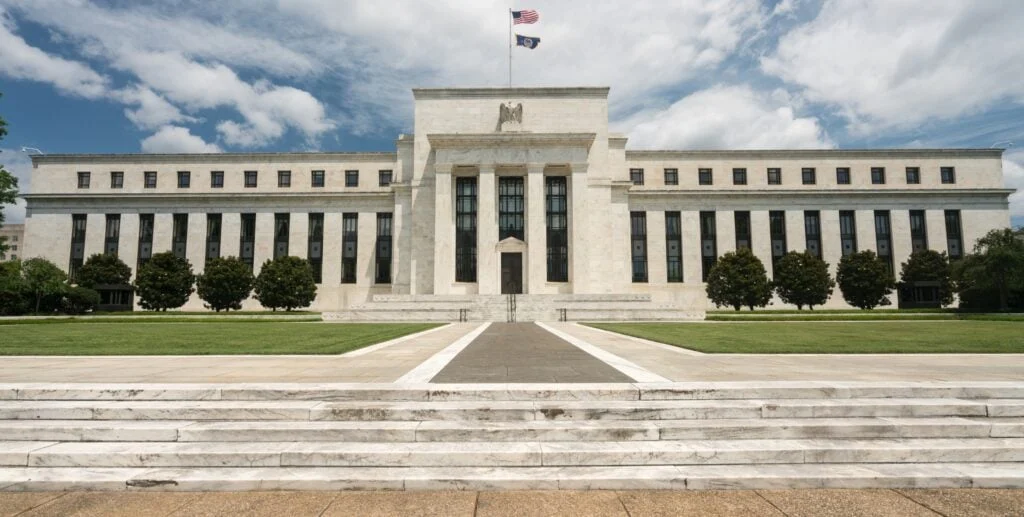
The Federal Reserve has officially announced a quarter-percentage-point interest rate hike, a decision that has sent immediate shockwaves through the United States real estate sector. This policy shift, occurring against a backdrop of persistent inflationary pressures exacerbated by geopolitical tensions in the Middle East, marks a significant pivot in the central bank’s monetary policy. For real estate investors, the move signals an intensification of the high-rate environment that has defined the post-2022 market, forcing a re-evaluation of acquisition strategies, cash-flow models, and portfolio management.
The Chronology of the Current Monetary Policy Shift
To understand the weight of this latest decision, one must examine the progression of the Federal Reserve’s strategy over the past three years. Following a period of aggressive post-pandemic tightening, the market had recently begun to price in a period of relative stability, if not outright easing. However, the unexpected persistence of inflation—largely attributed to supply chain disruptions and rising energy costs stemming from the conflict in Iran—has forced the Federal Reserve to reconsider its trajectory.
The decision to raise rates by 25 basis points reflects a strategic commitment to the Fed’s dual mandate of price stability and maximum employment. Historically, this move follows a series of fluctuating signals from federal leadership. From the tenure of Jerome Powell to the evolving economic mandates observed during the most recent political transitions, the central bank has consistently signaled that it will prioritize curbing inflation over the short-term stability of the housing market. As the federal funds rate inches upward, the impact is immediately visible in the debt markets, where mortgage rates have already climbed past the 7% threshold.
Mechanics of the Market: Beyond the Federal Funds Rate
A common misconception among retail investors is the direct correlation between the federal funds rate and mortgage rates. While the Fed’s actions are a primary catalyst, mortgage rates are more directly influenced by long-term bond yields, the performance of 10-year Treasury notes, and investor demand for mortgage-backed securities (MBS).
When the Federal Reserve increases the federal funds rate, it increases the cost for banks to borrow money. This cost is inevitably passed down to the consumer in the form of higher borrowing rates for everything from credit cards to home mortgages. However, because the market often "prices in" these hikes before they are officially announced, mortgage rates frequently fluctuate in anticipation of Fed meetings. This explains why prospective homeowners and investors have faced rising financing costs for months, even during periods when the Fed’s rate remained steady.
Regional Divergences and Market Volatility
The national housing market is far from a monolithic entity; rather, it is a collection of disparate regional economies that respond differently to monetary policy. Recent data from Realtor.com highlights a complex landscape where geographic location significantly dictates investment success.
In the Midwest, the cooling effect of high interest rates has led to a notable 4.3% decline in pending sales compared to the previous year. This suggests a market where buyers are increasingly cautious, providing an opening for investors who possess sufficient liquidity to negotiate price reductions. Conversely, the Southern and Northeastern regions have seen a modest uptick in pending sales—1.8% and 1.1%, respectively—suggesting that local job growth and migration patterns are, in some instances, offsetting the deterrent effect of higher mortgage costs.
The disparity in price reductions further complicates the investment landscape. In the West and South, more than 20% of residential listings have seen downward price adjustments as sellers struggle to attract buyers at current price points. In contrast, the Northeast shows more resilience, with only 14.15% of listings undergoing price cuts. Investors must therefore conduct hyper-local due diligence, as the "national" narrative of a slowing market does not apply equally to all zip codes.
The Impact on Buyer Demographics and Demand
The primary consequence of this latest rate hike is the systematic exclusion of a significant portion of the retail buyer demographic. As broker-owner Beau Keenan of Dickson Realty noted, the transition from a 6.75% rate to 7% creates a "swath" of buyers who are no longer qualified to enter the market. When record-high home prices are coupled with elevated financing costs, the monthly debt-service obligations become untenable for the average middle-income household.
This contraction in the buyer pool creates a dual-sided reality for investors. For those dependent on high-leverage strategies, such as the BRRRR (Buy, Rehab, Rent, Refinance, Repeat) method, the math has become increasingly difficult. Debt service coverage ratios are tighter, and the thin margins of error in a high-rate environment mean that even minor fluctuations in operating expenses—such as insurance or property taxes—can turn a profitable asset into a cash-flow drain.
However, for the cash-heavy investor, this environment is increasingly attractive. As retail competition wanes, institutional and private investors with significant equity or cash reserves are finding increased leverage in negotiations. Sellers who were previously uncompromising are now facing a reality where their property sits on the market for extended periods, leading to greater flexibility on price and closing terms.
Rental Demand and the "Lock-In" Effect
Despite the turmoil in the purchase market, the rental sector remains remarkably resilient. High interest rates have effectively forced would-be homebuyers to remain in the rental pool, keeping vacancy rates low and rental demand high. Data from the Federal Reserve Bank of New York indicates that rent growth remains firm, supported by a supply-demand imbalance in both urban and suburban corridors.
For existing landlords, this presents a unique strategic advantage. Those who secured long-term, fixed-rate financing during the period of historically low rates are effectively insulated from the current volatility. The challenge for these investors is not survival, but rather determining how to allocate capital. Many are finding that the most prudent move is not to aggressively acquire new, high-cost debt, but to reinvest cash flow into existing assets. Upgrading units to capture higher rent tiers or improving energy efficiency to lower operating costs is currently viewed by many financial analysts as a more reliable path to long-term wealth preservation than attempting to scale a portfolio with expensive, new-money debt.
Strategic Considerations for Portfolio Management
As the economic cycle matures, the "growth at all costs" mentality that defined the previous decade is being replaced by a focus on "sustainability and stabilization." For investors managing multiple properties, the following strategic steps are being recommended by industry experts:
- Debt Stress Testing: Evaluate every property in the portfolio against a potential future environment of higher rates. Determine if current cash flow can sustain a significant increase in debt service should a balloon payment or refinancing event occur.
- Portfolio Rationalization: If a property is consistently underperforming or failing to meet cash-flow targets due to high financing costs, it may be time to consider a divestment. Selling a non-performing asset to pay down debt on higher-quality properties can strengthen the overall balance sheet.
- Capital Allocation: Rather than seeking new acquisitions, prioritize capital expenditures that enhance the value of existing holdings. Reliable, long-term tenants are the best hedge against market uncertainty.
- Equity Preservation: Utilize cash reserves to lower loan-to-value (LTV) ratios where possible. Reducing debt exposure is an effective way to improve cash flow without relying on rent increases that may not be sustainable in the long run.
Conclusion: Navigating the New Normal
The Federal Reserve’s latest interest rate hike is not merely a data point; it is a fundamental shift in the cost of capital that will define the next chapter of real estate investment. While the temptation to "keep stacking doors" remains strong, the current climate demands a more disciplined, surgical approach to growth.
Investors must recognize that the market has transitioned from a period of easy liquidity to one of calculated risk. The most successful investors in the coming years will likely be those who prioritize liquidity, focus on long-term rental stability, and resist the urge to over-leverage in a high-interest environment. While the current macroeconomic outlook presents significant challenges, it also offers a reprieve from the frenzied, unsustainable competition of recent years. For the patient and the prepared, this period of market correction may prove to be a necessary reset, laying the groundwork for more stable, long-term investment outcomes. As the dust settles on the latest policy announcement, the objective remains clear: to build a portfolio that can withstand the cycles of the economy, ensuring that when the tides eventually turn, the investor remains positioned to thrive.