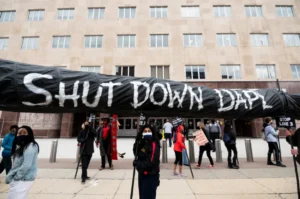
The government of French Polynesia has formally announced its intention to challenge a proposal by a United States-based startup to explore the seabed for mineral extraction in international waters situated immediately adjacent to its maritime boundaries. The move signals a deepening rift between the industrial ambitions of American mineral firms and the environmental and sovereign priorities of Pacific Island nations. Moetai Brotherson, the President of French Polynesia, has expressed significant concern over the lack of diplomatic transparency and the potential for irreversible ecological damage to the region’s delicate marine ecosystems.
The controversy centers on an application submitted by American Deep Sea Minerals, a startup backed by Bay Area investors, to the United States government. The company seeks authorization to explore a specific area of international waters known as the "Eastern High Seas Pocket 3." This region is geologically unique and geographically significant, as it is a pocket of the high seas entirely encircled by the Exclusive Economic Zones (EEZs) of French Polynesia, the Cook Islands, and Kiribati. The company’s objective is to identify and eventually extract minerals such as cobalt, nickel, and manganese—resources increasingly viewed as vital for the production of high-capacity batteries and advanced military technologies.
President Brotherson’s opposition is rooted in what he describes as a failure of consultation. While the startup reportedly sent a brief introductory email to the French Polynesian government, Brotherson maintains that no substantive dialogue has occurred. "We were approached, but we were not consulted," Brotherson stated, emphasizing that the territory would not remain passive while industrial activities are proposed on the doorstep of protected ecosystems. The lack of engagement has raised questions regarding the adherence to international norms concerning the rights of Indigenous peoples and neighboring states.
The Geopolitical and Regulatory Landscape
The timing of this application coincides with a period of intense international negotiation. In Jamaica, representatives from dozens of nations are currently gathered at the headquarters of the International Seabed Authority (ISA). For more than a decade, the ISA has been tasked with developing a "Mining Code"—a comprehensive regulatory framework intended to govern extractive activities in international waters, which are legally defined as the "common heritage of mankind."
However, the U.S. position has complicated these multilateral efforts. Because the United States has not ratified the United Nations Convention on the Law of the Sea (UNCLOS), it does not have a formal seat at the ISA’s decision-making table. In response, the U.S. administration has invited American companies to apply for mining permits directly through domestic regulators, such as the National Oceanic and Atmospheric Administration (NOAA), rather than waiting for the ISA to finalize its international rules. This unilateral approach has drawn sharp criticism from global leaders and regulatory bodies.
Letitia Carvalho, the Secretary-General of the ISA, recently addressed the assembly in Jamaica, warning against the dangers of national or corporate overreach. She reminded the international community that the deep seabed belongs to no single entity. "If we lose sight of this, we risk repeating on the ocean floor the same injustices and destruction we still strive to remedy on land," Carvalho remarked, echoing the sentiments of many Pacific leaders who view deep-sea mining as a new form of resource colonialism.
Environmental and Cultural Significance of Tainui Atea
For French Polynesia, the stakes are not merely economic or legal; they are existential. In 2022, the territory enacted a domestic ban on seabed mining, a policy that was mirrored by France in 2023. These legislative measures are designed to protect Tainui Atea, one of the world’s largest marine protected areas, which covers nearly the entirety of French Polynesia’s exclusive waters.
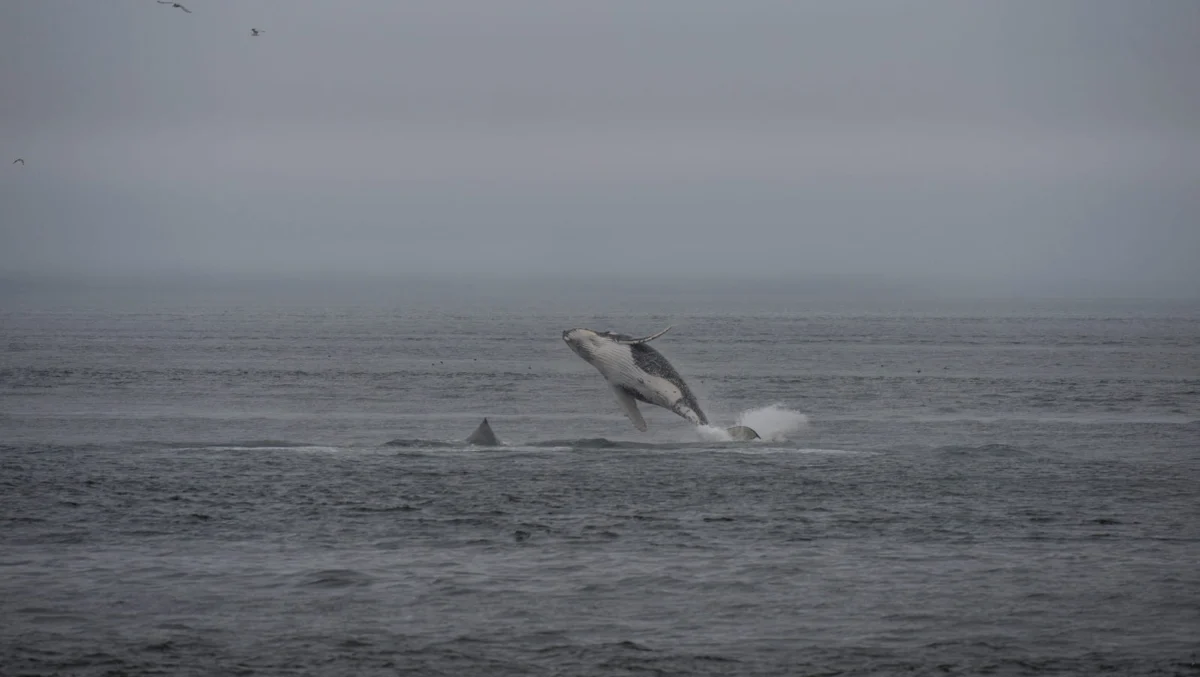
According to data from the United Nations, the Tainui Atea reserve is a biodiversity hotspot, sustaining 21 species of sharks, 176 species of coral, and over 1,000 species of fish. It is also a critical habitat for migratory species and a primary site for the region’s tuna fisheries, which are a cornerstone of the local economy. Scientific studies have warned that the plumes of sediment generated by deep-sea mining could travel for hundreds of miles, potentially suffocating coral reefs and disrupting the food chain upon which local fisheries depend.
Beyond the biological data, the ocean floor holds profound cultural significance for the Indigenous Ma’ohi people, who make up approximately 80 percent of French Polynesia’s population. Hinano Murphy, an Indigenous cultural expert from Moorea and Tahiti, has described the deep sea as a "sacred place of creation." In traditional Polynesian cosmogony, the ocean is the source of all life, and its disturbance is viewed as a spiritual violation. The concept of "Free, Prior, and Informed Consent" (FPIC), enshrined in international law, mandates that Indigenous communities must have the right to withhold consent for projects that affect their ancestral territories—a right that Brotherson argues is being ignored in this instance.
The Case for Exploration: The Corporate Perspective
In contrast to the concerns raised by Pacific leaders, the leadership of American Deep Sea Minerals maintains that its project is a necessary step toward a sustainable future. Graham Goulet, the CEO of American Metals (the parent entity), has defended the application, stating that the company intends to consult with the governments of the Cook Islands, Kiribati, and French Polynesia as the program matures.
Goulet has emphasized that the current application is for an exploration license, not a commercial extraction permit. He asserts that the exploration phase will include rigorous scientific studies and environmental impact assessments (EIAs), which will be conducted under the oversight of U.S. regulators. Furthermore, the company’s filing includes provisions for a "benefit-sharing agreement" with Pacific nations, suggesting that the economic rewards of the minerals could be distributed among the neighboring islands.
However, President Brotherson remains skeptical of these claims. He argues that the exploration phase is not a "neutral" scientific endeavor but a clear "pathway towards potential commercial mining." He pointed out that the application includes plans for mining tests, which involve the physical disturbance of the seabed to evaluate extraction efficiency. For the government of French Polynesia, the distinction between exploration and exploitation is a thin one when the environmental risks are so high.
A Timeline of Growing Resistance
The current conflict is the latest chapter in a multi-year timeline of resistance to deep-sea mining in the Pacific:
- 2022: French Polynesia officially bans seabed mining within its EEZ, citing the "precautionary principle."
- 2023: The French National Assembly votes overwhelmingly to support a total ban on deep-sea mining in its waters, signaling a shift in European maritime policy.
- Late 2023: The U.S. administration begins actively encouraging domestic firms to apply for seabed licenses to secure "critical mineral" supply chains.
- January 2024: The United Nations High Seas Treaty takes effect. This landmark international law allows for the creation of marine protected areas in international waters for the first time.
- July 2026: The ISA meets in Jamaica to finalize the Mining Code, while American Deep Sea Minerals’ application becomes public, sparking the current diplomatic row.
The UN High Seas Treaty: A New Legal Avenue
One of the most significant developments in this dispute is the potential application of the United Nations High Seas Treaty. This treaty provides a legal mechanism for nations to propose conservation areas in international waters—territories that previously existed in a regulatory "Wild West."
President Brotherson has indicated that French Polynesia intends to utilize this treaty to seek formal protection for the Eastern High Seas Pocket 3. By designating this area as a conservation zone, the territory could effectively block industrial activities even if they are authorized by the U.S. government. "This case goes beyond one company or one license application," Brotherson said. "It raises a fundamental question about whether an individual country can unilaterally authorize a new industry in international waters."
The outcome of this challenge will likely set a global precedent. If French Polynesia succeeds in using the High Seas Treaty to halt a mining project authorized by a major world power, it will bolster the authority of international environmental law. Conversely, if the U.S. proceeds with the permit, it could signal a period of increased geopolitical tension and "resource nationalism" on the high seas.
Broader Implications and Future Outlook
The standoff highlights a core tension in the global transition to green energy. To meet the demand for electric vehicle batteries and renewable energy storage, the world requires a massive increase in the supply of critical minerals. Proponents of seabed mining argue that extracting these minerals from the ocean floor is less environmentally damaging than terrestrial mining, which often involves deforestation and human rights abuses.
However, the "blue economy" advocates in the Pacific argue that the ocean is already under immense stress from climate change, acidification, and overfishing. They contend that adding deep-sea mining to this list of stressors could lead to a collapse of marine ecosystems that billions of people rely on for protein and climate regulation.
As the August 3 deadline for public comment on the American Deep Sea Minerals application approaches, the international community is watching closely. NOAA will be forced to weigh the strategic mineral needs of the United States against the diplomatic fallout of ignoring the protests of its Pacific neighbors. For the people of French Polynesia, the fight is about more than just a permit; it is about the right to protect a maritime heritage that has defined their culture for millennia.
"The protection of deep-sea ecosystems is now embedded in our domestic regulatory framework," Brotherson concluded. "We expect the interests of neighboring Pacific countries to be fully taken into account through prior notification, meaningful consultation, and a comprehensive, independent, and participatory environmental impact assessment." Whether the U.S. regulatory process will accommodate these demands remains the pivotal question for the future of the Pacific.