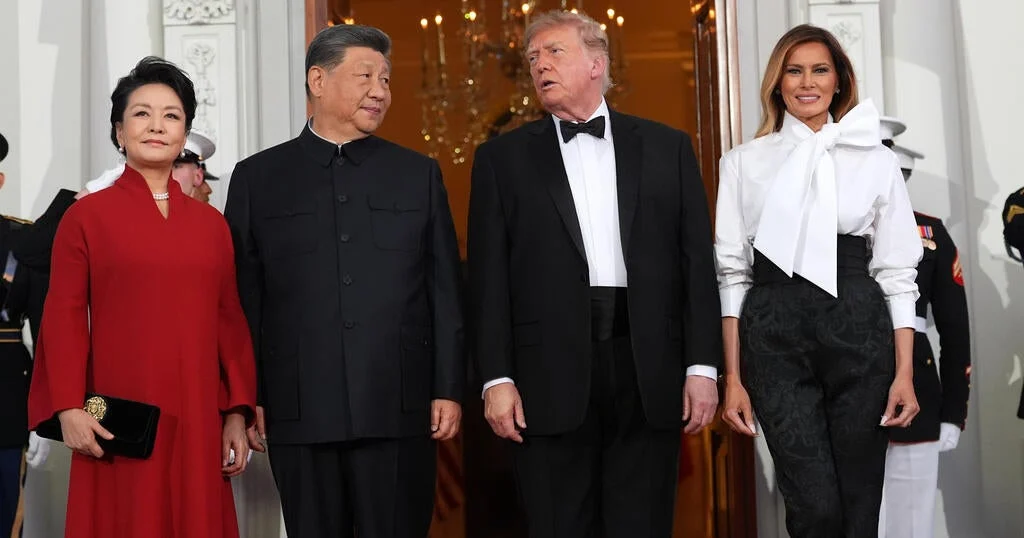
WASHINGTON — President Donald Trump rolled out a lavish red carpet at the White House for Chinese President Xi Jinping, marking the Chinese leader’s first formal state visit to the United States in over a decade. The high-profile diplomatic engagement brought together top-tier global leadership, billionaire technology executives, and cabinet officials for a multi-day summit framed by grand military displays, intricate cultural exchanges, and tense geopolitical undercurrents. While both leaders underscored the importance of maintaining open dialogue and managing strategic stability, analysts noted that the summit yielded few groundbreaking policy shifts, reflecting deep-seated systemic mistrust between the world’s two largest economic superpowers.
The visit comes at a delicate juncture in international relations, characterized by an ongoing arms race in artificial intelligence, a fragile two-month extension on bilateral tariff truces, and volatile flashpoints involving Taiwan, Iran, and Russia. Against this complex backdrop, the Washington summit served as both a stage for personal diplomacy and a high-stakes arena for economic and technological positioning.
A Grand Arrival and Day-One Itinerary
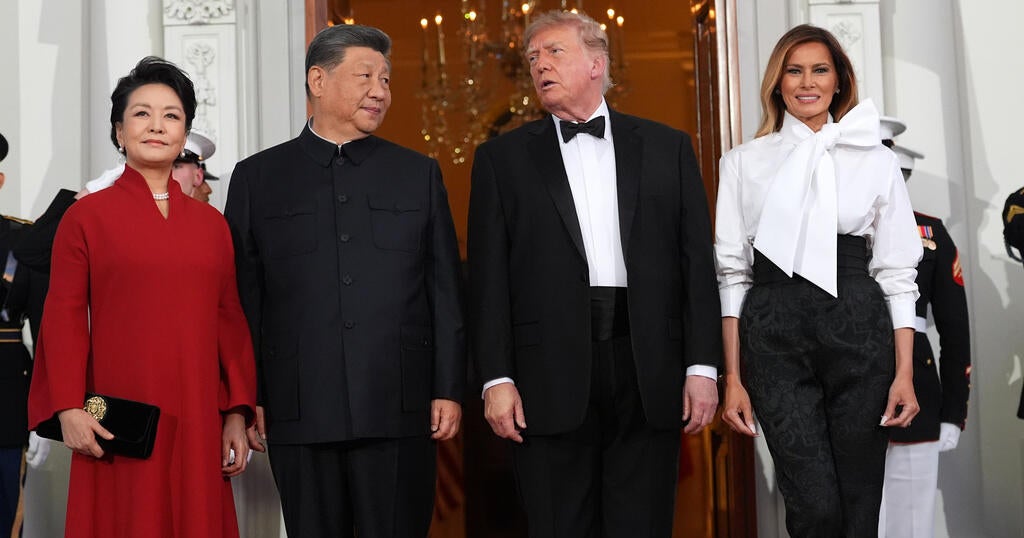
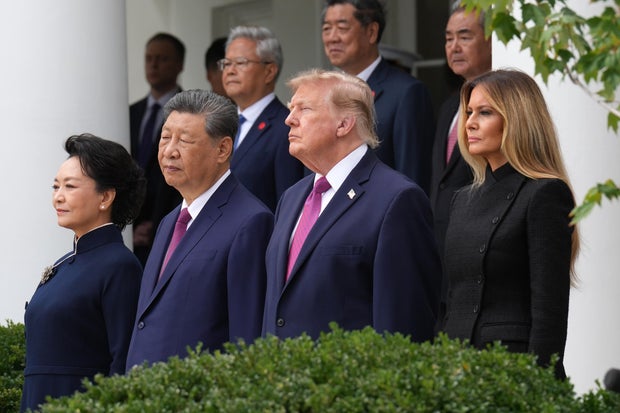
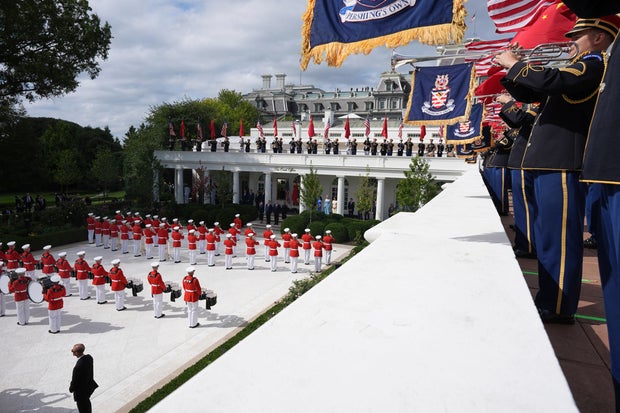
The diplomatic choreography began early Thursday morning at the White House South Lawn, where President Trump and First Lady Melania Trump hosted an elaborate arrival ceremony for President Xi and his wife, Peng Liyuan. The event featured a flag display, an Armed Forces Full Honor Cordon, the United States Army Herald Trumpets, and a formal military review in the Rose Garden accompanied by the United States Army Old Fife and Drum Corps. The morning pageantry concluded with a striking military flyover involving a B-2 Spirit and four F-22 Raptors.
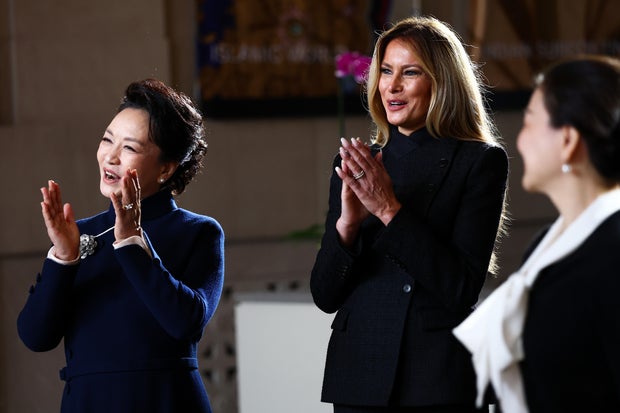
Following the outdoor ceremonies, the leaders transitioned indoors to the White House Grand Foyer, greeted by the strains of "Hail to the Chief." The delegations featured key administration figures, including Vice President JD Vance, Treasury Secretary Scott Bessent, White House Chief of Staff Susie Wiles, and Trade Representative Jamieson Greer. Simultaneously, First Lady Melania Trump and Madam Peng Liyuan participated in a cultural excursion, visiting the Smithsonian National Museum of Asian Art, where they were greeted by local choir students from the Hope Chinese School waving American and Chinese flags.
Later in the morning, Presidents Trump and Xi entered the Oval Office for bilateral discussions. Emerging from the talks, President Trump characterized the meeting as "great," praising Xi as an "expert on stone" before showing him the new White House helipad and inviting him inside Marine One.
High-Voltage Tech Titans and the White House State Dinner
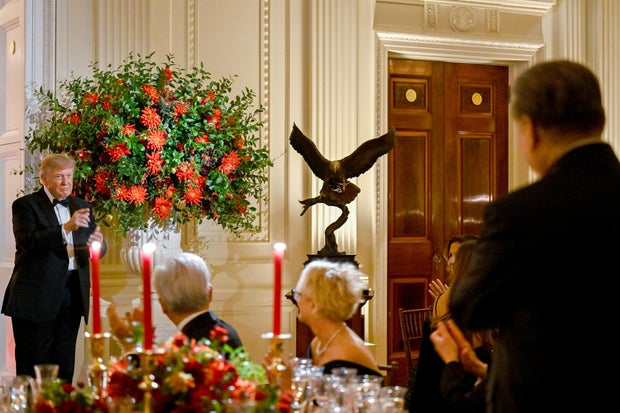
The pinnacle of the visit’s first day was a lavish state dinner hosted in the White House East Room. The guest list underscored the profound intersection of geopolitical statecraft and global technology, drawing the world’s wealthiest executives and most influential corporate leaders.
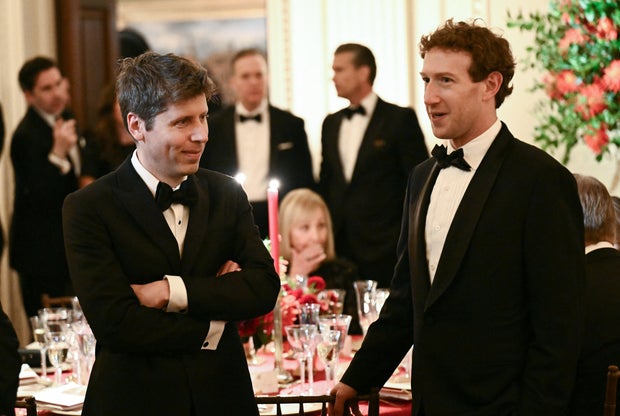
Among the high-profile attendees were billionaire Elon Musk, Nvidia CEO Jensen Huang, Meta CEO Mark Zuckerberg, Apple CEO Tim Cook, Google CEO Sundar Pichai, OpenAI CEO Sam Altman, Amazon founder Jeff Bezos, Qualcomm CEO Cristiano Amon, and JPMorgan Chase CEO Jamie Dimon. Three Supreme Court justices and multiple cabinet secretaries also filled the room, making it one of the most heavily attended and influential gatherings of its kind in recent years.
The first lady’s office released a meticulously curated menu designed to pay homage to historical diplomatic milestones. The meal began with a toast of Schramsberg "Blanc De Noir," a direct nod to the historic "Toast to Peace" shared by President Richard Richard Nixon and Premier Zhou Enlai in Beijing in 1972. The multi-course dinner featured yellow squash velouté, sesame-crusted sea bass, braised baby bok choy, and a dessert of vanilla crémeux and honey ice cream sourced directly from the White House beehives.
During his remarks at the dinner, President Trump offered guests a unique post-entertainment perk: a guided look at the active construction site of the controversial, massive new White House ballroom. Boasting that the venue would easily accommodate over a thousand people with standing room only, Trump framed the project as a central element of his presidential legacy. In a lighter moment at the end of the evening, Trump presented Xi with a large bronze bald eagle sculpture. Xi reciprocated with diplomatic goodwill of his own, announcing earlier in the day that China will soon dispatch two giant pandas to Atlanta’s zoo, continuing a longstanding tradition of "panda diplomacy."
Trade Truces and Economic Negotiations
Economic policy and trade stability dominated the substantive policy discussions leading up to and during the summit. Just one day before the visit, top U.S. and Chinese economic officials agreed to extend their precarious truce on tariffs for an additional two months, pushing the expiration date from November to January.
This ongoing economic arrangement traces its roots to an agreement struck in Busan, South Korea, which successfully de-escalated a tit-for-tat trade war that had driven bilateral tariffs past 100% in the spring of 2025. Treasury Secretary Scott Bessent, who held extensive meetings with Chinese Vice Premier He Lifeng ahead of the summit, noted that Beijing has floated the idea of a broader, more comprehensive trade pact.
While the U.S. remains open to either formalizing a permanent framework modeled after the Busan agreement or pursuing a larger deal, U.S. Trade Representative Jamieson Greer announced plans to establish a bilateral "Board of Trade." This new body is intended to protect a specific subset of low-tech consumer goods and agricultural products from being swept up in future trade disputes. Despite these administrative mechanisms, Chinese analysts cautioned that American economic pressure yields limited leverage against Beijing’s core objectives, noting that mutual economic interdependence necessitates careful, bound competition rather than outright decoupling.
Artificial Intelligence and Strategic Divergences
Artificial intelligence emerged as another critical focal point for the two administrations. Ahead of the meetings, President Trump took to social media to highlight "Super Intelligence" as a major agenda item, emphasizing that the United States must maintain its competitive edge in advanced computing.
While the U.S. has maintained strict trade restrictions blocking China from purchasing high-performance microchips essential for advanced AI models—though making selective exceptions for approved corporate customers like Nvidia—both sides have explored institutional guardrails. Over the weekend, Treasury Secretary Bessent revealed that Washington proposed a novel notification system designed to alert both nations to AI-related incidents affecting national security.
In his public remarks, President Xi echoed the need for responsible stewardship, calling for the development of AI to remain "always under human control." However, Xi emphasized that coexistence and healthy competition must govern the technological race, asserting that both nations stand to lose from unbridled conflict.
Geopolitical Friction Points: Taiwan, Iran, and Regional Security
Beneath the veneer of diplomatic pageantry and culinary hospitality, deep geopolitical divides persisted. Outside the White House gates, demonstrators gathered with megaphones to voice opposition to the visit, chanting slogans focused on human rights, the imprisonment of pro-democracy Hong Kong media tycoon Jimmy Lai, the preservation of Taiwan’s autonomy, and allegations regarding Beijing’s foreign policy alignments.
Inside the administration, the summit faced pushback from lawmakers on Capitol Hill. Republican Senator Roger Wicker, chairman of the Senate Armed Services Committee, openly criticized the lavish reception extended to Xi, citing ongoing grievances regarding Chinese Communist Party policies. Similarly, Democratic Senator Richard Blumenthal expressed sharp concern over reports linking Chinese satellite imagery to an Iranian strike that claimed the lives of U.S. soldiers in Jordan, urging the administration to draw a firm line against Beijing’s material support for regional adversaries.
Taiwan remained the most volatile flashpoint of the summit. Beijing continues to view the self-governing island as a renegade province destined for reunification, a stance Xi underscored during previous engagements by warning of potential clashes if the issue is mishandled. The United States maintains a longstanding policy of "strategic ambiguity," refusing to explicitly state whether it would intervene militarily in the event of a Chinese invasion while simultaneously supplying billions of dollars in defensive arms to Taipei.
Foreign policy analysts observing the summit noted that while the pageantry provided a platform for both leaders to project strength and domestic stability, structural disagreements over regional hegemony, technology supply chains, and international law ensured that the fundamental friction points between Washington and Beijing remain unresolved. As President Xi prepares to conclude his visit following a Friday morning tour of the National Archives, the long-term trajectory of U.S.-China relations will depend heavily on whether these temporary diplomatic truces can translate into durable, enforceable policy frameworks in the months ahead.