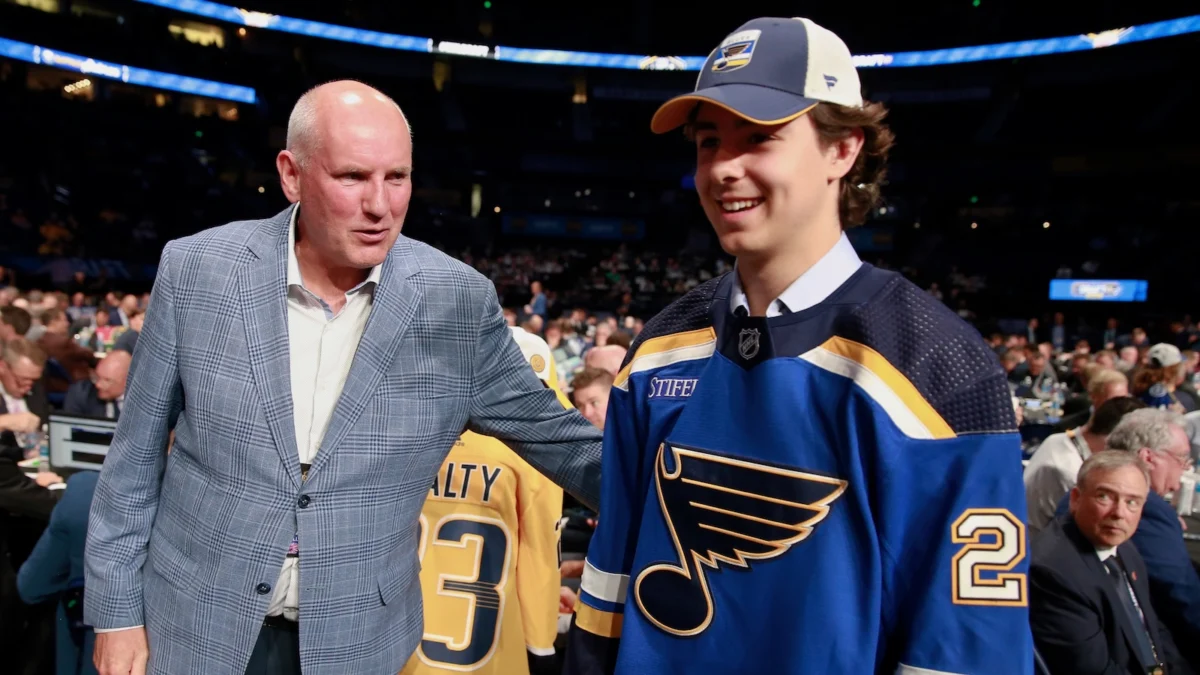
The harsh desert sun was already beating down on the field of Sun Angel Stadium in Tempe, Arizona, at roughly 7 a.m. on August 20, driving temperatures into the mid-80s. For 21-year-old Matthew Mayich, a standout hockey player and St. Louis Blues prospect who had recently transferred to Arizona State University, this was his very first official practice with his new collegiate team. It would also become a catastrophic turning point that has ignited a fierce national conversation regarding the adequacy of athlete safety protocols in an era of intensifying climate change.
What began as a routine introductory training session quickly deteriorated into a medical emergency. Guided by guest trainer and former Green Beret Tim Ziesel, Mayich and his teammates were put through a grueling regime of physical exertion. Over the course of what would later be contested as a 45-to-75-minute workout, the athletes performed push-ups, planks, flutter kicks, bear crawls, squats, sprints, and buddy-carries. As ambient temperatures approached 90 degrees Fahrenheit, the team was directed to execute a final, punishing exercise: a medicine ball run.
Chronology of a Crisis on the Field
According to official university timelines and harrowing accounts provided later by teammates, Mayich began visibly struggling as the final drill commenced. He stumbled, dropped the medicine ball, and fell to the ground. Despite attempting to rise, his body failed him, and he collapsed a second time.
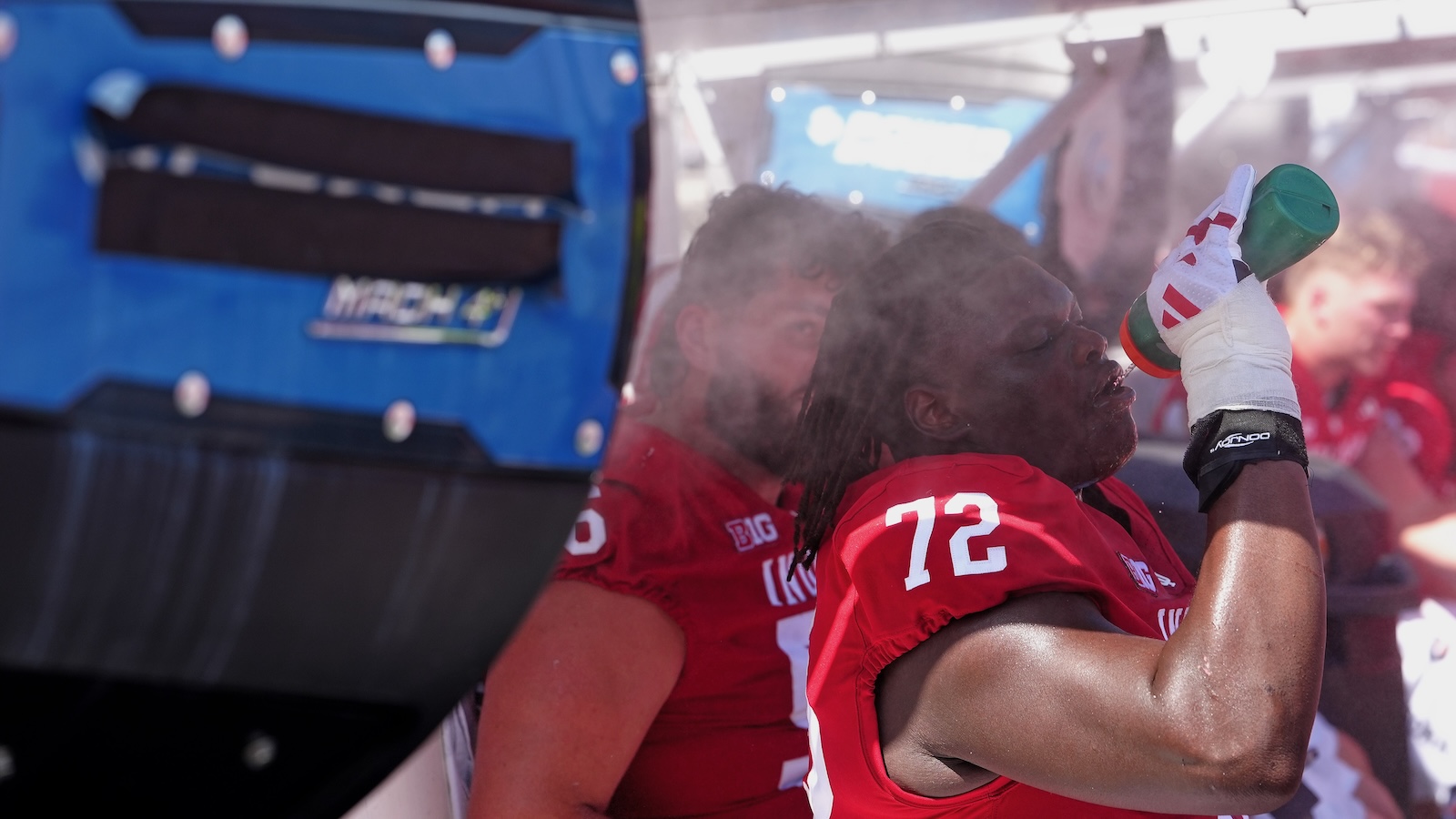
Athletic staff rushed to his side, applying iced towels and cool water before attempting to cool him further by spraying him with a garden hose. While he was initially responsive, his neurological and physical condition rapidly deteriorated. Recognizing the gravity of the situation, trainers placed a 911 call. Paramedics rushed Mayich to the hospital, where he was admitted in critical condition. Robert Carey, an attorney representing Mayich’s family, stated that the athlete suffered an exertional heat stroke. While medical diagnoses remain confidential and subject to independent corroboration, Carey has shared with journalists that the family’s hope for a meaningful recovery hovers near a miracle. Mayich has remained on life support at the Barrow Neurological Institute.
In the wake of the tragedy, Mayich’s parents, John and Christina, released a unified and poignant statement demanding transparency. "We want accountability for what happened to our son," they wrote. "We want the truth."
Allegations and Institutional Falllout
As public scrutiny intensified, institutional responses from Arizona State University and associated parties drew sharp criticism. University officials initially declined interview requests, while Larry Kazan, an attorney representing trainer Tim Ziesel, defended the session. In an email to media outlets, Kazan asserted that "the workout was not difficult as some media outlets have attempted to color it."
Meanwhile, ASU Head Coach Greg Powers insisted during a late September press conference that he remained the "right guy" to lead the program, though he largely avoided addressing the specific mechanics of the workout. The university’s stance shifted dramatically when ASU placed Powers on paid leave—more than a month after the incident and just two days after an anonymous letter signed by seven of Mayich’s teammates was sent to ASU President Michael M. Crow via legal representation.
The teammates’ letter fundamentally challenged the official narrative presented by the university. The players alleged that the training session lasted 75 minutes rather than 45, and directly claimed that mandatory safety guidelines were blatantly ignored. "The precautions required by ASU’s heat policy were not in place: no immersion tub, no ice chests, no on-field heat measurement, no scheduled breaks in shade," the letter stated. Furthermore, the players noted that the session continued despite multiple athletes showing visible signs of distress, including dropping to their knees, vomiting, and, in Mayich’s case, severe disorientation long before the final exercise.
In response to mounting pressure, ASU announced the appointment of former Arizona Supreme Court Chief Justice Scott Bales to lead an independent review evaluating the university’s planning, policies, and response protocols regarding outdoor athletic activities, with a completion deadline set for early December. While Mayich’s family welcomed the independent oversight through their attorney, they emphasized that the mandate must be broadened to thoroughly investigate direct culpability, adherence to NCAA rules, and institutional policy violations.
A Quarter-Century of Preventable Tragedies
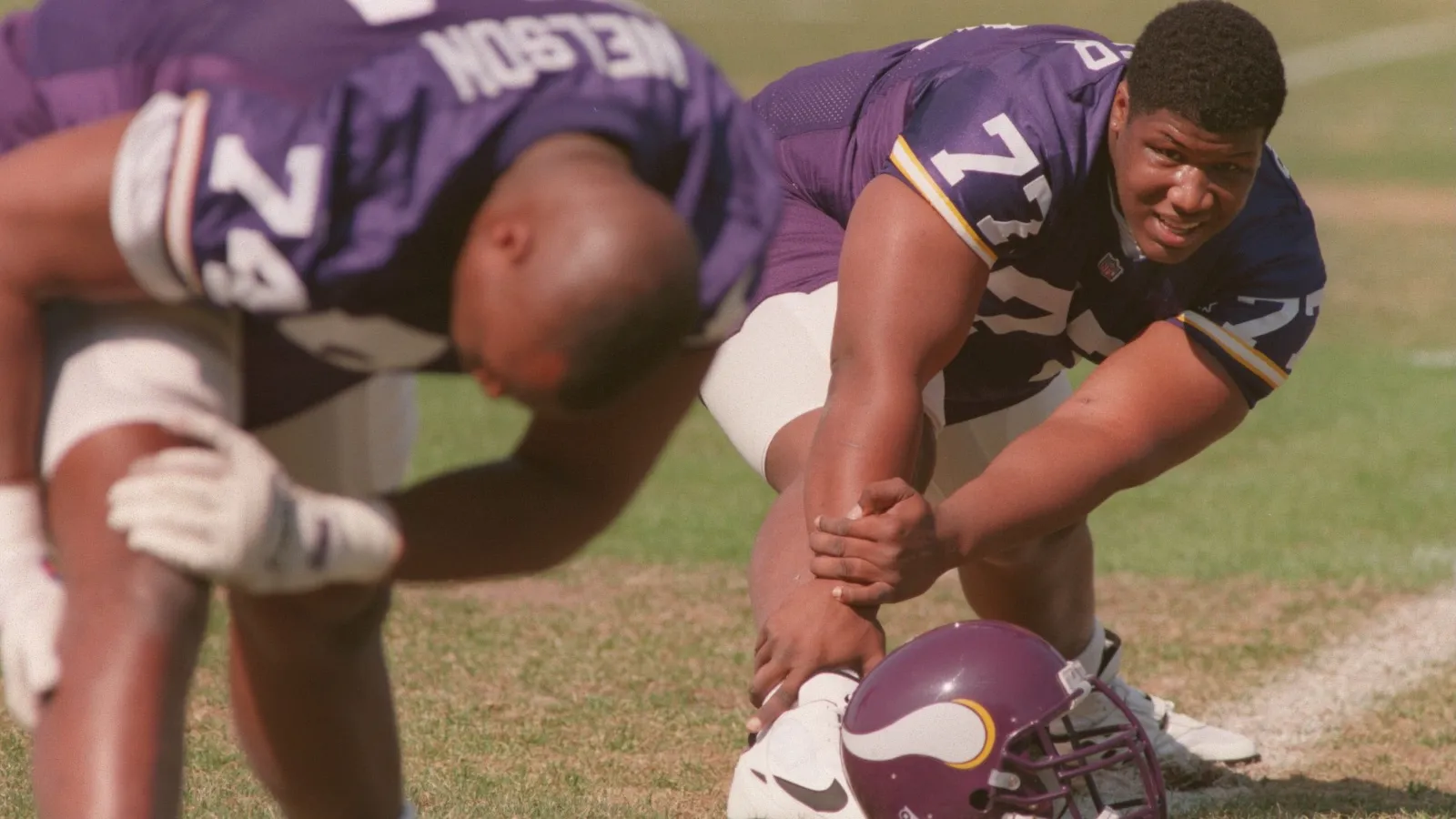
Mayich’s hospitalization arrives precisely 25 years to the month after another seminal sports tragedy: the death of Minnesota Vikings offensive lineman Korey Stringer, who succumbed to heat stroke during an NFL training camp in August 2001. Stringer’s death at age 27 served as a watershed moment that permanently altered how professional sports leagues approach hyperthermia and exertional heat illness.
Experts like Doug Casa, CEO of the Korey Stringer Institute at the University of Connecticut, acknowledge that immense progress has been made since Stringer’s passing. However, Mayich’s case underscores deep systemic vulnerabilities that persist across various levels of athletics. Exertional heat stroke remains one of the leading causes of preventable sports-related deaths, a risk amplified significantly by climate change. Recent scientific attributions from organizations like World Weather Attribution indicate that extreme temperature events in major sporting host cities have at least doubled over recent decades.
Compounding the environmental heat load is the widespread adoption of synthetic turf. Unlike natural grass fields, artificial turf absorbs and retains massive quantities of solar radiation. Surface temperatures on modern synthetic fields have been recorded reaching extreme heights—such as 157 degrees Fahrenheit during a recent NFL game in Nashville, where conditions were severe enough to melt players’ cleats and necessitate intravenous fluids for athletes who had not even participated in active snaps.
The Policy Patchwork and the "Wild West" of Youth Sports
While professional sports organizations and major collegiate programs generally possess the financial resources and medical personnel to implement sophisticated heat safety protocols, the regulatory landscape remains fragmented. At the professional level, the NFL mandates the use of cold-water immersion tubs, rectal thermometers for accurate core temperature readings, and wet bulb globe temperature (WBGT) measurements—the gold standard metric that accounts for ambient temperature, humidity, wind speed, and solar radiation.
However, enforcement and specificity vary widely. While the National Women’s Soccer League enforces strict WBGT thresholds that automatically trigger mandatory hydration breaks and game delays, other professional bodies grant individual franchises extensive flexibility.
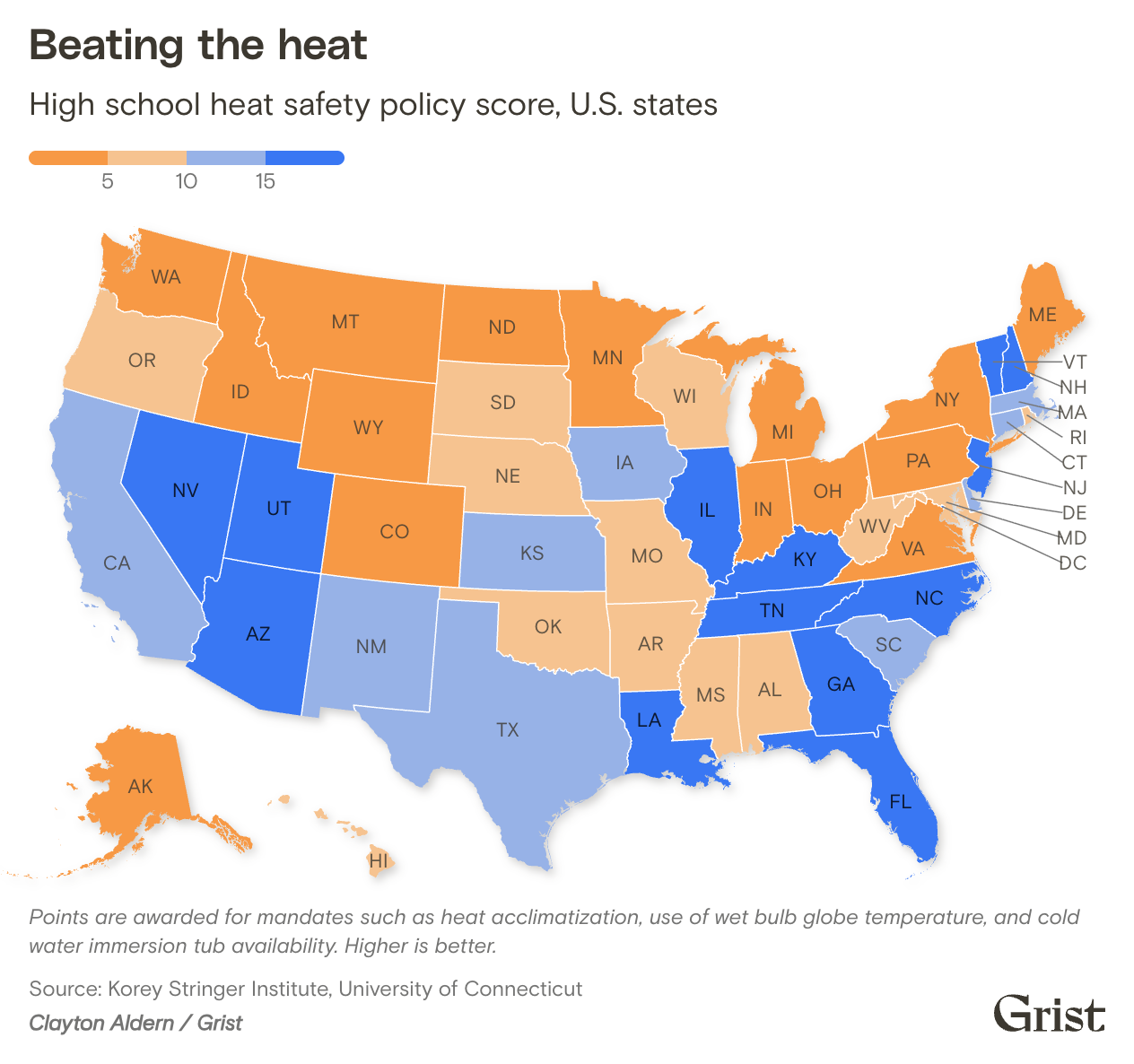
The most alarming policy gaps emerge outside the professional tier. There are no federal regulations governing heat safety in athletics, leaving high schools, youth leagues, and universities to navigate safety standards independently. According to evaluations conducted by the Korey Stringer Institute, state-level high school policies vary wildly. While states in the American Southeast—notably Georgia, which overhauled its athletic safety mandates following a series of high-school football heat fatalities—have climbed to national leadership in heat safety, many northern and mountain west states score poorly on mandatory acclimatization periods, WBGT monitoring, and cold-water immersion accessibility.
In youth sports, where participants are physiologically more vulnerable to rapid core temperature elevation, the regulatory environment has been described by pediatric experts as the "wild west." Dr. Michele LaBotz, a pediatrician and researcher, argues that heat safety must be prioritized with the same institutional rigor applied to concussions or lightning strikes.
The Science of Prevention and Treatment
From a physiological standpoint, medical experts emphasize that preventing heat illness requires adherence to structured acclimatization schedules, allowing athletes’ bodies 7 to 14 days to gradually adapt to high-temperature environments. Furthermore, when exertional heat stroke does occur, immediate and aggressive cooling is paramount.
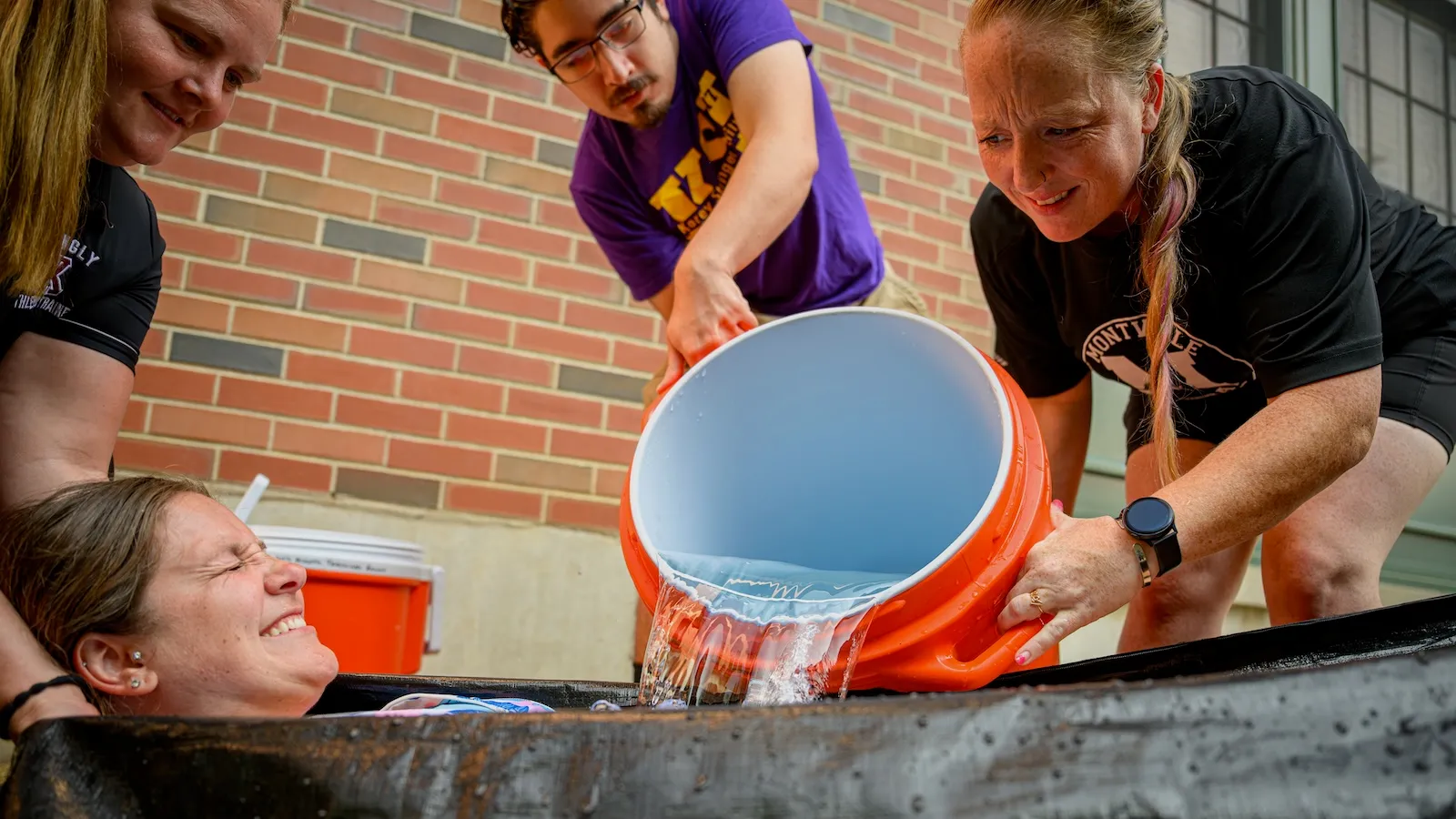
Decades of research led by Casa and other exercise physiologists demonstrate conclusively that cold-water immersion is the single most effective treatment for heat stroke, vastly outperforming air conditioning or traditional ice-pack applications. Immersion tubs can lower an overheating athlete’s core temperature to safe levels within minutes, effectively preventing multi-organ failure and death.
In Mayich’s case, the absence of an on-field immersion tub and the reliance on superficial cooling methods—such as garden hoses and cold towels—have become central focal points of the ongoing investigation.
Broader Implications for Collegiate Athletics
The unfolding situation at Arizona State University highlights a profound disconnect between institutional rhetoric and operational execution. Just days after Mayich was hospitalized while fighting for his life, ASU inaugurated its new Center for Heat Preparedness, with university administrators delivering keynote remarks emphasizing that "heat is a killer."
As independent investigators, athletic conferences, and legal representatives parse the events of August 20, the broader athletic community faces an unavoidable reckoning. Experts warn that as global temperatures continue to rise, institutions that fail to transition from voluntary guidelines to mandatory, rigorously enforced safety protocols will continue to gamble with the lives of young athletes. For Matthew Mayich and his family, the pursuit of accountability is not merely about finding fault within a single university program—it is a demand to ensure that no other athlete pays the ultimate price for institutional negligence under the desert sun.