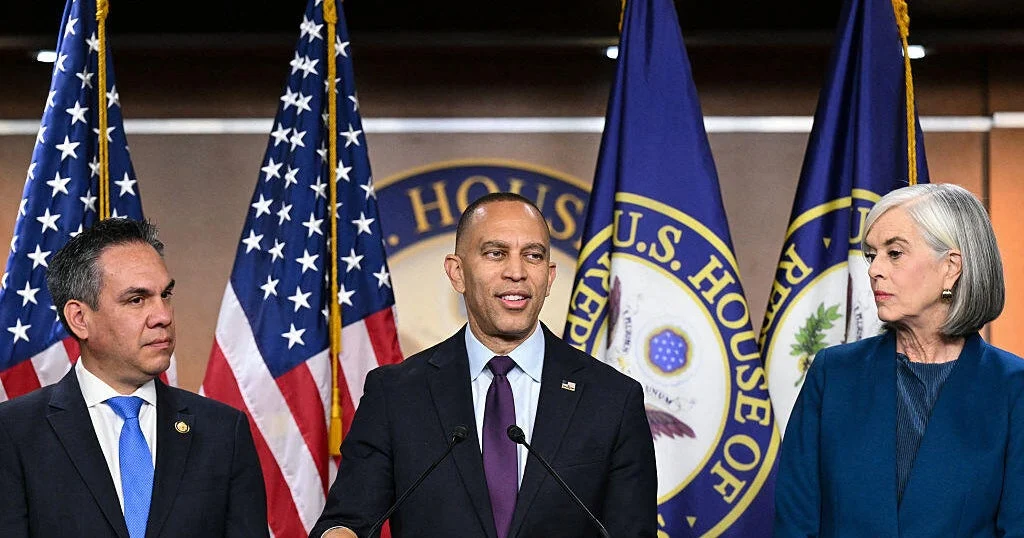
WASHINGTON — In a decisive display of internal party unity, Democratic Leader Hakeem Jeffries easily won his party’s nomination for the next speaker of the House on Wednesday, paving the official path for his historic election to the gavel when the Democratic Party assumes control of the lower chamber of the United States Congress in January.
The closed-door caucus vote, which took place at the U.S. Capitol, resulted in an overwhelming 251 to 11 backing for Jeffries. This robust mandate confirms his position at the helm of the House Democratic caucus as they transition from minority status to the majority following the 2026 midterm elections. Jeffries is now poised to break a monumental barrier in American political history, standing on the precipice of becoming the first Black House speaker in the nation’s history.
Alongside Jeffries’ nomination, House Democrats elected a slate of top leadership positions for the upcoming congressional term. In a notable milestone, the caucus voted to elevate Representative Katherine Clark of Massachusetts to the position of House Majority Leader, marking the first time a woman will hold that high-ranking legislative office. Additionally, the caucus filled other key leadership posts: Representative Pete Aguilar of California was re-elected as whip, Representative Joe Neguse of Colorado secured the role of assistant speaker, and Representative Ted Lieu of California won the vote to chair the Democratic caucus.
The Path to the Speakership and Structural Realities
While Wednesday’s vote was an internal party proceeding, the official election for speaker of the House will take place on the floor of the full chamber at the very beginning of the new congressional session in January. Under the rules of the House, the speaker must secure a majority of all members voting, typically requiring 218 votes.
With Democrats successfully flipping numerous seats during the 2026 midterm elections and securing a projected majority of more than 250 seats in the chamber, Jeffries’ trajectory to the 218-vote threshold is all but mathematically secured. Unlike the prolonged, multi-ballot floor fights that have plagued recent Republican majorities—most notably the historic 15-round contest that eventually led to Kevin McCarthy’s election in 2023—the Democratic majority enters the new legislative cycle projecting internal cohesion and structural stability.
Despite the overwhelmingly positive outcome for the leadership team, the closed-door nominations revealed minor friction points, particularly concerning the party’s progressive wing. Jeffries faced a token wave of dissent from seven newly elected progressive members who opted to vote against his nomination, choosing instead to signal a desire for broader policy concessions before the formal legislative session begins.
Progressive Dissent and Policy Demands
The seven incoming progressive lawmakers—representing a cross-section of diverse districts—released a collective statement immediately following the caucus meeting detailing their rationale for withholding their votes. The group included Darializa Avila Chevalier of New York, Adam Hamawy of New Jersey, Frederick Haynes of Texas, Melat Kiros of Colorado, Donavan McKinney of Michigan, Chris Rabb of Pennsylvania, and Claire Valdez of New York.
"Whether on Medicare for All, stopping ICE terror, getting money out of politics, or ending the genocide in Gaza, our constituents sent us to Congress with a mandate on these issues," the incoming members wrote. "We have worked to secure commitments from Leader Jeffries in good-faith conversations. While we have seen meaningful progress, there is still work to be done to ensure that the direction our party takes this coming Congress reflects what our constituents are demanding of leadership."
The protest highlights a classic dynamic within the modern Democratic coalition: the constant negotiation between a pragmatic, establishment leadership and a energized progressive wing pushing for systemic structural overhauls. However, with a substantial majority and no other high-ranking Democrat stepping forward to challenge Jeffries’ bid, the leverage held by individual freshman members remains inherently limited.
Addressing reporters at a post-election news conference at the Capitol, Jeffries minimized the impact of the dissent and emphasized the caucus’s capacity for ideological diversity.
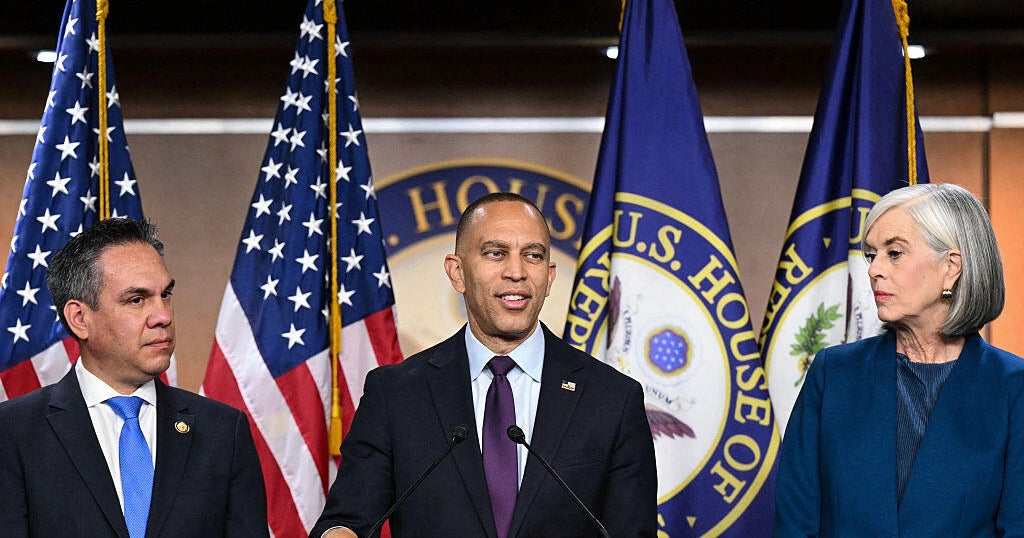
"The results of today’s election speak for themselves," Jeffries told reporters. "We’re going to work hard throughout every corner of the caucus to deliver for the American people."
Asked directly whether leadership would pivot toward the specific policy demands raised by the progressive holdouts, Jeffries underscored that the Democratic Party prides itself on representing a broad coalition of viewpoints.
"We have different perspectives, and we embrace that," Jeffries said. "We’re going to work together to find the highest common denominator in order to make life better for the American people."
A Deliberate Approach to Caucus Democracy
In a procedural move that underscored his desire for transparency within the caucus, Jeffries explicitly requested a tallied, recorded vote during the internal election rather than seeking a traditional vote by acclamation. According to colleagues, Jeffries argued that a recorded vote sets a transparent standard for accountability, mirroring the exact procedural approach Democrats utilized in 2018 when they similarly transitioned from the minority to the majority.
"Certainly seems to me it would be appropriate that we take exactly the same approach to give every single person the opportunity to weigh in one way or the other on who the caucus feels is best positioned based on track record, experience, vision," Jeffries explained ahead of the vote.
This insistence on a formal, recorded tally allowed every incoming and returning member to officially register their support, providing a clear baseline of the caucus’s internal alignment as they draft their legislative priorities for the upcoming 110th Congress.
Contrast with Senate Leadership Contests
The smooth and efficient execution of the House Democratic leadership elections stood in sharp contrast to the unfolding dynamics on the other side of the Capitol. In the U.S. Senate, long-serving Democratic Leader Chuck Schumer has faced a more contentious intra-party challenge from Senator Chris Van Hollen of Maryland, reflecting the distinct strategic debates occurring among Senate Democrats regarding the party’s future direction, messaging, and committee structures.
While Senator Schumer has publicly expressed absolute confidence that he commands the necessary votes to secure the position of Senate Majority Leader when internal elections are held early next month, the open challenge highlights a broader period of introspection and realignment across the national Democratic Party following the 2026 midterms.
Implications and Legislative Outlook for the New Majority
As Hakeem Jeffries prepares to take the gavel in January, his immediate mandate will be managing a diverse, newly expanded caucus while advancing a legislative agenda aimed at health care, economic relief, and governance reform.
Political analysts note that while a majority of over 250 seats grants Democrats comfortable breathing room on routine procedural votes, maintaining party discipline will remain a central challenge. The narrow margins traditionally seen in the closely divided Senate, combined with a potential Republican administration or remaining conservative institutional roadblocks, mean that House leadership will need to balance the ambitious demands of its progressive flank with the moderate pragmatism required to pass bipartisan measures.
For Jeffries, the overwhelming 251-11 vote serves as a clear indicator of confidence from his peers. As he stands on the threshold of history as the first African American speaker of the House, his early leadership decisions—particularly how he incorporates the concerns of incoming freshman reformers while maintaining party unity—will set the tone for the entire legislative agenda of the new congressional majority.