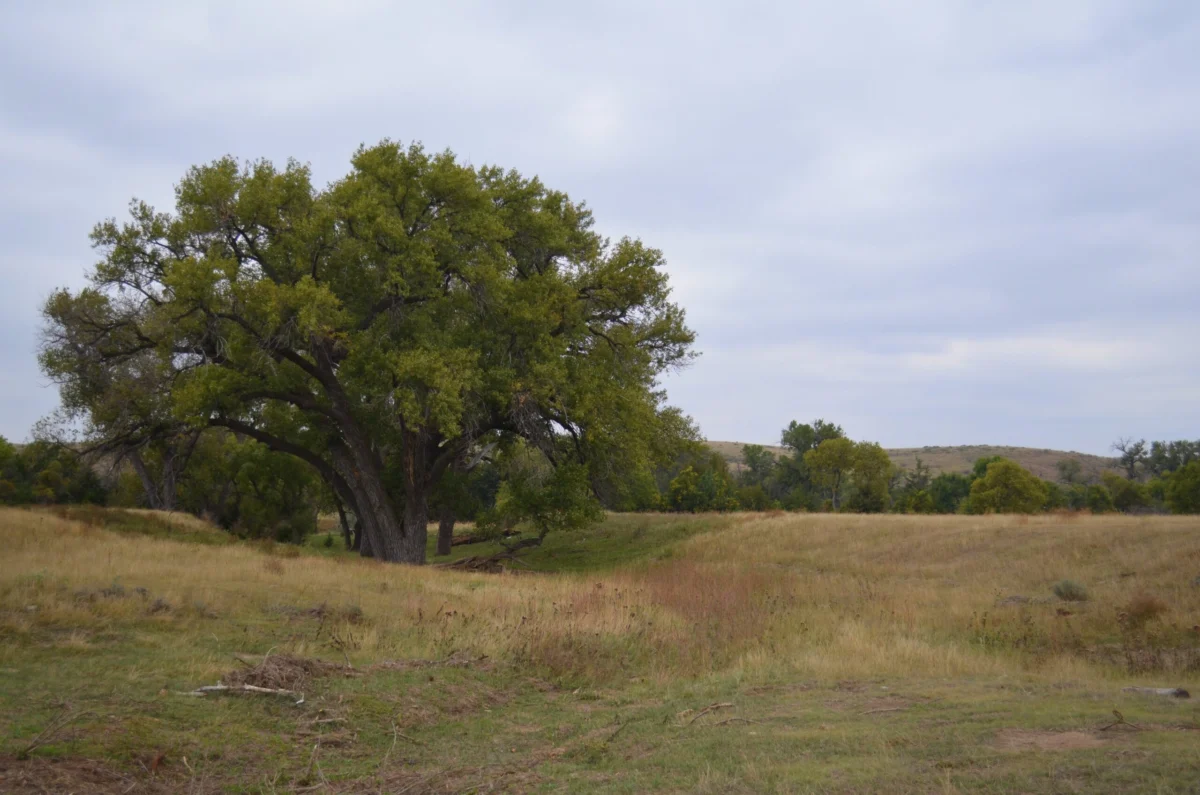
High above the undulating dunes of the Nebraska Sandhills, the vastness of the American prairie unfurls in a tapestry of emerald grasses, winding rivers, and bursts of wild sunflowers. Spanning roughly 19,500 square miles, this remote landscape represents one of the largest intact grassland ecosystems in North America. Yet, looking down from the cabin of a Bonanza A36 aircraft piloted by her father, rancher Shelly Kelly sees a quiet crisis unfolding. Amid the native grasses, neat rows of eastern red cedar trees—traditionally planted by homesteaders and ranchers as windbreaks to protect livestock—are bleeding outward. Younger saplings have broken free from these orderly lines, scattering across the open range like runners bolting from a pack.
This phenomenon, known to ecologists and agriculturalists as woody encroachment, is increasingly referred to as the "green glacier." It describes the relentless, slow-motion invasion of woody plant species into historic grassland biomes. Far from being a localized nuisance, this ecological shift threatens to upend the economic viability, biodiversity, and hydrological stability of the Great Plains. Across 10 states, the expansion of woody vegetation accounts for an estimated $4 billion in lost rangeland production, according to data from the Texas A&M AgriLife Extension. For ranchers and conservationists alike, halting the advance of the green glacier has become an existential race against time.
Historical Roots and Cultural Legacies
The rapid spread of trees across the High Plains is ironic, given the region’s historical identity. Before Nebraska became universally recognized as the "Cornhusker State," it proudly bore the official moniker of the "Tree Planter State." This identity traces its lineage back to federal legislation designed to encourage settlement and economic development in the mid-to-late 19th century.
The Homestead Act of 1862 required settlers to cultivate portions of their claimed land with crops or trees to secure official land titles. Decades later, the Kinkaid Act of 1904 provided free trees to homesteaders attempting to farm and ranch 640-acre tracts in the arid western portions of Nebraska. Generations of agriculturalists inherited a deeply ingrained cultural ethos that viewed tree planting as a virtuous, progressive act of stewardship. Settlers arriving from the heavily forested eastern United States naturally sought to recreate familiar landscapes by planting windbreaks around their farmsteads and calving grounds.
Over the decades, advances in horticulture yielded increasingly resilient cultivars of the eastern red cedar (Juniperus virginiana). While these trees successfully protected livestock from biting winter gales, they also unleashed a biological feedback loop. Mature cedars produce prolific amounts of seeds, which are dispersed by birds and mammals across a radius extending up to 200 feet. Seedlings typically grow at rates of one to two feet per year; once they reach a height of roughly five feet, they begin generating their own seed crops, exponentially accelerating the invasion.
Compounding the problem is the historical suppression of fire. For millennia, prairies relied on periodic, high-intensity fires—both naturally ignited by lightning and intentionally managed by Indigenous peoples—to clear out woody vegetation and stimulate the deep root systems of native grasses. As European settlement expanded, federal and state agencies instituted aggressive fire-suppression policies to protect private property and timber resources. Without fire to keep them in check, woody plants established thick, fire-resistant bark, rendering them nearly impervious to minor blazes and setting the stage for widespread encroachment.
The Ecological and Economic Toll
The consequences of woody encroachment extend far beyond aesthetics, triggering profound disruptions across ecological and economic spheres. The most immediate impact is borne by cattle ranchers, who face diminishing forage availability as trees crowd out the nutritious grasses essential for livestock production. According to agricultural economists, the steady loss of open range compromises the productivity of the multi-billion-dollar livestock industry spanning the Great Plains.
Ecologically, the transformation of grasslands into woodlands spells disaster for regional biodiversity. Grassland-dependent species—including migratory birds, pollinators, and small mammals that rely on open horizons and specific vegetative structures—are experiencing sharp population declines. Furthermore, encroaching trees place an unsustainable burden on regional water supplies. Eastern red cedars are notoriously thirsty plants, intercepting rainfall before it can reach the soil and drawing heavily from shallow aquifers through expansive root systems. In a region where water is already scarce, the proliferation of invasive trees exacerbates drought stress and diminishes streamflows.
Paradoxically, the expansion of woody plants also challenges conventional wisdom regarding carbon sequestration. While mainstream climate policy has long championed tree planting as a primary mechanism for capturing atmospheric carbon, recent scientific consensus highlights the vulnerabilities of forested carbon sinks in the face of climate change and wildfires.
Forests store the majority of their carbon aboveground in woody trunks, branches, and leaves. When a wildfire sweeps through an overgrown woodland, massive quantities of carbon are instantaneously released into the atmosphere, followed by prolonged emissions from charred debris. In contrast, healthy grasslands store upwards of 80 percent of their carbon safely underground within extensive, resilient root systems that can plunge twenty feet into the earth. Following a natural or prescribed fire, grasslands rebound rapidly, sequestering carbon anew without the catastrophic losses associated with timber destruction.
Furthermore, rising atmospheric carbon dioxide levels and warming temperatures appear to give woody plants a physiological advantage over native grasses. Trees utilize a different photosynthetic pathway (often C3 metabolism) that thrives in carbon-rich, warm, and dry environments, accelerating their growth rates and making containment increasingly difficult.

Mitigating the Invasion: Fire, Clearing, and Cultural Shifts
Recognizing that a hands-off, non-interventionist management strategy will only accelerate the collapse of the ecosystem, conservationists and agricultural leaders are deploying a multifaceted defense. Central to these efforts is the restoration of a "culture of fire" across regions where it has been systematically discouraged.
In the Flint Hills of Kansas and the Osage Hills of Oklahoma—which together harbor roughly two-thirds of the nation’s remaining tallgrass prairie—prescribed burning remains a cornerstone of land management. This tradition dates back more than a century; historical records, such as 1915 cattle-lease contracts, mandated regular burning to ensure that livestock could graze on the tender, nutrient-dense grasses that sprout in the wake of a fire. Brian Obermeyer, the Great Plains grasslands strategy director for The Nature Conservancy, emphasizes that while prescribed fire is culturally ingrained in the southern tallgrass region, introducing the practice to areas like the Nebraska Sandhills requires patience, education, and community engagement.
Simultaneously, grassroots organizations and state agencies are ramping up physical removal efforts. Shelly Kelly serves as the executive director of the Sandhills Task Force, a 33-year-old nonprofit dedicated to promoting sustainable land management and conservation in the ranching sector. Through targeted grants, fundraising campaigns, and partnerships with state and federal agencies, the task force helps private landowners cover up to 75 percent of the costs associated with cedar removal. These financial incentives have helped catalyze a burgeoning local industry centered on mechanical land clearing and restoration.
However, policy contradictions remain a hurdle. While state and federal conservation programs allocate funds to subsidize tree removal, agricultural departments in various jurisdictions continue to support tree-planting initiatives for windbreaks, inadvertently fueling the very problem field conservationists are fighting to reverse. Experts argue that agricultural extension services must pivot toward promoting non-invasive alternatives for wind protection, such as native shrubs or mechanical barriers.
Collaboration with Indigenous nations is also reshaping modern prairie management. Organizations like The Nature Conservancy have partnered with the InterTribal Buffalo Council and the Tanka Fund to reintroduce free-ranging bison herds to ancestral lands, including the Joseph H. Williams Tallgrass Prairie Preserve in Oklahoma. Unlike cattle, which primarily graze on grasses, bison and other native herbivores interact with the ecosystem in ways that promote structural diversity and help suppress invasive species.
A Race to Save What Remains
North America’s grassland prairies—encompassing shortgrass, mixed-grass, and tallgrass ecosystems—historically stretched from the foothills of the Rockies to the edges of the deciduous forests of Kentucky, and from Texas up into the Dakotas. Today, mere fragments survive. Tallgrass prairies have suffered the most catastrophic losses, with only an estimated 4 percent of their historic range remaining intact, making them arguably the most altered ecosystem on the continent.
Despite these grim statistics, conservationists maintain that the High Plains offer a unique window of opportunity. Unlike dense forests where clearing invasive species is logistically prohibitive, eastern red cedars in sandy soils are relatively easy to manage if caught early—cutting them down to the root is often sufficient to prevent regeneration.
Chris Helzer, Nebraska director of science and stewardship for The Nature Conservancy, stresses that successful conservation is not about eliminating all trees, but rather about maintaining ecological boundaries. "To some extent, you can have a prairie that has trees," Helzer noted. "But there’s a line—when you cross that line, you have a woodland with clearings, not a grassland with trees."
As ranchers, scientists, and policymakers work to bridge the gap between traditional agricultural practices and modern ecological science, the fate of the Great Plains hangs in the balance. For advocates like Shelly Kelly, the mission is clear: to protect the ecological integrity, economic vitality, and sweeping horizons of the landscape before the green glacier permanently rewrites the geography of the American heartland.