The transformation of the romance genre from a whispered literary indulgence into a dominant cultural and commercial powerhouse was on full display on a crisp Saturday morning in Brooklyn. As Lorde’s anthemic track Love Club echoed over the audio system at Industry City, approximately 300 readers, writers, and fantasy-romance aficionados gathered for a landmark event celebrating the contemporary literature landscape. This was the setting for the inaugural RomCon, a specialized convention produced by contemporary romance publisher 831 Stories in partnership with dating platform Hinge.
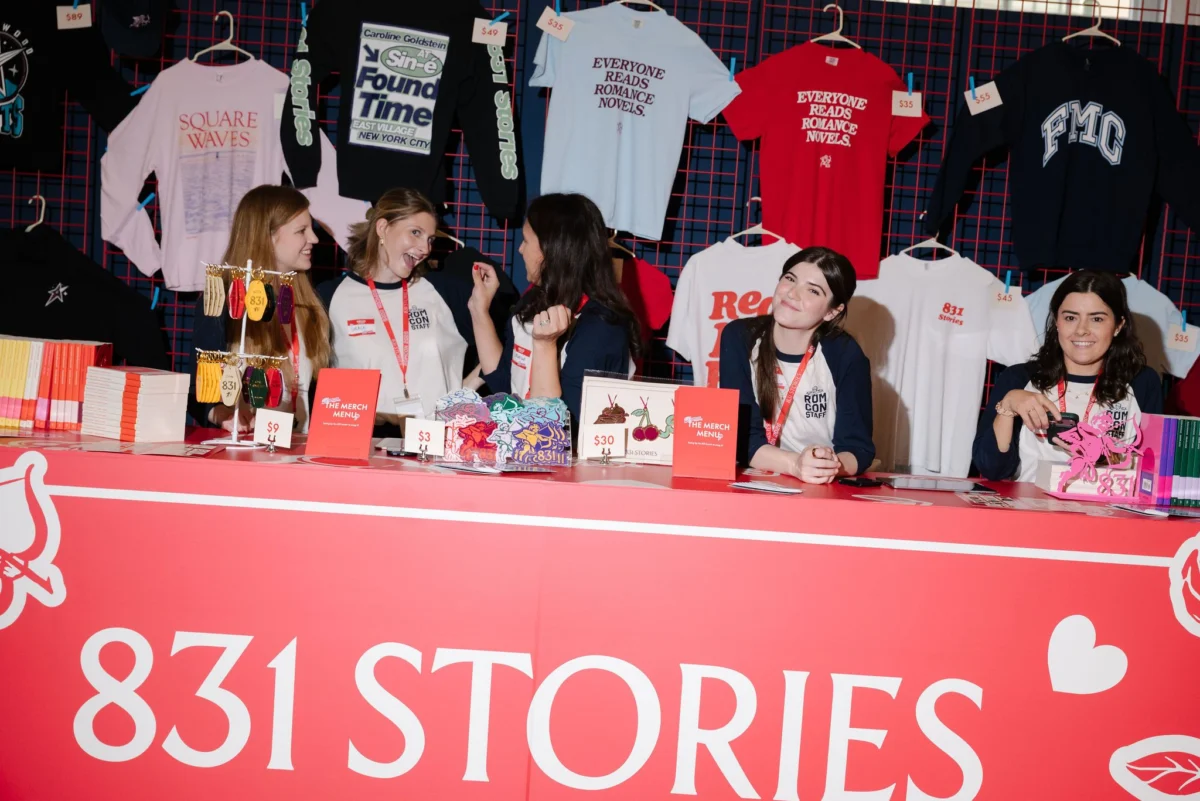
Founded in 2024 by entrepreneurs Claire Mazur and Erica Cerulo, 831 Stories designed the convention to bridge the gap between digital-age reading communities and physical literary spaces. The day-long itinerary featured a robust series of panel discussions addressing complex themes, ranging from the practical application of romance in real-world scenarios to academic panels dissecting pleasure, power, and the socio-political implications of romance literature. Surrounding the main stages were carefully curated vendors, including the prominent romantasy bookstore The Ripped Bodice, Etsy creator Amanda Krovic producing custom heart-shaped engraved bookmarks, a specialized Warby Parker mobile book cart, and an official 831 pop-up shop offering exclusive merchandise and titles.
The Literary Pioneers of Modern Romance
At the heart of the convention were the authors—literary figures and genre experts whose works frequently top global bestseller lists. The roster of speakers included notable names such as Nikki Payne, Tressie McMillan Cottom, Casey McQuiston, Brooke Averick, and Sarah MacLean. These writers addressed the evolving perception of romance literature, contrasting today’s vibrant, communal environment with the isolated reading experiences of past decades.
Sarah MacLean, a bestselling historical romance author preparing to release her 22nd book in February, reflected on the historical stigma associated with the genre. Recalling her early years as a reader of romance fantasy, MacLean described an era when enthusiasts operated akin to a clandestine society marked by quiet embarrassment. According to MacLean, the digital revolution and social media platforms played a pivotal role in liberating readers, allowing them to connect, organize, and shed the anxieties once tied to public consumption of women-centric literature.

During her panel on romance tropes—shared alongside fellow authors Brooke Averick, Page Powars, and Nicola Yoon—MacLean discussed her specific creative framework. She noted a preference for protagonists who begin their journeys in sharp opposition rather than opting for traditional "friends-to-lovers" trajectories, while also citing foundational genre influences such as Susan Elizabeth Phillips’s Nobody’s Baby But Mine.
A Blend of Academic Discourse and Community Engagement
The panels at RomCon deliberately avoided the traditional, passive conference format, functioning instead as a hybrid of a rigorous academic seminar, an exclusive club meeting, and a high-velocity digital group chat. Tyler McCall, writer and host of the 831 podcast Radio 831, moderated several discussions, noting the sophisticated level of literary analysis present among the attendees.
Between scheduled programming, participants utilized designated networking and relaxation spaces, featuring plush white furnishings designed to foster organic interaction. Claire Mazur emphasized that the operational philosophy behind the event prioritized attendee comfort and emotional well-being over chaotic convention exhaustion. By intentional design, the environment was constructed to counteract the prevailing cultural anxieties surrounding modern dating and relationships. Mazur explained that the collaboration with Hinge stemmed from a shared objective: to remind audiences that dating and romance can remain optimistic, joyful, and meaningful pursuits despite contemporary disillusionment fostered by dating app fatigue.
The Economic and Cultural Engines Driving the Rom-Com Boom
The timing of RomCon coincides with an unprecedented economic boom within the publishing industry, largely driven by the romance and romantasy sectors. Over the past five years, romance has consistently outpaced other fiction categories in year-over-year sales growth, propelled heavily by digital communities on TikTok (BookTok), Instagram, and specialized reading platforms like Goodreads and StoryGraph.

Publishers and technology platforms have quickly adapted to this shifting consumer behavior. Claire Mazur pointed to the integration of audiobooks into platforms like Spotify, which added audio services to its ecosystem in 2022, as a primary catalyst for bringing unprecedented numbers of new readers into the market. Audio formats have successfully lowered the barrier to entry, allowing busy consumers to consume expansive fantasy worlds and contemporary narratives during commutes, workouts, and daily routines.
Furthermore, corporate brand partnerships—exemplified by Hinge’s presenting sponsorship of RomCon—demonstrate how mainstream commercial entities are recognizing the high-engagement potential of romance fandoms. Rather than viewing romance as a niche demographic, major brands are investing directly in the cultural infrastructure built by readers and writers.
Broader Industry Implications and Future Outlook
The success of 831 Stories’ first annual RomCon highlights a structural shift in how literary genres build community and monetize intellectual property. Historically, traditional publishing relied heavily on standardized book tours and traditional media reviews to market titles. Today, direct-to-consumer experiential events, podcasting, and localized activations are proving essential for fostering brand loyalty among hyper-engaged readerships.
Industry analysts suggest that conventions like RomCon serve a dual purpose: they validate the cultural legitimacy of a historically marginalized genre while creating localized economies for independent creators, specialty bookstores, and merchandise vendors. As publishers continue to experiment with immersive brand extensions, the boundary between reader and community member continues to dissolve.
Organizers at 831 Stories view the Brooklyn event as a foundational blueprint for future scaling. By prioritizing an environment where intellectual engagement intersects with emotional affirmation, the convention successfully demonstrated that the contemporary romance community is not merely a passive consumer base, but a dynamic, self-sustaining cultural movement. If events like RomCon are any indication, the future of the romance genre will be characterized by greater visibility, institutional recognition, and spaces designed to celebrate the enduring cultural significance of love and storytelling.