The vast stretches of primary rainforest flanking the BR-319 highway in the Brazilian Amazon have increasingly fallen under the de facto control of criminal organizations, according to a comprehensive study released by researchers at the University of São Paulo (USP). The findings suggest that illegal logging, gold mining, land grabbing, and large-scale cattle ranching are no longer merely peripheral issues but are now the primary economic drivers along this critical transit artery. As the Brazilian government pushes forward with infrastructure improvements to the highway, experts warn that the project may inadvertently serve as a catalyst for irreversible socio-environmental collapse in one of the world’s most vital carbon sinks.
A Legacy of Infrastructure and Neglect
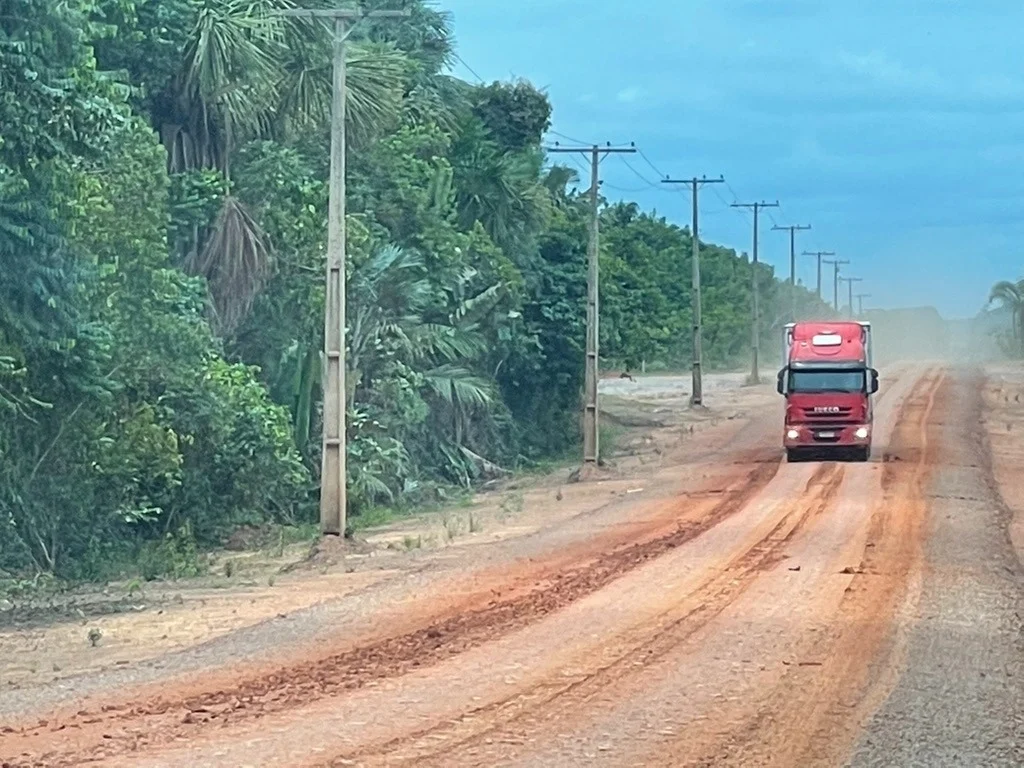
The BR-319 highway, a 885-kilometer road connecting the Amazonian capital of Manaus to Porto Velho in the state of Rondônia, stands as a symbol of both regional ambition and environmental degradation. Conceived during Brazil’s military dictatorship in the 1970s, the highway was intended to integrate the remote Amazon interior into the national economy. However, the road proved difficult to maintain in the challenging tropical climate and largely fell into disrepair by the late 1990s.
For decades, the central 339-kilometer stretch of the road remained largely impassable during the rainy season, acting as a natural barrier that limited large-scale encroachment. This isolation preserved significant swaths of biodiversity. The situation began to shift dramatically after 2015, when the administration of then-President Dilma Rousseff authorized the first phase of significant maintenance work. This initial move signaled a change in the status quo, prompting speculative land grabbing that intensified significantly under the presidency of Jair Bolsonaro, whose rhetoric encouraged infrastructure expansion and economic development within the Amazon basin.
Chronology of Escalation
The trajectory of the BR-319 region has been marked by a series of pivotal policy shifts and environmental milestones:
- 1970s: Construction of the BR-319 begins under the military regime, intended to link the northern and southern Amazon.
- 1998: The highway is effectively abandoned due to high maintenance costs and environmental challenges, leading to the deterioration of the road surface.
- 2015: President Dilma Rousseff authorizes the first major maintenance efforts on the road, inadvertently sparking a rush of land speculation.
- 2019–2022: The Bolsonaro administration prioritizes the paving of the highway, fueling widespread deforestation and the conversion of forest land into pasture.
- April 2026: President Luiz Inácio Lula da Silva’s government advances plans to accelerate work on the highway, utilizing a controversial legal mechanism to circumvent traditional environmental licensing requirements.
- September 2026: In a bid to mitigate potential damage, the federal government establishes four new sustainable development reserves, covering approximately 668,000 hectares.
The Criminal Nexus and Land Conversion
The recent research, led by Lucas Ferrante of the Center for Research on Biodiversity and Climate Change (CBioClima), paints a grim picture of the current governance vacuum. According to Ferrante, the lack of robust state surveillance has transformed the BR-319 corridor into a "fertile ground" for organized crime.
The study establishes a clear correlation between the illicit activities of drug trafficking and environmental crimes. In the remote reaches of the Amazon, the same clandestine networks that facilitate the movement of narcotics are increasingly utilizing illegal logging and gold mining as secondary revenue streams. Furthermore, the researchers highlight that cattle ranching acts as a primary vehicle for money laundering. By establishing "farms" on grabbed public land, criminal syndicates can legitimize illicit capital through the sale of cattle, effectively integrating criminal proceeds into the formal economy.
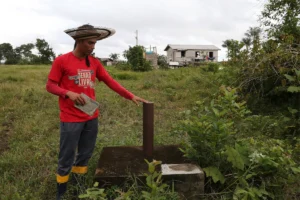
"This region is becoming a hub of large farms controlled by organized crime," Ferrante noted in an interview. During the study’s five field expeditions, researchers documented the presence of illegal secondary roads—an informal network estimated to be six times the length of the highway itself. These secondary arteries allow for the rapid transport of timber and mineral resources away from state monitoring points. The danger posed by these groups is not only environmental but also human; during a field survey, researchers discovered the body of a farm worker, a testament to the surging violence linked to land disputes in the territory.

Data-Driven Concerns: The Tipping Point
The scientific community has expressed profound concern regarding the "tipping point" theory—the idea that if deforestation in the Amazon exceeds a certain threshold, the forest will lose its ability to generate its own rainfall, triggering a catastrophic transition into a savanna-like ecosystem.
Ferrante’s analysis suggests that the current mitigation strategies proposed by the federal government are insufficient. While the administration has pledged to install three checkpoints and 170 wildlife crossings to minimize ecological fragmentation, the study argues that these measures fail to address the scale of the infiltration. Ferrante estimates that a minimum of 28 permanent checkpoints would be required to effectively monitor the existing secondary road network. Without this, the highway will likely facilitate the rapid expansion of land clearing, pushing the region closer to irreversible degradation.
Official Response and Mitigation Efforts
The administration of President Lula da Silva faces a complex balancing act: fulfilling a long-standing political promise to improve infrastructure for the isolated populations of Manaus, while simultaneously upholding international commitments to protect the Amazon. The creation of the four new sustainable development reserves in September 2026 represents the government’s attempt to reconcile these competing interests. By formalizing land use in these areas, the state aims to create a buffer zone against further encroachment.
Government proponents argue that the paving of the BR-319 is essential for economic development and for reducing the cost of living for residents in Manaus, who currently rely heavily on expensive air and river transport for goods. Proponents of the road also emphasize that a formal, paved highway allows for greater state presence, theoretically making it easier for environmental agencies like IBAMA (the Brazilian Institute of Environment and Renewable Natural Resources) to monitor the region compared to the current chaotic, uncontrolled environment.
Implications for the Future
The debate over the BR-319 serves as a microcosm of the broader struggle for the future of the Amazon. The study from USP underscores that infrastructure projects in the rainforest are rarely neutral. In the absence of a strong, consistent state presence, the infrastructure often serves as an invitation for organized criminal entities to expand their territorial control.
The academic consensus, as articulated in the study, is clear: the current governance conditions are inadequate for the risks posed by such a massive project. The authors of the study have urged the Brazilian government to reassess, and potentially revoke, the licenses currently facilitating the road improvements. They argue that under the status quo, the BR-319 will consolidate a "high-risk corridor" for environmental crime and territorial appropriation.
As Brazil moves into the next phase of the project, the eyes of the international community remain fixed on the region. The outcome of the BR-319 expansion will likely serve as a litmus test for the effectiveness of the current administration’s environmental policies. If the government fails to address the underlying criminal networks operating along the route, the highway may become not just a connector of cities, but a conduit for the irreversible destruction of the world’s largest tropical forest.
The economic, social, and environmental costs of such a outcome would be profound, impacting not only the biodiversity of the Amazon basin but also the global climate stability that depends on the integrity of this vast, complex ecosystem. The evidence presented by Ferrante and his colleagues serves as a stark warning that infrastructure without robust, uncompromising enforcement is a recipe for ecological tragedy.