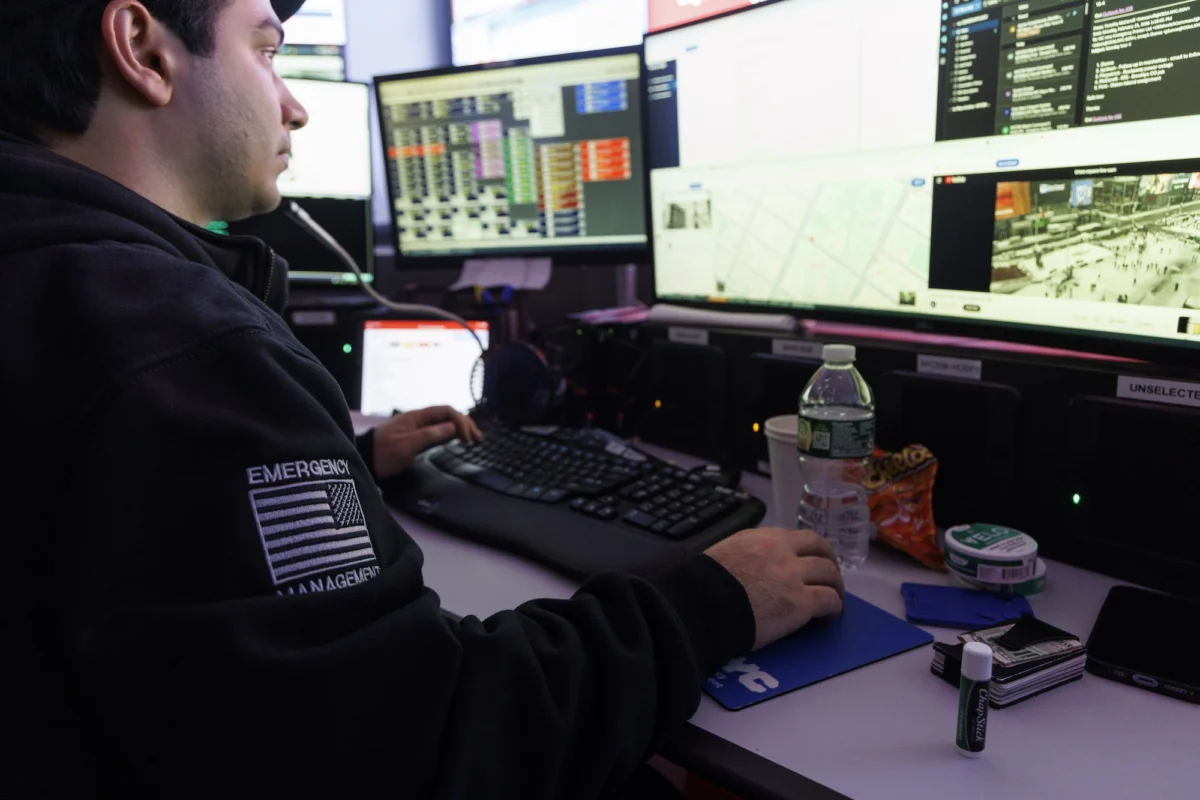
Emergency response departments across the United States are increasingly turning to generative artificial intelligence to draft public safety alerts, hazard notifications, and crisis communications. While understaffed and resource-constrained agencies view AI as a vital tool to bridge communication gaps during extreme weather events, experts warn that unvetted technology carries severe risks. From hallucinated meteorological graphics to dangerously vague evacuation notices, the premature adoption of AI in disaster management highlights a precarious intersection between technological innovation and public safety.
The Reality of Human Error in Crisis Communication
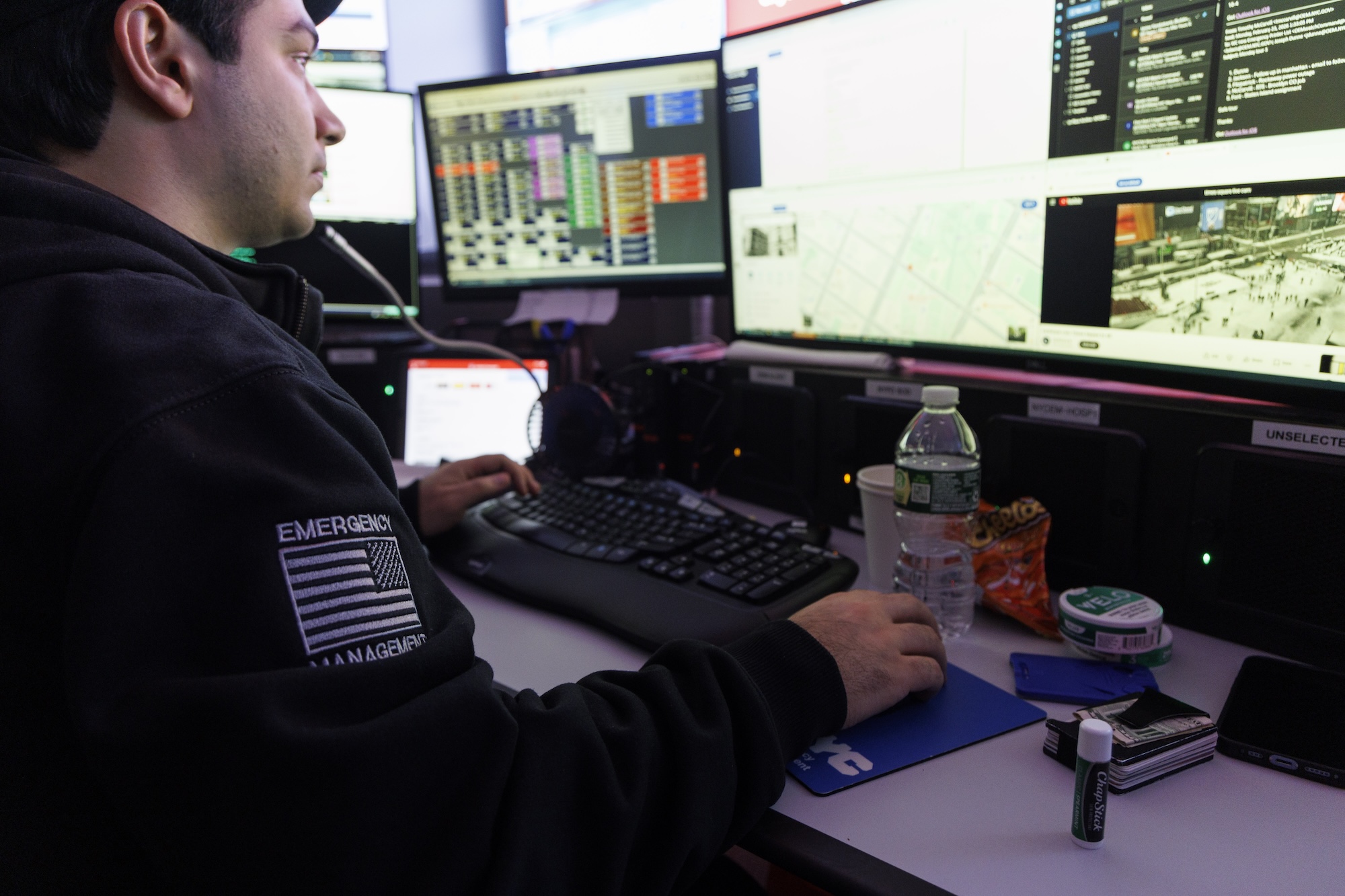
At the local level, state and municipal emergency managers form the essential first line of defense during environmental crises. Unlike the Federal Emergency Management Agency (FEMA), which coordinates federal support post-disaster, local officials must make split-second decisions and communicate immediate threats to their constituents.
Historically, however, human communication during disasters has frequently broken down under pressure. Emergency personnel are prone to writing in dense bureaucratic jargon, omitting critical geographic details under the assumption that locals are already informed, or including extraneous information that dilutes the urgency of a warning.
The consequences of flawed messaging can be catastrophic. In 2016, adjacent California counties issued conflicting "voluntary" and "mandatory" evacuation orders for the same active wildfire, causing widespread confusion. Similarly, Australian officials utilized the phrase "Watch and Act" during the 2019 bushfires—a term later criticized by a national royal commission for inducing significant public ambiguity.
The most lethal failure of crisis communication occurred following the 2017 Thomas Fire in Montecito, California. Weeks after the blaze, heavy rainfall triggered a massive, deadly mudslide. Because county officials utilized ambiguous language reminiscent of wildfire evacuation warnings—asking residents in voluntary zones to "stay alert"—many citizens chose to remain in their homes, suffering from "warning fatigue" after enduring multiple evacuations in a single month. The resulting debris flow claimed 23 lives and injured more than 160 individuals.
The Technological Temptation: Why Agencies Turn to Chatbots
FEMA provides rigorous training sessions on disaster communication protocols, but under high-stress conditions—surrounded by ringing phones, blaring radios, and cascading emergency data—officials often struggle to recall classroom best practices.
This is where large language models (LLMs) present an appealing alternative. Proponents argue that an AI chatbot can ingest decades of disaster response research, analyze hundreds of historical emergency alerts in seconds, and rewrite human-drafted text to maximize clarity and urgency.
In smaller municipalities, the temptation is especially strong. Rob Dale, director of the emergency management department in Ingham County, Michigan, notes that for departments lacking dedicated communications staff, an AI tool operating under tight supervision can consistently outperform an exhausted, overwhelmed official trying to construct a warning from scratch.
Specialized startups have rushed to fill this market demand. Companies like EM1 have trained proprietary language models using empirical disaster communication research, such as the frameworks developed by disaster sociologist Jeannette Sutton at the University of Albany. In internal testing, these specialized models have frequently matched or exceeded human performance benchmarks in turning vague, error-ridden alerts into precise, actionable directives.
To illustrate this capability, consider an actual alert issued by a New Mexico county to warn residents of rising floodwaters along the San Juan River:
Original Alert:
"Breeched banks. The water is rising. EVACUATE NOW. McGee Park open for people and pets, RV."
Processed through an emergency-trained AI model, the revised alert transforms into a comprehensive directive:
Revised Alert:
"San Juan County: Floodwater is rising near [location]. People in [evacuation area]: LEAVE NOW for higher ground. Do not walk or drive through floodwater. McGee Park is open for people and pets. Check [official update source] for updates."
The AI successfully corrected spelling errors, inserted vital geographic placeholders, clarified specific evacuation boundaries, and provided actionable safety instructions while directing citizens to official information channels.
Unofficial Adoption and the Danger of "Hallucinations"
Despite the clear benefits demonstrated in controlled environments, official adoption of generative AI for live extreme weather alerting remains low. Contractual restrictions and agency policies generally forbid employees from deploying unvetted consumer chatbots for public safety operations.
However, disaster research instructors note that unofficial usage is already pervasive. Sarah Miller, a professor of emergency management at Pierce College in Washington and an instructor at the National Disaster Preparedness Training Center, observes that emergency managers frequently bring high-quality drafts to training seminars, privately admitting they generated the text in seconds using consumer platforms like ChatGPT or Gemini.
This shadow adoption creates significant vulnerabilities. Earlier this month, following Hurricane Isaias’s Gulf Coast landfall, an Alabama county emergency manager attempted to emphasize local wind risks by publishing a graphic depicting a meteorological "sting jet." The graphic, generated entirely via an AI chatbot, was scientifically inaccurate.
Laura Myers, director of the University of Alabama’s Center for Advanced Public Safety, emphasized the inherent peril of such actions. "That county emergency manager was trying to get his stakeholders to focus on the risk… and so he had asked AI to help him," Myers said. "It did what he wanted it to do, but it was not meteorologically accurate."
Furthermore, automated systems risk exacerbating warning fatigue. If chatbots allow agencies to generate and broadcast alerts at an unprecedented volume, the constant stream of notifications may desensitize the public, ultimately driving down compliance when actual life-threatening conditions arise.
The Crisis of Public Trust
Beyond technical inaccuracies, the deployment of artificial intelligence touches upon a fundamental currency of emergency management: public trust.
Disaster officials frequently reiterate that trust is their most valuable asset. When communities face life-or-death scenarios, they must perceive the messaging authority as authentic, empathetic, and reliable. Critics argue that AI-generated text and graphics inherently lack the human touch required to foster that connection.
Skepticism toward automated government systems is already growing. In Syracuse, New York, a public employees’ union filed a lawsuit against the local government after it deployed an AI service to handle non-emergency 911 calls. As public awareness of generative AI increases, citizens who discover that evacuation orders or safety warnings were authored by a machine rather than a public safety professional may react with distrust or outright defiance.
Ginny Katz, founder of HazAdapt, a consultancy advising disaster officials on technology integration, underscores this psychological barrier. "We trust things that we perceive are authentic and care about us," Katz noted. "AI-generated content does not feel authentic."
Implications and the Path Forward
As climate change accelerates the frequency and intensity of extreme weather events, emergency management departments will continue to grapple with severe resource constraints. The appeal of artificial intelligence as a force multiplier in disaster response is undeniable.
However, consensus among researchers and practitioners suggests that AI should currently serve strictly as a back-end drafting and brainstorming tool rather than an autonomous decision-maker. While a seasoned emergency manager can safely utilize a chatbot to streamline communications under expert oversight, an inexperienced official relying on unverified outputs during a crisis invites catastrophe.
Ultimately, the future of AI in emergency management will depend on institutional guardrails, transparent governance, and the maintenance of a rigorous human-in-the-loop requirement. Until public trust in automated systems can be firmly established, the ultimate responsibility for saving lives must remain unambiguously in human hands.