In the sun-drenched Jordan Rift Valley of northern Israel, a single fossilized molar from an extinct giant elephant has provided paleontologists and archaeologists with an unprecedented window into the Pleistocene epoch. Nearly 700,000 years ago, the region now known as the Hula Valley was not the semi-arid landscape often associated with Middle Eastern antiquity, but a lush, sprawling mosaic of wetlands, dense woodlands, and flowing river systems. This environment served as a critical ecological refuge, supporting the massive Palaeoloxodon antiquus—the straight-tusked elephant—and providing the essential resources necessary for early human populations to survive as they traversed the Levantine Corridor, a vital land bridge connecting Africa and Eurasia.
The discovery, recently published in the journal Quaternary Science Reviews, centers on excavations at the Gesher Benot Ya’aqov (GBY) site. Led by Hannah Farrell, a PhD candidate at the University of Haifa, the study utilized advanced geochemical and biological analytical techniques to treat a single elephant molar not merely as a specimen of natural history, but as a biological archive of the Middle Pleistocene.
The Chronology of the Site and Discovery
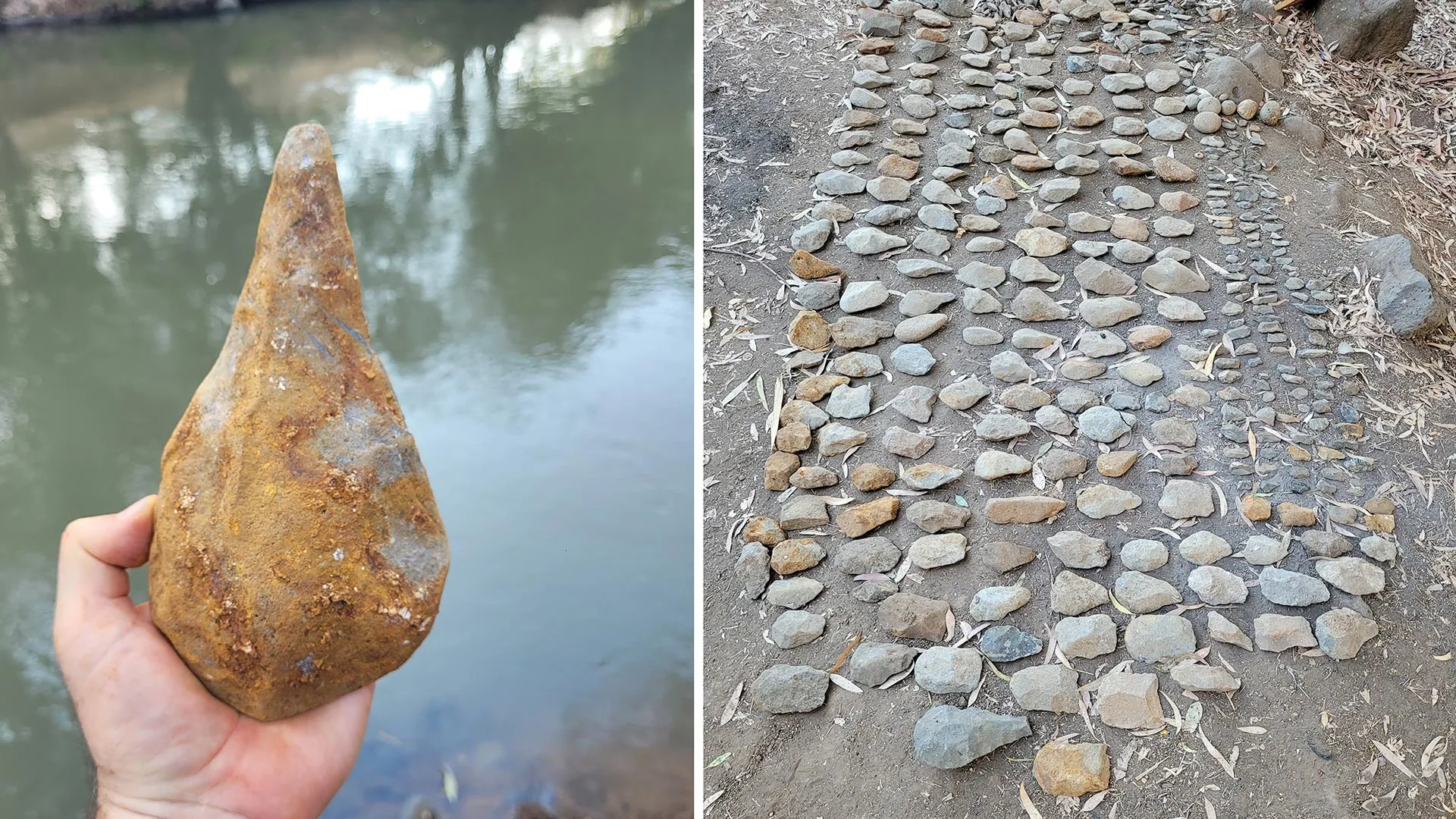
The Gesher Benot Ya’aqov site has long been recognized as a premier location for understanding the Acheulian tradition, a period marked by the proliferation of sophisticated stone tool technologies. Archaeologists have previously unearthed significant quantities of basalt handaxes and cleavers at the site, providing evidence of early hominin ingenuity. These artifacts represent some of the earliest complex stone-tool industries in the archaeological record, suggesting that the human groups inhabiting this area were highly adapted to their environment.
The research team, which included specialists from the University of Haifa and Tel Aviv University, focused on materials unearthed during excavations led by Professor Gonen Sharon of Tel-Hai University. The specific fossils analyzed—a large molar and several tusk fragments—belong to Palaeoloxodon antiquus, a species that stood up to four meters tall at the shoulder and played a dominant role in the Pleistocene ecosystem. By combining CT scanning, isotope geochemistry, and micro-wear analysis, the researchers were able to synthesize a comprehensive portrait of the animal’s life and the environment it inhabited.
Methodology: Reading the Chemical Record
To reconstruct an ecosystem from 700,000 years ago, the team employed a multi-disciplinary approach. Traditional paleontological study often focuses on the morphology of the bone; however, this study leveraged the chemical properties locked within the tooth’s enamel.
CT imaging allowed the team to peer inside the fossil to assess its internal growth patterns without compromising the specimen. Simultaneously, isotope geochemistry—the measurement of stable isotopes of carbon and oxygen—provided data regarding the animal’s water sources and dietary habits. These measurements indicated that the elephant had access to a highly dependable water supply, consistent with a landscape characterized by permanent rivers and shallow wetlands.
Furthermore, pollen analysis conducted by researchers from Tel Aviv University provided the botanical framework for the study. By identifying preserved pollen grains in the sediments surrounding the fossil, the team confirmed the presence of a diverse floral landscape. The data points to a rich mix of reeds, sedges, willow, and tamarisk, all of which thrive in wetland environments. This vegetation density suggests that the Hula Valley acted as a "green lung" in the region, offering a consistent food source for megafauna and, by extension, the humans who hunted or scavenged them.
An Ecological Crossroads: The Levantine Corridor
The geographic placement of the Gesher Benot Ya’aqov site is central to the significance of these findings. The Jordan Rift Valley is a segment of the Levantine Corridor, a geographic channel that served as the primary dispersal route for hominins moving out of Africa and into Eurasia. For hundreds of thousands of years, this corridor functioned as a conveyor belt for biodiversity.
The environmental stability identified by Farrell and her colleagues is a critical finding. While many parts of the globe experienced volatile climatic shifts during the Pleistocene, the Hula Valley appears to have remained a stable ecological refuge. This persistence of resources—water, timber, and animal protein—likely explains why human populations were able to sustain themselves in the region for extended periods. Access to such high-quality habitats was not merely a luxury; it was a fundamental requirement for the demographic expansion of early humans into northern latitudes.
Implications for Human Evolution and Migration
The interaction between early humans and the Palaeoloxodon antiquus is a hallmark of the Acheulian period. The proximity of stone tools to these megafauna remains suggests a complex relationship, likely involving the exploitation of these animals for meat, hide, and perhaps even ivory. The ability to process such massive carcasses required coordinated social behavior and the mastery of specialized tool-making, both of which are hallmarks of the evolving human intellect.
Professor Gonen Sharon emphasizes that the importance of this study lies in the broader narrative of survival. "Understanding how humans and animals responded to environmental change hundreds of thousands of years ago helps us better understand the forces that shaped our species," Sharon noted. By mapping the environment that supported these groups, researchers are moving closer to answering the question of how early humans navigated the immense logistical challenges of trans-continental migration.
Analysis of Findings and Future Research
The integration of archaeological data with paleoenvironmental reconstruction provides a template for future research in the region. The study demonstrates that human evolution cannot be viewed in a vacuum; it is inextricably linked to the availability of natural resources and the ecological carrying capacity of specific habitats.
The findings also challenge previous assumptions about the "hostility" of prehistoric landscapes. Rather than viewing the path out of Africa as a gauntlet of survival, the data suggests that corridors like the Hula Valley were highly productive, offering a sequence of stable, resource-rich habitats that facilitated the slow but steady movement of hominin populations.
This research project, involving a coalition of experts including Cheryl A. Makarewicz and Nimrod Marom, highlights the necessity of interdisciplinary cooperation. By combining expertise in zooarchaeology, isotope geochemistry, and palynology, the team has successfully demonstrated that even a single tooth can hold the key to reconstructing a lost world.
Conclusion
As the scientific community continues to explore the Gesher Benot Ya’aqov site, the discovery of the Palaeoloxodon antiquus molar serves as a reminder of the intricate connections between ancient environments and human development. The Hula Valley, nearly 700,000 years ago, was a cradle of survival that supported the giants of the animal kingdom and the precursors to modern humanity. Through the lens of this single fossil, we gain a clearer understanding of the ecological resilience required to inhabit our planet, providing a profound perspective on the enduring story of human movement and adaptation. Future excavations will likely continue to expand upon this picture, further illuminating the complex relationship between early humans and the vibrant, changing landscapes they once called home.