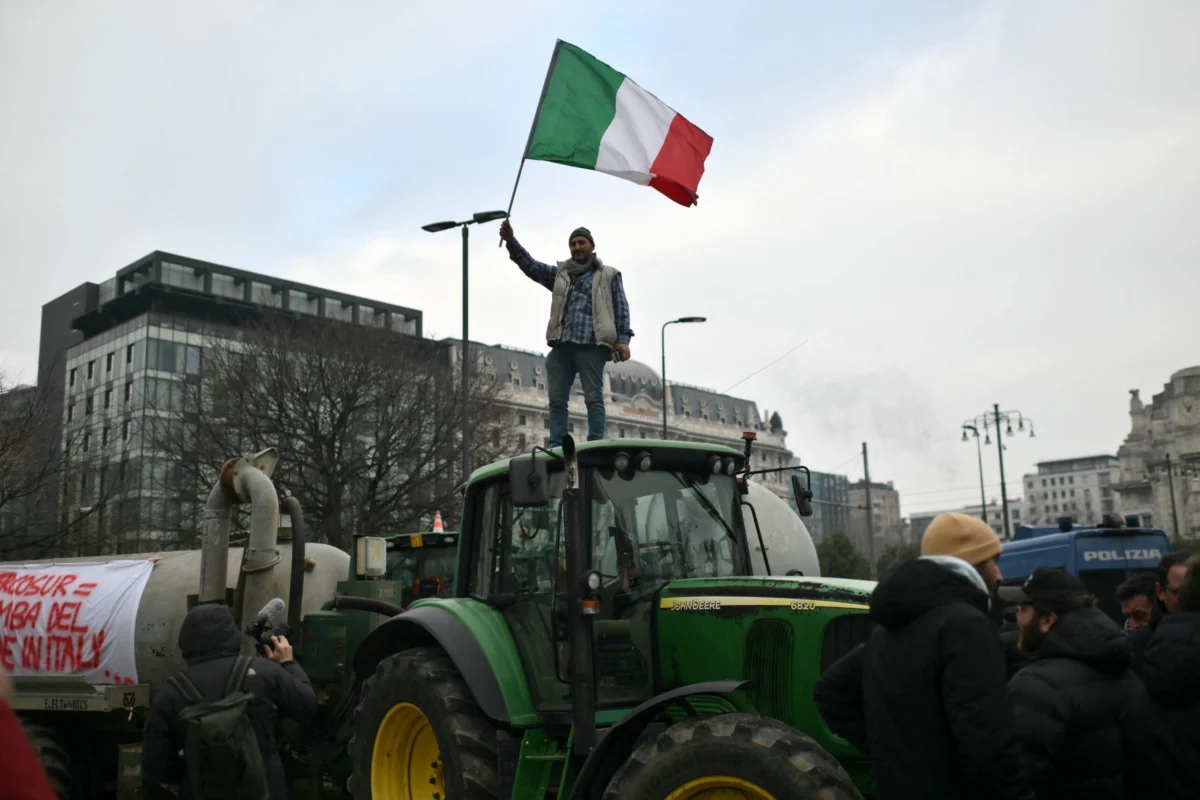
The Italian peninsula is currently experiencing a period of profound social and economic volatility, marked by widespread demonstrations and a mounting crisis within the nation’s critical supply chains. On Friday, October 30, 2026, the country witnessed coordinated protests in over 50 cities, organized by the grassroots union USB. In Turin, the unrest reached a symbolic peak when local farmers dumped two bins of manure directly in front of the city hall. This act of defiance served as a visceral prelude to a massive march against the rising cost of living and the state’s continued investment in military spending. Speakers at the rally framed the protest as a direct opposition to the industrial shift toward arms manufacturing, labeling the city’s pivot toward defense contracts as a betrayal of its traditional economic and social priorities.
This wave of unrest is not an isolated incident but rather the culmination of months of simmering frustration among farmers, truckers, and laborers. The convergence of soaring inflation, energy instability, and the expiration of vital tax subsidies has created a "perfect storm" that has effectively brought large swaths of the Italian economy to a standstill.
A Chronology of Escalation: From Roadblocks to National Stoppage
The current state of emergency has its roots in mid-October, when the cost of diesel—already strained by geopolitical tensions following the outbreak of the Iran war—pushed logistics providers to the brink. For the transport sector, which serves as the lifeblood of Italy’s food production, the math no longer added up.
In the second week of October, independent truckers and agricultural unions initiated a series of strategic blockades across Sicily and the southern mainland. These protestors targeted fuel depots, major highway intersections, and logistical hubs, effectively cutting off the flow of goods from the agricultural south to the industrial north. By October 20, the impact was no longer confined to the logistics industry; the nation’s famed food supply chain began to fracture.
Major pasta producers, including Rummo and La Molisana, were forced to suspend operations as their manufacturing plants in Campania and Molise ran out of raw materials. The blockage of grain transport from the wheat-rich fields of Puglia created a bottleneck that silenced mills and paralyzed production lines. Simultaneously, the dairy industry faced an existential threat. Because the production of authentic Buffalo Mozzarella requires milk to be processed within 60 hours of collection, the inability of trucks to reach dairies resulted in the catastrophic waste of approximately one million liters of milk in a single day. Industry experts estimated losses of roughly €3 million within a 24-hour window, forcing a re-evaluation of the vulnerability of Italy’s high-value, short-shelf-life agricultural exports.
The Macroeconomic Pressure Cooker
The desperation on the streets is underscored by bleak data released by Istat on the morning of the October 30 demonstrations. Italian inflation hit 5.4% in October, marking the highest level observed in over three years. This figure is significantly higher than the 3.7% reported in the United States and dwarfs the 0.9% inflation rate recently recorded in China.
The primary driver of this inflationary surge is energy. The cost of fuel has risen to such extremes that it has altered the social fabric of the country, with reports from Naples documenting residents returning to horse-drawn transport for daily commutes. Nationally, energy prices have surged by 31.4% compared to the previous year. This rapid increase has eroded the purchasing power of the average Italian household, which has already been dealing with a long-term divergence between wage growth and the cost of essential goods. Data spanning from 2000 to 2025 indicates that while consumer prices have risen by roughly 63%, the cost of food has skyrocketed by approximately 90%, creating a persistent "affordability gap" that has now reached a breaking point.
Official Responses and the North-South Divide
The political response to the crisis has been characterized by a combination of fiscal intervention and institutional hardening. On October 22, the administration of Prime Minister Giorgia Meloni announced a €175.2 million aid package intended to provide tax credits for truckers, farmers, and fishermen. This brought the total government expenditure on sector-specific relief to €540 million.
While these measures led to the clearing of some southern pickets, many in the affected regions viewed the response as "too little, too late." Giuseppe Richichi, president of a Sicilian truckers’ association, noted that the government was essentially repaying funds that the industry felt it was already owed due to previous tax discrepancies. Furthermore, the divide between the north and south became a point of contention during the protests. While demonstrations in major northern hubs like Milan and Bologna captured the national media spotlight, the severe food shortages and industrial paralysis occurring in the south were initially overlooked. This perceived neglect exacerbated the sense of isolation felt by southern workers, fueling the intensity of the subsequent nationwide strike.
The government’s stance toward the protests has been increasingly rigid. Transport Minister Matteo Salvini issued threats of sanctions against transport workers who participated in the strikes, and the Interior Ministry engaged in pre-emptive arrests to quell the momentum of the movement. In Turin, the use of water cannons by police against demonstrators at the prefecture signaled a shift toward a more aggressive containment strategy, marking a departure from the more tolerant approach observed in earlier, smaller-scale protests.
Implications for the Future of Italian Agriculture and Logistics
The implications of these events extend far beyond the immediate disruption of supermarket supply chains. Italy is currently facing a fundamental challenge in its ability to reconcile its "Made in Italy" agricultural heritage with the harsh realities of the global energy market. The protest movement is essentially a plea for structural reform that addresses the disproportionate impact of fuel costs on primary producers.
Historically, Italian farmers have proven to be a resilient and politically active cohort. In February 2024, tractor convoys famously descended upon Rome to protest European Union green regulations and the influx of low-cost imports. The current movement, however, is broader in scope, incorporating taxi drivers, students, and workers from various sectors who all share a common grievance: the cost of survival.
For the Italian government, the challenge is twofold. First, they must address the immediate supply chain bottlenecks to prevent a long-term collapse of the food export sector, which is a cornerstone of the national economy. Second, they must navigate the political fallout of a populace that feels increasingly disconnected from the fiscal policies emanating from Rome and Brussels.
As the dust settles on the events of October 30, the underlying issues remain unresolved. The high cost of production, the instability of the energy market, and the widening gap between the northern industrial base and the southern agricultural heartland suggest that these protests may not be the end of the current unrest. With inflation showing few signs of immediate cooling, the pressure on the Meloni administration to provide more than just temporary tax credits will likely intensify.
The "manure protest" in Turin is a symbolic marker of a deeper systemic illness. As Italy looks toward the winter months, the resilience of its supply chain and the stability of its social order will depend on the government’s ability to move beyond reactive measures and engage in a comprehensive strategy that protects its workers from the volatile pressures of the global economy. For now, the empty shelves in Naples and the stalled production lines in Campania serve as a stark reminder of how quickly the gears of a modern nation can grind to a halt when the people who fuel them can no longer afford to keep them moving.