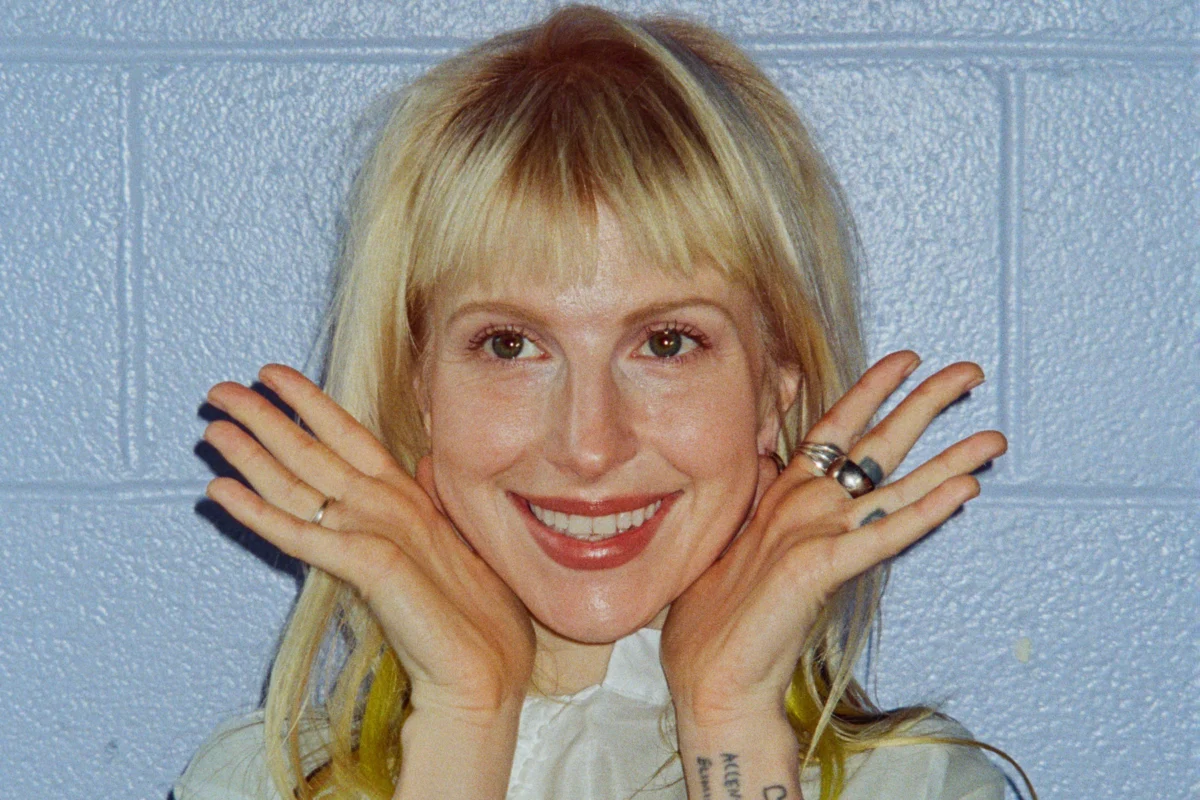
The musical trajectory of Hayley Williams has long been defined by an evolution from the angst-driven pop-punk of her youth to the introspective, genre-defying artistry of her solo career. On September 16, this evolution reached a new zenith at New York’s Forest Hills Stadium. Over the course of a nearly two-hour performance, Williams navigated a 25-song setlist that drew deeply from her three solo projects: 2020’s Petals for Armor, 2021’s Flowers for Vases / Descansos, and her most recent release, Ego Death at a Bachelorette Party. The concert served not merely as a retrospective, but as a live laboratory where Williams examined the intersections of personal vulnerability, artistic growth, and civic responsibility.
A Chronology of Artistic Reclamation
The performance began with a sharp, interrogative tone. Opening with Pure Love, a track from her debut solo album, Williams challenged the audience’s perceived familiarity with her public persona. The stage production, characterized by pulsating lights and surreal visual motifs—including massive, hyper-realistic eyes projected onto white curtains—established a sense of immediate, almost clinical, intimacy. This aesthetic choice underscored the theme of the evening: the discomfort of being watched versus the necessity of being known.
The setlist followed a deliberate structure, grouping songs into clusters that allowed for thematic progression. By layering tracks like Cinnamon and Dead Horse alongside the more contemplative selections from her recent work, Williams demonstrated how her songwriting has shifted from externalized rage to a nuanced, inward-looking investigation of selfhood. The transition from the studio-recorded, airy compositions of her earlier work to the heavy, percussion-driven arrangements performed at Forest Hills highlighted a newfound confidence in her vocal instrument.
The Role of Orchestration and Live Arrangement
A defining moment of the evening occurred during the inclusion of the True Believer Quartet, a four-piece string ensemble that has become a staple of her current live configuration. Their participation elevated deeper cuts such as True Believer, transforming the track into a haunting meditation on American history. The inclusion of an interpolation of Billie Holiday’s Strange Fruit served as a stark, historical anchor for the performance, rooting Williams’ contemporary grievances in a broader lineage of protest music.
This was further reinforced by her decision to pair the performance with an abridged cover of Nina Simone’s Don’t Let Me Be Misunderstood. By placing these compositions alongside her own, Williams invited the audience to participate in a musical dialogue that spans decades, suggesting that her own personal "ego death" is inextricably linked to the cultural and political atmosphere of the United States.
Political Discourse as Performance
The atmosphere at Forest Hills was marked by an overt political consciousness. Williams utilized the platform to reiterate long-standing stances on human rights and social justice. Throughout the show, she led the crowd in chants of "Free Palestine" and "Fuck ICE," and explicitly condemned the rise of Christian nationalism in the American political sphere.
This approach stands in direct contrast to recent industry trends, where major artists have faced criticism for attempting to depoliticize their concert environments. By framing her concert as a space for both emotional release and political engagement, Williams challenged the notion that live music must remain a neutral sanctuary. This stance was underscored by her choice of pre-show music, which prominently featured artists like Macklemore, Lukas Graham, and Finneas—musicians who have faced professional consequences or public scrutiny for their advocacy regarding international human rights.
Broader Implications and Industry Context
The logistical and cultural significance of the Forest Hills show cannot be understated. As the live music industry grapples with rising ticket prices and the increasing difficulty for fans to access large-scale events, Williams used her platform to highlight the necessity of community spaces. Her address to the crowd—urging them to maintain their commitment to live, shared experiences—acted as a call to action.
Data from the live music sector suggests that audience engagement is increasingly driven by the perceived authenticity of the performer. According to recent industry reports on touring habits, audiences are prioritizing artists who bridge the gap between studio recordings and live performance through raw, unfiltered stage presence. Williams’ deliberate inclusion of the True Believer Quartet and her commitment to performing songs that still feel like "fresh wounds" positions her within a cadre of artists who prioritize the emotional labor of performance over polished, predictable entertainment.
The Geography of Identity
A recurring theme throughout the evening was the tension between home and displacement. When Williams dedicated the title track of her latest album, Ego Death at a Bachelorette Party, to Nashville, she was articulating a sentiment shared by many artists currently navigating the shifting cultural landscapes of their home cities. The commentary served as a reflection on how gentrification, political polarization, and the erosion of local history affect the individual.
By grounding the show in these specific, localized concerns, Williams effectively translated her personal experience into a universal narrative. The "Hayley Williams Show" is not merely a concert; it is an exercise in public vulnerability. It asks the audience to participate in a cycle of "gorging on future memories," as Williams described her approach earlier this year.
Conclusion: A Synthesis of Sound and Sentiment
The show concluded with an appeal to civic duty, with Williams explicitly encouraging the audience to participate in the upcoming November elections. This closing statement served as a culmination of the evening’s trajectory: moving from the private, internal struggle of the individual to the collective responsibility of the citizen.
The technical execution of the night—from the gold glitter makeup applied during My Friend to the haunting string arrangements—demonstrated a synthesis of high-concept performance art and accessible pop music. Williams’ ability to wield her voice with increasing precision while maintaining the raw edge of her early career suggests that she is in a period of significant artistic maturation. As she continues to perform across major venues, her work remains a testament to the idea that the personal is, indeed, political, and that the most effective way to confront a complex world is to be as transparent as possible about one’s own evolution. The performance at Forest Hills was a profound reminder of the power of music to serve as a conduit for both individual healing and collective awareness.