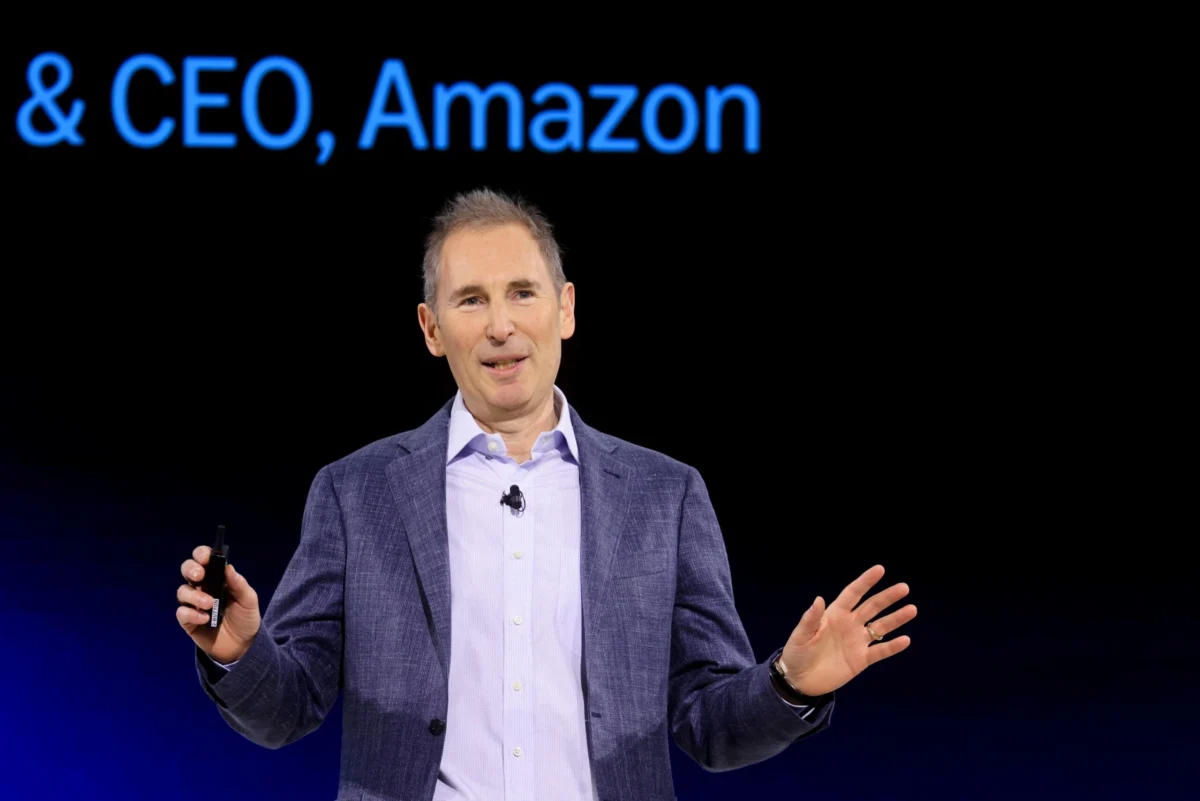
Amazon’s third-quarter financial results have underscored the precarious position of modern hyperscalers, as the e-commerce titan navigates a complex transition from traditional retail and cloud services toward a future dominated by massive capital investment in artificial intelligence. While Amazon Web Services (AWS) continues to demonstrate resilient, double-digit growth, the broader financial picture—characterized by missing revenue targets, cooling advertising growth, and a dramatic shift in free cash flow—has signaled to Wall Street that the path to AI profitability is both expensive and fraught with uncertainty.
The company reported third-quarter revenue of $201.9 billion, a figure that narrowly missed analyst expectations. Profits reached $20.7 billion, a decline from the same period last year, which the company attributed to the absence of the significant accounting gains recorded in the prior year regarding its strategic investment in the AI firm Anthropic. Following the disclosure of these results and a tepid outlook for the upcoming holiday quarter, Amazon shares experienced an immediate 5% decline in after-hours trading, reflecting investor anxiety over the company’s ability to balance its massive infrastructure spend with sustained profitability.
The AWS Engine vs. Rising Capital Expenditures
At the core of Amazon’s business model, AWS remains a powerful, if expensive, engine. The cloud unit posted third-quarter sales of $45.98 billion, representing a 39.3% year-over-year increase that exceeded Wall Street targets. This performance confirms that the demand for enterprise-grade AI compute remains robust. Companies across the global economy are racing to integrate generative AI into their workflows, and AWS remains a primary beneficiary of this trend.
However, the "cost of doing business" in the AI era has reached unprecedented levels. Amazon reiterated its commitment to aggressive capital expenditure, with projections for 2026 reaching approximately $220 billion. This staggering sum, which includes data center construction, high-performance GPU procurement, and energy infrastructure, has fundamentally altered Amazon’s balance sheet. The most striking indicator of this change is the company’s free cash flow, which swung from a positive $14.8 billion to a negative $42.4 billion over the last twelve months.
This capital-intensive strategy is not unique to Amazon. The "Big Four"—Amazon, Microsoft, Alphabet, and Meta Platforms—are collectively on track to spend more than $700 billion on capital expenditures by 2026. This spending is largely directed at the physical footprint of the AI age: massive data centers designed to house the massive server arrays necessary to train and deploy large language models.
Advertising and Retail: The Softening Underbelly
While the cloud unit excels, Amazon’s non-cloud divisions are showing signs of strain. The advertising business, which has become a vital profit driver for the company in recent years, grew by only 12% in the third quarter, missing analyst projections. This slowdown is particularly concerning as it mirrors similar trends observed at Google parent Alphabet, suggesting that digital advertising spend may be facing broader macroeconomic headwinds.
Furthermore, Amazon’s guidance for the fourth quarter—the all-important holiday shopping season—fell short of market expectations. The company projected sales between $240 billion and $247 billion and operating income in the range of $28.5 billion to $33.5 billion. Analysts had anticipated more optimistic figures, and the company’s inability to clear these bars suggests that the retail side of the business is facing pressure from inflation-weary consumers and heightened competition.
The shift in the timing of Prime Day, which occurred in the second quarter this year rather than the third, also complicates the year-over-year comparison for the third quarter, creating a "noise" in the data that analysts are struggling to reconcile with the broader trend of slowing retail growth.
The Anthropic Connection and Long-Term Commitments
A critical component of Amazon’s AI strategy is its partnership with Anthropic. Recent disclosures from Anthropic’s IPO prospectus have shed light on the sheer scale of the financial commitments underpinning the AI boom. Anthropic has committed to spending at least $110 billion on Amazon cloud services through April 2036. This "take-or-pay" style commitment ensures a long-term revenue stream for AWS, regardless of actual usage fluctuations.
This commitment is part of a larger ecosystem of dependency. Anthropic has pledged a total of $389.9 billion in compute spending across various providers, including Microsoft, Alphabet, and SpaceXAI. Amazon’s investment of $18 billion in Anthropic, with an additional $15 billion committed, highlights the company’s role as both an infrastructure provider and a venture capitalist in the AI space. The volatility in Amazon’s quarterly profits is directly linked to the valuation of these stakes, as seen in the year-over-year decline in profit caused by the absence of last year’s Anthropic valuation gain.
Internal Shifts and the Future of AI Integration
As Amazon navigates these financial pressures, it is simultaneously undergoing an internal reorganization. The company has continued its trend of workforce rationalization, cutting 250 jobs in its devices and services division this week, following the reduction of roughly 1,000 roles in its retail department earlier this year. These moves come after the company laid off approximately 30,000 workers between late 2025 and the first half of this year.
Simultaneously, Amazon is evolving its approach to AI adoption among its own staff. In an internal memo, the company instructed software engineers to embrace AI, yet emphasized that they will be judged on tangible outcomes rather than the volume of AI-generated code. "If your work does not benefit from current AI tooling, that is a finding, not a failing," the memo stated, signaling a pragmatic approach that seeks to prevent the "AI bubble" from inflating the costs of internal operations without delivering commensurate productivity gains.
Furthermore, Amazon is taking a defensive stance regarding its digital real estate. By blocking Meta’s AI assistant, Muse, from accessing its online store, Amazon is protecting its advertising revenue. AI assistants that bypass the traditional retail search experience pose a significant threat to the company’s ability to serve advertisements, which remain one of the most profitable segments of its retail operation.
Implications for the Tech Sector
The results from Amazon, alongside those from Microsoft and Alphabet, have created a nervous atmosphere for tech investors. The "hyperscaler" model—building massive, expensive infrastructure in the hope that future demand will justify the cost—is facing its first real test of market patience.
The primary concern among analysts is whether the "AI bubble" could burst if the promised efficiency gains for businesses fail to materialize. If the massive capital expenditures do not translate into higher margins or sustained growth in the cloud units, the companies may be forced to pull back on spending, which would have cascading effects on the hardware manufacturers and semiconductor companies that have benefited from the current surge in data center construction.
For now, Amazon remains committed to its course. With 300,000 seasonal hires planned for the holiday quarter and a continued focus on hardware innovation—such as its new Echo products and AI wearables—the company is betting that its scale and diverse service offerings will allow it to weather the transition. However, as the company enters the final quarter of the year, the margin for error has shrunk. Investors are no longer content with mere growth; they are increasingly demanding evidence that the record-breaking spending on AI infrastructure is leading to a sustainable, profitable future. The tension between long-term investment and short-term performance will likely remain the defining theme for Amazon well into 2026.