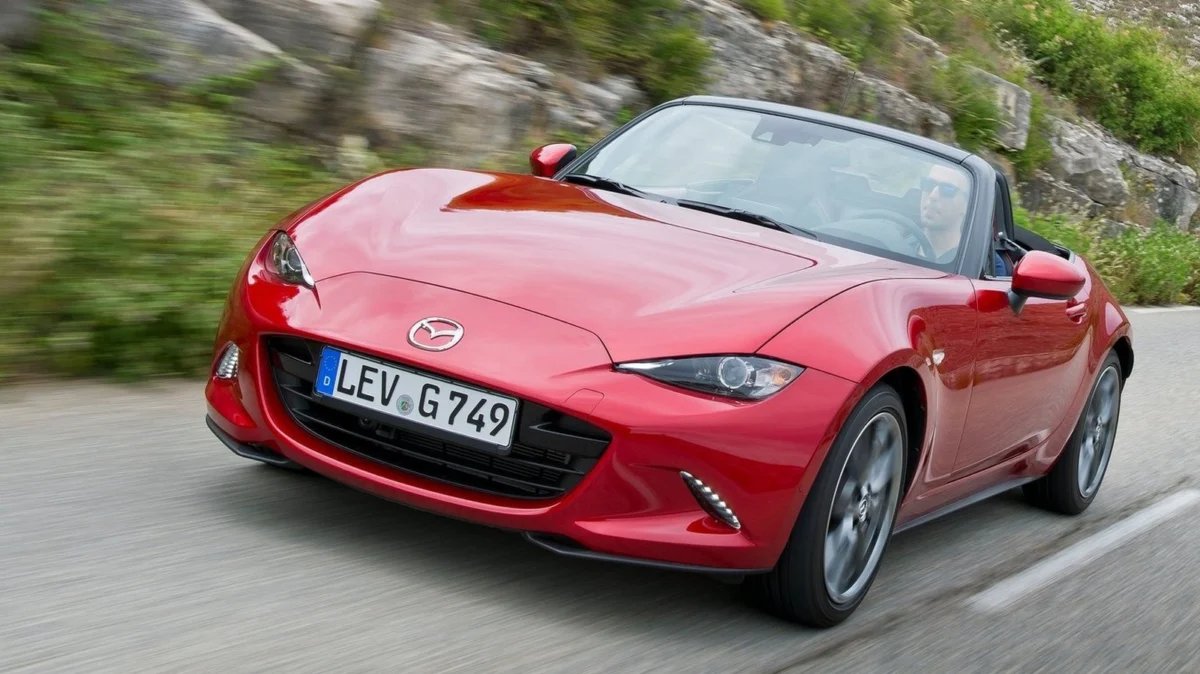
The automotive landscape has undergone a monumental shift over the past two decades, characterized by an insatiable consumer appetite for increasingly larger vehicles, complex infotainment systems, and heavy electrification. Amid this relentless pursuit of utility and bulk, one vehicle has stubbornly resisted industry trends while maintaining a fiercely loyal global following: the Mazda MX-5 Miata. As automotive inflation drives the average price of a new car past the $48,000 threshold, the Miata remains a beacon of accessible, lightweight rear-wheel-drive engineering. With an MSRP starting at approximately $32,640 for the current model year, this iconic roadster continues to serve as a benchmark for driver engagement, offering a compelling economic and dynamic proposition for enthusiasts and practical drivers alike.
Main Facts and Vehicle Specifications
At its core, the current fourth-generation (ND) Mazda MX-5 Miata remains faithful to the original design philosophy introduced in 1989: Jinba Ittai, a Japanese term translating to the horse and rider as one. Weighing in at just over 2,300 pounds, the modern Miata achieves its nimble handling characteristics through sheer discipline in weight reduction rather than brute horsepower.
Powered by a naturally aspirated 2.0-liter SKYACTIV-G four-cylinder engine, the vehicle produces 181 horsepower and 151 lb-ft of torque. Power is sent exclusively to the rear wheels via a remarkably crisp six-speed manual transmission or an optional six-speed automatic. This mechanical configuration yields a 0-to-60 mph time of approximately 5.7 seconds—figures that, while modest on paper, translate into an intensely engaging real-world driving experience.
Financially, the vehicle’s $32,640 baseline pricing breaks down into highly digestible metrics for modern consumers. When amortized over a standard 60-month automotive loan at prevailing interest rates, the monthly financial commitment hovers around $544, positioning the sports car as a surprisingly viable discretionary purchase for middle-income buyers seeking a dedicated weekend vehicle or a spirited daily driver.
Historical Context and Chronology
The enduring legacy of the Mazda Miata is rooted in a bold gamble taken by Mazda executives in the late 1980s. During an era when traditional lightweight British and Italian roadsters had largely vanished from the market due to reliability concerns and tightening safety regulations, Mazda engineers set out to recreate the affordable, wind-in-the-hair motoring experience for a modern era.
- February 1989: The first-generation Mazda MX-5 (NA) makes its global debut at the Chicago Auto Show, instantly captivating the automotive press and public with its iconic pop-up headlights and diminutive proportions.
- 1998: The second-generation (NB) arrives, featuring fixed headlights and increased structural rigidity to meet evolving safety standards while retaining the vehicle’s signature lightweight footprint.
- 2005: The third-generation (NC) debuts at the Geneva Motor Show, introducing a slightly larger platform, a heavier folding hardtop variant, and updated safety and comfort amenities.
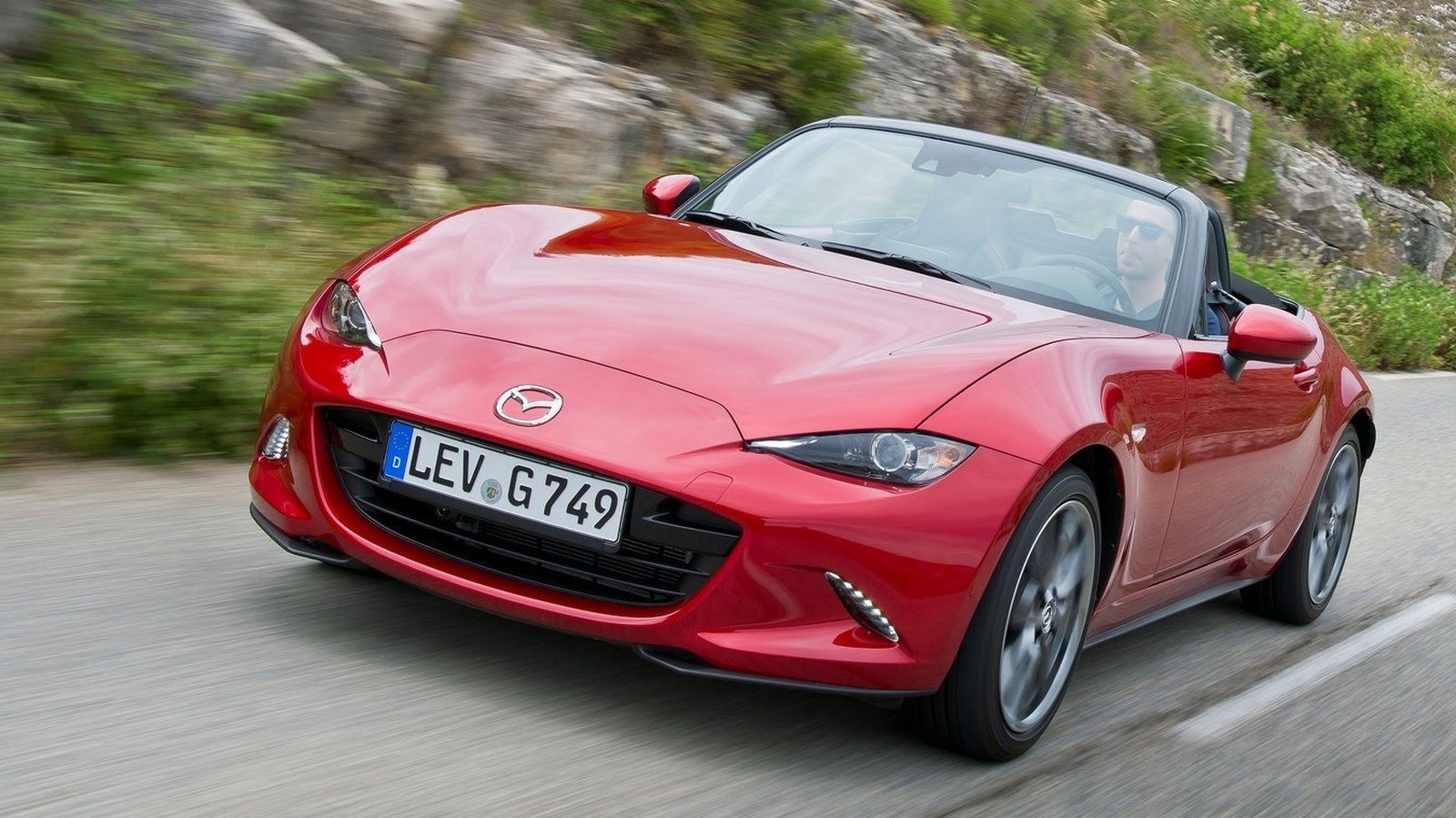
- 2015: Mazda launches the fourth-generation (ND) Miata, shedding significant weight compared to its predecessor and adopting modern Kodo design language, which has since defined the brand’s visual identity.
- Present Day: The ND generation continues to receive continuous mechanical refinements, including the recent implementation of asymmetrical limited-slip differentials and enhanced steering calibration, ensuring it remains contemporary without losing its analogue soul.
Market Implications and Economic Analysis
Analyzing the Miata’s place in the contemporary automotive market reveals fascinating insights into consumer psychology and manufacturing constraints. As global emissions standards tighten and profit margins dictate the electrification of heavy SUVs and crossovers, sports cars with internal combustion engines are facing an existential threat.
Industry analysts note that vehicles like the Miata operate on razor-thin volume margins for manufacturers. Yet, they serve a vital halo purpose for brands like Mazda. By anchoring the brand’s identity to driving purity and mechanical feedback, the MX-5 elevates the perception of Mazda’s broader lineup, which includes crossover SUVs like the CX-5 and CX-90.
Furthermore, the vehicle’s residual value remains among the highest in the industry. Because depreciation curves for enthusiast-driven sports cars tend to flatten significantly after the initial years of ownership, purchasing a new Miata represents a relatively sound financial asset compared to depreciating luxury sedans or mainstream commuter vehicles. The total cost of ownership is further mitigated by exceptional reliability ratings, straightforward mechanical packaging, and robust aftermarket parts availability.
Cultural Impact and Ownership Community
Beyond the spec sheet and economic calculations, the Mazda Miata occupies a unique space in automotive culture. Unlike hypercars or exotic supercars that often create social distance between the driver and the public, the Miata is universally approachable.
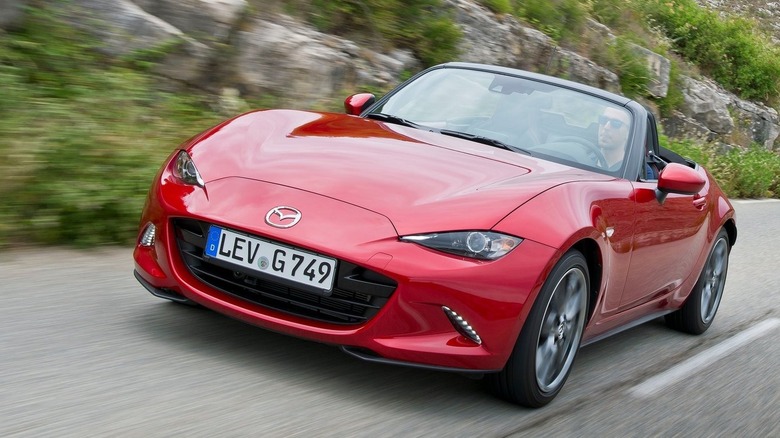
Ownership immediately grants access to one of the most active car communities in the world. Regional clubs, track day organizations, and weekend autocross events across North America, Europe, and Asia are frequently dominated by Miata owners. This ubiquitous grassroots infrastructure provides an inherent social dividend for buyers. Whether participating in charity drives or technical workshops, owners find a structured, welcoming community that transcends age, demographic, and socioeconomic boundaries.
Broader Outlook
As the automotive industry marches inevitably toward electrification, autonomous driving aids, and digital cockpit integration, the Mazda MX-5 Miata stands as an increasingly rare artifact of analogue purity. It proves that driving enjoyment is not a function of horsepower figures or quarter-mile times, but rather of balance, feedback, and mechanical communication.
For prospective buyers weighing the decision to invest in a dedicated enthusiast vehicle, the market data, historical resilience, and community support paint a clear picture. The Mazda Miata remains a singular achievement in modern automotive manufacturing—a vehicle that delivers precisely what it promises, ensuring that buyers continue to find immense satisfaction long after driving off the dealership lot.