The healthcare landscape of the Middle East has faced unprecedented challenges over recent years, driven by regional conflicts, massive refugee influxes, and systemic economic pressures. Against this complex backdrop, the Director-General of the World Health Organization (WHO), Dr. Tedros Adhanom Ghebreyesus, concluded the first day of a critical two-day State visit to the Hashemite Kingdom of Jordan. The diplomatic and technical mission underscored the enduring, robust partnership between the global health agency and the Jordanian government, focusing intensely on universal health coverage (UHC), comprehensive mental health frameworks, and agile humanitarian health action in times of acute crisis.
The visit comes at a pivotal juncture for global public health, highlighting Jordan’s exemplary role as a regional stabilizer and a compassionate host to millions of displaced individuals. Throughout the tightly packed itinerary, Dr. Tedros engaged with high-ranking government officials, international donors, frontline medical professionals, and humanitarian partners. Crucially, his engagements were amplified by the participation of Prince Harry, Duke of Sussex, and Meghan, Duchess of Sussex, through their foundation, Archewell Philanthropies, drawing international attention to the intersecting crises of physical trauma and psychological distress among vulnerable populations.
High-Level Bilateral Talks and Royal Recognition of Health Leadership
A central pillar of the Director-General’s itinerary was an official audience with His Majesty King Abdullah II. This high-level meeting emphasized Jordan’s proactive stance in positioning health as both a fundamental human right and a crucial pillar of national and regional security. Discussions in the royal palace centered on actionable strategies for reinforcing health system resilience, expanding equitable access to medical care, and sustaining vital support for emergency responses across the Middle East. Particular attention was devoted to the plight of the Palestinian people, specifically patients medically evacuated from the Gaza Strip to Jordanian facilities, alongside the millions of refugees currently sheltered within the Kingdom’s borders.
Expressing profound gratitude during the discussions, Dr. Tedros lauded the Hashemite monarch’s unwavering dedication to progressive health policies. "I wish to express my appreciation to His Majesty King Abdullah II for his commitment to advancing universal health coverage," Dr. Tedros stated. He further commended the overarching solidarity demonstrated by the Jordanian state and its citizenry, noting that the country currently provides essential health services to more than three million refugees, predominantly originating from neighboring Syria and, more recently, war-torn Gaza.
A cornerstone of these humanitarian efforts is His Majesty’s pioneering Medical Corridor initiative. This logistical and medical lifeline facilitates the transfer and specialized treatment of critically ill and injured children from Gaza, who would otherwise face insurmountable barriers to care. By maintaining these operations under immense geopolitical strain, Jordan continues to model an operational standard where humanitarian imperative supersedes political friction.
Witnessing Resilience: Pediatric Care and Medical Evacuations
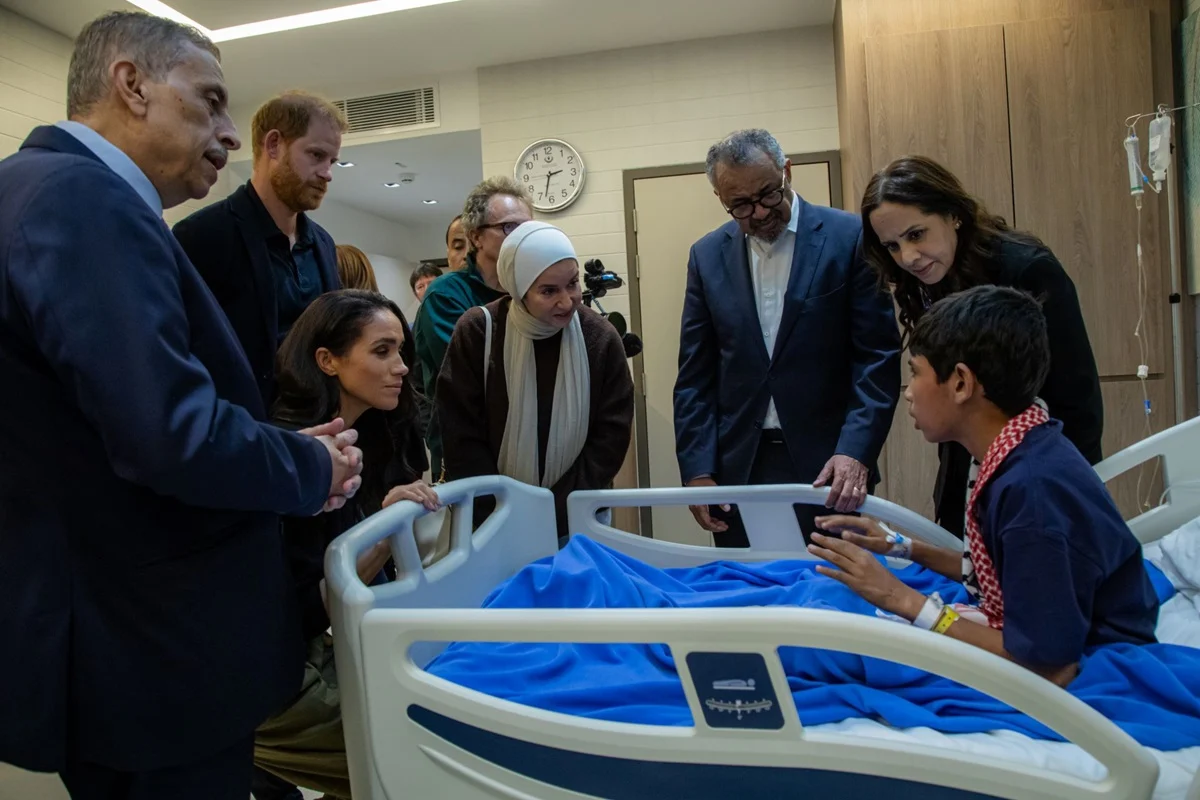
Moving beyond diplomatic chambers, Dr. Tedros transitioned from policy discussions to frontline reality by visiting a specialized, WHO-supported hospital facility dedicated to treating children evacuated from the Gaza Strip. The visit provided an unvarnished look at the human toll of the ongoing regional conflict, as well as the remarkable resilience of medical personnel working under high-pressure conditions.
During the hospital tour, the WHO chief interacted directly with young patients, their families, and the multidisciplinary teams of doctors, nurses, and specialists delivering life-saving interventions. These medical professionals manage a severe spectrum of cases, ranging from complex trauma and blast injuries to advanced pediatric oncology and other life-threatening conditions.
The field assessment underscored the irreplaceable value of the medical evacuation corridor established through Jordan. Public health experts note that as local healthcare infrastructure inside Gaza remains severely degraded—with a vast majority of hospitals either non-functional or operating at minimal capacity—external conduits like the Jordanian corridor are quite literally the difference between life and death for hundreds of vulnerable patients. However, health officials emphasized that these ad-hoc corridors must be backed by predictable, sustained international financing and open transit protocols to scale up support effectively.
Mobilizing Resources: High-Level Donor and Partner Consultations
Recognizing that frontline heroism requires robust financial backing, Dr. Tedros convened a high-level strategic meeting with key health partners, donor nations, specialized United Nations agencies, and major philanthropic organizations. The primary objective of the roundtable was to align funding priorities for bolstering Jordan’s national health system while simultaneously sustaining regional humanitarian operations.
Discussions at the donor roundtable zeroed in on two critical funding gaps: scaling up comprehensive mental health services within host communities and securing long-term operational budgets for countries carrying the heavy mantle of large-scale refugee hosting. Donors evaluated current investment portfolios, acknowledging that the protracted nature of Middle Eastern displacement requires shifting from short-term emergency funding models to multi-year, developmental health financing.
Dr. Tedros welcomed the ongoing commitments of international stakeholders, emphasizing that investing in Jordan’s health infrastructure yields dividends that extend far beyond its borders, stabilizing the health security of the entire Levant region.
Advancing Primary Healthcare and Mental Health Integration
In addition to multilateral consultations, Dr. Tedros held extensive bilateral talks with Jordan’s Minister of Health. These administrative discussions drilled down into the mechanics of institutional reform, specifically evaluating Jordan’s steady march toward comprehensive Universal Health Coverage.
Jordan has increasingly emerged as a global frontrunner in adopting a primary healthcare-centric model to achieve UHC. Notably, the nation has integrated mental health services directly into its routine primary care network—a progressive policy shift strongly supported by the WHO Director-General’s Special Initiative for Mental Health. By decentralizing psychological support and embedding it within general medical clinics, Jordan is actively dismantling the social stigma historically associated with mental health care. This ensures that patients presenting with chronic physical ailments or acute psychological trauma can access holistic, integrated treatment under one roof, setting a benchmark for health systems across the Eastern Mediterranean region.
The Philanthropic Dimension: Archewell’s Advocacy and Support
The visibility of the WHO chief’s visit was significantly magnified by the presence of Prince Harry and Meghan, the Duke and Duchess of Sussex. Participating in their capacities as founders of Archewell Philanthropies and long-standing global advocates for public health, the couple joined Dr. Tedros for several key engagements throughout the day.
Archewell has cultivated a robust partnership with the WHO over recent years, extending support across diverse public health vectors. Their collaborative footprint ranges from advocating for equitable distribution and access to COVID-19 vaccines during the global pandemic to endorsing targeted medical evacuation logistics and community-level mental health initiatives.
During the joint engagements, Prince Harry focused heavily on his ongoing advocacy as an ally of the WHO’s mental health mandates. He underscored the urgent necessity of prioritizing mental health investments across all societal strata, paying specific attention to high-risk demographics such as men, adolescents, and children caught in the crossfire of conflict and displacement.
Reflecting on the collaborative mission, Dr. Tedros remarked, "I want to thank our partners, including Prince Harry, Duke of Sussex and Meghan, Duchess of Sussex, whose commitment to mental health and humanitarian action has helped bring visibility, resources and hope to some of the world’s most vulnerable communities. Their collaboration is helping to advance WHO’s mission to ensure health for all."
Echoing these sentiments, Prince Harry detailed the personal insights gained through their philanthropic endeavors. "It is an honour to join the Director-General of the World Health Organization in Jordan, a country that is leading by example in compassion, resilience and innovation," the Duke of Sussex stated. "Through our work with Archewell Philanthropies, my wife and I have seen first-class hand the impact of WHO’s efforts to support mental health and deliver life-saving care in emergencies. We remain deeply committed to advancing awareness, reducing stigma and expanding access to mental health support for all those affected by conflict and crisis. Mental health is fundamental to recovery, dignity and long-term peace, and we are proud to stand with WHO and partners around the world to make it a global priority."
Looking Ahead: Day Two Itinerary and Comprehensive Regional Agenda
As the first day of the high-level mission drew to a close, preparations were finalized for the second and final day of Dr. Tedros’s State visit to Jordan. The itinerary promises an equally intensive exploration of specialized Jordanian health institutions and community outreach programs.
Scheduled stops for the second day include a formal visit to Jordan’s National Center for Rehabilitation of Addicts. Supported technically by the WHO, the center serves as a vital national institution delivering integrated medical, psychological, and social rehabilitation services to individuals struggling with substance use disorders—a hidden health crisis often exacerbated by socioeconomic instability and displacement.
Furthermore, the Director-General is scheduled to meet with prominent community leaders and women’s advocacy networks, including representatives from the Jordanian Hashemite Fund for Human Development (JOHUD). These grassroots engagements are designed to evaluate how community-led development initiatives intersect with national health policies at the local level.
The mission will also feature a high-profile visit to the renowned King Hussein Cancer Center (KHCC). Dr. Tedros and his delegation will tour the specialized oncology facility to discuss cutting-edge advances in cancer treatment, research protocols, and the potential for expanding regional collaboration in oncology care, ensuring that advanced specialized medicine remains accessible to patients from across neighboring countries.
Broader Implications and Regional Health Security
Public health analysts note that Dr. Tedros’s visit to Jordan carries profound strategic implications for the Eastern Mediterranean region and the wider international community. By spotlighting Jordan’s capacity to absorb monumental humanitarian shocks while simultaneously advancing structural health reforms, the WHO is signaling a strategic shift in how international bodies must address protracted crises.
The model demonstrated in Amman—combining high-level political will, strategic bilateral medical corridors, community-embedded mental health services, and robust international donor coordination—offers a replicable blueprint for health system resilience in fragile states. As geopolitical tensions continue to threaten regional stability, the WHO’s engagement in Jordan reinforces the principle that health diplomacy remains a potent tool for preserving human dignity and fostering cross-border solidarity.
The State visit will officially conclude following final debriefings with multilateral partners supporting humanitarian and operational logistics. These concluding sessions will cement Jordan’s undisputed status as an indispensable humanitarian hub, medical evacuation corridor, and anchor of health security in a volatile geopolitical climate.