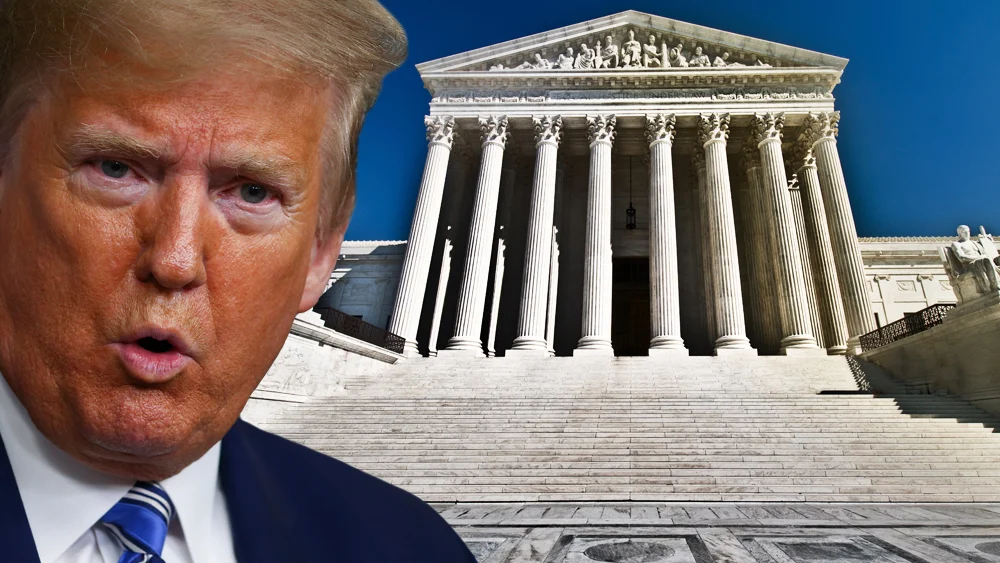
The Supreme Court of the United States issued a decisive and unsigned order late Monday rejecting an emergency application filed by the Department of Justice, effectively halting the administration’s last-minute bid to invalidate approximately 20,000 mail-in ballots in California. The high court’s decision leaves lower court rulings intact and represents a significant legal defeat for the federal government on the eve of the midterm elections.
The emergency intervention request was presented to Justice Elena Kagan, who subsequently referred the matter to the full court. Without noting any recorded dissents, the justices declined to issue an injunction pending appeal, preserving the integrity of the contested ballots and ensuring that election administrators in the nation’s most populous state could proceed with processing and counting votes according to established state protocols.
The legal showdown underscores the intense, high-stakes friction between federal oversight and states’ rights over election administration, culminating in a dramatic legal clash just hours before polls opened nationwide.
Background Context and Genesis of the Legal Dispute
The dispute centered on a list of approximately 20,000 mail-in ballots flagged by federal authorities. The Department of Justice, acting in alignment with the priorities of the Trump administration, argued that emergency intervention was necessary to prevent potential noncitizens from participating in the electoral process. Federal lawyers maintained that the flagged voter pool contained systemic anomalies, including names of individuals not actively registered to vote and records belonging to persons who reportedly no longer reside within California.
Attorneys representing the federal government insisted that these irregularities pointed to a broader, systemic vulnerability that could compromise the legitimacy of the midterm outcomes in key jurisdictions. However, these claims faced immediate skepticism from state election officials, civil rights groups, and legal scholars who pointed to robust verification procedures already embedded within California’s vote-by-mail system.
California law mandates rigorous signature verification, address matching, and secure ballot tracking mechanisms. State authorities argued that the federal government’s assertions were speculative and designed primarily to cast unwarranted doubt on the administration of the election. Lower courts repeatedly rejected the Justice Department’s arguments, finding insufficient evidence to justify the disruption of an ongoing election and the disenfranchisement of thousands of voters based on contested or unverified lists.
Chronology of the Legal Challenge
The emergency litigation unfolded across a compressed timeline typical of eleventh-hour election disputes:
- Late October: The Department of Justice identifies the contested pool of approximately 20,000 mail-in ballots and begins pressing state officials for intervention.
- Days Prior to the Midterms: Federal attorneys file emergency motions in lower federal courts seeking an injunction to set aside the ballots pending further review.
- Weekend Preceding the Election: Federal district and appellate courts reject the DOJ’s requests, ruling that the federal government failed to demonstrate irreparable harm or a likelihood of success on the merits that would justify upending state-administered voting procedures.
- Midterms Eve: The DOJ escalates the matter to the Supreme Court via an emergency application presented to Justice Kagan, culminating in the high court’s rapid denial issued in an unsigned order.
Official Reactions and Political Fallout
The Supreme Court’s ruling drew swift and sharp reactions from political leaders across the country, highlighting the deep polarization surrounding election administration and states’ rights.

California Governor Gavin Newsom, who has frequently positioned himself as a vocal opponent of federal overreach, celebrated the ruling while issuing a stern warning to federal actors and outside groups attempting to influence or disrupt the state’s electoral process. Hours after the decision was released, Newsom took to social media to denounce the administration’s legal strategy.
"Donald Trump is trying to throw out 20,000 California ballots and intimidate election workers," Newsom wrote. "Let me be clear: If you interfere with our elections, California will come for you. No presidential pardon will save you. We are ready. Every eligible vote will be counted."
Democratic lawmakers and voting rights organizations lauded the high court’s refusal to intervene, framing the decision as a vital defense of democratic norms and constitutional federalism. Proponents of the ruling argued that interfering with ballots on the eve of an election sets a dangerous precedent that undermines public confidence in the electoral system.
Conversely, supporters of the administration expressed deep disappointment with the outcome. Conservative figures and legal analysts aligned with the federal push argued that the court’s refusal to hear the emergency appeal missed an opportunity to establish a uniform standard for voter verification and to address perceived vulnerabilities in mail-in voting infrastructures. They maintained that the administration’s primary objective was to ensure maximum transparency and legal compliance, rather than to suppress legitimate votes.
Broader Implications for Federalism and Election Administration
The Supreme Court’s action reinforces long-standing constitutional principles regarding the decentralization of American elections. Under the Elections Clause of the U.S. Constitution, states retain primary authority over the "Times, Places and Manner" of holding elections for Senators and Representatives, subject to congressional oversight.
Legal experts note that while the federal government possesses statutory authority to enforce civil rights and voting laws, attempts by the executive branch to intervene directly in state-level ballot processing on the eve of an election face an exceptionally high legal bar. The high court’s reluctance to grant emergency stays in ongoing elections reflects a consistent judicial preference for maintaining the status quo when last-minute injunctions threaten to create administrative chaos or disenfranchise eligible voters.
Furthermore, the case highlights the growing intersection of executive branch litigation and local election administration. As the legal landscape surrounding mail-in voting, voter registration databases, and eligibility verification continues to evolve, federal courts are frequently asked to adjudicate disputes that balance federal oversight interests against the administrative autonomy of state governments.
Ultimately, the Supreme Court’s refusal to intervene in the California dispute ensures that the 20,000 contested ballots will remain part of the active count, subject to the state’s rigorous verification standards. The ruling serves as a definitive punctuation mark on a contentious pre-election legal battle, reaffirming the boundaries of federal intervention in state-run democratic processes.