
Wall Street is undergoing a monumental transformation in how it funds the future of power generation, yet the financial mechanics of this shift reveal a striking paradox. Blackstone, one of the world’s premier private equity titans, closed its latest flagship vehicle—appropriately rebranded as Blackstone Energy Transition Partners V—at an eye-watering $8.7 billion in mid-October. Demand for the fund was so intense that executives reportedly turned away an additional $3 billion to remain beneath their strict investment caps.
This financial windfall highlights a broader economic reality: private equity capital dedicated to the energy transition has surged over the past decade, defying broader downturns in other climate-oriented asset classes. Yet, beneath the clean veneer of "transition" portfolios lies a complex and controversial strategy. While retail and institutional investors often assume these funds are strictly financing solar panels, wind farms, and zero-emission grid infrastructure, major players like Blackstone are simultaneously funneling capital into natural gas plants, electrical grid improvements for power-hungry data centers, and rising electricity markets.
This divergence between climate-focused marketing and traditional fossil-fuel-adjacent investing has ignited a heated debate among financial analysts, environmental advocates, and institutional stakeholders who manage public pension funds.
The Rise and Evolution of Private Equity Transition Funds
To understand how private equity approaches the energy transition, one must examine the fundamental mechanics of the asset class. Private equity firms operate by pooling capital from institutional investors—such as corporate and public pension funds, endowments, and ultra-high-net-worth individuals—every few years. They use this capital to acquire established companies, implement operational overhauls to maximize profitability, and eventually sell them off to return realized gains to their investors. Unlike publicly traded stocks available to the general public, these private markets remain shielded from direct retail scrutiny, drawing historical criticism for prioritizing high yields above labor and environmental safeguards.
Over the past five years, however, these private equity giants have dramatically pivoted their deployment strategies. According to data compiled by energy research firm BloombergNEF, private market "transition funds" raked in an astounding $178 billion between 2021 and early 2026. This figure represents triple the capital raised by comparable funds dedicated to traditional fossil fuels and general energy investments combined.
This robust fundraising environment stands in stark contrast to the struggles faced by climate-focused venture capital firms, which back early-stage startups rather than established industrial players. Climate tech venture capital is currently on track to record its worst year of the decade, suffering from shifting macroeconomic winds and altered regulatory appetites.
A Chronology of Policy Shifts and Economic Realities
The ballooning scale of private equity transition funds has coincided with rapid turbulence in federal policy and the broader global economy.
- 2017: Blackstone takes a definitive early step away from the upstream fossil fuel sector, officially ceasing all direct investments in oil and gas production fields.
- 2022: The firm formally changes the name of its dedicated energy investment fund to incorporate the phrase “energy transition,” signaling an institutional commitment to the future power landscape. Simultaneously, firm leadership clarifies that natural gas infrastructure will remain a core pillar of the fund’s strategy.
- August 2022: The United States passes the landmark Inflation Reduction Act (IRA), creating the most significant federal clean energy investment incentive framework in American history and accelerating technological innovation.
- 2025: Political shifts in Washington culminate in a Republican-controlled Congress repealing the vast majority of the IRA’s signature climate provisions. Meanwhile, the artificial intelligence boom triggers a historic buildout of massive data centers across the country.
- Mid-October 2026: Blackstone officially announces the $8.7 billion final close for Blackstone Energy Transition Partners V, having rejected $3 billion in excess institutional demand.
These compounding market pressures—specifically the explosive surge in electricity demand driven by data centers and artificial intelligence workloads—have transformed the energy transition into a mature, highly sophisticated economic trend.
“Investors are sensing oncoming scarcity and are positioning themselves accordingly,” explains Dan Cohn, an energy finance analyst at the Institute for Energy Economics and Financial Analysis (IEEFA). “That speaks to both the moment of rising electricity demand, but also the maturity of clean energy technologies.”
The Natural Gas Debate: Bridge Fuel or Climate Liability?
The core controversy surrounding private equity transition funds is not their lack of capital, but rather their definition of what qualifies as a "transition" asset. While European-focused vehicles like Copenhagen Infrastructure Partners’ Energy Transition Fund heavily prioritize green hydrogen and pure renewable assets, major American firms maintain a much broader interpretation.
Blackstone’s investment thesis explicitly views methane gas—the primary component of natural gas—as an indispensable tool during the multi-decade shift away from coal and heavy hydrocarbons. When Blackstone rebranded its fund in 2022, global head of energy David Foley defended the inclusion of natural gas assets to industry publications. He argued that simply adding intermittent solar and wind generation to the electrical grid does not inherently allow operators to instantly retire existing base-load power sources like coal and gas plants without risking grid instability.
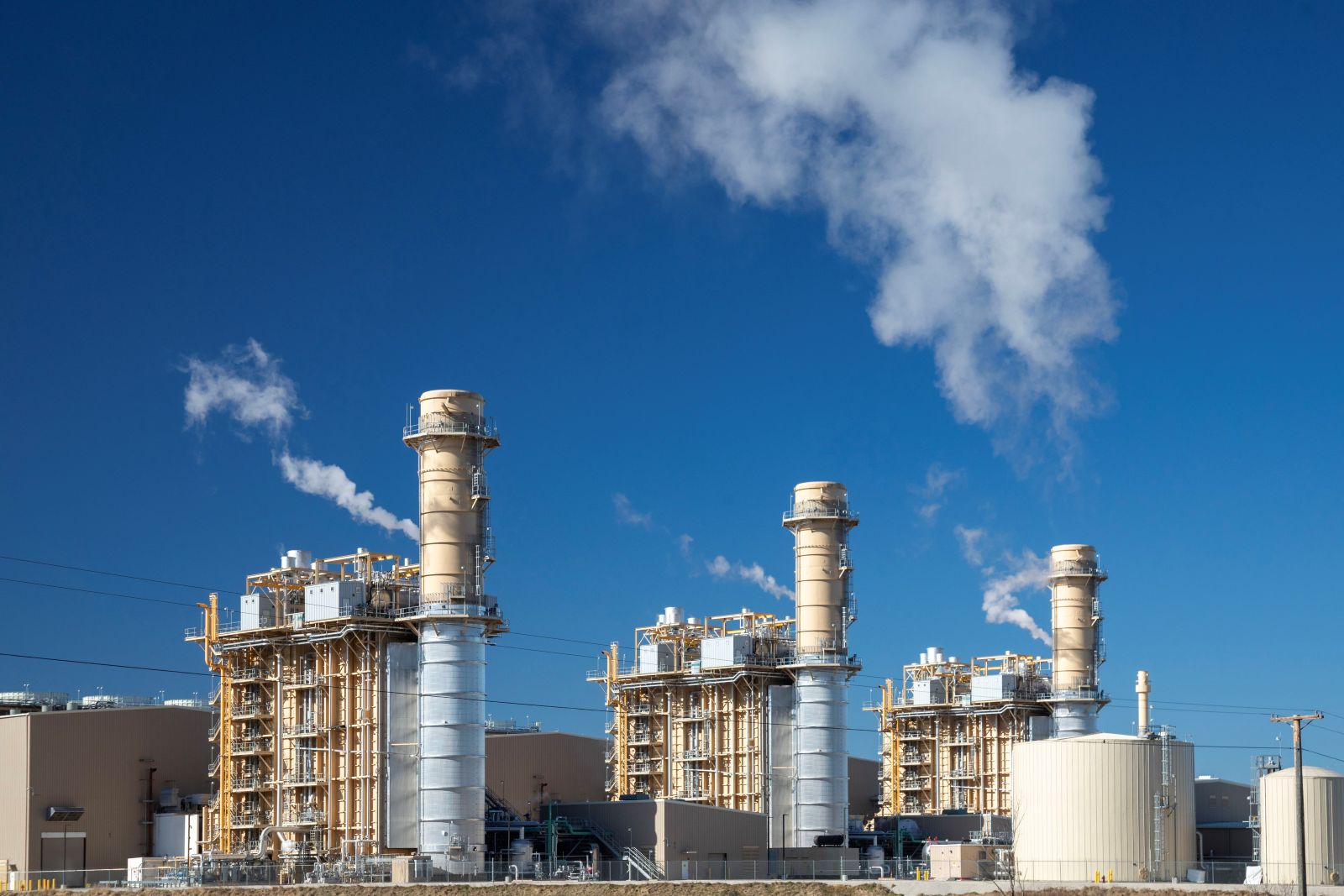
This year alone, Blackstone’s fund announced targeted acquisitions across six companies, spanning a natural gas plant operator, a data center cooling technology provider, grid transmission developers, and renewable energy startups. Similarly, private equity giant Brookfield has defended its investments in natural gas where they serve to displace dirtier fossil fuels like coal, though it has faced sustained pressure from shareholder advocacy groups over its gas expansion footprint.
Other financial powerhouses draw distinct lines within their portfolios. BlackRock, an independent private markets titan, explicitly differentiates "transition" strategies from "sustainable" strategies on its corporate disclosures, noting that not all transition portfolios meet strict sustainability criteria.
Institutional Stakes and Public Accountability
This terminological flexibility creates profound complications for public entities that have entrusted their beneficiaries’ wealth to these private equity giants. At least three major government-managed pension and treasury systems in the United States—the Oregon State Treasury, the Minnesota State Board of Investment, and the San Francisco Employees’ Retirement System—have committed a combined $525 million to Blackstone’s latest energy transition fund.
Each of these public entities operates under formal, strict climate-action roadmaps and carbon reduction targets. For instance, the San Francisco Employees’ Retirement System maintains targets to cut portfolio carbon emissions by 65 percent, while Oregon routinely issues public reports detailing its "climate-positive" investment categories.
The inclusion of natural gas and data-center-adjacent infrastructure in funds backed by public climate capital has already sparked friction at home. Earlier this year, an Oregon state representative formally petitioned the state treasury to demand greater transparency and more rigorous definitions regarding how public funds report and categorize these hybrid assets. None of the institutional investors nor Blackstone responded to requests for comment prior to publication.
Financial analysts note that the inclusion of natural gas is rarely accidental; transition funds that incorporate gas assets historically post slightly higher short-term financial returns compared to pure-play renewable funds, driven by high capacity payments and surging electricity tariffs.
Broader Implications for the Global Power Sector
Outside the glass-walled boardrooms of Wall Street, the debate over whether natural gas and data centers truly belong in a transition portfolio is fierce. Proponents argue that natural gas has successfully displaced coal in regional power markets, driving down immediate carbon intensity, while the tech industry’s data center expansion is injecting unprecedented private capital into overdue electrical grid modernization.
Conversely, environmental scientists and climate advocates emphasize that burning natural gas—and managing the rampant methane leaks inherent to extraction and transport systems—generates massive greenhouse gas emissions that threaten global climate targets. Critics argue that powering data centers with new gas infrastructure locks economies into fossil-fuel dependency, directly conflicting with the deployment of clean energy alternatives like utility-scale battery storage, which can reliably store and discharge renewable energy when solar and wind generation dip.
“Natural gas no longer functions as a credible bridge in the energy transition,” wrote Shruti Shukla, a senior advocate on international energy at the Natural Resources Defense Council, warning that continued gas expansion risks raising system costs and creating long-term structural volatility.
As the energy transition matures, financial analysts suggest that market forces may eventually render fossil fuel investments obsolete even within private equity portfolios. As utility-scale solar, wind, and battery technologies continue to experience structural price declines and efficiency gains, the economic justification for relying on natural gas as a bridge fuel will face mounting headwinds.
For now, however, Wall Street has proven adept at monetizing the friction of the pivot—proving that in the multi-trillion-dollar race to electrify the modern economy, profitability and purity rarely follow the same map.