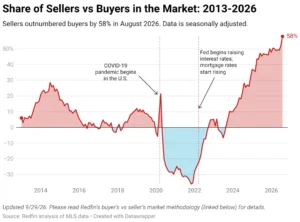
In the current volatile housing market, the traditional dynamics of real estate transactions are undergoing a significant transformation. As inventory levels rise and mortgage rates remain a primary concern for prospective homeowners, the use of seller concessions has emerged as a critical tool for facilitating successful sales. Recent data from Redfin indicates that concessions were offered in 46.2% of U.S. home sales during the spring season, marking one of the highest shares on record. This trend highlights a fundamental shift in the power balance between buyers and sellers, as the market currently sees 48.5% more sellers than buyers nationwide. Consequently, homeowners are increasingly turning to creative financial incentives to make their listings more competitive without necessarily resorting to drastic price reductions.
The Evolution of the Seller Concession in a High-Interest Environment
A seller concession is broadly defined as any incentive offered by a property owner to reduce a buyer’s out-of-pocket costs or to make a home purchase more financially viable. These concessions can range from direct financial credits at closing to the inclusion of high-value personal property or the pre-payment of recurring fees. Historically, concessions were more common in "buyer’s markets," where inventory was high and demand was low. However, the current landscape is unique; while inventory is growing, high interest rates have dampened purchasing power, forcing sellers to find ways to lower the "barrier to entry" for buyers.
In fact, the strategy has become so prevalent that it is often combined with other sales tactics. Approximately 15.7% of home sales now include both a concession and a price reduction. This suggests that for many sellers, a single approach is no longer sufficient to secure a deal in markets like Austin, Texas, or Seattle, Washington, where local economic factors and inventory surges have created distinct challenges.
A Chronology of Market Shifts: 2021 to 2024
To understand the current reliance on concessions, one must look at the trajectory of the housing market over the last three years. In 2021 and early 2022, the market was characterized by ultra-low interest rates and a severe shortage of homes. During this period, concessions were virtually non-existent; buyers were often waiving inspections and paying well above the asking price.
By late 2022 and throughout 2023, the Federal Reserve’s aggressive interest rate hikes began to cool the frenzy. As borrowing costs doubled, the pool of eligible buyers shrank. By the spring of 2024, the market reached a tipping point where sellers had to compete for a limited number of qualified buyers. This led to the "record-high rate" of concessions observed today. The transition from a market of scarcity to one of strategic negotiation has made the understanding of these financial levers essential for any homeowner looking to exit their investment successfully.
Eight Essential Seller Concession Strategies
The application of concessions is not a one-size-fits-all approach. Depending on the condition of the home and the specific needs of the buyer, sellers can employ several different types of incentives.
1. Closing Cost Assistance
One of the most frequent hurdles for buyers is the accumulation of closing costs, which typically range from 2% to 5% of the purchase price. By agreeing to cover a portion of these fees—such as lender origination fees, title insurance, or escrow charges—a seller can significantly reduce the amount of cash a buyer needs to bring to the table. This is often the deciding factor for first-time homebuyers who may have enough for a down payment but are stretched thin by additional transaction fees.
2. Mortgage Interest Rate Buydowns
With interest rates hovering at levels unseen for decades, the "buydown" has become a premier marketing tool. Sellers pay an upfront fee to the buyer’s lender to lower the interest rate, either permanently or temporarily (e.g., a 2-1 buydown where the rate is 2% lower the first year and 1% lower the second). This directly impacts the buyer’s monthly mortgage payment, often providing more long-term relief than a simple price cut of the same value.
3. Repair or Upgrade Credits
Post-inspection negotiations are a common point where deals fall apart. Rather than the seller coordinating contractors to fix a leaky roof or an outdated electrical panel—which can delay the closing—they may offer a lump-sum credit. This allows the buyer to oversee the repairs to their own specifications after they take possession, while the seller avoids the logistical headache of home improvement during a move.
4. HOA-Related Credits
In regions where Homeowners Association (HOA) fees are substantial, or where a "special assessment" for building repairs is looming, sellers can offer to pre-pay these costs for a set period. This provides the buyer with a "buffer period" of lower monthly expenses, making the home more attractive compared to similar units in the same complex.
5. Personal Property Inclusions
While technically a non-credit concession, the inclusion of high-end appliances, furniture, or even outdoor equipment like hot tubs can sweeten a deal. For a buyer, moving into a home that is already furnished or equipped with a new washer and dryer saves thousands of dollars in immediate post-closing expenses.
6. Comprehensive Home Warranties
For older homes, buyers are often wary of system failures shortly after moving in. A seller-purchased home warranty—usually costing between $500 and $900—covers major appliances and systems (HVAC, plumbing, electrical) for the first year. This provides peace of mind and acts as a form of "insurance" against the unknown for the buyer.
7. Flexible Closing and Lease-Back Agreements
Time can be as valuable as money. Offering a flexible timeline—such as allowing a buyer to move in early or, conversely, allowing the seller to rent the home back for a month while they finalize their own move—can resolve the logistical friction that often prevents a contract from being signed.
8. Direct Pre-Closing Repairs
In some cases, especially with government-backed loans like FHA or VA, certain repairs are mandatory before the loan can be funded. Sellers who proactively address these issues before the home even hits the market, or agree to do so during the escrow period, ensure a smoother path to a successful closing.
Impact on Appraisals and Financial Feasibility
A critical consideration for any seller offering concessions is the impact on the home’s appraisal. While concessions do not directly lower the appraised value of a property, they can complicate the lender’s risk assessment. If a seller offers $20,000 in concessions on a $400,000 home, the lender must ensure that the home is truly worth the sale price and that the "interested party contributions" (IPCs) do not exceed the limits set by Fannie Mae or Freddie Mac.
Typically, IPC limits are tied to the down payment amount. For instance, on a conventional loan with a down payment of less than 10%, seller concessions are often capped at 3% of the sale price. Understanding these limits is vital to prevent a situation where a negotiated deal is rejected by the buyer’s underwriting department.
Regional Variations: Austin vs. Seattle
The effectiveness and prevalence of concessions often depend on local inventory levels. In Austin, Texas, a recent surge in new construction has led to a significant increase in supply, giving buyers substantial leverage. Sellers in this market are frequently using rate buydowns to compete with large-scale developers who have the capital to offer aggressive financing incentives.
In contrast, Seattle, Washington, remains a high-cost market with relatively constrained inventory compared to Texas. Here, concessions are more frequently used to address high closing costs or to provide credits for specific "work-from-home" upgrades, reflecting the needs of the city’s tech-heavy workforce.
Broader Implications for the Real Estate Industry
The rise of the "concession-heavy" market reflects a broader economic reality: the disconnect between home prices and affordability. Analysts suggest that until mortgage rates stabilize or inventory significantly outpaces demand, concessions will remain a standard component of the American real estate transaction.
From a tax perspective, sellers must also be aware that concessions reduce their net proceeds. While a $500,000 sale with $15,000 in concessions is recorded as a $500,000 sale price (benefiting neighborhood "comps"), the seller’s actual realized gain is $485,000. This distinction is important for capital gains calculations and should be discussed with a tax professional.
Conclusion: Strategic Value Over Price Reductions
For modern sellers, the goal is no longer just to find a buyer, but to find a buyer who can successfully cross the finish line of a mortgage approval. Seller concessions facilitate this by solving the immediate cash-flow and monthly-payment challenges that modern buyers face. By framing these incentives as "added value" rather than a sign of property defects, sellers can maintain their asking prices, preserve neighborhood property values, and achieve a faster, more certain closing. As the market continues to evolve, the ability to negotiate these nuanced financial terms will distinguish successful sellers from those whose listings linger on the market.