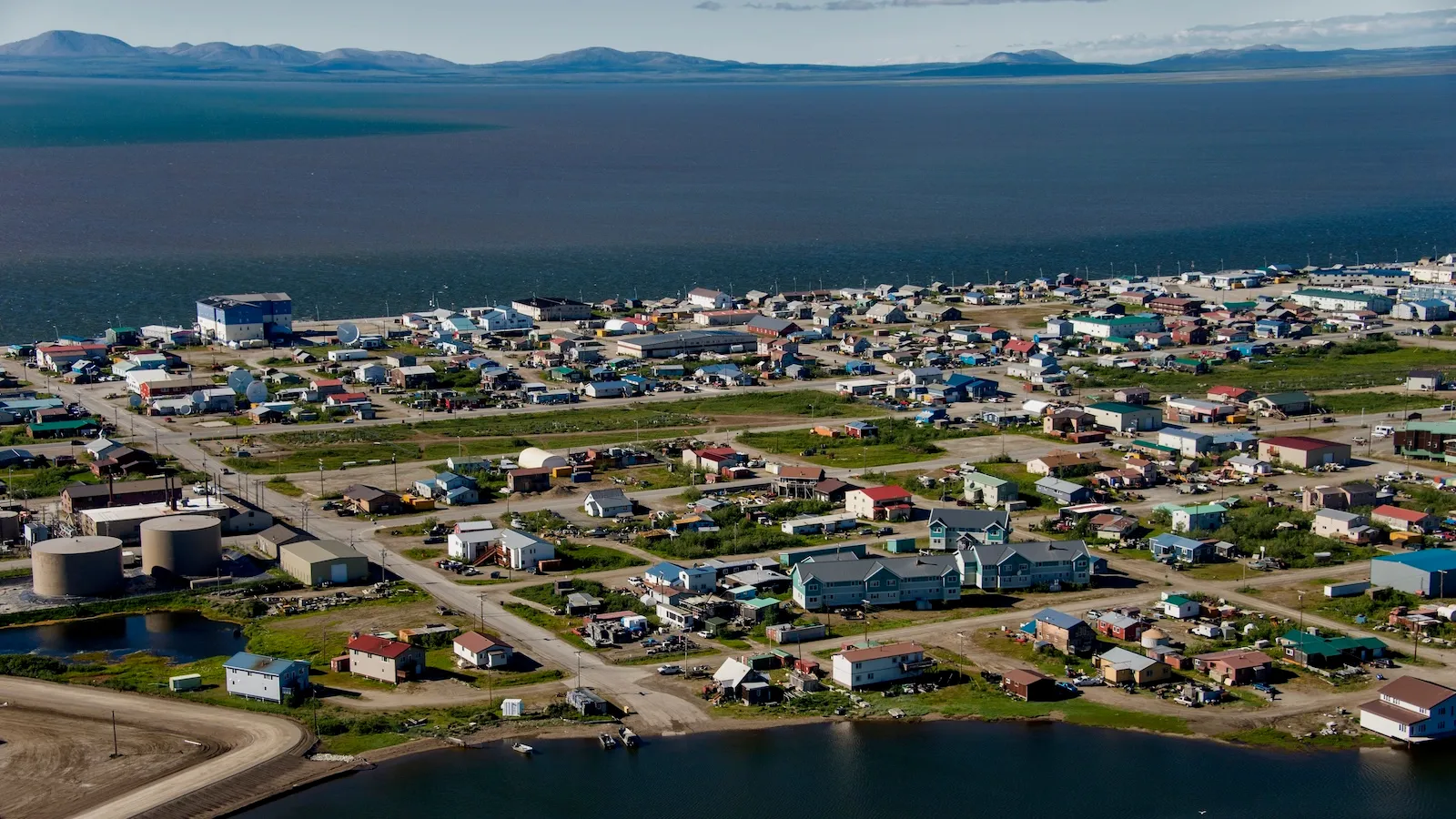
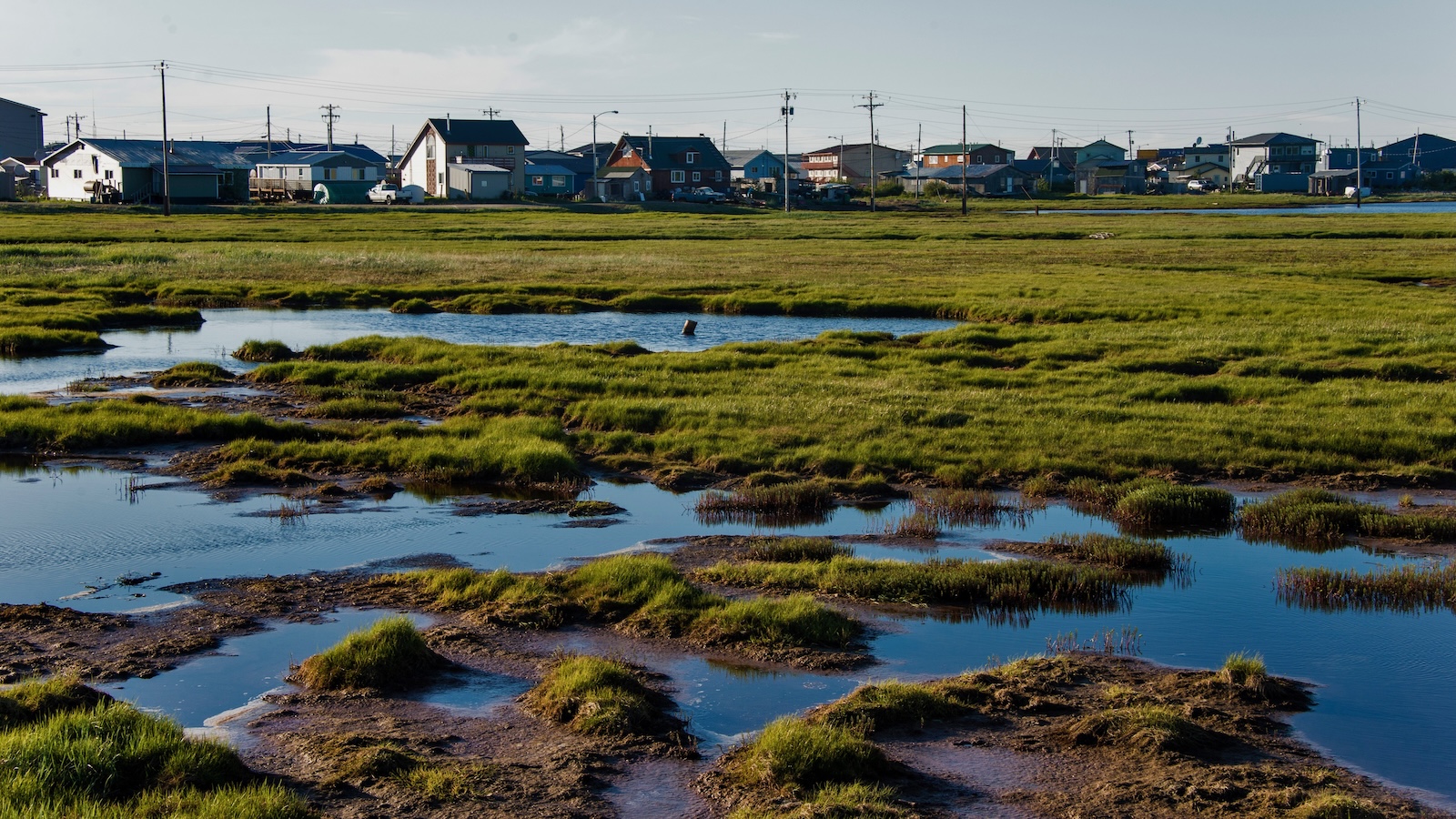
Perched precariously on a narrow gravel spit jutting into the freezing expanse of Kotzebue Sound just north of the Arctic Circle, the remote Alaskan city of Kotzebue faces an annual logistical countdown that dictates the rhythm of daily life. For residents of this northwestern hub, the calendar is marked by a strict three-month shipping window. During this brief period when sea ice temporarily retreats, freight barges must deliver the entirety of the community’s annual diesel supply. Beyond this fleeting window, the isolated settlement is accessible only by air, rendering it profoundly vulnerable to the volatility of global shipping routes and international commodity markets.
The consequences of this geographic isolation are starkly visible in the household budgets of the community’s residents. Kotzebue relies on diesel generation for approximately 75 percent of its municipal and residential power. To sustain this dependence, local families funnel roughly 20 percent of their total household income directly into energy expenditures. This staggering figure climbs to more than three times the national average energy burden experienced by low-income households across the United States. For a community striving to secure long-term economic stability, these exorbitant energy costs act as a persistent anchor on local development.
The Human and Economic Toll of Global Energy Volatility
The structural reliance on imported fossil fuels places remote Indigenous populations at the whim of geopolitical tensions far beyond their borders. Chad Nordlum, the energy project manager for the Native Village of Kotzebue, points out that the community is entirely at the mercy of shifting international markets.
"Right now, with the Iran war going on, the diesel prices are very high and we’re locked in to much higher prices than we’ve have in the past," Nordlum explains. "There’s really nothing the community can do about diesel prices, but what we can do is produce our own energy."
This stark realization drove local leaders to pursue ambitious green energy transitions designed to sever the umbilical cord of imported fossil fuels. Hope arrived in 2024 when the Environmental Protection Agency (EPA) announced a monumental $20 million grant earmarked for a transformative local wind energy project. The allocation was part of a broader $150 million federal infusion intended to bolster critical tribal infrastructure throughout Alaska. According to projections at the time, the wind initiative would have slashed Kotzebue’s reliance on diesel fuel to roughly 40 or 50 percent, simultaneously returning long-term economic and infrastructural sovereignty to the Native Village.
Those plans came to an abrupt halt in May 2025, when the incoming Trump administration officially canceled the grant. More than a year later, the much-anticipated wind infrastructure remains indefinitely paused, leaving local leaders searching for alternative pathways to energy independence.
A Chronology of Disinvestment: From Historic Investments to Sweeping Cancellations
The cancellation of Kotzebue’s wind project was far from an isolated incident. It formed a prominent component of a wider wave of funding rollbacks orchestrated by the Department of Government Efficiency (DOGE), which targeted hundreds of millions of dollars previously allocated to Native American tribes across the United States.
To understand the scale of the current regulatory environment, policy experts point to a distinct timeline of legislative shifts and administrative reversals over the past several years:
- August 2022: The passage of the Inflation Reduction Act (IRA) establishes unprecedented funding streams designed to accelerate renewable energy deployment, climate resilience planning, and economic development in historically underserved regions, including Indian Country.
- 2023–2024: Federal agencies disburse historic levels of funding, channeling over $700 million into climate, energy, and infrastructure initiatives specifically tailored for tribal nations. Projects range from climate action planning to community-wide solar installations.
- Late 2024 to Early 2025: Political transitions bring sweeping administrative reviews across federal agencies. The newly formed Department of Government Efficiency, alongside legislative efforts packaged in the proposed "One Big Beautiful Bill Act," begins systematically dismantling grant frameworks established under the previous administration.
- May 2025: The EPA officially cancels Kotzebue’s $20 million wind energy grant, mirroring parallel actions that terminated high-profile initiatives, such as a $25 million grant intended to install solar panels on 600 homes within the Hopi Tribe as part of the broader $7 billion Solar for All program.
- 2026: Comprehensive reports published by the Brookings Institution detail the widespread impact of these cancellations, revealing that DOGE eliminated approximately $468 million in funding targeted toward Indigenous communities, heavily impacting environmental, natural resource, and agricultural programs.
Data and Analysis: Uncovering Systemic Underinvestment
Two recent reports published by the Brookings Institution shed light on the systemic nature of these funding rollbacks, illustrating how the recent terminations fit into a broader historical pattern of federal neglect. According to the research, approximately half of the $468 million slashed by DOGE was originally designated for environmental and natural resource management, while another 11 percent directly targeted agricultural programs. These initiatives included vital climate adaptation frameworks, green jobs programs, and infrastructure modernizations.
Rob Maxim, a fellow at Brookings Metro and a member of the Mashpee Wampanoag Tribe, emphasizes that the recent administrative cuts exacerbate long-standing infrastructure deficits. While the aggressive pace of the current administration’s cancellations is notable, Maxim argues that chronic underinvestment remains the default posture of the United States government toward Indigenous nations.
"The actions that the Trump administration are taking are particularly significant, but it’s not totally out of trend with previous administrations," Maxim notes. "And what we wanted to show was that actually this underinvestment is kind of the default for the U.S. rather than a blip."
In contrast, the robust flow of funding following the COVID-19 pandemic represented a rare deviation from historical norms. Analysts point out that these pandemic-era and IRA-driven infusions were designed not as discretionary philanthropic gestures, but as fulfillment of foundational federal duties.
"The funding that was flowing to Indian Country was not being done on the basis of race or DEI, and it was absolutely not illegal," Maxim asserts. "It was aimed at the promotion of tribal sovereignty and the well-being of tribal citizens and tribal communities, and so that is, you know, an obligation that the U.S. government maintains."
Administrative Justifications and Policy Implications
As federal oversight bodies scrutinize domestic spending, researchers have identified specific patterns in how grant programs were evaluated for elimination. Glencora Haskins, a senior research associate and applied research manager at Brookings Metro, highlights that federal reviews disproportionately flagged programs utilizing terms related to tribal governance.
"I think that there was a very surface-level view of what a lot of these programs were doing, rather than any deep interrogation of the types of systemic infrastructure deficits that programs were trying to fix," Haskins explains.
Neither the White House nor the EPA immediately responded to requests for comment regarding the criteria used to select specific tribal grants for cancellation.
Legal and policy scholars note that the systemic removal of these funds directly compromises the federal government’s trust and treaty responsibilities toward sovereign nations. Furthermore, the timing of these rollbacks coincides with a period of intensifying climate disruption. Native communities across Alaska and the broader continental United States face mounting threats from rising temperatures, thawing permafrost, coastal erosion, catastrophic wildfires, and increasingly violent storm surges. Without proactive investments in structural resilience, these communities face compounding vulnerabilities that threaten traditional ways of life and local economies.
Policy Recommendations for Long-Term Security
To prevent future political cycles from jeopardizing essential infrastructure, researchers at Brookings have outlined concrete legislative remedies. Haskins and Maxim advocate for the passage of congressional legislation that would categorically bar the termination of established federal grants and contracts awarded to tribal nations.
Additionally, the recommendations urge lawmakers to legally codify that all financial allocations directed to Indigenous communities serve foundational trust and treaty obligations, safeguarding them regardless of fluctuating political objectives or shifting program nomenclature. Furthermore, the report calls for statutory mandates ensuring that federal funds flow directly to tribal treasuries upfront, eliminating burdensome reimbursement processes that strain local administrative capacities.
Local Perseverance Amid National Uncertainty
Back in Kotzebue, the immediate path forward remains uncertain, but local leadership refuses to abandon the pursuit of energy autonomy. While Chad Nordlum monitors political developments in Washington in hopes that federal policy might eventually pivot back toward supporting remote Arctic infrastructure, the community is not standing still.
In the absence of the stalled wind turbine initiative, Nordlum and his team are actively scaling down their immediate ambitions, channeling local energy into a smaller solar project designed to chip away at the community’s immense power burdens.
"Our main goals are energy security and economic development for the tribe, which is ultimately being able to invest in our own community, help make the lives of people here a little more sustainable," Nordlum reflects. "We want our community to continue on into the future. We have to get a handle on our energy prices and availability."