The launch of Wild Guardians, a comprehensive multimedia educational initiative by Mongabay Kids, marks a significant shift in how environmental science is integrated into the upper elementary school curriculum. Designed specifically for fourth and fifth-grade students, the project moves beyond traditional textbook learning by utilizing a blend of documentary-style video storytelling, illustrated comics, and interdisciplinary lesson plans. By connecting young learners with real-world conservationists and their projects across the globe, Wild Guardians seeks to transform passive observation into active environmental stewardship. This initiative comes at a critical juncture in education, where there is an increasing demand for resources that foster scientific literacy alongside empathy for the natural world.
The Genesis of the Wild Guardians Project
The development of Wild Guardians was rooted in the recognition that children often lack a tangible connection to the abstract concepts of climate change, habitat loss, and biodiversity. While environmental education is frequently taught in theory, the founders of this initiative identified a gap in practical, actionable engagement. By partnering with organizations such as the Wild Nature Institute and local conservation groups like WaterWays in Tennessee, the program provides students with case studies of children their own age taking concrete action.
The program’s development phase spanned several months, focusing on translating complex conservation challenges—such as habitat fragmentation and water pollution—into digestible, five-minute video narratives. These narratives are paired with "toolkit" materials that align with established educational standards in math, English language arts, and social studies. By embedding conservation into the core curriculum, the creators aim to ensure that environmental education is treated as a foundational element of learning rather than an extracurricular luxury.
Core Conservation Topics and Geographic Scope
The pilot phase of the Wild Guardians series focuses on three distinct ecological challenges, each highlighting the interconnectivity between human communities and their local environments.
The first module, "Growing food for giants," takes students to Tanzania. Here, the narrative follows primary school students who are actively involved in reforestation efforts designed to support giraffe populations. By planting native trees and restoring degraded corridors, these children serve as a model for habitat restoration. The lesson serves as a global example of how community-led initiatives can provide the necessary resources for megafauna survival, while simultaneously benefiting local food security.
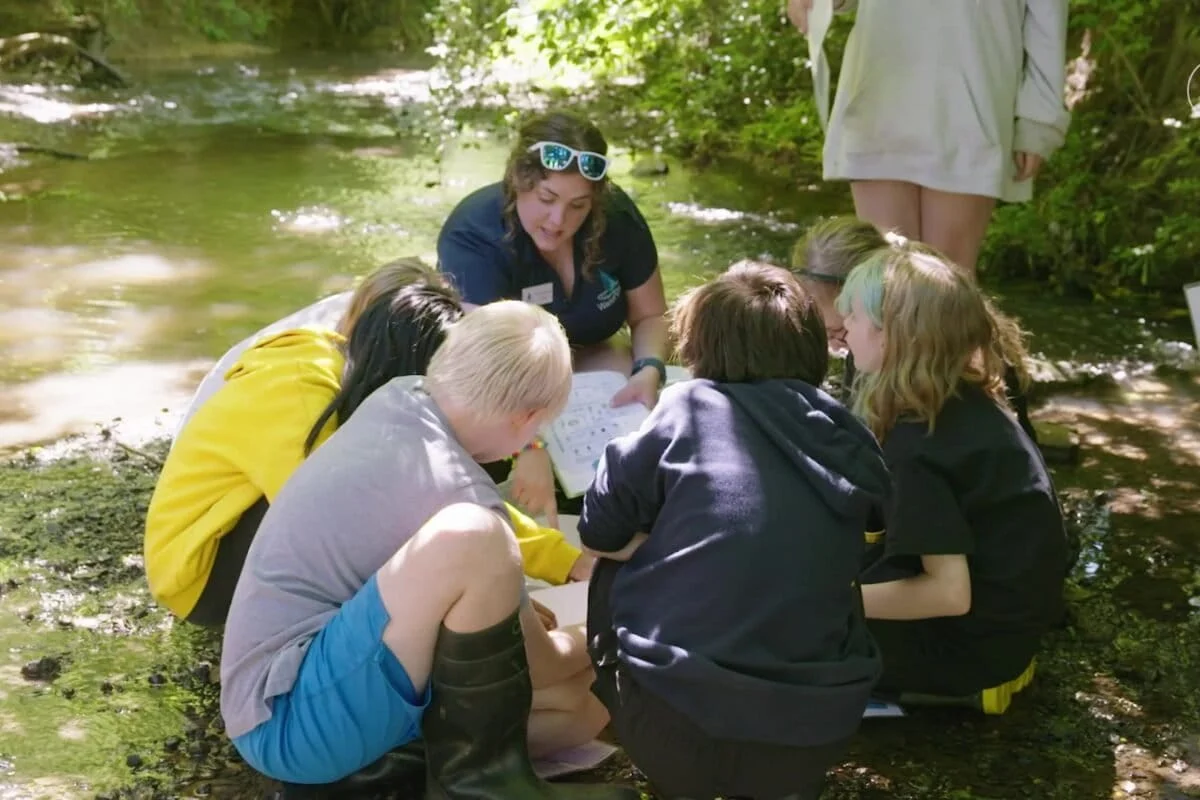
The second module, "Exploring and protecting waterways," shifts the focus to Chattanooga, Tennessee. This segment provides an intimate look at the health of local watersheds. By exploring local creeks that serve as habitats for species like the hellbender—a giant salamander—and various crawfish species, students learn the physics of water flow and the chemistry of pollution. The module emphasizes that waterways are not isolated bodies but rather systems that connect mountain ranges to the sea, teaching students that their local actions have a downstream impact on the broader biosphere.
The third module, "Discovering wild bees," addresses the often-overlooked crisis of pollinator decline. With over 20,000 species of bees globally, the program corrects the common misconception that all bees produce honey or live in managed hives. By introducing students to the specialized roles of solitary, wild bees, the curriculum highlights the necessity of biodiversity for food production and ecosystem resilience. Students are encouraged to conduct their own "wild bee safaris," fostering observational skills and an appreciation for the insects that are essential for global pollination.
Educational Framework and Pedagogical Strategy
The effectiveness of the Wild Guardians series lies in its interdisciplinary approach. Emily Townsend, the education lead for the project, has emphasized that the materials are designed for versatility. The "toolkit" structure allows educators to integrate the videos and comics into existing lesson plans without requiring significant extra preparation.

Data from educational researchers suggest that student engagement increases significantly when content is localized. By providing materials that explain how to perform habitat restoration or water quality testing in their own backyards, the program empowers students to transition from "learning about" to "doing." This pedagogical strategy is supported by the theory of "place-based education," which posits that learning is most effective when it is rooted in the unique history, environment, and culture of the student’s local community.
Supporting Data and Environmental Context
The necessity for such educational interventions is underscored by current environmental trends. According to the Intergovernmental Science-Policy Platform on Biodiversity and Ecosystem Services (IPBES), up to one million species are currently threatened with extinction, many within decades. Furthermore, the loss of natural habitats, often driven by agricultural expansion and urban development, continues to displace wildlife at an unprecedented rate.
In the case of wild bees, the decline is largely attributed to habitat fragmentation and the excessive use of pesticides. By teaching elementary students about the importance of pollinator corridors, the Wild Guardians program addresses a major conservation priority: the need for private land management to support biodiversity. Similarly, the focus on waterway protection in Tennessee addresses the critical issue of freshwater health; global data indicates that freshwater species are declining at a rate double that of terrestrial or marine species. Providing students with the knowledge to mitigate these threats—through simple actions like planting native flowers or monitoring local creek health—serves as a proactive response to these systemic issues.
Expert Perspectives on Youth Stewardship
The initiative has received support from various stakeholders in the conservation and education sectors. Mallory Lindsay, representing the Earth Focus Initiative of The Chuck & Ernestina Kreutzkamp Foundation, notes that the primary value of the program is its potential to alleviate "eco-anxiety" among youth. By providing a framework for action, the program helps children shift their mindset from fear to agency.
"The Wild Guardians project provides a practical toolkit for kids to take action for nature. This gives kids a sense of hope," noted Veila Makundi and Monica Bond of the Wild Nature Institute. Their endorsement reflects a growing consensus among environmental scientists that public engagement must include the younger generation to be sustainable. By showcasing children in Tanzania successfully growing food for giraffes, the program offers a tangible success story that counters the narrative of inevitable environmental collapse.
Implications for Future Curricula
The launch of Wild Guardians arrives at a time when school districts are increasingly looking for ways to integrate STEM (Science, Technology, Engineering, and Mathematics) with civic engagement. The program’s alignment with standard curricula makes it an attractive option for public and private schools alike.
Looking forward, the success of this series could signal a broader trend in educational content production. As digital access in classrooms becomes more prevalent, the ability to stream high-quality, multimedia content directly into the classroom allows for a more immersive experience than was possible in previous decades. If the Wild Guardians model proves successful in scaling—potentially by expanding to new topics like coral reef restoration or urban forest management—it could establish a new standard for how environmental non-profits interact with the formal education system.
Conclusion: Measuring Long-term Impact
While the Wild Guardians series is still in its early stages of implementation, the potential for long-term impact is substantial. By fostering a sense of connection to local wildlife, the program aims to cultivate a generation of voters, scientists, and community leaders who view environmental stewardship as an essential component of their civic responsibility.
The success of this initiative will likely be measured not just by the number of classrooms that utilize the materials, but by the tangible environmental improvements initiated by students. Whether through the creation of a pollinator garden at a suburban school or a community-led cleanup of a local stream, the transition from classroom theory to real-world impact is the ultimate goal of the Wild Guardians project. As Mongabay Kids continues to distribute these resources for free, the project stands as a testament to the idea that even the smallest stewards can play a significant role in protecting the planet’s wild places.