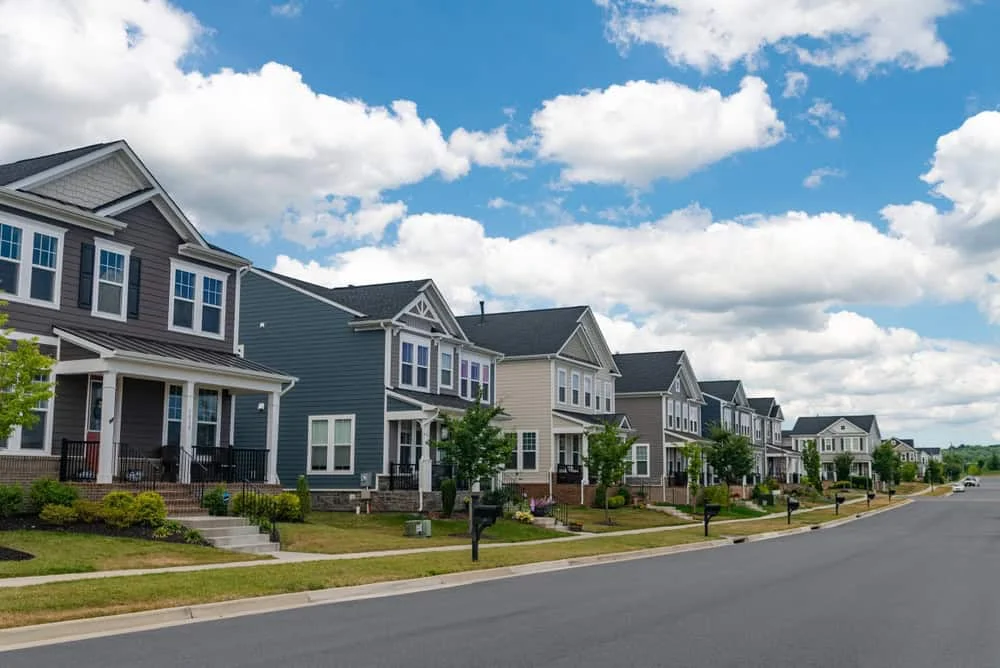
When a developer moves into an established neighborhood and begins constructing modern homes amid a landscape of older, character-rich properties, a ripple of curiosity and concern immediately spreads among longtime residents. Homeowners naturally wonder how these new market entries will influence their own property valuations, while prospective buyers ponder whether to invest in the newly built options or seek out older, more established residences nearby. Because real estate valuation relies heavily on recent comparable sales, the introduction of modern housing stock can significantly alter local market dynamics. However, the assumption that new construction automatically drives up property values is a common real estate misconception.
In practice, whether a newly developed project elevates, diminishes, or leaves nearby property values stagnant depends on a complex interplay of architectural design, local infrastructure, broader economic trends, and regional supply and demand. As urban and suburban neighborhoods across the United States continue to evolve through infill development, understanding these mechanisms is vital for anyone navigating the property market as a buyer, seller, or long-term resident.
The Broader Economic Landscape and Housing Market Trends
To properly contextualize how new construction affects localized real estate values, one must first examine the broader economic forces shaping the national housing market. Real estate does not exist in a vacuum; neighborhood-level changes occur against the backdrop of shifting interest rates, macroeconomic pressures, and national inventory levels.
Recent housing data illustrates this volatility. For instance, comprehensive market reports from major brokerages such as Redfin have highlighted shifting price trajectories nationwide. During specific periods of economic transition, median U.S. home-sale prices have experienced year-over-year declines, marking consecutive weeks of downward adjustments in various regional markets. When the macro housing market undergoes a cooling phase, sale prices in the immediate vicinity of a newly built home often mirror these broader regional trends—regardless of whether the new construction itself had a positive or negative local impact.
Consequently, real estate analysts emphasize that distinguishing between localized development effects and broader macroeconomic price movements is essential. A newly constructed home might sell for a high price, but if prevailing market interest rates are high and buyer demand is contracting, neighboring older homes may still see flat or declining valuations driven by national economic headwinds rather than local architectural changes.
Architectural Harmony and the Fine Line Between Enhancement and Disruption
At the micro-level, the physical attributes of the new construction dictate its relationship with the surrounding community. Quality, architectural scale, and aesthetic integration are the primary determinants of whether a project acts as an economic anchor or an outlier that disrupts the neighborhood’s financial ecosystem.
Industry experts emphasize that thoughtful planning is the dividing line between positive and negative valuation impacts. Jez Alogla, founder of Alogla Homes, highlights the nuanced nature of these developments. According to Alogla, new construction successfully uplifts existing neighborhood values when it is meticulously planned, designed with intention, and fully consistent with the established character of the community. Conversely, projects plagued by excessive density, subpar architectural choices, inadequate infrastructure, heightened traffic congestion, or a severe mismatch in price points relative to the existing housing stock frequently exert downward pressure on neighboring properties.
This sentiment is echoed by Marc Santarromana, founder of Design First Builders, who points out the critical importance of scale and materials. A well-constructed home that honors the dimensional scale and historical character of its street elevates the comparable sales data used by real estate agents and professional appraisers. However, introducing a structure that is disproportionately massive, overly dense, or stylistically discordant can make surrounding older homes appear dated or structurally overshadowed, potentially depressing their perceived market appeal even if the new build commands a strong sales figure. Furthermore, the longevity of materials matters immensely; timeless architectural choices tend to preserve property values, whereas trendy, short-lived aesthetic finishes can accelerate the depreciation of a newly introduced property’s comparative advantage.
Supply, Demand, and the Mechanics of Comparable Sales
The introduction of new housing stock fundamentally alters local market supply, creating a dynamic tension between increased inventory and heightened neighborhood desirability. When developers introduce modern homes featuring contemporary layouts, energy-efficient infrastructure, and updated amenities, they often attract a fresh wave of prospective buyers who might not have otherwise considered an established neighborhood.
Michelle Chaney, finance director at Zeilman-James Homes, Inc., notes that residential construction can revitalize mature communities by bringing renewed consumer interest. While adding physical structures naturally expands local housing inventory—which in some economic models could increase competition—it simultaneously enhances the overall marketing appeal of the micro-market. These new homes establish fresh pricing benchmarks, creating new comparable sales (comps) that real estate professionals utilize to evaluate neighborhood worth.
However, evaluating these comps requires nuance. Because older homes possess distinct historical features, mature landscaping, and different floor plans compared to brand-new builds, direct price comparisons can be misleading. Appraisers and real estate agents must carefully adjust valuations to account for the age and condition gap between the properties, ensuring that an expensive new build does not artificially inflate or deflate the valuation of a nearby mid-century home without proper contextualization.
Analyzing Local Impacts: What Homeowners and Buyers Should Examine
For residents and prospective buyers seeking to determine the exact trajectory of property values in their specific area, relying on generalized assumptions is insufficient. A methodical, data-driven approach is required to assess how an incoming construction project will alter the local real estate landscape.
Industry professionals recommend gathering concrete planning documents and historical sales data rather than speculating based on curb appeal alone. Key steps in this evaluation process include:
- Reviewing municipal planning and zoning board records to understand the full scope, density, and timeline of approved or proposed construction projects in the immediate vicinity.
- Analyzing recent comparable sales within a tight geographic radius—typically a quarter-mile to a half-mile block radius—to observe whether historical price trends diverge from the broader metropolitan average.
- Assessing infrastructural capacity, including local traffic patterns, school district enrollment metrics, and parking availability, all of which heavily influence long-term neighborhood desirability.
- Consulting with a licensed real estate agent who possesses deep, localized expertise in the specific municipality to interpret current appraisal trends and neighborhood absorption rates.
By systematically documenting these variables, homeowners can gain a clearer picture of their asset’s trajectory, while buyers can make more informed decisions regarding long-term equity growth.
Broader Implications for the Future of Urban and Suburban Infill
As metropolitan areas continue to densify and available vacant land dwindles, infill construction—the process of developing vacant or underutilized parcels within existing urbanized areas—will remain a dominant force in American real estate. The economic friction between preservation and modernization is an inevitable consequence of this growth.
Ultimately, the impact of new construction on nearby property values is neither universally beneficial nor categorically detrimental. It is a localized economic event dictated by the quality of execution, the responsiveness of local infrastructure, and the alignment of supply and demand. For municipal planners, developers, and neighborhood associations, the challenge lies in fostering a balanced approach to growth—one that introduces necessary modern housing stock while actively preserving the architectural integrity and social fabric of established communities. As the housing market continues to navigate economic shifts, understanding these multifaceted dynamics will remain essential for anyone with a stake in real estate.
Frequently Asked Questions
Does new construction automatically increase property values?
No. While well-designed new homes that align with local demand and neighborhood character can support or elevate nearby values, poorly planned projects or those built during a broader market downturn may have little to no positive effect, or could even weigh on neighboring property valuations.
Can new construction lower the value of nearby homes?
Under certain circumstances, yes. Projects that introduce excessive density, severe traffic congestion, strained local infrastructure, or architectural styles drastically out of step with the existing streetscape can diminish the appeal and market value of neighboring properties.
How can residents find out what is being built in their neighborhood?
Homeowners and prospective buyers can consult their local municipal planning, zoning, or permitting offices to review public records on approved and proposed developments. Additionally, partnering with a local real estate agent who actively monitors regional permitting activity can provide valuable insight into upcoming construction pipelines.