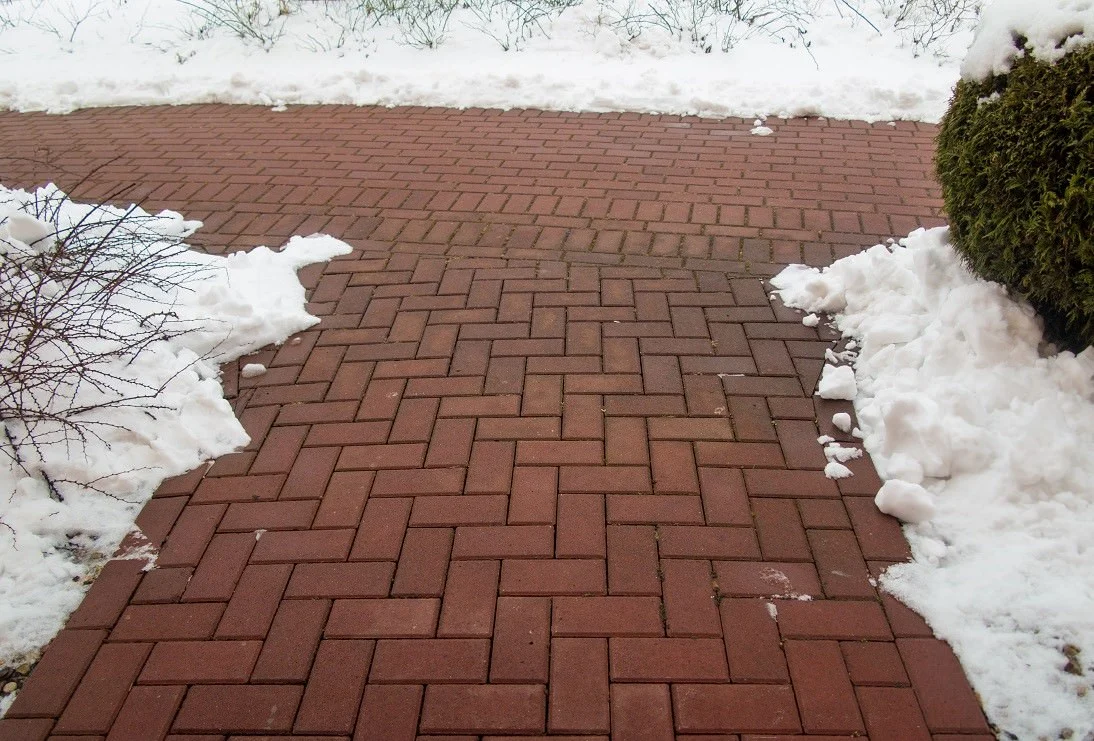
In regions defined by severe winters, every construction or home improvement project carries an additional layer of complexity that requires meticulous planning and often a higher upfront investment to mitigate the destructive forces of nature. From the formation of ice dams on rooflines to the subterranean pressure of frost heave, the seasonal freeze-thaw cycle represents a relentless mechanical assault on infrastructure. For homeowners and civil engineers in the Northern and Midwestern United States, as well as across Canada and Northern Europe, the durability of outdoor surfaces is not merely an aesthetic concern but a matter of structural integrity and environmental responsibility. Recent advancements in material science and hydraulic engineering have transformed the paving industry, offering new solutions that allow landscapes to withstand sub-zero temperatures while managing stormwater runoff effectively.
The Mechanical Reality of Winter Damage
To understand the necessity of specialized paving systems, one must first examine the physics of how winter destroys conventional surfaces. Water is a uniquely destructive force in cold climates due to its behavior upon freezing. Unlike most substances, water expands by approximately 9 percent when it transitions from a liquid to a solid state. This expansion occurs with immense force; if water is trapped within a microscopic pore of a concrete paver or a hairline crack in an asphalt driveway, it acts as a hydraulic lever, pushing the material apart from the inside.
This process, known as spalling, results in the flaking, pitting, and eventual crumbling of the surface. In a typical Northern winter, this cycle can repeat dozens of times as temperatures fluctuate above and below the freezing point. A driveway that appears pristine in October can emerge in April with significant surface degradation. Furthermore, the use of de-icing salts—while necessary for safety—often exacerbates this damage by increasing the number of freeze-thaw cycles and chemically attacking the binder in concrete and masonry.
Beyond surface degradation lies the threat of frost heave. This phenomenon occurs when moisture in the soil beneath the pavement freezes, forming "ice lenses" that push the entire structure upward. When the ground thaws, the support becomes uneven, leading to deep structural cracks and shifted pavers. Traditionally, the solution was to seal surfaces completely to prevent water ingress. However, modern environmental science has revealed that shedding runoff into municipal sewers carries significant ecological costs, including the contamination of local streams and the depletion of groundwater reserves.
The Permeable Solution: A Paradigm Shift in Pavement Design
The emergence of permeable paving systems represents a fundamental shift in how engineers approach cold-climate infrastructure. Rather than attempting to create an impenetrable barrier, permeable systems are designed to manage water by allowing it to pass through the surface and into a prepared stone base. This "drain-through" approach offers a dual benefit: it protects the pavement from freeze-thaw damage and provides a sustainable method for managing snowmelt and rainwater.
Research into cold-climate installations has demonstrated that permeable pavements often perform better than their solid counterparts during the winter months. Because water drains into the sub-base rather than pooling on the surface, the formation of "black ice" is significantly reduced. Furthermore, studies have shown that the air pockets within permeable systems can act as an insulating layer, causing the pavement to freeze more slowly and thaw more quickly than conventional slabs. This thermal behavior reduces the reliance on chemical de-icers, which further protects the longevity of the material and the health of the surrounding ecosystem.
Technical Standards and Durability Ratings
For consumers and contractors, identifying materials capable of surviving extreme cold requires a reliance on standardized testing. The industry utilizes specific benchmarks to measure a product’s resistance to the elements. ASTM C1645 is the standard specification for the freeze-thaw and de-icing-salt durability of concrete interlocking pavers. This test subjects the material to repeated cycles of freezing and thawing in a saline solution to simulate the harshest winter conditions.
Similarly, ASTM C67 covers the testing of clay pavers, ensuring they can withstand the internal pressures of moisture expansion. When a product is rated to these standards, it indicates that the manufacturer has verified its performance against the specific stresses delivered by a cold-climate winter. Homeowners are increasingly moving away from petroleum-based sealants, which can defeat sustainability goals and peel under the stress of snowplows, opting instead for materials that possess inherent durability.
Plastic Grid Systems: The Structural Workhorses
Among the most resilient options for cold climates are open-cell plastic grid systems. Often manufactured from high-density polyethylene (HDPE) or other recycled polymers, these systems are not pavers in the traditional sense. Instead, they form a cellular matrix that is filled with gravel or soil and grass.
The primary advantage of plastic grids in winter is their flexibility. Unlike rigid concrete slabs, which crack when the ground moves, plastic grids possess a "ring-and-grid" design that can flex with seasonal soil movement. This inherent elasticity allows them to shrug off frost heave without losing structural integrity.
Industry Leaders in Flexible Paving
Several manufacturers have optimized these systems for residential and commercial use in extreme climates:
- TRUEGRID: Utilizing 100 percent post-consumer recycled HDPE, TRUEGRID systems are engineered to operate in a temperature range from -58°F to 194°F. Their patented flex joints are specifically designed to accommodate expansive soils. Because the system is entirely porous, it prevents surface icing and provides superior traction for vehicles.
- Vodaland EasyPave and HexPave: These systems cater to the DIY market, offering snap-and-lock connections that do not require specialized tools for installation. When set on a properly compacted, open-graded stone base with geotextile fabric, these grids can support heavy vehicular loads while ensuring that meltwater is moved away from the surface before it can refreeze.
- Invisible Structures: This company offers products like Grasspave2 and Gravelpave2, which ship in flexible rolls. These systems boast a 92 percent void space, allowing for near-instantaneous drainage. They are also designed to be "plowable," a critical requirement for any Northern driveway, provided the plow blade is slightly elevated or fitted with a rubber edge.
Concrete Innovation: Techo-Bloc and the Evolution of Dry-Cast Masonry
For those who prefer the aesthetic of traditional stone or concrete, the industry has developed permeable concrete pavers that do not sacrifice durability for drainage. Techo-Bloc, a leader in the North American market, has engineered its permeable line specifically for the "freeze-thaw belt."
Their flagship Aquastorm paver is a dry-cast concrete unit with integrated spacers. These spacers ensure a consistent joint width, which is then filled with small aggregates to allow for high infiltration rates. Unlike many cheaper concrete options, these pavers are rated for both freeze-thaw and de-icing-salt resistance. By ensuring that the color runs through the entire unit rather than just the surface, the manufacturer ensures that the aesthetic appeal remains intact even after years of exposure to snow shovels and salt.
Conversely, some materials that perform well in warmer climates, such as GraniteCrete, are now being marketed with caveats. While GraniteCrete is an excellent permeable choice for moderate regions, its manufacturers advise against its use in areas with prolonged deep freezes, as the decomposed-granite admixture can suffer surface damage under extreme frost action.
The Role of Recycled Rubber in Modern Paving
Recycled rubber tiles, often made from diverted tires, represent another category of winter-ready surfacing. Products like Rubberific and Multy Home’s Envirotile are promoted as being inherently frost-resistant because rubber does not absorb water and cannot be cracked by internal ice expansion.
However, environmental experts urge caution regarding the placement of rubber pavers. Because they are derived from used tires, they may contain compounds that can leach into the soil. While they are excellent for walkways and patios, they should be kept away from vegetable gardens or areas where food crops are grown. Additionally, most rubber tiles are designed to be laid over existing hard surfaces, meaning they may not provide the same drainage benefits as a fully permeable grid system unless the entire assembly is engineered for porosity.
On the Horizon: The Future of Frost-Proof Permeable Concrete
While current technology offers robust solutions, the next frontier in paving involves the development of "clogging-resistant" permeable concrete. Historically, poured pervious concrete has struggled in cold climates because its large pores can become clogged with sediment and salt, leading to internal freezing and rapid deterioration.
Materials researchers are currently testing new high-strength permeable pavements that do not require the air-entrainment additives typically needed to survive frost. This research, currently transitioning from laboratory settings to commercial pilot programs, suggests a future where poured permeable driveways will be as reliable in the sub-zero temperatures of Minnesota as they are in the temperate climates of the South.
Strategic Implementation and Long-Term Implications
The transition toward permeable, cold-climate-rated paving is more than a home improvement trend; it is a necessary adaptation to a changing climate and aging municipal infrastructure. By choosing materials that manage water on-site, homeowners reduce the "Urban Heat Island" effect and decrease the volume of polluted runoff entering local waterways.
The success of these systems, however, depends entirely on the "unseen" components of the installation. A cold-climate paver is only as good as the base beneath it. A properly designed system requires a multi-layered base of open-graded stone—larger rocks at the bottom for storage and smaller aggregates at the top for leveling. This structure creates a massive "void space" that can hold thousands of gallons of water, allowing it to slowly infiltrate the soil even when the surface is frozen.
As municipalities continue to implement "stormwater taxes" based on the amount of impervious surface on a property, the economic argument for permeable paving becomes as compelling as the structural one. By investing in materials that flex with the earth and breathe with the water, property owners can ensure that their landscapes remain durable, safe, and environmentally sound for decades to come, regardless of how hard the winter hits.