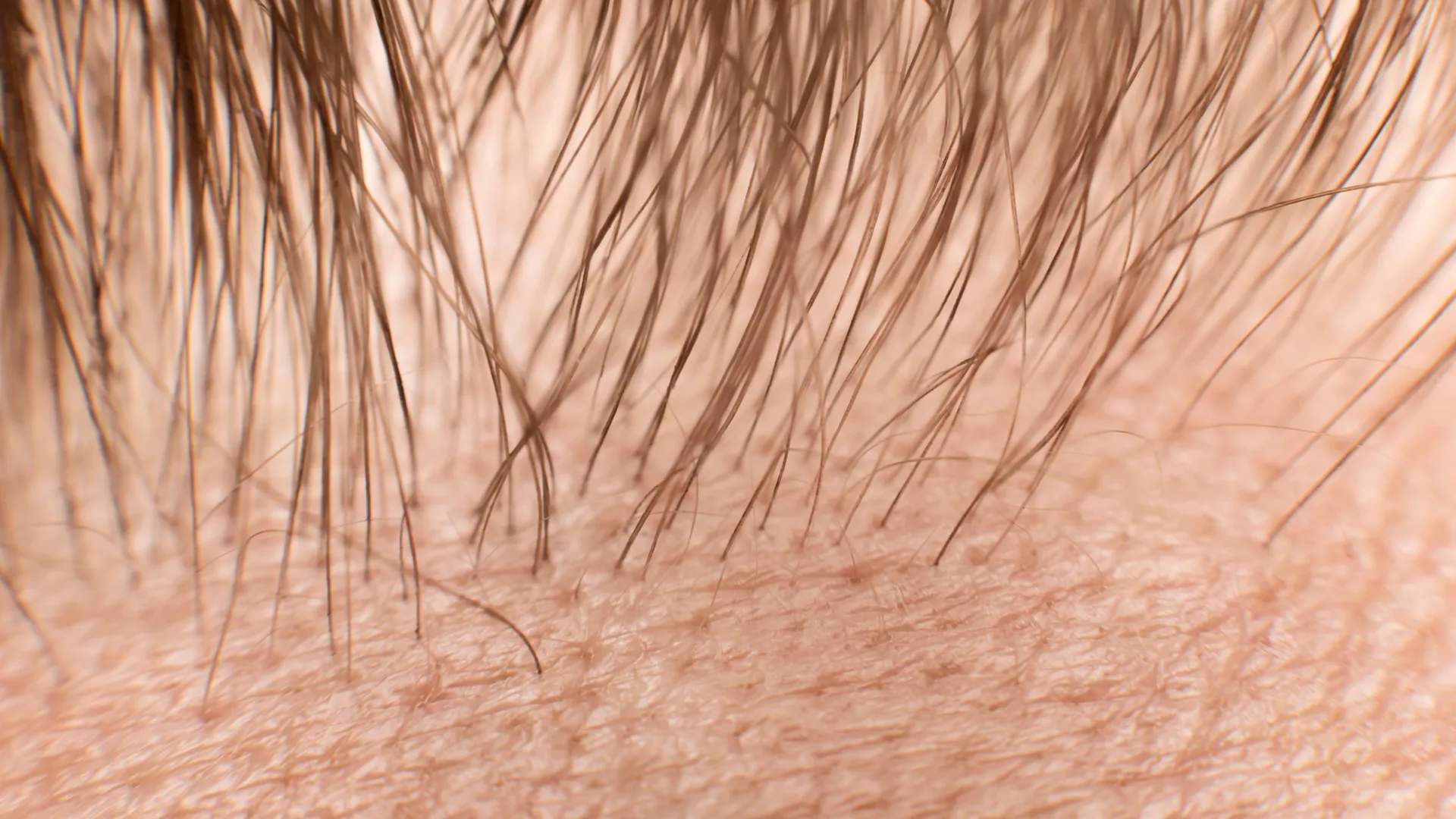
Long before a mammal is born, its skin begins establishing the precise locations where hair will eventually grow, forming intricate geometric arrangements that vary wildly across the animal kingdom. For decades, developmental biologists have sought to uncover the underlying mechanisms governing these patterns. Recent research conducted at the University of Geneva (UNIGE) has challenged long-standing assumptions, proposing that these sophisticated biological architectures are not the result of complex, pre-programmed genetic blueprints, but rather the emergent property of simple, local interactions between cells and chemical signals.
The study, published in the Proceedings of the National Academy of Sciences (PNAS), marks a significant shift in developmental biology. By utilizing a mathematical model based on chemotaxis—the movement of cells in response to chemical gradients—researchers have successfully replicated the follicle patterns of two distinct rodent species. This discovery suggests that nature relies on a unified, adaptable mechanism to generate the diverse arrays of hair, feathers, and scales observed in vertebrates.
The Historical Context: The Expansion-Induction Model
To understand the significance of this discovery, one must look at the prevailing theory that has dominated the field for nearly half a century. The expansion-induction model has long served as the primary framework for explaining how skin appendages, known as placodes, emerge in embryonic development.
Under this model, researchers hypothesized that as a nascent placode forms, it secretes an inhibitory chemical signal. This signal effectively creates a "no-fly zone" around the structure, preventing nearby cells from developing into further follicles. As the embryo matures, the skin grows and stretches. This physical expansion eventually pushes neighboring cells far enough away from the initial placode that they are no longer suppressed by the chemical gradient. At that point, a new placode can emerge.
While this theory has been empirically observed in laboratory mice (Mus musculus) and provides a logical explanation for regular spacing, it has struggled to account for the extraordinary variety of follicle densities and orientations seen in other mammals. Critics of the model have argued that if it were the universal rule, one would expect far more uniformity across the animal kingdom than what is actually observed.
A New Mechanism: The Role of Chemotaxis
Led by Athanasia Tzika, a Senior Lecturer, and Michel Milinkovitch, a Professor in the Department of Genetics and Evolution at UNIGE’s Faculty of Science, the research team sought an alternative explanation that could account for greater biological flexibility. They pivoted toward chemotaxis—a fundamental biological process where cells migrate toward or away from specific chemical concentrations.
In the human body, chemotaxis is best known for guiding white blood cells toward sites of infection or injury, but the UNIGE team proposed that it also serves as the fundamental engine for skin patterning. The researchers developed a simulation in which mobile cells in the dermis—the inner layer of skin—respond to attractant chemical signals secreted by the epidermis.
By simulating the growth of the skin alongside these cellular movements, the researchers observed that placodes did not need to be told where to form by a master regulatory system. Instead, the placodes formed spontaneously through the self-organization of cells reacting to local chemical cues. When the team ran the simulation, it perfectly mirrored the follicle development patterns seen in standard laboratory mice, effectively demonstrating that the traditional expansion-induction model may be a specific case of a much broader, simpler phenomenon.
Testing the Limits: The Spiny Mouse Case Study
The true test of the team’s hypothesis was to see if this mechanism could explain patterns that defied the traditional model. They turned their attention to the spiny mouse (Acomys dimidiatus). Unlike the common house mouse, the spiny mouse possesses a coat with a highly directional, rigid geometric alignment of hair follicles—a structure that cannot be reconciled with the standard expansion-induction theory.
Using high-resolution, three-dimensional imaging of embryonic skin, the team mapped the biochemical and growth characteristics of the spiny mouse. When these parameters were integrated into their mathematical model, the simulation again successfully produced the specific, highly organized pattern found in the species.
This finding is of critical importance to the field of evolutionary biology. It suggests that the vast differences in physical appearance between mammalian species are not necessarily driven by the evolution of entirely new, complex developmental genes. Instead, species-specific patterns can emerge from subtle "tweaking" of a shared, ancestral mechanism. By slightly adjusting the chemical sensitivity of cells, the rate of skin growth, or the strength of the attracting signals, evolution can generate an endless variety of textures and patterns using the same basic cellular toolkit.
Scientific Implications and Future Research
The implications of this research extend far beyond hair growth. The mechanisms identified by the UNIGE team provide a template for understanding how complex tissues develop during embryogenesis. If the development of skin appendages—which are structurally homologous to feathers and scales—is driven by self-organizing chemotaxis, it is highly probable that similar principles govern the patterning of other organs and tissues.
Muhamet Ibrahimi and Ebrahim Jahanbakhsh, key researchers on the study, emphasized the elegance of this discovery: "Our findings show that the observed patterns do not require a complex system telling each placode where to form. Instead, placodes emerge spontaneously from local interactions between cells and chemical signals."
This shift toward "emergent behavior" in biological systems aligns with modern trends in systems biology, which favor models of self-organization over top-down control. In the context of evolutionary medicine, understanding these pathways could also shed light on congenital conditions where skin development is interrupted, as well as providing insights into regenerative medicine, where the goal is to induce the growth of new follicles or skin structures in damaged tissue.
Broader Impact: A Unified Biological Language
The work of the UNIGE team serves as a reminder of the efficiency of evolution. Nature rarely creates a new machine when a modification to an existing one will suffice. By identifying the core role of chemotaxis in follicle formation, researchers have uncovered a "universal language" of tissue architecture.
Looking forward, the scientific community is expected to test this model against other mammalian species with even more complex coats, such as those with spotted or striped patterns. If the model holds, it could lead to a predictive understanding of how skin morphology evolves in response to environmental pressures.
As Athanasia Tzika concluded, the differences we observe between species are not the result of fundamentally different developmental blueprints, but rather variations on a single, self-organizing theme. This realization simplifies the grand puzzle of development, moving the field closer to a comprehensive, physics-based understanding of how life builds itself from the bottom up.
While the expansion-induction model will remain a useful component of developmental history, the UNIGE study provides the framework for a more robust and flexible theory. By bridging the gap between cell-level signaling and macroscopic anatomy, this research highlights the beauty and inherent logic of the biological processes that define the physical world. As further studies emerge, the focus will likely shift toward identifying the specific genes that control these chemical gradients, potentially unlocking the ability to manipulate tissue patterning for therapeutic or biotechnological applications in the future.