Syria’s $7 Billion Power Plan Hinges on Grid Fixes
Syria’s ambitious $7 billion power sector reconstruction plan is heavily reliant on a foundational necessity: the complete overhaul and modernization of its dilapidated electricity grid. Without addressing the deep-seated issues plaguing transmission and distribution networks, any investment in new generation capacity, however substantial, risks being squandered. The existing grid infrastructure, heavily damaged by years of conflict and neglected maintenance, suffers from chronic power losses, frequent outages, and an inability to reliably deliver electricity to end-users. Experts estimate that current transmission and distribution losses in Syria can exceed 30%, a figure far exceeding international benchmarks. This translates directly into wasted energy, increased operational costs, and a significant impediment to economic recovery. The $7 billion figure, while seemingly large, is precisely targeted to confront these dual challenges: bolstering generation and, critically, rebuilding and fortifying the network that carries that power.
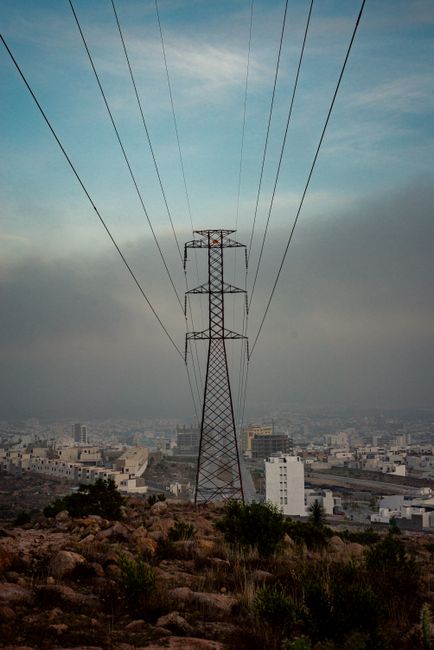
The core of the $7 billion initiative, as outlined by Syrian officials and international partners, involves a multi-pronged approach to grid rehabilitation. This includes the replacement of damaged or obsolete transmission lines, the installation of modern substations equipped with advanced control and monitoring systems, and the upgrading of distribution networks within cities and rural areas. The emphasis is on creating a resilient and efficient grid capable of handling increased power loads from newly constructed or rehabilitated power plants, as well as facilitating the integration of renewable energy sources, a key component of Syria’s long-term energy strategy. The plan recognizes that simply adding more megawatts at the generation source will not solve the problem if that power cannot reach consumers reliably and with minimal loss. Therefore, a significant portion of the $7 billion is earmarked for these vital infrastructural upgrades.
One of the primary technical challenges facing the grid fix is the pervasive issue of technical and non-technical losses. Technical losses occur due to the physical limitations of electricity transmission and distribution, such as resistance in wires and energy dissipation in transformers. However, in Syria’s current context, these losses are exacerbated by aging equipment that is less efficient. Non-technical losses, which encompass electricity theft and metering inaccuracies, are also a significant problem that contributes to revenue shortfalls for the power utility. The $7 billion plan aims to tackle both through a combination of technological solutions and improved operational practices. This includes the deployment of smart meters to accurately measure consumption, enhanced anti-theft measures, and the repair or replacement of faulty transmission and distribution components to reduce inherent energy dissipation.
The geographical scope of the grid rehabilitation is extensive. Syria’s electrical infrastructure spans vast distances, connecting major cities, industrial zones, agricultural regions, and remote communities. The damage is not uniform, with some areas bearing the brunt of direct conflict and others suffering from decades of underinvestment. The $7 billion allocation must therefore be strategically distributed to address the most critical network segments first, prioritizing areas with the highest population density, significant industrial activity, and those crucial for agricultural production. This requires meticulous network analysis, detailed damage assessments, and a phased implementation approach. Projects will likely involve rebuilding damaged substations, replacing kilometers of degraded transmission lines, and upgrading local distribution networks that are often the weakest link in the chain.
Funding for the $7 billion power plan is expected to come from a combination of sources, including government investment, loans from international financial institutions, and potentially private sector participation. However, securing and effectively deploying these funds is contingent on demonstrating a clear path to grid stability and a return on investment. International donors and investors will be scrutinizing the plan’s technical feasibility, its management capacity, and its potential to create a sustainable and reliable energy system. A robust and transparent procurement process, coupled with effective project management, will be crucial to ensuring that the $7 billion is utilized efficiently and that the grid rehabilitation projects are completed on time and within budget. The success of the entire $7 billion endeavor hinges on this meticulous financial and operational oversight.
The rehabilitation of the grid is not merely a technical undertaking; it also involves human capital development and institutional strengthening. Syria’s power utility, the General Establishment of Electricity for Generation, Transmission and Distribution (GEG), has faced significant challenges in maintaining and operating its infrastructure. The $7 billion plan must therefore include provisions for training and upskilling its workforce in the operation and maintenance of modern grid technologies, including advanced metering infrastructure and supervisory control and data acquisition (SCADA) systems. Rebuilding institutional capacity, improving management practices, and fostering a culture of accountability within GEG are equally important for the long-term success of the grid fix and the overall power sector reform.
Integrating renewable energy sources, such as solar and wind power, is a stated objective of Syria’s energy strategy and a key consideration within the $7 billion plan. However, the successful integration of intermittent renewable energy generation requires a flexible and stable grid. The current grid’s unreliability and susceptibility to outages are significant barriers to incorporating variable renewable power sources. The proposed grid upgrades, including enhanced control systems and the modernization of substations, are designed to improve grid stability and enable the absorption of renewable energy. Without these foundational grid improvements, the potential of Syria’s renewable energy resources will remain largely untapped, hindering the diversification of the energy mix and the reduction of reliance on fossil fuels, which is a critical component of the $7 billion’s broader aims.
The economic implications of a revitalized electricity grid, supported by the $7 billion investment, are profound. Reliable electricity is a prerequisite for industrial development, business growth, and job creation. Businesses cannot operate efficiently, and industries cannot expand without consistent and affordable power. The current grid deficiencies discourage investment and contribute to high operational costs for existing enterprises. By fixing the grid, the $7 billion plan aims to unlock economic potential, attract foreign investment, and improve the quality of life for Syrian citizens by ensuring access to essential services. The ability of the $7 billion to deliver on these economic promises is directly tied to the success of its grid modernization components.
Furthermore, the $7 billion plan acknowledges the need to address the critical issue of energy security. Decades of conflict have disrupted energy supplies and made the country vulnerable to fluctuations in international energy markets. A modern and efficient grid, coupled with diversified generation capacity, will enhance Syria’s energy independence and resilience. The ability to transmit and distribute power reliably from various sources, including domestic renewables and rehabilitated traditional plants, reduces reliance on a single energy source and strengthens the nation’s overall security. The success of the $7 billion in achieving this strategic objective is inextricably linked to the successful repair and enhancement of its transmission and distribution networks.
The implementation of the $7 billion power plan, with its central focus on grid rehabilitation, will undoubtedly face numerous challenges. These include security concerns in certain regions, the availability of skilled labor and materials, and the complex logistical requirements of large-scale infrastructure projects. However, the strategic imperative to rebuild Syria’s energy sector, and the substantial financial commitment represented by the $7 billion, underscore the recognized necessity of prioritizing grid modernization. The success of the entire $7 billion investment, and its potential to transform Syria’s energy landscape, ultimately rests on its ability to lay a robust and reliable foundation through comprehensive grid fixes.
