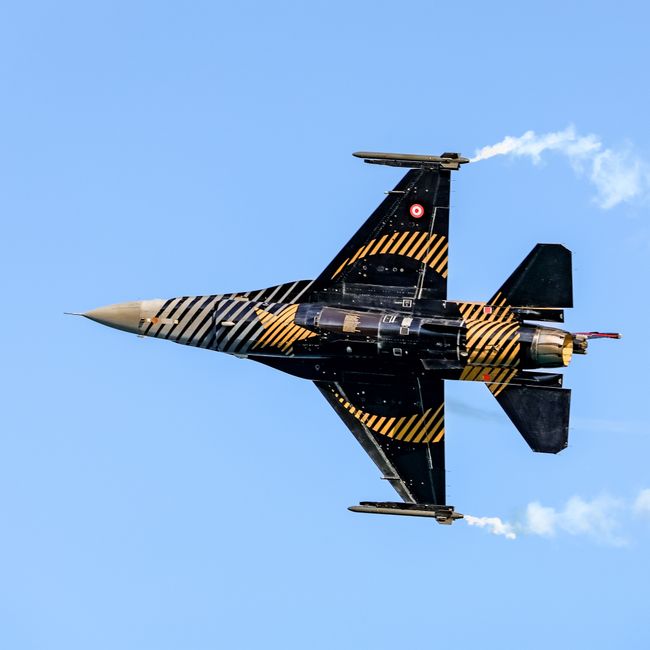
Category Military Aviation 2: Advanced Concepts and Emerging Technologies
Category Military Aviation 2 encompasses the cutting edge of aerial warfare, moving beyond foundational principles to explore sophisticated doctrines, transformative technologies, and the evolving operational landscape. This domain is characterized by a relentless pursuit of superiority through enhanced speed, stealth, lethality, survivability, and information dominance. Unlike basic military aviation which focuses on fundamental aircraft types and their employment, Category 2 delves into the intricacies of advanced propulsion systems, novel weapon integration, sophisticated sensor suites, networked warfare architectures, and the increasingly critical role of artificial intelligence and autonomy. Understanding this category is crucial for anyone seeking to grasp the future of air combat, strategic power projection, and the operational advantages gained through technological leaps. The development and deployment of aircraft and systems within Category 2 are often driven by the need to counter emerging threats from peer and near-peer adversaries, necessitating continuous innovation and adaptation. This segment of military aviation is not merely about building faster or more powerful planes; it’s about fundamentally reshaping how air power is conceived, employed, and sustained in a complex global security environment. The economic investment in this area is substantial, reflecting its perceived importance in maintaining national security and projecting influence. Research and development cycles are compressed, with nations vying for technological supremacy in a high-stakes arms race.
The operational concepts defining Category Military Aviation 2 are intrinsically linked to the advancement of aircraft design and capabilities. Beyond traditional air superiority and ground attack missions, modern military aviation focuses on a spectrum of highly specialized roles. These include: persistent intelligence, surveillance, and reconnaissance (ISR) at extreme ranges and altitudes, often employing uncrewed aerial vehicles (UAVs) equipped with advanced sensor payloads capable of penetrating sophisticated enemy defenses. Electronic warfare (EW) has ascended to paramount importance, with aircraft designed to disrupt, deceive, and degrade enemy command, control, communications, computers, and intelligence (C4I) networks. This involves dedicated EW platforms, as well as integrated EW systems on multi-role combat aircraft. Strategic strike capabilities have evolved to incorporate longer ranges, greater precision, and the ability to overcome advanced air defense systems, often through the use of stealth technology and advanced standoff munitions. Space-based assets, while not strictly aircraft, are now inextricably linked to military aviation, providing critical navigation, communication, and ISR support, necessitating integrated operations between air and space domains. The concept of "missionized" aircraft, where platforms are designed and equipped for very specific, high-demand missions, is also a hallmark of Category 2, moving away from the more general-purpose designs of earlier eras. The integration of these diverse capabilities into cohesive operational plans represents a significant intellectual and strategic undertaking, requiring highly trained personnel and sophisticated command structures.
Propulsion systems represent a core area of innovation within Category Military Aviation 2. While turbofan and turboprop engines remain prevalent, research and development are pushing the boundaries of efficiency, thrust-to-weight ratio, and operational flexibility. Advanced cycle engines, such as adaptive cycle engines, offer variable bypass ratios, allowing for optimized performance across a wider range of flight conditions, from subsonic loitering to supersonic dash capabilities. This adaptability is critical for platforms operating in diverse threat environments. Hypersonic propulsion, including scramjets (supersonic combustion ramjets), is a burgeoning field with the potential to revolutionize strategic strike and reconnaissance, enabling aircraft to travel at speeds exceeding Mach 5. The challenges associated with scramjet technology are immense, including aerodynamic heating, fuel injection, and combustion stability at extreme speeds, but the potential payoff in terms of reduced transit times and enhanced survivability is substantial. Electric and hybrid-electric propulsion systems are also being explored, particularly for smaller UAVs and specialized applications, offering advantages in terms of reduced noise signatures, increased endurance, and potentially lower operational costs. Thermal management of advanced propulsion systems, especially for hypersonic flight, is a critical engineering challenge, requiring novel materials and cooling techniques to prevent structural failure and maintain engine integrity. The development of these advanced propulsion systems is often a multi-decade endeavor, involving significant government funding and collaboration between aerospace companies and research institutions.
The integration of advanced sensor suites is a defining characteristic of Category Military Aviation 2. Beyond traditional radar and infrared systems, modern military aircraft are equipped with multi-spectral sensors capable of detecting and tracking targets across a wide range of electromagnetic spectrums. Synthetic aperture radar (SAR) provides high-resolution ground imagery, even through cloud cover and at night. Electro-optical/infrared (EO/IR) sensors offer detailed visual and thermal imaging, crucial for target identification and tracking. Electronic support measures (ESM) systems are vital for detecting and analyzing enemy radar and communication signals, providing situational awareness and enabling targeted electronic attack. The trend is towards sensor fusion, where data from multiple sensors is combined and processed by sophisticated algorithms to create a more comprehensive and accurate picture of the battlespace. This fusion is essential for combating sophisticated electronic countermeasures and for identifying low-observable targets. Advanced lidar and hyperspectral imaging technologies are also finding their way into military platforms, offering new ways to identify specific materials and anomalies. The sheer volume of data generated by these sensor suites necessitates advanced data processing capabilities, often leveraging artificial intelligence and machine learning to sift through information and highlight critical intelligence for human operators. The development of these sensor technologies is driven by the need to maintain information superiority in increasingly contested environments.
Lethality in Category Military Aviation 2 has transitioned from sheer explosive power to precision, multi-role capabilities, and networked weapon delivery. Precision-guided munitions (PGMs) are standard, with advancements focusing on extended range, improved seeker technologies (e.g., multi-mode seekers that combine radar, infrared, and GPS guidance), and enhanced electronic countermeasures resistance. The development of hypersonic missiles, capable of outmaneuvering current air defense systems, represents a significant leap in strategic strike capability. Beyond traditional kinetic weapons, directed-energy weapons (DEWs), such as high-energy lasers (HELs) and high-power microwaves (HPMs), are moving from theoretical concepts to operational deployment. HELs can be used for defensive purposes, such as shooting down drones and missiles, or for offensive roles. HPMs can disrupt or disable electronic systems without causing kinetic damage. The integration of swarming tactics, where multiple unmanned or semi-autonomous platforms coordinate attacks, is another emerging concept that enhances lethality and survivability by overwhelming enemy defenses. The development of "smart" munitions that can loiter, re-target, and communicate with other weapons platforms further enhances their effectiveness and adaptability in dynamic combat scenarios. The ethical considerations and legal frameworks surrounding the deployment of autonomous weapon systems are also becoming increasingly important within this category.
Survivability in Category Military Aviation 2 is a multifaceted challenge, addressed through a combination of stealth, electronic countermeasures, defensive systems, and robust operational doctrines. Stealth technology, encompassing radar-absorbent materials, optimized airframe shapes, and reduced infrared signatures, remains a cornerstone for penetrating heavily defended airspace. Electronic warfare suites are sophisticated, employing jamming, deception, and decoys to defeat enemy radar, missile guidance systems, and C4I networks. Directed-energy defensive systems, like those mentioned previously, are also becoming crucial for countering incoming threats. Beyond technological solutions, operational tactics play a vital role, including mission planning to exploit terrain and weather, employing multi-axis ingress and egress routes, and operating in networked formations to provide mutual support and early warning. The concept of "resilient" aircraft, designed to withstand some level of battle damage and continue the mission or return safely, is also gaining traction, incorporating advanced materials and self-sealing fuel systems. The increasing prevalence of sophisticated air defense systems and advanced missile technologies necessitates a continuous evolution of survivability measures, making it a perpetual area of research and development. The integration of threat-warning systems with active countermeasures is a key focus, allowing aircraft to react instantaneously to detected threats.
Networked warfare architectures are fundamentally reshaping military aviation within Category 2. The concept of a "network-centric battlefield" emphasizes the seamless flow of information between all friendly assets, enabling enhanced situational awareness, coordinated decision-making, and synchronized application of force. This involves advanced datalinks, secure communication systems, and sophisticated battle management systems that integrate data from aircraft, ground units, naval vessels, and space-based assets. Aircraft are no longer isolated platforms but nodes within a larger, interconnected system. This allows for real-time tasking, dynamic re-tasking, and the sharing of targeting information, significantly increasing operational tempo and effectiveness. The development of common data standards and interoperable systems is critical for achieving true network-centricity. Future concepts include the integration of artificial intelligence to automate data correlation, threat assessment, and even recommend optimal course of action. The reliance on robust and secure networks also makes them a prime target for enemy cyber warfare, necessitating strong defensive measures to protect critical information infrastructure. The ability to operate effectively in a degraded or denied network environment is therefore a crucial consideration.
Artificial intelligence (AI) and autonomy are the driving forces behind the next generation of military aviation within Category 2. AI is being integrated into various aspects, from optimizing flight control and navigation to enhancing sensor data analysis and threat identification. Autonomy, particularly in uncrewed systems, is transforming mission profiles. Advanced UAVs, such as those capable of swarm operations, autonomous loitering, and complex target engagement, are becoming increasingly capable. The development of "loyal wingman" concepts, where manned aircraft can control and coordinate swarms of autonomous drones, is a key area of research. AI algorithms are crucial for enabling these systems to make real-time decisions in complex and uncertain environments, to adapt to changing circumstances, and to learn from their experiences. The ethical and legal implications of lethal autonomous weapon systems (LAWS) remain a significant area of debate and require careful consideration. The development of robust human-machine teaming capabilities is also paramount, ensuring that AI enhances, rather than replaces, human judgment and control. The potential for AI to dramatically reduce pilot workload, improve decision-making speed, and increase mission success rates is immense, but challenges related to explainability, robustness, and security must be addressed.
The convergence of these advanced concepts and emerging technologies in Category Military Aviation 2 is leading to a paradigm shift in air warfare. The future battlefield will be characterized by highly intelligent, networked, and multi-domain operations. Aircraft will be more adaptable, resilient, and lethal, capable of operating in increasingly complex and contested environments. The emphasis will shift from individual platform performance to the collective effectiveness of integrated systems. The development and deployment of these capabilities require sustained investment in research and development, a highly skilled workforce, and a strategic vision that anticipates future threats and opportunities. The ongoing evolution of Category 2 will continue to shape the global balance of power and the nature of conflict in the 21st century. The ability to rapidly develop, test, and field these advanced systems will be a key determinant of military advantage. The international landscape of military aviation research and development is highly competitive, with nations investing heavily to maintain or achieve technological superiority.
