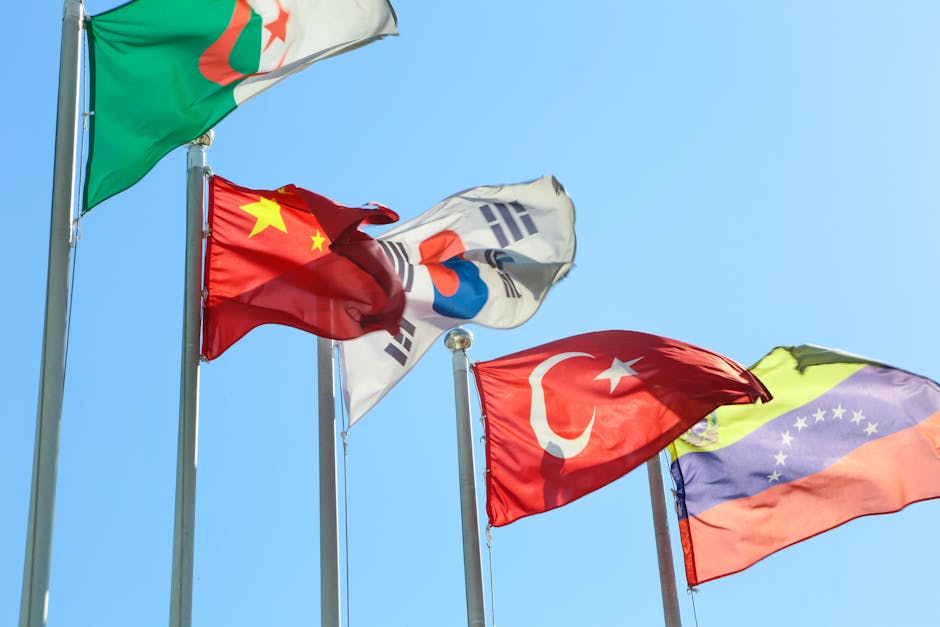
International Relations: Navigating Global Interdependence and Power Dynamics
International relations (IR) is a multifaceted academic discipline and field of study dedicated to understanding the complex web of interactions between sovereign states, international organizations, non-governmental organizations (NGOs), multinational corporations (MNCs), and individuals on the global stage. At its core, IR grapples with the fundamental question of how these diverse actors engage with one another, influencing and being influenced by their actions, policies, and perceptions. This engagement spans a vast spectrum of activities, from diplomatic negotiations and economic trade to military alliances, cultural exchanges, and the global struggle for resources and influence. The discipline seeks to identify patterns, explain causal relationships, and offer theoretical frameworks to comprehend the drivers of conflict and cooperation, the evolution of global governance, and the persistent challenges of peace, security, and development. The study of international relations is crucial for analyzing contemporary global issues, from climate change and pandemics to terrorism and economic crises, as these problems transcend national borders and necessitate collective action.
A foundational concept in international relations is the notion of the state as the primary actor. Traditionally, IR scholarship has focused on the state as a rational, unitary actor pursuing its national interests, often defined in terms of power, security, and economic prosperity. Realism, one of the oldest and most influential theoretical perspectives, posits that the international system is anarchic, meaning there is no overarching authority above states. In this anarchic environment, states are driven by self-preservation and the pursuit of power to ensure their survival. This leads to a constant struggle for dominance and a tendency towards conflict, as states view each other with suspicion and seek to maximize their relative gains. Key figures associated with realism include Niccolò Machiavelli, Thomas Hobbes, Hans Morgenthau, and Kenneth Waltz. Waltz’s neorealism, for instance, emphasizes the structural constraints of the international system – namely, anarchy, the distribution of capabilities, and the self-help nature of states – as the primary determinants of state behavior. Realist theories highlight the importance of military power, alliances, and deterrence in shaping international outcomes. The balance of power, a central tenet of realism, suggests that stability is achieved when power is distributed relatively equally among major states, preventing any single actor from dominating the system.
In contrast to realism, liberalism offers a more optimistic view of international politics, emphasizing the potential for cooperation and the role of non-state actors. Liberalism argues that while anarchy exists, it is not the sole determinant of state behavior. Factors such as international institutions, international law, economic interdependence, and the spread of democracy can mitigate the effects of anarchy and foster peaceful relations. Liberals believe that shared values, common interests, and the potential for mutual gains through cooperation can lead to a more ordered and prosperous international system. Key liberal thinkers include Immanuel Kant, Woodrow Wilson, and Robert Keohane. Kant’s concept of "perpetual peace" envisioned a world united by republican governments, a federation of free states, and cosmopolitan law. Keohane’s work on neoliberal institutionalism highlights how international institutions, even in an anarchic system, can facilitate cooperation by reducing transaction costs, providing information, and establishing norms. Economic interdependence, whereby states rely on each other for trade and investment, is seen as a powerful incentive for peace, as war would disrupt these mutually beneficial ties. The spread of democracy is also a central theme, with the democratic peace theory suggesting that liberal democracies are less likely to go to war with each other.
Beyond realism and liberalism, other significant theoretical frameworks enrich the study of international relations. Constructivism, for instance, emphasizes the social construction of international reality. Constructivists argue that identities, norms, interests, and even the very concept of anarchy are not fixed but are shaped through ongoing social interactions and shared understandings among actors. The emphasis is on ideas, beliefs, and discourse as drivers of state behavior and international change. Alexander Wendt’s assertion that "anarchy is what states make of it" encapsulates this perspective, suggesting that the nature of the international system depends on the shared beliefs and interactions of its members. Marxism and critical theory, on the other hand, focus on issues of inequality, exploitation, and power imbalances stemming from global capitalism and historical power structures. These theories examine how economic systems and colonial legacies continue to shape international relations, often perpetuating disparities between the core and the periphery of the global economy. Feminist IR scholars analyze how gender shapes international politics, challenging traditional state-centric and power-focused analyses by highlighting the experiences and agency of women and the ways in which patriarchal structures influence conflict, peacebuilding, and global governance. Post-colonial theories critically examine the enduring impact of colonialism on contemporary global power dynamics and the perspectives of formerly colonized nations.
The agenda of international relations is vast and encompasses a wide array of issue areas. International security remains a paramount concern, encompassing the study of war, peace, arms control, disarmament, terrorism, cybersecurity, and the proliferation of weapons of mass destruction. Understanding the causes of conflict, the dynamics of deterrence, and the strategies for conflict resolution and peacekeeping are central to this domain. International political economy (IPE) investigates the interplay between politics and economics on a global scale. This includes the study of international trade, finance, development, globalization, the role of MNCs, and the impact of economic policies on international relations. IPE seeks to explain why some states are rich and others are poor, and how economic power translates into political influence. International organizations and law represent another critical area of study. This involves analyzing the roles and effectiveness of organizations like the United Nations (UN), the World Trade Organization (WTO), and the International Monetary Fund (IMF) in managing global affairs, as well as the development and application of international legal norms and institutions. The effectiveness of these bodies in promoting cooperation, enforcing rules, and addressing global challenges is a subject of continuous debate.
Foreign policy analysis (FPA) delves into the decision-making processes of individual states, examining how domestic factors – such as bureaucratic politics, public opinion, interest groups, and leadership – influence a state’s external actions. FPA seeks to explain why states choose certain foreign policy options over others. Diplomacy and negotiation are the essential tools through which states and other actors manage their relationships and resolve disputes. The study of diplomatic practices, negotiation strategies, and the art of statecraft is fundamental to understanding how international interactions are conducted. Global governance is an increasingly important concept, referring to the complex web of formal and informal rules, norms, and institutions that shape collective action on global issues. This includes understanding how states, IOs, NGOs, and other actors collaborate, or fail to collaborate, in addressing challenges such as climate change, pandemics, and migration. Humanitarian intervention and the responsibility to protect (R2P) raise complex ethical and political questions about the international community’s obligation to intervene in states where severe human rights abuses are occurring. The debate over sovereignty versus human rights lies at the heart of these discussions. Transnational issues, such as environmental degradation, pandemics, migration, and the spread of illicit drugs and weapons, highlight the interconnectedness of the global system and the need for international cooperation.
The study of international relations is dynamic and constantly evolving, responding to new global challenges and shifting power configurations. The rise of non-state actors, the increasing interconnectedness through technology and globalization, and the growing salience of issues like climate change and pandemics have broadened the scope of IR scholarship. The discipline continues to grapple with fundamental questions of power, justice, and order in an ever-changing world. Understanding the theoretical underpinnings of IR, the diverse issue areas it encompasses, and the various actors involved is crucial for navigating the complexities of the 21st century and for formulating effective policies to address global challenges. The ongoing quest for peace, security, and sustainable development in a world characterized by both cooperation and competition remains the central animating force of the field of international relations. The ability to critically analyze global events, understand the motivations of different actors, and appreciate the interconnectedness of national and international affairs is indispensable for informed citizenship and effective policymaking in the modern era. The field provides the analytical tools necessary to dissect complex geopolitical landscapes, predict potential flashpoints, and envision pathways towards a more stable and equitable global order.
