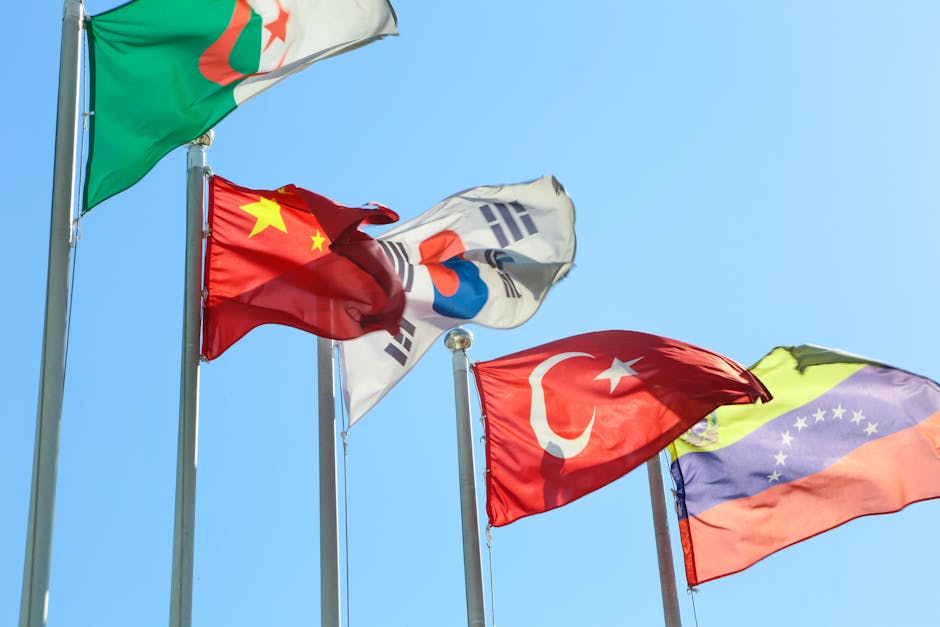
International Relations: Theory, Practice, and Global Governance
International Relations (IR) is a multifaceted academic discipline that examines the complex web of interactions between sovereign states, international organizations, non-governmental organizations (NGOs), multinational corporations (MNCs), and individuals on the global stage. At its core, IR seeks to understand the causes of conflict and cooperation, the dynamics of power, the processes of diplomacy, the nature of international law, and the structures of global governance. The field grapples with fundamental questions about how the world is organized, how decisions are made, and how collective action can be achieved in an anarchic international system, characterized by the absence of a supreme global authority. Understanding IR is crucial for navigating the challenges and opportunities of our interconnected world, from economic interdependence and climate change to security threats and human rights. The study of IR encompasses a broad spectrum of theoretical perspectives, methodological approaches, and empirical research areas, offering a rich and dynamic intellectual landscape.
Theoretical Frameworks in International Relations
The theoretical landscape of International Relations is diverse, with several prominent schools of thought offering distinct lenses through which to analyze global affairs. Realism, perhaps the oldest and most enduring paradigm, posits that the international system is inherently anarchic, and states are the primary actors, driven by a relentless pursuit of power and security. Realists, such as Hans Morgenthau and Kenneth Waltz, emphasize self-interest, national interest, and the inevitability of competition and conflict in the absence of a world government. Within realism, structural realism (neorealism) focuses on the distribution of power among states as the key determinant of international outcomes, arguing that a unipolar, bipolar, or multipolar distribution of power significantly shapes state behavior and the likelihood of war. Classical realism, conversely, emphasizes human nature and the innate desire for power as the root cause of state behavior.
Liberalism, in contrast, offers a more optimistic perspective, emphasizing the potential for cooperation, interdependence, and the role of institutions in mitigating conflict. Liberals, including Immanuel Kant and Robert Keohane, highlight the importance of democracy, free trade, and international organizations in fostering peace and prosperity. They argue that shared values, economic ties, and multilateral frameworks can create a more ordered and cooperative international system. Neoliberal institutionalism, a contemporary offshoot, focuses on how international institutions can facilitate cooperation by reducing transaction costs, providing information, and establishing norms and rules. Democratic peace theory, a significant liberal concept, suggests that democratic states are less likely to go to war with each other due to shared norms, institutions, and accountability to their citizens.
Constructivism offers a third major theoretical approach, emphasizing the social construction of international reality. Constructivists, such as Alexander Wendt, argue that international norms, ideas, identities, and shared understandings, rather than material power alone, shape state behavior and the nature of the international system. They contend that anarchy is "what states make of it," meaning that the logic of the international system is not fixed but is continuously created and recreated through social interaction. Constructivism highlights the role of discourse, identity formation, and the evolution of shared beliefs in shaping international relations.
Other significant theoretical perspectives include Marxism, which analyzes international relations through the lens of class struggle and economic exploitation, arguing that capitalism inherently generates inequality and conflict within and between states. Critical theory, drawing from Marxist and other critical traditions, challenges existing power structures and seeks to understand and transform systemic injustices. Feminist international relations theory critiques traditional IR scholarship for its male-centric biases, highlighting the gendered nature of power, conflict, and cooperation, and bringing marginalized voices and experiences to the forefront. Post-colonial theory examines the enduring legacies of colonialism on global power dynamics and international relations, focusing on issues of sovereignty, development, and representation.
The Practice of International Relations: Diplomacy, Statecraft, and Negotiation
The practice of international relations is primarily conducted through diplomacy, statecraft, and negotiation. Diplomacy, the art and practice of conducting negotiations between representatives of states or groups, is the principal tool for managing state-to-state relations. Diplomatic missions, embassies, and consulates serve as crucial channels for communication, information gathering, and the advancement of national interests. Diplomats engage in multilateral and bilateral discussions, participate in international conferences, and work to build consensus on a wide range of issues. Statecraft encompasses the broader range of policies and strategies employed by governments to achieve their foreign policy objectives. This includes the use of economic power (e.g., sanctions, trade agreements), military power (deterrence, intervention), and soft power (cultural influence, public diplomacy).
Negotiation is a fundamental element of diplomatic practice. It involves the process of bargaining and compromise to reach mutually acceptable agreements. International negotiations can address complex issues such as arms control, trade disputes, environmental protection, and peace settlements. Successful negotiation requires a deep understanding of the interests of all parties, effective communication skills, and the ability to build trust and find common ground. The outcomes of international negotiations are often codified in treaties, conventions, and agreements, which form the basis of international law.
The role of international organizations (IOs) in the practice of international relations is increasingly significant. Organizations like the United Nations (UN), the World Trade Organization (WTO), and the International Monetary Fund (IMF) provide forums for multilateral diplomacy, facilitate cooperation, and establish norms and rules that govern state behavior. IOs can play a vital role in peacekeeping, humanitarian assistance, economic development, and the promotion of human rights. However, the effectiveness of IOs is often constrained by the willingness of member states to comply with their decisions and the political realities of international power dynamics.
Non-governmental organizations (NGOs) and civil society actors have also emerged as influential players in international relations. NGOs work on a wide array of issues, from environmental advocacy and human rights monitoring to disaster relief and development assistance. They often lobby governments, raise public awareness, and provide essential services, thereby shaping the international agenda and influencing policy outcomes. Multinational corporations (MNCs) also exert significant influence through their global economic activities, impacting trade, investment, employment, and environmental standards. Their actions can create both opportunities for development and challenges related to labor rights and corporate social responsibility.
Global Governance: Challenges and Structures
Global governance refers to the complex web of formal and informal rules, norms, and institutions that regulate collective action and decision-making on a transnational scale. It is the evolving system of how the international community manages its shared problems and pursues its common interests in the absence of a world government. The concept of global governance acknowledges that many contemporary challenges, such as climate change, pandemics, financial crises, and terrorism, transcend national borders and require coordinated international responses.
The United Nations stands as the most prominent institution of global governance, established in 1945 to maintain international peace and security, develop friendly relations among nations, and achieve international cooperation in solving global problems. Its various organs, including the Security Council, the General Assembly, the Economic and Social Council (ECOSOC), and the International Court of Justice (ICJ), address a wide range of global issues. However, the UN’s effectiveness is often hampered by the political divisions among its member states, particularly within the Security Council, where the veto power of permanent members can impede decisive action.
Beyond the UN, a multitude of other international and regional organizations contribute to global governance. These include specialized agencies of the UN (e.g., WHO, UNESCO), multilateral financial institutions (e.g., IMF, World Bank), regional organizations (e.g., European Union, African Union, ASEAN), and international regimes governing specific issue areas like trade (WTO), telecommunications (ITU), and aviation (ICAO). International law, comprising treaties, customary international law, and general principles of law, provides a normative framework for global governance, though its enforcement mechanisms are often weak.
The rise of non-state actors, as discussed earlier, further complicates and enriches the landscape of global governance. NGOs, MNCs, and epistemic communities (groups of experts and scientists) play increasingly important roles in shaping international norms, advocating for policy changes, and implementing global initiatives. This diffusion of authority challenges traditional state-centric models of international relations and necessitates a more inclusive and multi-stakeholder approach to governance.
However, significant challenges persist in the realm of global governance. These include issues of legitimacy and accountability, as non-elected bodies and transnational actors often wield considerable influence. The unequal distribution of power and resources among states can lead to the dominance of powerful nations and the marginalization of developing countries. The effectiveness of global governance is also tested by the rise of nationalism, protectionism, and the erosion of multilateral cooperation in certain regions. Furthermore, ensuring coherence and coordination among the diverse actors and institutions involved in global governance remains a constant struggle. Addressing these challenges requires continuous adaptation, reform, and a commitment to inclusive and equitable decision-making processes to effectively manage the complexities of the 21st-century international system.
