Washington – As the global economy continues to navigate the profound fallout from the ongoing conflict with Iran, maintaining elevated fuel prices, a striking scarcity of states are moving to temporarily suspend their respective gas and diesel taxes. This reluctance stems from widespread consensus among tax policy experts that such measures would offer only marginal relief at the pump while critically undermining the funding mechanisms for vital transportation infrastructure, including roads and bridges, upon which millions of drivers depend daily.
The Geopolitical Undercurrent: Iran War and Global Oil Markets
The catalyst for the current energy crisis traces back to the escalation of hostilities with Iran. The conflict, which commenced earlier this year, immediately sent shockwaves through international oil markets. Iran, a significant player in global energy supply, and its strategic position controlling the Strait of Hormuz – a choke point through which approximately one-fifth of the world’s daily oil consumption passes – means any instability directly translates into heightened supply fears and a significant geopolitical risk premium on crude oil prices. Disruptions to shipping, threats to oil infrastructure in the region, and general market uncertainty have coalesced to push Brent crude futures consistently above the $90 per barrel mark, with WTI crude following closely. This geopolitical instability has eclipsed other market factors, rendering previous price projections obsolete and setting a new, higher baseline for energy costs worldwide.
Prior to the war, the U.S. Energy Information Administration (EIA) had projected national gas prices to average around $2.95 per gallon in 2027. However, in the wake of the conflict’s onset, these forecasts have been dramatically revised, with the EIA now anticipating an average of $3.46 per gallon for 2027, signaling a prolonged period of elevated costs for consumers and businesses alike. This substantial increase underscores the deep and lasting impact of the war on global energy dynamics.
The Economic Strain on American Households
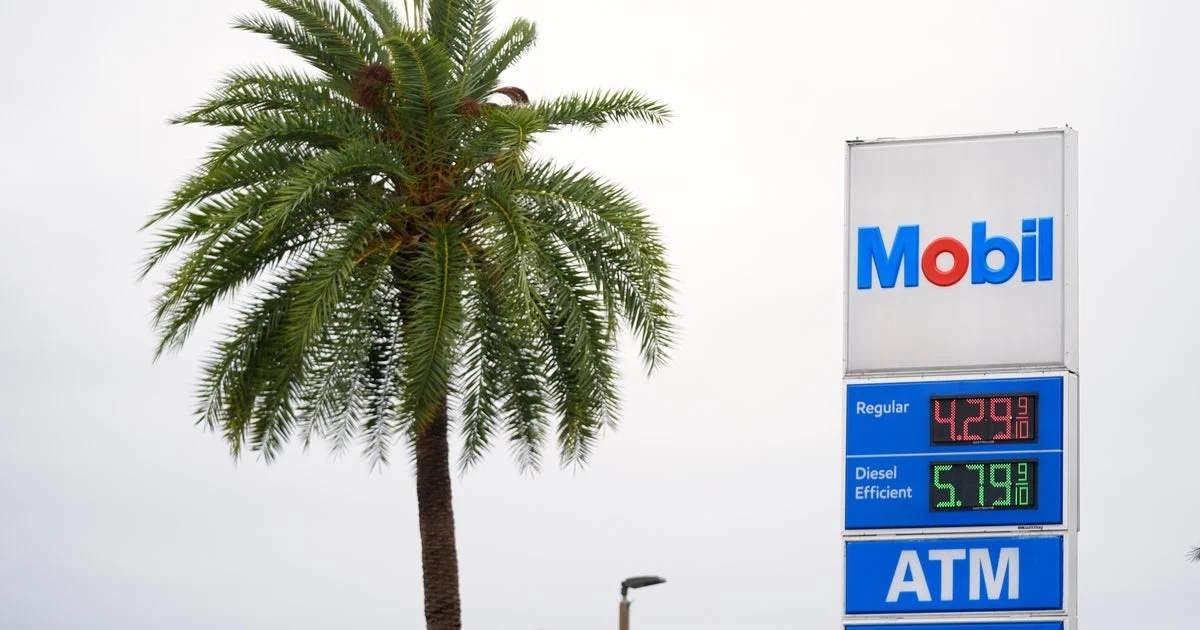
The financial burden on American households has become increasingly palpable. According to recent data from AAA, the average price for a gallon of gasoline across the U.S. stood at $4.11 on Wednesday, a stark increase from pre-conflict levels. This surge in prices has translated into tangible hardship for a significant portion of the population. A recent CBS News poll revealed that a staggering 51% of respondents reported that current gas prices have either posed a financial hardship or created significant financial difficulty for them. This widespread sentiment highlights the urgent need for effective policy responses, even as the efficacy of gas tax holidays remains hotly debated among experts and policymakers. The average state gas tax, currently standing at 32.6 cents per gallon, while seemingly a small fraction of the total price, represents a substantial revenue stream for states dedicated to maintaining essential infrastructure.
A Limited State Response: Isolated Tax Suspensions
Despite the mounting pressure from constituents facing escalating fuel costs, the response from state governments to mitigate motor fuel taxes has been notably restrained since the Middle East conflict began. Only a handful of states have opted for temporary suspensions or reductions, illustrating the broader apprehension among state leaders regarding the financial implications of such measures.
Georgia emerged as the first state to act, with Republican Governor Brian Kemp signing into law a 60-day suspension of the state’s 33-cent-per-gallon gas tax and 37-cent-per-gallon diesel tax. This measure, enacted last month, was part of a larger legislative package that also included state income tax refunds, a move Governor Kemp championed as delivering "meaningful tax relief" to Georgians. Georgia House Speaker Jon Burns estimated the suspension would save drivers "nearly $400 million over the next 60 days," emphasizing the perceived immediate benefit to consumers.
Following Georgia’s lead, Indiana’s Republican Governor Mike Braun issued an executive order on April 8, instituting a 30-day suspension of the state’s 7% gasoline sales tax. Utah also implemented a temporary reduction, albeit a more modest one, decreasing its state fuel tax by 6 cents on the gallon, bringing it to 32 cents per gallon for the remainder of 2026. These isolated actions, however, represent a minority position among states, with the vast majority choosing to maintain their existing fuel tax structures.
Expert Consensus: An "Expensive Gimmick" with Limited Efficacy
The hesitation from most states, and indeed the federal government, to suspend fuel taxes is not without substantial justification, according to leading tax policy experts. Carl Davis, research director at the Institute on Taxation and Economic Policy (ITEP), unequivocally labels such measures an "expensive gimmick." He argues that if the primary objective is to provide meaningful tax cuts to working and middle-class drivers, gas tax holidays are largely ineffective, as a significant portion of the savings often fails to reach the consumer.
Adam Hoffer, director of excise tax policy at the Tax Foundation, echoes this sentiment, succinctly stating, "Band-Aids don’t fix potholes." Hoffer emphasizes that while seemingly a quick fix, suspending gas taxes fails to address the underlying issues driving high fuel prices and ultimately creates more problems than it solves, particularly concerning infrastructure funding.
The Mechanics of Pass-Through: Why Consumers Don’t Get Full Relief
One of the primary reasons for the skepticism surrounding gas tax holidays lies in the complex dynamics of how tax cuts are passed through the supply chain. Davis explains that gas taxes differ from typical sales taxes in their application. Fuel wholesalers and distributors, rather than directly the consumer at the pump, are generally responsible for paying the motor fuel tax to the government. When this tax is suspended, these intermediaries can opt to retain a portion of the savings, rather than fully lowering the price at the pump.
Empirical evidence supports this contention. A 2022 Penn Wharton study, which analyzed the impact of temporary fuel tax holidays in Maryland, Georgia, and Connecticut, found that consumers did indeed see a reduction in prices, but not the full amount of the tax cut. In Maryland, approximately 72% of the tax cut was passed on to consumers. For Georgia and Connecticut, the figures were 62% and 71%, respectively. The remaining percentages were presumed to be absorbed by fuel wholesalers or distributors, highlighting a significant leakage in the intended consumer benefit. This mechanism means that while drivers might see some relief, it is often less than the full tax amount, diminishing the impact of the policy.
The Dire Impact on Infrastructure: Roads, Bridges, and Safety
Beyond the limited consumer benefit, the most significant drawback of suspending gas and diesel taxes is the direct and detrimental impact on transportation infrastructure. Policy experts consistently describe motor fuel taxes as a "user fee" – a system where those who utilize the roads and benefit from them are the ones who fund their maintenance and improvement. Removing this fee, even temporarily, has immediate and far-reaching consequences for the quality and safety of the nation’s roadways.
Carl Davis highlights that gas taxes constitute "the single most important way that states pay for transportation infrastructure." Consequently, suspending these taxes takes "a huge bite out of the funds states use to keep our bridges safe and our roads in good repair." The implications are tangible for drivers: essential road improvement projects could be delayed or halted indefinitely, potholes may go unfilled, and drivers could face increased wear and tear on their vehicles, leading to unplanned and costly trips to mechanic shops for tire and suspension repairs.
The financial toll of such suspensions is substantial. The Institute on Taxation and Economic Policy (ITEP) estimated that Georgia’s 60-day tax holiday alone would result in a revenue loss of approximately $399 million. To put this into perspective, ITEP also calculated that the bottom 60% of earners in Georgia would save only about $13 a month from the suspension, illustrating a disproportionate cost-benefit ratio. Davis underscores that the gas tax directly benefits drivers through "road maintenance, bridge repair, expansions of the transportation network and so on," which are fundamental to "make it possible to drive at all and have a safe, efficient, enjoyable drive."
Furthermore, many states are already struggling to adequately fund their transportation systems through existing user fees. Hoffer notes that "most states aren’t able to fully fund their transportation systems with transportation user fees as it is." Suspending the gas tax only exacerbates this existing problem, forcing states to potentially divert funds from other critical public services, such as education or healthcare, to cover essential road maintenance. This cross-subsidization can have unintended negative consequences for other vital sectors.
An additional consideration for state budgets is the revenue loss from out-of-state drivers. Gas taxes are collected from anyone purchasing fuel within a state’s borders, including tourists and commercial transporters. Suspending these taxes means states forgo revenue that would otherwise be contributed by non-residents who also utilize their infrastructure.
The Federal Stalemate: Highway Trust Fund Challenges
The complexities and criticisms associated with state-level gas tax suspensions are largely mirrored at the federal level. The federal government imposes an 18.4-cent-per-gallon gas tax and a 24.3-cent-per-gallon diesel tax, with these revenues earmarked directly for the federal Highway Trust Fund. This fund is the primary source of federal investment in highways, bridges, and mass transit systems across the country.
Adam Hoffer points out that, similar to many state-level funds, the federal Highway Trust Fund has been facing its own long-term funding challenges, gradually becoming underfunded due to increased vehicle fuel efficiency and stagnant tax rates. "The system isn’t fully supporting itself right now," Hoffer warns, indicating that a federal gas tax suspension would only deepen this existing fiscal precariousness. This underlying fragility is a significant factor in the absence of a federal proposal for a gas tax holiday at this time.
Historically, federal gas tax holidays have been proposed during periods of high fuel prices, but have consistently met with political resistance. In 2022, facing soaring inflation and high gas prices, then-President Joe Biden proposed a federal gas tax holiday, but the idea was quickly dismissed by congressional Democrats, who shared many of the same concerns voiced by experts about its effectiveness and impact on infrastructure funding. Similarly, during the financial crisis of spring 2008, then-candidate Barack Obama notably dismissed calls from his rivals for a federal gas tax suspension, stating, "Well, let me tell you, this isn’t an idea designed to get you through the summer, it’s designed to get them through an election." This historical context underscores the deep-seated political and economic reservations surrounding such proposals.
The Challenge of Reinstatement and Long-Term Projections
Even if a temporary gas tax suspension were deemed effective in providing immediate relief, the eventual reinstatement of these taxes presents its own set of challenges. Hoffer notes that "no one likes to see taxes go up again," and the timing of such a reinstatement could be particularly problematic. If a suspension were to end during a heavy summer travel season, for instance, drivers could face a sudden and unwelcome increase in prices at a time when demand is already high, potentially leading to renewed public outcry and political backlash.
The long-term outlook for fuel prices, as indicated by the EIA’s revised projections, suggests that higher costs are not a transient issue but rather a sustained challenge. The war with Iran has fundamentally altered the global energy landscape, introducing a persistent element of geopolitical risk and supply uncertainty. The EIA’s forecast of $3.46 per gallon on average in 2027, a significant jump from the pre-war projection of $2.95, reinforces the view that the current high prices are not a temporary blip.
In conclusion, the decision by most states and the federal government to refrain from suspending gas and diesel taxes, despite public pressure, reflects a pragmatic assessment of the policy’s limited effectiveness and significant drawbacks. As Adam Hoffer succinctly summarizes, for policymakers grappling with the dual pressures of economic hardship and infrastructure needs, a gas tax holiday is "kind of a no-win policy." The ongoing war with Iran has undeniably created a difficult environment for consumers, but the consensus among experts is that short-term tax holidays offer little genuine relief while jeopardizing the very infrastructure that enables economic activity and daily life. The challenge for policymakers remains finding more sustainable and effective strategies to alleviate the burden of high fuel prices without compromising essential public services.