South Korean Politics: Navigating the Currents of Democracy and Development
South Korean politics operates within a vibrant, albeit often contentious, democratic framework, deeply influenced by its rapid economic development, a persistent security threat from North Korea, and a dynamic civil society. The country’s political system is a presidential republic, with a directly elected President serving as both head of state and head of government, wielding significant executive power. This presidential system, while designed to provide strong leadership, has historically been prone to periods of intense political polarization and clashes between the executive and legislative branches. The National Assembly, the unicameral legislature, plays a crucial role in lawmaking, oversight, and the impeachment of the President. Its members are elected through a mixed system, combining single-member constituencies with proportional representation, fostering a diverse range of voices but also contributing to coalition building challenges and shifting political alliances.
The political landscape is characterized by a multi-party system, though it has often coalesced around two dominant blocs. Historically, these have been the conservative and liberal/progressive camps, each with distinct ideological underpinnings and policy priorities. Conservative parties, often drawing support from older generations and more affluent regions, tend to advocate for market-oriented economic policies, a strong national defense, and a more assertive stance towards North Korea. Conversely, liberal and progressive parties, with broader appeal among younger voters and urban populations, typically champion social welfare programs, inter-Korean reconciliation, and efforts to address income inequality and environmental concerns. The shifting balance of power between these blocs has led to significant policy swings, reflecting the evolving socio-economic concerns and national mood of the electorate.
The Presidential election, held every five years, is a watershed event that shapes the direction of the nation. The candidate who secures a plurality of votes wins, often leading to a dramatic shift in policy priorities and personnel. Presidential elections are frequently characterized by intense campaigning, high voter turnout, and deep divisions among the populace. The outcome of these elections reverberates across all sectors of society, influencing economic policy, foreign relations, social reforms, and the judiciary. The legacy of past presidencies, including allegations of corruption and abuse of power, casts a long shadow, leading to a heightened sense of public scrutiny and demands for accountability. This has manifested in historical instances of presidential impeachment and the incarceration of former leaders, underscoring the fragility of democratic institutions in the face of entrenched power and public disillusionment.
The National Assembly’s role extends beyond legislative duties to serve as a critical check on presidential power. Its members engage in robust debate, committee hearings, and question-time sessions, scrutinizing government actions and policies. The power of impeachment, though rarely invoked, remains a potent tool to address perceived presidential misconduct. The legislative agenda is often shaped by partisan rivalries, with bills facing protracted negotiations and amendments. Minority parties, while often lacking the numbers to unilaterally block legislation, can exert considerable influence through their ability to form alliances, raise public awareness, and leverage procedural tactics. The efficacy of the National Assembly is therefore a subject of continuous debate, with proponents highlighting its democratic function and critics pointing to its potential for gridlock and partisan obstructionism.
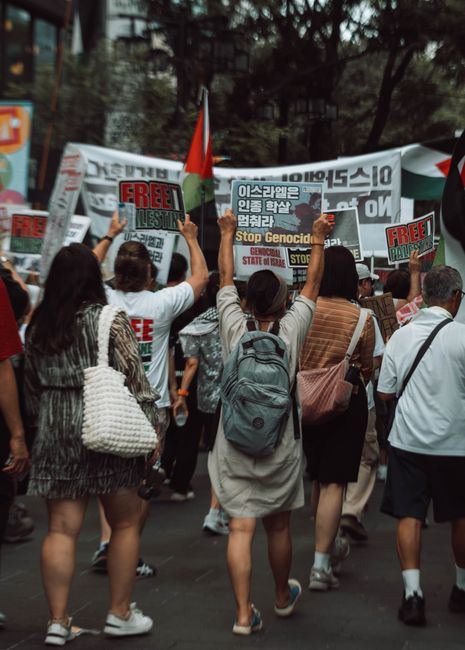
Beyond the formal institutions, South Korean civil society plays an indispensable role in shaping the political discourse and holding power accountable. A vibrant network of non-governmental organizations (NGOs), labor unions, civic groups, and online communities actively participates in advocacy, public awareness campaigns, and protests. These organizations have been instrumental in pushing for democratic reforms, advocating for human rights, and challenging corruption. The candlelit vigils of the early 2010s, which ultimately led to the impeachment of President Park Geun-hye, stand as a powerful testament to the collective power of civil society to effect political change. This active citizenry, often characterized by its passion and organization, serves as a crucial bulwark against authoritarian tendencies and a driving force for social progress.
The enduring and paramount issue in South Korean politics is the relationship with North Korea. The Korean Peninsula remains divided, with an armistice agreement, not a peace treaty, technically separating the two nations. This perpetual state of tension dictates a significant portion of South Korea’s foreign and defense policy. Conservative governments have historically favored a robust military posture and strong alliances with the United States, while liberal administrations have often pursued engagement and dialogue with Pyongyang, seeking to de-escalate tensions and explore avenues for cooperation. The nuclear ambitions of North Korea and its repeated missile provocations pose a constant threat, shaping security debates, influencing defense spending, and impacting inter-Korean relations. The pursuit of denuclearization, while a stated goal of successive South Korean governments, remains a complex and often elusive objective, fraught with diplomatic challenges and unpredictable shifts in Pyongyang’s behavior.
South Korea’s foreign policy is also deeply intertwined with its role as a major global economic power. Its "chaebols," large family-controlled conglomerates, are at the forefront of industries like semiconductors, automobiles, and shipbuilding, and play a significant role in shaping trade agreements and international economic relations. The country is a key player in global supply chains and a significant recipient of foreign investment. Consequently, its foreign policy is often driven by economic interests, seeking to maintain open markets, secure resources, and foster diplomatic ties that support its trade objectives. Its relationship with major global powers, particularly the United States and China, is a delicate balancing act, navigating competing economic and security interests.
The issue of reunification with North Korea, while a long-standing aspiration, is a complex and multifaceted challenge. Public opinion on the matter is divided, with some segments of the population viewing reunification as a necessary step towards national healing and others expressing concerns about the immense economic and social costs associated with integrating two vastly different societies. The diverse approaches to reunification, ranging from gradual integration to immediate absorption, reflect the deep divisions in how this ultimate goal is envisioned. The practicalities of reunification, including the vast economic disparities and the differing political systems, present formidable obstacles that continue to be a subject of intense debate and strategic planning.
Economic inequality and social welfare are increasingly prominent issues within South Korean politics. The rapid industrialization and economic growth, while lifting millions out of poverty, have also led to widening income gaps, precarious employment, and concerns about the sustainability of the welfare system. Progressive parties and civic groups advocate for stronger social safety nets, progressive taxation, and measures to address issues like youth unemployment, the aging population, and the high cost of housing. Conservative governments, while acknowledging these challenges, tend to prioritize market-based solutions and fiscal discipline. The ongoing debate over the optimal balance between economic growth and social equity is a defining characteristic of contemporary South Korean political discourse.
The judiciary, while constitutionally independent, has also found itself at the center of political controversy. High-profile corruption scandals involving former presidents and powerful business figures have led to increased public demand for judicial reform and greater accountability. The Constitutional Court plays a vital role in interpreting the constitution and adjudicating disputes between branches of government, its decisions often having profound political implications. The perception of judicial fairness and impartiality is crucial for maintaining public trust in democratic institutions, and any perceived politicization of the judiciary can lead to significant public backlash.
The role of media and information dissemination is another critical element of South Korean politics. A highly developed and competitive media landscape, encompassing traditional newspapers, broadcast networks, and a burgeoning online sphere, plays a significant role in shaping public opinion and holding politicians accountable. However, concerns about media bias, the spread of misinformation, and the influence of vested interests are perennial challenges. The rise of social media has democratized information access but has also amplified polarization and facilitated the rapid dissemination of both accurate and inaccurate news. Navigating this complex media environment is a constant challenge for political actors seeking to communicate their messages and engage with the electorate.
The political legacy of authoritarianism and military rule continues to influence contemporary South Korean politics. The country’s transition to democracy in the late 1980s was a hard-won achievement, and the memory of past repression fuels a strong commitment to democratic values and human rights. However, lingering societal divisions and historical grievances can sometimes resurface, impacting political discourse and intergenerational relations. The process of reconciliation and addressing past injustices remains an ongoing endeavor, influencing debates about national identity and the future direction of the country.
The influence of gender in South Korean politics is also a significant and evolving issue. While the country has made strides in gender equality, women remain underrepresented in political leadership positions. Feminist movements and advocacy groups are actively pushing for greater political participation, policies to address gender-based discrimination, and the dismantling of patriarchal structures. The increasing visibility of these issues in the political arena signals a growing awareness and demand for more inclusive representation and equitable policy outcomes.
Ultimately, South Korean politics is a dynamic and multifaceted arena shaped by a unique confluence of historical experiences, geopolitical realities, and socio-economic transformations. The interplay between its presidential system, a robust civil society, an ever-present North Korean threat, and evolving economic and social priorities creates a political landscape that is both challenging and remarkably resilient. The nation’s commitment to democratic principles, coupled with its capacity for civic engagement and adaptation, suggests a continued evolution as it navigates the complexities of the 21st century.
