South Korean Politics: A Multifaceted Landscape of Democracy, Development, and Division
South Korean politics is a dynamic and complex arena characterized by a robust democratic system, a history of rapid economic development, and persistent societal divisions. As the fifth-largest economy in Asia and a significant player on the global stage, the political landscape of the Republic of Korea (ROK) profoundly impacts regional stability, international trade, and technological advancement. Understanding its nuances requires an examination of its constitutional framework, the evolution of its party system, key policy areas, and the enduring challenges that shape its trajectory. The ROK operates under a presidential system with a unicameral legislature, the National Assembly. The President, directly elected for a single five-year term, serves as the head of state and government, wielding considerable executive power. This single-term limit, a legacy of past authoritarian regimes, aims to prevent the concentration of power but can also lead to a lack of policy continuity. The National Assembly, composed of at least 300 members, half of whom are directly elected from constituencies and the other half from proportional representation, plays a crucial role in legislation, oversight, and budget approval. The judiciary, headed by the Supreme Court, is independent and serves as a vital check on the other branches of government.
The evolution of South Korea’s political parties reflects its journey from military rule to a mature democracy. The two dominant forces for much of its modern history have been the conservative and progressive blocs. Traditionally, the conservative camp has been associated with economic development, national security, and a strong alliance with the United States. Parties like the Saenuri Party (and its predecessors) and more recently the People Power Party (PPP) have largely drawn support from older generations, more affluent regions, and business communities. Their platforms often emphasize deregulation, fiscal conservatism, and a firm stance against North Korea. Conversely, the progressive bloc, represented by parties such as the Democratic Party of Korea (DPK), has historically championed social welfare, workers’ rights, inter-Korean reconciliation, and a more balanced foreign policy. They tend to resonate with younger voters, urban populations, and labor unions. The DPK, in particular, has seen its influence grow significantly in recent decades, reflecting shifts in demographic and social attitudes. Beyond these two major poles, smaller parties and independent candidates periodically emerge, often focusing on specific issues like environmentalism, gender equality, or regional interests, though their electoral impact is typically limited. The dynamics between these blocs are often characterized by intense ideological debate and a highly polarized public discourse, a phenomenon exacerbated by the pervasive influence of social media.
Key policy areas in South Korean politics are shaped by its unique geopolitical position, economic structure, and social aspirations. National security and inter-Korean relations remain paramount concerns. The ongoing tension with North Korea, its nuclear program, and occasional provocations necessitate a robust defense posture and a complex diplomatic strategy. The ROK’s alliance with the United States is a cornerstone of its security policy, though debates persist regarding the extent of reliance on this alliance and the potential for greater regional security cooperation. Economically, South Korea has achieved remarkable success, transforming from an agrarian society to a global leader in technology and manufacturing. However, this economic miracle has also created challenges, including widening income inequality, the dominance of large conglomerates (chaebols), and the need for sustainable growth in an increasingly competitive global market. Policies related to economic fairness, innovation, and job creation are constantly debated. Social policy areas are also gaining prominence, with increasing attention paid to demographics, such as the nation’s rapidly aging population and its alarmingly low birthrate. The government faces pressure to strengthen social safety nets, reform the pension system, and address the affordability of education and housing. Furthermore, environmental concerns, including air quality and climate change, are becoming more central to political discourse and policy formulation.
Despite its democratic achievements and economic prowess, South Korea grapples with several enduring challenges that significantly influence its political landscape. One of the most persistent is regionalism, where political allegiances and voting patterns are often strongly tied to an individual’s birthplace or perceived regional identity. This phenomenon has historically fueled political polarization and can complicate national consensus-building. Another significant challenge is the legacy of authoritarianism and its impact on civil liberties and social justice. While South Korea enjoys a high degree of freedom of speech and assembly, historical grievances, including those related to the Gwangju Uprising and past periods of political repression, continue to inform political activism and demands for accountability. Corruption has also been a recurring issue, with several high-profile scandals involving politicians and business leaders shaking public trust. Efforts to improve transparency and strengthen anti-corruption measures are ongoing, though their effectiveness is a subject of continuous debate. The influence of powerful chaebols on politics and the economy is another complex issue. While they have been instrumental in South Korea’s economic growth, concerns persist about their market dominance, their influence on government policy, and their social responsibility. Addressing these multifaceted challenges requires ongoing political dialogue, institutional reform, and a sustained commitment to democratic principles.
The electoral system in South Korea, while broadly democratic, has its own characteristics and implications for political outcomes. The presidential election is a first-past-the-post system, meaning the candidate with the most votes wins, and it occurs every five years. This direct mandate grants the president significant authority. The National Assembly elections employ a mixed system. Approximately two-thirds of the seats are elected from single-member constituencies using a first-past-the-post method, which often favors established parties and can lead to geographic strongholds. The remaining one-third of seats are allocated through a nationwide party-list proportional representation system. Voters cast two ballots: one for their constituency representative and another for a political party. This proportional representation component is intended to ensure that smaller parties can gain a voice in the legislature, although the threshold for representation can still be a barrier. The outcomes of these elections significantly shape the balance of power between the executive and legislative branches, and between the dominant political blocs. Party mergers, splits, and the formation of new alliances are common occurrences, often driven by electoral strategy and the desire to capitalize on public sentiment. The media landscape, particularly the vibrant and often partisan online space, plays a crucial role in shaping public opinion and influencing electoral campaigns, making media literacy and the responsible dissemination of information critical for a healthy democracy.
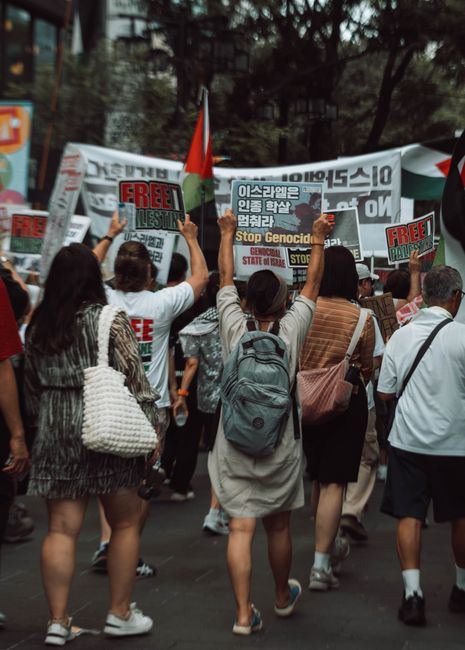
Public discourse and activism are integral to South Korean politics, reflecting a highly engaged citizenry. The country boasts a strong tradition of civil society organizations and grassroots movements that advocate for a wide range of causes, from environmental protection and labor rights to gender equality and social justice. These groups often act as crucial watchdogs, holding the government and corporations accountable and pushing for policy changes. Public protests and demonstrations, while sometimes disruptive, are a recognized and utilized form of political expression. The rapid spread of information and opinions through social media platforms like KakaoTalk, Twitter, and various online communities further amplifies public voices and can mobilize large numbers of people quickly. This digital connectivity has democratized access to information and political participation but also presents challenges related to misinformation, online harassment, and the potential for echo chambers that reinforce existing biases. Navigating this complex information ecosystem is a constant challenge for policymakers and citizens alike. The emphasis on education and intellectual engagement in South Korean society contributes to a politically aware populace, though this can also manifest in passionate and sometimes polarized debates on contentious issues.
The relationship between South Korea and its neighbors, particularly North Korea and China, is a defining element of its foreign policy and, consequently, its domestic politics. The ongoing division of the Korean Peninsula remains a central preoccupation. The spectrum of approaches towards North Korea ranges from engagement and reconciliation championed by progressive administrations to a more hardline stance emphasizing sanctions and pressure, favored by conservatives. These differing approaches often lead to significant political debate within South Korea and impact its diplomatic relations with key international actors. China’s growing influence in the region, its economic leverage, and its role in denuclearization efforts also present complex challenges and opportunities for South Korean foreign policy. Balancing the economic ties with China and the security alliance with the United States is a delicate act of diplomacy that is constantly debated by political factions. Japan, another significant regional power, has a relationship with South Korea marked by historical sensitivities and evolving economic and security cooperation. Managing these complex bilateral and multilateral relationships requires astute diplomacy and is often a subject of considerable political attention and debate within the ROK.
The economic framework of South Korea, characterized by the powerful influence of chaebols, has profound political ramifications. These large, family-controlled industrial conglomerates, such as Samsung, Hyundai, and LG, are deeply embedded in the national economy, contributing significantly to exports, employment, and technological innovation. However, their immense economic power also translates into considerable political influence. Debates surrounding chaebol reform, including issues of corporate governance, fair competition, and the prevention of undue political lobbying, are perennial in South Korean politics. Progressive parties often advocate for greater regulation and a leveling of the playing field for small and medium-sized enterprises (SMEs), while conservative parties tend to emphasize the importance of the chaebols for national economic competitiveness and employment. The close relationship between business and politics has historically been a source of concern, leading to instances of corruption and allegations of cronyism. Efforts to enhance transparency in political financing and strengthen regulations against unfair practices are ongoing. The future economic direction of South Korea, including its transition towards a more service-based economy and its role in global supply chains, will undoubtedly continue to be a major focus of political debate and policy development.
Demographic shifts are increasingly shaping the political agenda in South Korea. The nation faces a rapidly aging population and one of the lowest birthrates in the world. This demographic reality poses significant challenges to the sustainability of its pension system, healthcare infrastructure, and labor market. Political parties are under pressure to propose viable solutions, ranging from increased support for childcare and parental leave to immigration policies and reforms in the retirement age. The low birthrate is not merely an economic or social issue; it has profound implications for the future workforce, national vitality, and even the long-term viability of the South Korean state. Consequently, policies aimed at reversing this trend and supporting families are becoming increasingly central to electoral campaigns and policy discussions. The aspirations and concerns of younger generations, who are often more attuned to issues of social mobility, environmental sustainability, and gender equality, are also gaining political traction. The growing political awareness and activism of young people, particularly in urban centers, represent a significant force for change and contribute to the evolving dynamics of the South Korean political landscape. Understanding these demographic trends is crucial for grasping the current and future challenges confronting South Korean politics.
