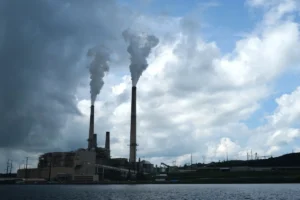
The continent of Europe is currently grappling with a relentless surge in temperatures that has tested the limits of modern infrastructure and public health systems. In France, where the memory of past climate tragedies remains a potent catalyst for policy, the government has activated its most comprehensive heat-resilience protocols to date. As summer temperatures in Paris recently climbed above 103 degrees Fahrenheit (39.4 degrees Celsius), the nation finds itself at the epicenter of a broader European crisis. This current heatwave, the second to strike the continent in as many months, arrived before the official start of the summer season, signaling a shift in the frequency and intensity of extreme weather events. While France has spent more than two decades preparing for this reality, the mounting death toll across the region suggests that even the most sophisticated plans are struggling to keep pace with a rapidly warming planet.
The Shadow of 2003: A Catalyst for National Transformation
To understand France’s current approach to extreme heat, one must look back to the devastating summer of 2003. That year, a prolonged heatwave saw temperatures hover above 95 degrees Fahrenheit for two consecutive weeks. The result was a public health catastrophe of unprecedented proportions: more than 14,800 people died in France alone, many of them elderly citizens living in urban apartments without adequate ventilation or cooling. The event exposed systemic failures in emergency response, hospital capacity, and social monitoring of vulnerable populations.
In the immediate aftermath, French policymakers vowed that such a disaster would never happen again. In 2004, the government unveiled the National Heat Plan (Plan National Canicule), which has since become a global benchmark for heat resilience. Central to this plan is a sophisticated four-tiered alert system, designed to scale the national response in direct proportion to meteorological risks.
When the system reaches its highest alert level, a national crisis center is established to coordinate efforts across various ministries. At the local level, prefects and mayors are legally required to implement specific interventions. These include the mandatory opening of "cool rooms" in public buildings, the extension of hours for parks and swimming pools, and the deployment of "census-based" check-ins. Under this system, local municipalities maintain registers of elderly and disabled residents, ensuring that social workers or volunteers contact them daily during peak heat periods to monitor their health and hydration.
Urban Adaptation: Redesigning the City for a Hotter Future
While emergency response was the focus of the early 2000s, France has recently shifted its strategy toward long-term urban adaptation. In Paris, the challenge is particularly acute due to the city’s dense architecture and famous zinc roofs, which can act as radiators, trapping heat within top-floor apartments. With only about 25 percent of French households equipped with air conditioning, the city has had to find innovative ways to lower ambient temperatures.
The "Green Paris" initiative is a cornerstone of this effort. City officials have committed to planting 170,000 new trees by 2030 to enhance the urban canopy and provide natural shade. Furthermore, the city has invested heavily in "cool islands"—designated areas such as schools, libraries, and museums that are kept at lower temperatures and remain open to the public. To combat the "urban heat island effect," where asphalt and concrete trap heat, Paris has begun converting schoolyards into "oasis" spaces, replacing heat-absorbing pavement with permeable, green surfaces.
Beyond greenery, the city is also rethinking its mobility infrastructure. The expansion of shaded biking paths and the creation of "cool routes" allow residents to navigate the city without constant exposure to direct sunlight. In a move that highlights the severity of future projections, Paris officials have even conducted "tabletop exercises" and simulations to prepare for a future where temperatures could reach a staggering 122 degrees Fahrenheit (50 degrees Celsius). These drills involve testing the resilience of the power grid, the water supply, and the ability of emergency services to operate in extreme conditions.
The Human Toll and the Mediterranean Crisis
Despite these robust preparations, the current heatwave has already proven lethal. In France, more than 40 drownings were reported in a single week as residents sought relief in rivers, lakes, and the sea. Many of the victims were teenagers, underscoring the secondary risks associated with extreme heat, such as accidental deaths during recreational cooling.
The crisis extends far beyond French borders. In Spain, a local monitoring agency estimated that more than 200 deaths in the past week could be attributed to the heat. Spanish authorities have issued urgent warnings for residents to stay indoors during the "hours of fire"—typically between noon and 6:00 PM—and to avoid any strenuous physical activity. The vulnerability of the unhoused population and those working in outdoor industries, such as construction and agriculture, has become a focal point for human rights advocates across the Mediterranean.

Data from the European Union’s Copernicus Climate Change Service confirms that Europe is the fastest-warming continent on Earth. For much of 2024, temperatures have consistently remained 1.5 degrees Celsius (2.7 degrees Fahrenheit) above pre-industrial levels. Climatologists warn that on the current trajectory, European temperatures are expected to rise by as much as 5.6 degrees Fahrenheit by the end of the century. The situation is further complicated by the looming threat of a "Super El Niño" in 2027, a periodic climatic event that is expected to drive global temperatures to record-breaking highs.
The Rise of Heat Governance: Chief Heat Officers
As the threat of extreme heat becomes a permanent fixture of the summer months, a new form of governance is emerging. Experts like Ladd Keith, an associate professor at the University of Arizona and director of the Heat Resilience Initiative, argue that cities must move beyond reactive emergency management.
"Cities across the world—even the ones that are doing the best that they can—are still preparing for the heat that we’re experiencing today," Keith noted. "They’re not doing a great job of really aggressively planning for the heat that we’re going to experience tomorrow."
To bridge this gap, several global cities have begun appointing "Chief Heat Officers" (CHOs). Miami-Dade County in Florida was the first to create the role in 2021, followed by cities like Los Angeles, Phoenix, Athens, and Melbourne. These officials are tasked with breaking down the "silos" of government, ensuring that urban planners, public health experts, and emergency responders work in unison.
Arizona serves as a compelling case study in the efficacy of coordinated heat management. In 2023, the state saw nearly a thousand heat-related deaths. In response, the governor appointed a statewide cooling center coordinator and declared official heat emergencies to unlock funding and resources. By the following year, even as temperatures remained punishing, the state saw a measurable improvement in health outcomes due to better-coordinated cooling center networks and more aggressive public communication strategies.
Analyzing the Path Forward: Infrastructure vs. Emergency Response
The divergence between the American and European experiences highlights a fundamental tension in heat resilience: the balance between immediate emergency response and long-term infrastructural changes. In the United States, air conditioning is often viewed as the primary defense against heat, but this solution is energy-intensive and can exacerbate the problem by venting waste heat into the streets. In Europe, where AC is less common and historical preservation makes retrofitting buildings difficult, the focus must remain on passive cooling and social intervention.
The economic implications are equally significant. Extreme heat reduces labor productivity, strains energy grids, and damages infrastructure like railway tracks and road surfaces. A fact-based analysis of the current trend suggests that if cities do not invest now in cooling infrastructure, the long-term costs of healthcare and lost economic output will far exceed the initial investment in trees, fountains, and sustainable architecture.
Conclusion: A New Climate Reality
The events of the past week in France and across Europe serve as a stark reminder that the climate of the past is no longer a reliable guide for the future. The strategies pioneered by France since 2003 have undoubtedly saved thousands of lives, but the sheer velocity of current warming trends requires a rapid evolution of these plans.
As Ladd Keith emphasizes, any lessons learned from the current heatwave must be rapidly integrated into policy. The transition from "managing a disaster" to "designing for a new climate" is the defining challenge for urban centers in the 21st century. For Paris, Madrid, and Tucson alike, the goal is no longer just to survive the summer, but to fundamentally reimagine how human society functions in a world where 100-degree days are the new normal. The "heat of tomorrow" is already arriving, and the window for preparation is closing fast.