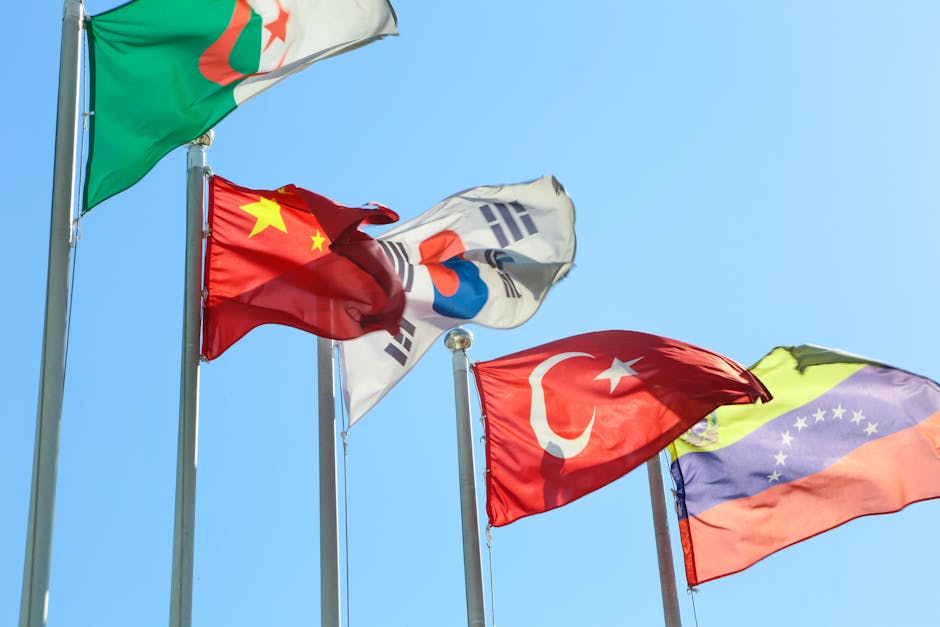
International Relations: Understanding Global Power Dynamics and Cooperation
International Relations (IR) is a multifaceted academic discipline and a practical field of study that examines the interactions among states, international organizations, non-governmental organizations, multinational corporations, and other non-state actors. At its core, IR seeks to understand the causes of conflict and cooperation on a global scale, the distribution of power, the formation and enforcement of international law, the dynamics of diplomacy, and the complexities of global governance. It is a field concerned with how the world is organized beyond the boundaries of individual nation-states, exploring the myriad connections and dependencies that shape our interconnected planet. The scope of IR is vast, encompassing issues ranging from war and peace, economic interdependence and inequality, human rights and humanitarian crises, to environmental challenges and the spread of pandemics. Scholars and practitioners of IR grapple with fundamental questions about sovereignty, national interest, security, and the very nature of political community in an era of globalization.
One of the foundational theoretical approaches in International Relations is realism. Realist theories, broadly speaking, posit that states are the primary actors in the international system and that their principal objective is to maximize their security and power. This pursuit of power, according to realists, is driven by an inherent self-interest and a fundamental uncertainty about the intentions of other states. The international system, from a realist perspective, is anarchic – meaning there is no overarching authority above states capable of enforcing rules or resolving disputes. This anarchic condition compels states to rely on their own capabilities for survival, leading to a constant struggle for power and a perpetual predisposition towards conflict. Key concepts within realism include the balance of power, where states seek to prevent any single state from becoming too dominant, and the security dilemma, where the efforts of one state to enhance its security are perceived as a threat by other states, leading to a spiral of countermeasures and increased tension. Prominent realist thinkers include Hans Morgenthau, Kenneth Waltz, and John Mearsheimer, whose work has significantly shaped our understanding of interstate conflict and the dynamics of great power competition.
In contrast to realism, liberalism offers a more optimistic perspective on international relations, emphasizing the potential for cooperation and the role of international institutions, democracy, and economic interdependence in fostering peace. Liberalism argues that while anarchy exists, it does not necessarily lead to perpetual conflict. Instead, liberals highlight the ways in which states can overcome the challenges of anarchy through the creation of international regimes, organizations, and legal frameworks. These institutions, such as the United Nations, the World Trade Organization, and various regional bodies, provide forums for dialogue, dispute resolution, and the establishment of common norms and rules. Furthermore, liberals point to the role of economic interdependence, arguing that states with strong trade and investment ties are less likely to engage in conflict, as war would disrupt these mutually beneficial relationships. The spread of democracy is also a central tenet of liberalism, with the democratic peace theory suggesting that democratic states are less prone to fighting one another. Key liberal scholars include Immanuel Kant, Robert Keohane, and Joseph Nye, whose work has championed the importance of international cooperation and the "soft power" of persuasion and attraction.
Constructivism represents a more recent but highly influential theoretical paradigm in International Relations. Unlike realism and liberalism, which often treat state interests as given and exogenous, constructivism emphasizes the role of ideas, norms, identities, and social interactions in shaping the international system. Constructivists argue that the international system is not simply a material reality of power and capabilities but is also socially constructed. States’ interests and identities are not fixed but are continually shaped and reshaped through their interactions with other actors. For example, what is considered a threat or a security interest can change over time based on prevailing norms and beliefs. The concept of sovereignty, for instance, is not an inherent attribute of states but is a social construct that has evolved over centuries. Constructivism highlights the power of collective understandings and shared beliefs in shaping state behavior and the possibilities for international cooperation or conflict. Scholars such as Alexander Wendt and Nicholas Onuf have been instrumental in developing constructivist thought, demonstrating how shared understandings can create and dissolve anarchy and influence the logic of state action.
The study of international security is a central pillar of International Relations. It encompasses a broad range of issues related to the protection of states and their populations from external and internal threats. Traditional security concerns have historically focused on military threats, including interstate warfare, arms races, and the proliferation of weapons of mass destruction. However, the concept of security has broadened considerably in recent decades to include non-traditional threats. These encompass a wide array of challenges such as terrorism, cyber warfare, transnational organized crime, environmental degradation, climate change, pandemics, economic instability, and mass migration. The interconnectedness of the modern world means that threats to security are increasingly diffuse and can originate from a variety of sources, often transcending state borders. Addressing these multifaceted security challenges requires a comprehensive approach that involves not only military capabilities but also diplomatic efforts, intelligence gathering, economic development, and international cooperation. The development of effective strategies for managing and mitigating these threats is a continuous and evolving endeavor in the field of International Relations.
International political economy (IPE) is another crucial subfield that examines the intricate relationship between politics and economics in the global arena. IPE investigates how political forces shape economic outcomes and how economic forces, in turn, influence political decisions at the international level. Key areas of study within IPE include international trade, finance, investment, development, and globalization. Scholars of IPE explore the causes and consequences of economic inequality between states, the role of international financial institutions like the International Monetary Fund (IMF) and the World Bank, and the impact of multinational corporations on national economies and global governance. Different theoretical perspectives, such as mercantilism, liberalism, and Marxism, offer distinct explanations for the workings of the international political economy and the distribution of power and wealth within it. Understanding IPE is essential for comprehending global economic disparities, the dynamics of international trade negotiations, and the challenges of achieving sustainable and equitable economic development worldwide.
International law and organizations play a pivotal role in shaping state behavior and facilitating cooperation within the international system. International law, comprising treaties, customary international law, and general principles of law, provides a framework of rules and norms that govern interactions between states and other international actors. While enforcement mechanisms can be challenging in the absence of a global sovereign, international law provides a basis for accountability and dispute resolution. International organizations, ranging from universal bodies like the United Nations to specialized agencies such as the World Health Organization (WHO) and the International Atomic Energy Agency (IAEA), serve as platforms for states to cooperate on shared challenges, negotiate agreements, and implement collective action. These organizations can facilitate diplomacy, provide humanitarian assistance, promote human rights, and contribute to global stability. The effectiveness and legitimacy of international law and organizations are subjects of ongoing debate, but their importance in managing the complexities of the modern world is undeniable.
Diplomacy and foreign policy are the practical instruments through which states conduct their relations with each other. Diplomacy involves the art and practice of negotiation, communication, and representation between states, aiming to advance national interests and resolve disputes peacefully. Foreign policy refers to the strategies and actions adopted by a state in its dealings with other countries. The formulation of foreign policy is influenced by a multitude of factors, including domestic political considerations, economic interests, security concerns, and ideological beliefs. Different approaches to diplomacy exist, from traditional bilateral negotiations to multilateral diplomacy within international organizations. The effectiveness of diplomacy can be enhanced through various tools, including public diplomacy, economic statecraft, and the use of soft power. Understanding the nuances of diplomatic practice and the intricacies of foreign policy decision-making is crucial for navigating the complexities of international relations and for promoting peace and stability.
The rise of non-state actors has fundamentally altered the landscape of International Relations. Beyond states, a diverse array of actors now wield significant influence on the global stage. These include international organizations (IOs) like the UN, non-governmental organizations (NGOs) such as Amnesty International and Greenpeace, multinational corporations (MNCs) like Google and Shell, and even transnational terrorist groups and criminal networks. NGOs, for instance, often advocate for specific causes, lobby governments, and provide humanitarian assistance, thereby shaping international norms and policies. MNCs exert considerable economic power, influencing trade patterns, labor standards, and environmental regulations. The actions of these non-state actors can either complement or challenge the policies of states, leading to a more complex and interconnected international system where power is no longer solely concentrated in the hands of sovereign governments. Analyzing the roles and impacts of these diverse actors is a critical component of contemporary IR scholarship.
Globalization, a pervasive phenomenon characterized by the increasing interconnectedness and interdependence of societies across the globe, profoundly shapes the field of International Relations. It manifests in various forms: economic globalization, involving the free flow of goods, services, capital, and labor across borders; cultural globalization, leading to the diffusion of ideas, values, and lifestyles; and political globalization, marked by the growing influence of international institutions and norms. While globalization offers potential benefits such as increased economic growth and access to information, it also presents significant challenges, including rising inequality, the erosion of national sovereignty, the spread of financial crises, and the amplification of cultural tensions. IR scholars analyze the drivers and consequences of globalization, seeking to understand how it transforms state-society relations, power dynamics, and the prospects for global governance. The ongoing debate revolves around whether globalization is a force for convergence or divergence, and how its benefits and burdens can be more equitably distributed.
The study of peace and conflict resolution is a core concern within International Relations. Understanding the origins of war, the dynamics of conflict escalation, and the pathways to achieving lasting peace is a central objective. This involves analyzing various forms of conflict, from interstate wars and civil wars to intrastate violence and terrorism. Peace research explores the conditions that foster peace, the mechanisms for preventing conflict, and the strategies for resolving existing disputes. This includes examining the role of diplomacy, mediation, peacekeeping operations, disarmament, and post-conflict reconstruction. Furthermore, the field investigates the concept of positive peace, which goes beyond the mere absence of violence to encompass the presence of social justice, equality, and human well-being. The ongoing pursuit of peace in a world still plagued by conflict remains a paramount challenge and a driving force for much of the research and practice within International Relations.
