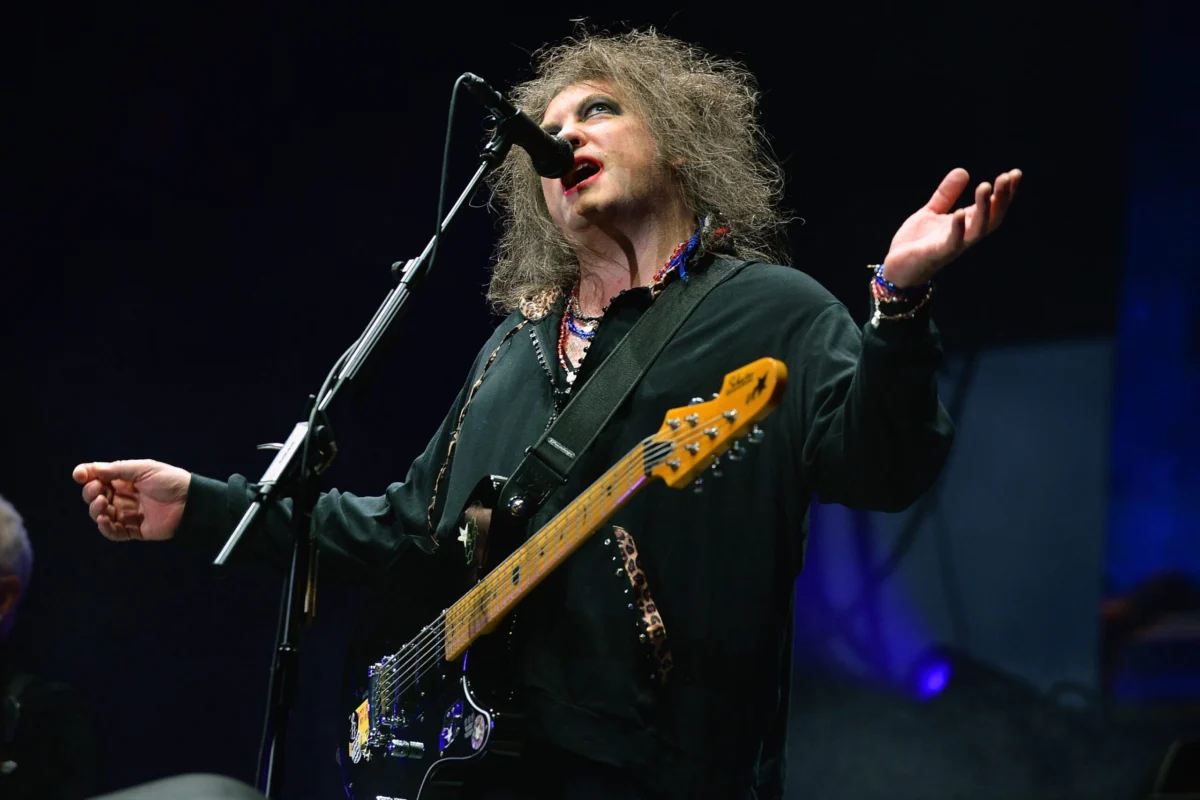
The upcoming FIFA World Cup final is set to make history by featuring its first-ever halftime show, a decision that has ignited a passionate and vocal critique from Robert Smith, the enigmatic frontman of the iconic British band The Cure. In a series of outspoken social media posts, Smith expressed his profound disapproval of the groundbreaking entertainment initiative, framing it as a cynical display of "bread and circuses" that detracts from the sport’s integrity.
Smith’s initial, explosive reaction was posted on The Cure’s official Instagram account, featuring a series of anguished capital letters followed by hashtags that left little room for ambiguity regarding his sentiments. The post read: "AAAAAAAAAAAAAAAAAGH… #Breadandcircuses #MUGWANK #pleasejustfuckoff." The brevity and raw emotion of his outburst immediately captured attention, signaling a stark contrast to the typically celebratory atmosphere surrounding such a monumental sporting event.
The curated lineup for this unprecedented halftime spectacle, reportedly assembled with the input of Coldplay’s Chris Martin, boasts a star-studded roster of global music titans. The announced performers include pop royalty Madonna, teen idol Justin Bieber, Latin superstar Shakira, and the globally phenomenon K-pop group BTS. This ambitious fusion of elite athletic competition and A-list entertainment aims to transcend the traditional boundaries of a sporting event.
FIFA President Gianni Infantino, in a statement released to the press, lauded the halftime show as a "groundbreaking spectacle." He articulated the vision behind the initiative, stating it would celebrate "football, music and our shared values, ensuring a legacy that transcends the final whistle." This description positions the event not merely as entertainment but as a cultural statement, intended to leave a lasting positive impact.
However, Smith’s ire was not directed at the individual artists slated to perform. In a subsequent post, he sought to clarify his position, emphasizing that his objection was fundamentally to the concept itself. "IT IS ABOUT THE #MUGWANK I D E A OF A FOOTBALL WORLD CUP FINAL HALF TIME SHOW… IF YOU NOW UNDERSTAND MY ‘AAAAAAAGH!’ A BIT BETTER, BUT STILL DON’T AGREE, PLEASE ADJUST YOUR RED CAP, YOUR ‘JANNY + DONNY + $$$’ TSHIRT AND… KNOCK YOURSELF OUT? ONWARDS," he wrote, further elaborating on his critique. This clarification suggests that Smith views the integration of such a lavish entertainment production into a pivotal sporting moment as a distraction, potentially diluting the significance of the game itself and appealing to base desires for spectacle over substance.
The term "bread and circuses," which Smith invoked, is an ancient Roman political strategy of appeasing the populace with free food and entertainment to distract them from more pressing political issues. By using this phrase, Smith implies a perception of FIFA using the halftime show as a tool to divert attention from potential controversies or to enhance commercial appeal at the expense of the sport’s core values.
Historical Context and FIFA’s Evolving Approach
The decision to introduce a halftime show to the FIFA World Cup final marks a significant departure from the tournament’s historical norms. While musical performances have often been a feature of opening and closing ceremonies at major sporting events, including the World Cup, a dedicated, elaborate show during the actual match’s intermission is a novel development. This move reflects a broader trend across the sports and entertainment industries to maximize engagement and commercial opportunities by integrating high-profile artistic performances.
Historically, World Cup finals have been defined by the intense drama on the pitch, the strategic brilliance of the teams, and the passionate support of millions of fans worldwide. The 15-minute halftime interval has traditionally been a period for teams to regroup, for coaches to strategize, and for viewers to digest the unfolding narrative of the match. The introduction of a multi-act musical performance fundamentally alters this dynamic, potentially shifting focus away from the athletic contest itself.
This strategic pivot by FIFA can be seen in the context of increasing competition for global entertainment attention. As media consumption habits evolve and the demand for multi-platform experiences grows, sporting organizations are seeking innovative ways to enhance viewership and monetize their flagship events. The World Cup, with its unparalleled global reach, represents a prime opportunity to blend sports and popular culture on an unprecedented scale.
The Performers and FIFA’s Vision
The selection of performers underscores FIFA’s ambition to create an event with universal appeal. The inclusion of artists like Madonna, Justin Bieber, Shakira, and BTS ensures a broad demographic reach, tapping into diverse fan bases across various genres and generations. Each of these artists commands a massive global following, capable of drawing significant attention and generating substantial buzz.
Madonna, a perennial icon of pop music, has a long history of delivering memorable performances at major global events. Justin Bieber, a global pop sensation, commands immense youth appeal. Shakira, with her blend of Latin rhythms and pop sensibilities, has consistently captivated audiences at sporting spectacles. BTS, the South Korean boy band, has achieved a level of global fandom that is virtually unmatched in contemporary music, representing a significant draw for a younger, digitally-native audience.
Furthermore, Variety exclusively reported that the halftime show will also feature performances from members of the New York Philharmonic and the Simón Bolívar Symphony Orchestra of Venezuela. This unexpected inclusion suggests a dualistic approach to the entertainment, aiming to blend mainstream pop appeal with more classical and culturally significant artistic expressions. The collaboration between these esteemed orchestras is slated to be a tribute to Venezuela, particularly in the wake of devastating earthquakes in the region. This adds a layer of philanthropic and commemorative intent to the spectacle, aiming to harness the event’s reach for a humanitarian cause.
The Logistics and Regulatory Challenges
The logistical and regulatory implications of a prolonged halftime show have also become a point of discussion and contention. Sources have indicated to BBC News that the halftime show might extend up to 25 minutes. This raises a direct conflict with tournament regulations, which typically stipulate that players’ halftime breaks should not exceed 15 minutes.
This discrepancy between the proposed entertainment duration and the established rules of the game presents a significant challenge. The timing of football matches is meticulously managed to adhere to broadcast schedules and ensure fair play. Extending the halftime break by an additional 10 minutes could have ripple effects on the overall match duration, potentially impacting broadcast rights agreements and fan viewing experiences. It also raises questions about how FIFA plans to manage player rest and readiness for the second half of such a critical match. The potential for player fatigue or disruption to pre-match routines is a valid concern within the sporting community.
FIFA’s representatives have not yet issued an official comment regarding this specific regulatory conflict, and their response to requests for clarification has been notably absent. This silence may indicate ongoing internal discussions or a strategy to address these concerns privately before a public statement.
Broader Implications and Fan Reactions
Robert Smith’s vocal opposition, while perhaps the most prominent, is likely representative of a segment of the football purist community. These fans often emphasize the sanctity of the game and view commercial or entertainment intrusions as potentially diluting its essence. Smith’s use of terms like "#MUGWANK" and "#pleasejustfuckoff" reflects a visceral reaction against what he perceives as a crass commercialization and a trivialization of a moment of profound sporting significance.
His subsequent clarification, however, indicates a nuanced critique. He is not dismissing the talent of the performers but rather the idea of integrating such a large-scale entertainment production into the climax of the World Cup. His reference to "red cap" and "JANNY + DONNY + $$$" likely alludes to political figures and the perceived commercial interests driving such decisions, suggesting a broader critique of power structures and financial motivations influencing the sport.
The context of The Cure’s current activities adds another layer to the narrative. The band is presently engaged in a European tour, most recently performing in Plovdiv, Bulgaria. Smith’s recent collaboration on Olivia Rodrigo’s album, with a duet titled "What’s Wrong With Me," also places him within the broader contemporary music landscape, making his critique from within that sphere all the more notable.
The FIFA World Cup final halftime show represents a bold experiment in event management and entertainment integration. While FIFA envisions a "groundbreaking spectacle" that celebrates shared values, critics like Robert Smith raise pertinent questions about the potential impact on the integrity of the sport and the underlying motivations behind such ambitious productions. As the event draws closer, the debate over the balance between athletic competition and commercial entertainment is likely to intensify, reflecting broader societal discussions about the evolving nature of global sporting events. The success, or indeed the perceived failure, of this inaugural halftime show will undoubtedly shape future approaches to integrating entertainment into the world’s most-watched sporting occasions.