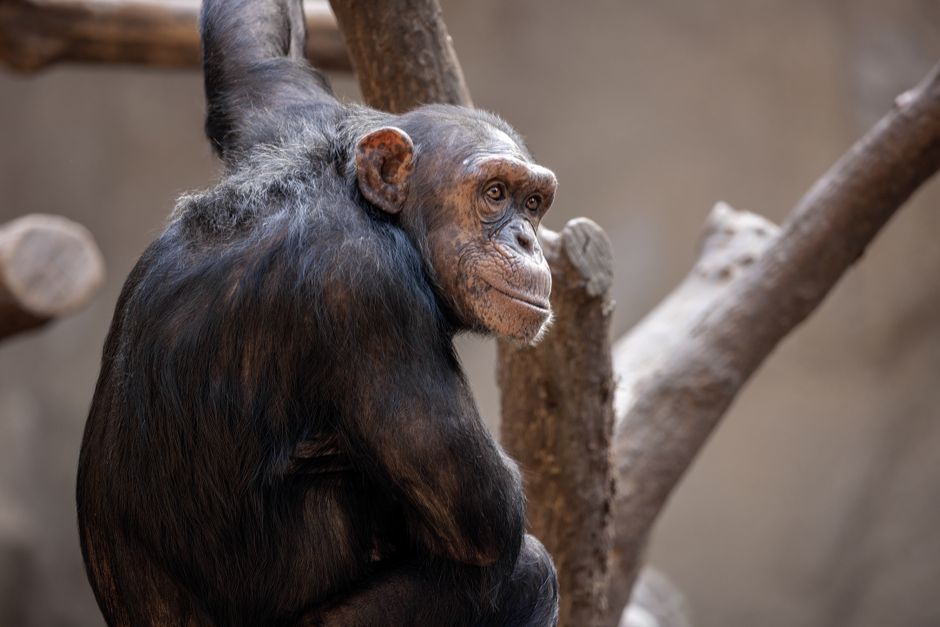
Uganda’s Rare Chimpanzee Civil War: Lethal Consequences of Social Fission in Great Ape Societies
A startling and deeply concerning phenomenon has unfolded in Uganda’s remote Budongo Forest, where a protracted and violent conflict between two chimpanzee communities has been meticulously documented by researchers. This “civil war,” as it has been termed, offers a stark and chilling glimpse into the lethal consequences of social fission in great ape societies, highlighting a dark undercurrent of intergroup aggression that extends beyond territorial disputes and into outright extermination. The prolonged nature of this conflict, marked by coordinated raids, brutal assaults, and the systematic elimination of individuals from the rival group, underscores the profound evolutionary pressures and social dynamics that can drive even our closest living relatives to engage in behaviors mirroring those of human warfare. This event is not an isolated incident of aggression but a complex and devastating manifestation of deep-seated intergroup animosity, a phenomenon rarely observed with such intensity and duration in wild chimpanzee populations. The implications of this Budongo Forest conflict extend far beyond the confines of the forest itself, offering invaluable, albeit tragic, insights into the evolutionary roots of conflict, cooperation, and the very nature of social organization in highly intelligent and complex primate societies.
The Budongo Forest conflict, which has been ongoing for several years, centers around two distinct chimpanzee communities: the Sonso and the Waibira. Initially, interactions between these groups, while occasionally tense, did not foreshadow the extreme violence that was to erupt. However, a gradual breakdown in social cohesion within the Sonso group, coupled with shifts in territorial boundaries and resource competition, appears to have acted as catalysts for the escalating animosity. Researchers, led by figures such as Dr. Crickette Sanz and Dr. Melissa Emery Thompson, have employed advanced tracking technologies, observational studies, and genetic analyses to meticulously document the unfolding events. Their findings paint a grim picture of deliberate and strategic aggression, characterized by organized hunting parties from one group targeting members of the other, particularly juveniles and females, with the apparent objective of weakening and ultimately eradicating the rival population. This is not simply opportunistic predation; it represents a sustained and targeted campaign, driven by factors that researchers are still working to fully comprehend but which likely involve a confluence of demographic pressures, social instability, and the fundamental struggle for survival and reproductive success.
The lethal consequences of this social fission are undeniable and have had a profound impact on the population dynamics of both communities. The Waibira group, in particular, has suffered significant losses, with multiple individuals confirmed to have been killed during violent encounters. The nature of these killings is often brutal, involving severe injuries from biting, tearing, and blunt force trauma. The coordinated nature of the attacks is particularly noteworthy, suggesting a level of social organization and strategic planning that is often associated with human warfare. Groups of male chimpanzees from the dominant community will embark on “patrols” into the territory of their rivals, actively searching for individuals to attack. These patrols are often silent and stealthy, emphasizing the predatory and lethal intent. The victims are frequently isolated, making them vulnerable to overwhelming force. The aftermath of these attacks, as observed by researchers, can be gruesome, with bodies often dismembered and parts of the carcass consumed, though this aspect is still under intense investigation as to whether it represents a purely aggressive act or a form of ritualistic consumption within the context of conflict.
Several key factors are believed to be contributing to this unprecedented level of intergroup violence. One prominent hypothesis centers on demographic imbalances and resource scarcity. As populations grow and available food resources become stretched, competition for territory and sustenance intensifies. In Budongo Forest, the encroachment of human activities, such as deforestation and agriculture, may also be exacerbating these pressures, leading to increased stress and competition between chimpanzee groups. Furthermore, shifts in leadership and social hierarchy within the Sonso community may have created opportunities for more aggressive factions to assert dominance, leading to increased intergroup aggression. The breakdown of established social bonds and alliances within a community can weaken its ability to maintain peaceful coexistence with neighboring groups, making it more susceptible to conflict. The absence of strong, unifying leadership capable of mediating disputes or fostering cooperation can also be a significant contributing factor.
The concept of “social fission” in chimpanzee societies refers to the process by which a larger community splits into smaller, often independent, groups. While fissioning is a natural and adaptive social strategy that can help manage internal group dynamics and resource competition, in extreme circumstances, it can lead to heightened intergroup tension and conflict, as seen in Budongo. When fission occurs without adequate mechanisms for maintaining intergroup relations, such as established social boundaries or reciprocal relationships, it can pave the way for sustained hostility. The absence of opportunities for intergroup social bonding, such as shared foraging or reciprocal grooming, further entrenches animosity and reduces the potential for peaceful resolution. The Budongo conflict represents a catastrophic outcome of this process, where fission has not led to peaceful coexistence but to a relentless pursuit of dominance and elimination.
The documented instances of infanticide and the targeting of vulnerable individuals, particularly infants and juveniles, highlight the devastating reproductive consequences of this conflict. By eliminating the offspring of rival groups, chimpanzees can effectively stifle the long-term viability of their competitors, a strategy with profound evolutionary implications. This behavior is particularly alarming as it suggests a level of foresight and strategic planning focused on the extinction of rival lineages. The cessation of reproduction within the targeted group, coupled with direct mortality, creates a demographic deficit that can be incredibly difficult to overcome. The long-term impact on the genetic diversity and overall health of the chimpanzee population in the region is a significant concern for conservationists.
The scientific community’s ability to meticulously document and analyze this conflict offers an unprecedented opportunity to understand the evolutionary underpinnings of aggression and warfare. By studying the behavior of chimpanzees, our closest living relatives, we gain valuable insights into the biological and social factors that may have contributed to the development of human conflict. The Budongo Forest war serves as a powerful reminder that the capacity for extreme violence is not unique to humans and that the roots of intergroup conflict may be deeply embedded in our shared evolutionary history. Understanding these dynamics is crucial for developing effective conservation strategies and for a more comprehensive understanding of primate behavior. The detailed observations of coordinated attacks, strategic planning, and the systematic elimination of rivals provide a comparative framework for understanding the evolution of human warfare.
The implications for chimpanzee conservation are significant and deeply troubling. The ongoing violence poses a direct threat to the survival of the affected chimpanzee populations, potentially leading to their local extinction. Conservation efforts must now not only address habitat protection and human-wildlife conflict but also grapple with the complex issue of intergroup violence. Strategies for mitigating this violence are challenging, as direct intervention could have unintended consequences. However, understanding the drivers of this conflict, such as resource scarcity and habitat fragmentation, is crucial for developing long-term solutions. The possibility of facilitating greater dispersal and gene flow between isolated groups, where feasible and safe, could also be a consideration, though this is fraught with practical and ethical challenges.
Researchers are continuing to monitor the situation in Budongo Forest, hoping to glean further insights into the motivations behind this brutal conflict and the potential for its resolution. The long-term observation of these chimpanzee communities provides an invaluable, albeit tragic, dataset for understanding the intricate interplay of social dynamics, environmental pressures, and evolutionary forces that shape the behavior of our closest relatives. The ongoing study of this "civil war" offers a somber but essential window into the dark side of sociality in great apes, a reminder of the potent and destructive forces that can emerge when social bonds fracture and intergroup animosity takes root. The lessons learned from Budongo will undoubtedly shape our understanding of primate social behavior and the evolutionary history of conflict for years to come. The sheer scale and duration of this violent episode necessitate a re-evaluation of our assumptions about the peaceful nature of many chimpanzee interactions and underscores the adaptive significance of both extreme aggression and remarkable cooperation within primate societies. The ongoing research is vital for informing future conservation strategies and for a deeper understanding of the very essence of sociality in the animal kingdom.
