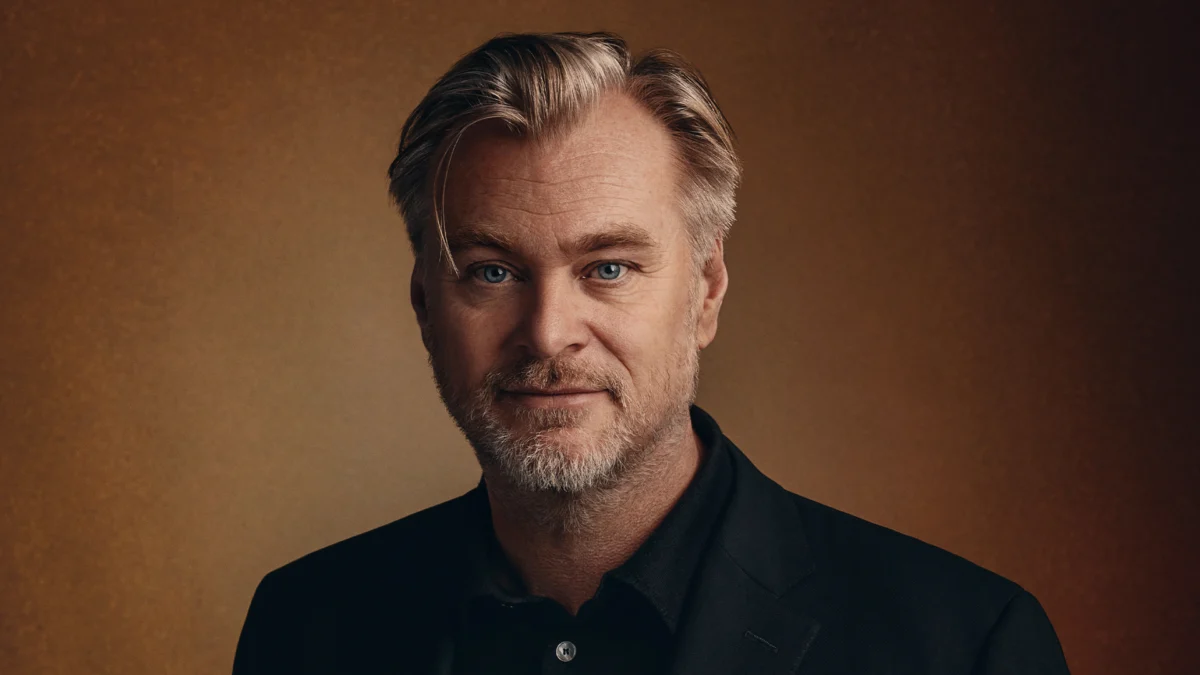
Christopher Nolan, a filmmaker whose name has become synonymous with ambitious, intellectually stimulating blockbusters, has once again captivated audiences and critics with his latest masterpiece, The Odyssey. Fresh off the seven-Oscar sweep of Oppenheimer, Nolan’s thirteenth feature film has not only achieved staggering box office success but also serves as a profound testament to his enduring artistic vision and his ability to weave complex narratives that resonate deeply with the human experience.
The film, a daring and visually spectacular adaptation of Homer’s ancient Greek epic poem, has debuted to an astounding $264 million worldwide, shattering Nolan’s own global opening weekend record. Domestically, The Odyssey garnered an impressive $124 million, marking his highest opening outside of the Batman franchise. A significant portion of this success, 23.8 percent, can be attributed to the immersive power of IMAX screens, a format Nolan has championed throughout his career. This unprecedented financial performance underscores the immense trust and anticipation audiences place in Nolan’s projects, a trust meticulously built over more than 25 years of delivering visually stunning and thematically rich cinematic experiences.
A Cinematic Journey Decades in the Making
Nolan’s fascination with Homer’s epic dates back to his childhood. The seeds of The Odyssey were sown decades ago during his brief involvement with the development of the 2004 film Troy. While his tenure on that project was short, the imagery of Odysseus’s cunning Trojan Horse, a pivotal moment in the original poem, became an indelible mark on Nolan’s directorial imagination. This haunting visual, symbolizing deception and the consequences of war, is powerfully established within the opening moments of his Odyssey, setting a tone of both epic grandeur and profound introspection.
However, the genesis of The Odyssey as Nolan’s own narrative feature was a more organic process. As he delved deeper into the writing, Nolan realized the pervasive influence of Homer’s tale on his own filmography. The archetypal journey of Odysseus, his decade-long struggle to return home after the Trojan War, mirrored themes of perseverance, loss, identity, and the search for belonging that have permeated his previous works. This realization led to a fascinating meta-narrative, where elements from Nolan’s iconic films are not merely alluded to but are intricately woven into the fabric of The Odyssey itself.

Weaving a Tapestry of Nolan’s Cinematic Universe
The film’s narrative tapestry is rich with echoes of Nolan’s celebrated filmography. Audiences will recognize the spectral presence of characters and thematic parallels that bridge his diverse body of work. The film subtly introduces figures reminiscent of Alfred Borden (Christian Bale) from The Prestige, Cobb (Leonardo DiCaprio) from Inception, and the determined Allied soldiers striving for home in Dunkirk. Similarly, a ghost-like observer, echoing Coop’s (Matthew McConaughey) poignant yearning in Interstellar and Bruce Wayne’s (Christian Bale) existential struggles in The Dark Knight Rises, adds layers of melancholic reflection. The theme of a leap of faith to escape confinement, a hallmark of The Dark Knight Rises, finds a new manifestation in Odysseus’s own quest for liberation. The fragmented memories and questioning of reality that defined Leonard Shelby (Guy Pearce) in Memento are powerfully mirrored in Odysseus’s own disoriented journey. Furthermore, a character portrayed by Anne Hathaway, much like Selina Kyle/Catwoman in The Dark Knight Rises, is poised to witness a recluse’s extraordinary archery prowess.
Perhaps the most striking thematic resonance lies in the apocalyptic undercurrents that connect The Odyssey to Nolan’s other recent films, Tenet and Oppenheimer. The Trojan Horse, an instrument of unprecedented destruction disguised as a gift, bears a chilling parallel to the atomic bomb wielded by J. Robert Oppenheimer. Both creations, born from extraordinary ingenuity, carry the profound fear of irrevocably altering the very foundations of warfare and civilized society. This thematic kinship suggests a deliberate exploration by Nolan of humanity’s capacity for both creation and devastation, and the complex moral quandaries that arise from wielding immense power.
Nolan’s Intentional Ambiguity and Evolving Themes
Despite the clear thematic connections, Christopher Nolan maintains his characteristic stance on explicit interpretation, suggesting that these parallels often emerge in retrospect. "Now that I look back on it after finishing The Odyssey, there are interesting parallels [to Oppenheimer]," Nolan stated in an interview with The Hollywood Reporter. "I try to leave each film I do with thematic concerns and questions that stay a little bit open for me and hopefully the audience too. They are things that I want to explore further without being too self-conscious about it." This approach allows each film to breathe independently while fostering a deeper appreciation for the overarching philosophical inquiries that drive Nolan’s creative process.
The Enduring Power of the Golden Rule
At its core, The Odyssey champions the importance of Zeus’s law, a principle universally recognized as the Golden Rule: treating others as one wishes to be treated. The film, while concluding with a somber warning about the consequences of disregarding historical lessons, carries an undercurrent of optimism regarding humanity’s inherent goodness. "The fact that we have mutual respect is what, to some extent, defines civilization," Nolan elaborated. "I don’t think that’s something that can be entirely imposed by, for example, a religious framework. I think it has to be innate in us for that to be as prevalent and as effective as it has been over thousands of years." This philosophical outlook suggests that while civilization is fragile and susceptible to disruption, the fundamental human capacity for empathy and respect remains a potent force for its preservation.
Technical Prowess and Innovation: The IMAX Revolution
The Odyssey‘s groundbreaking achievement of being the first narrative feature shot entirely in IMAX is a testament to Nolan’s unwavering commitment to cinematic innovation. The film’s visual grandeur and immersive quality are amplified by the format’s unparalleled clarity and scale. Nolan’s pioneering use of IMAX cameras began with subtle integrations in The Prestige and was significantly advanced with The Dark Knight, transforming the format from a documentary tool into a mainstream cinematic language.

The evolution of IMAX camera technology, particularly the development of sound-blimped cameras, has been crucial for Nolan. This innovation allows for the seamless integration of dialogue recording directly on set, a significant logistical and artistic advancement. "The idea that IMAX has now been able to engineer a way to contain the camera so that it’s effectively silent, that’s a big leap forward," Nolan remarked. He emphasized the collaborative nature of this evolution, highlighting the continuous feedback loop between filmmakers, cinematographers like Hoyte van Hoytema, and the camera manufacturers to refine these complex systems. The ongoing collaboration with Panavision has also been instrumental in developing a wider array of specialized lenses and faster apertures, further enhancing the visual storytelling capabilities of the IMAX format. This relentless pursuit of technical excellence ensures that Nolan’s films deliver an unparalleled sensory experience to the audience.
A Collaborative Spirit and Evolving Partnerships
Nolan’s directorial approach is characterized by a deep respect for his collaborators. While he has a history of working with trusted craftspeople, he also embraces the infusion of fresh perspectives. The transition from long-time Director of Photography Wally Pfister to Hoyte van Hoytema marked a significant shift, yet it paved the way for successful collaborations with other new artisans on The Odyssey, including composer Ludwig Göransson, editor Jennifer Lame, and production designer Ruth De Jong. Nolan views this as a vital balance between the comfort of familiarity and the stimulation of new ideas, ensuring each project benefits from the best creative minds.
His loyalty extends beyond major stars to the talented actors who inhabit smaller, yet crucial, roles. John Papsidera, his casting director since Memento, has been instrumental in discovering and bringing exceptional performers to Nolan’s projects. Nolan acknowledges the immense pressure on these actors, who must deliver compelling performances under demanding circumstances, and credits Papsidera’s genius in identifying actors capable of such feats.
A Personal Touch Amidst Epic Scale
Even amidst the colossal scale of his productions, Nolan has a remarkable track record of staying within budget and ahead of schedule. He attributes this success to a strategic approach: "What I realized early on is that if I stayed on budget and on schedule, I got less interference," he explained. "I didn’t give people a reason to panic." This proactive management grants him greater creative control, allowing him to make necessary compromises on his own terms, a philosophy that has become a cornerstone of his filmmaking process.
On a more personal note, Nolan revealed how recent life events subtly influenced the emotional core of The Odyssey. The poignant reunion between Odysseus and his loyal hunting dog, Argos, resonated deeply with Nolan, particularly after his family acquired their first dog as their children were transitioning to college. "It’s the ultimate dog movie. So I was definitely better prepared to take on the ultimate dog movie having become a dog owner," he shared, illustrating how life experiences can imbue even the grandest narratives with intimate emotional truth.

A Genre-Bending Vision and Future Endeavors
While often pressured to direct a pure horror film, Nolan views The Odyssey as an exploration of the genre’s inherent elements. "They don’t need to beg me to tell a horror story anymore. Just buy a ticket," he quipped. He believes horror, more than any other genre, demands a compelling conceptual idea at its heart, citing films like Speak No Evil as examples of how potent storytelling can transcend technical execution. This suggests a continued openness to exploring the darker, more unsettling aspects of human psychology within his future projects.
Looking ahead, the 20th-anniversary re-release of The Prestige promises a stunning 70mm presentation, a testament to the enduring artistry of its original cinematography by Wally Pfister and production design by Nathan Crowley. The possibility of future collaborations with Christian Bale, whom Nolan regards as one of the finest actors of his generation, remains a tantalizing prospect for cinephiles.
Christopher Nolan’s The Odyssey is more than just a film; it is a cinematic event that solidifies his legacy as a master storyteller and a visionary innovator. Its box office triumph, coupled with its intricate thematic depth and technical brilliance, reaffirms his unique ability to connect with a global audience on both an intellectual and emotional level, leaving an indelible mark on the landscape of modern cinema.