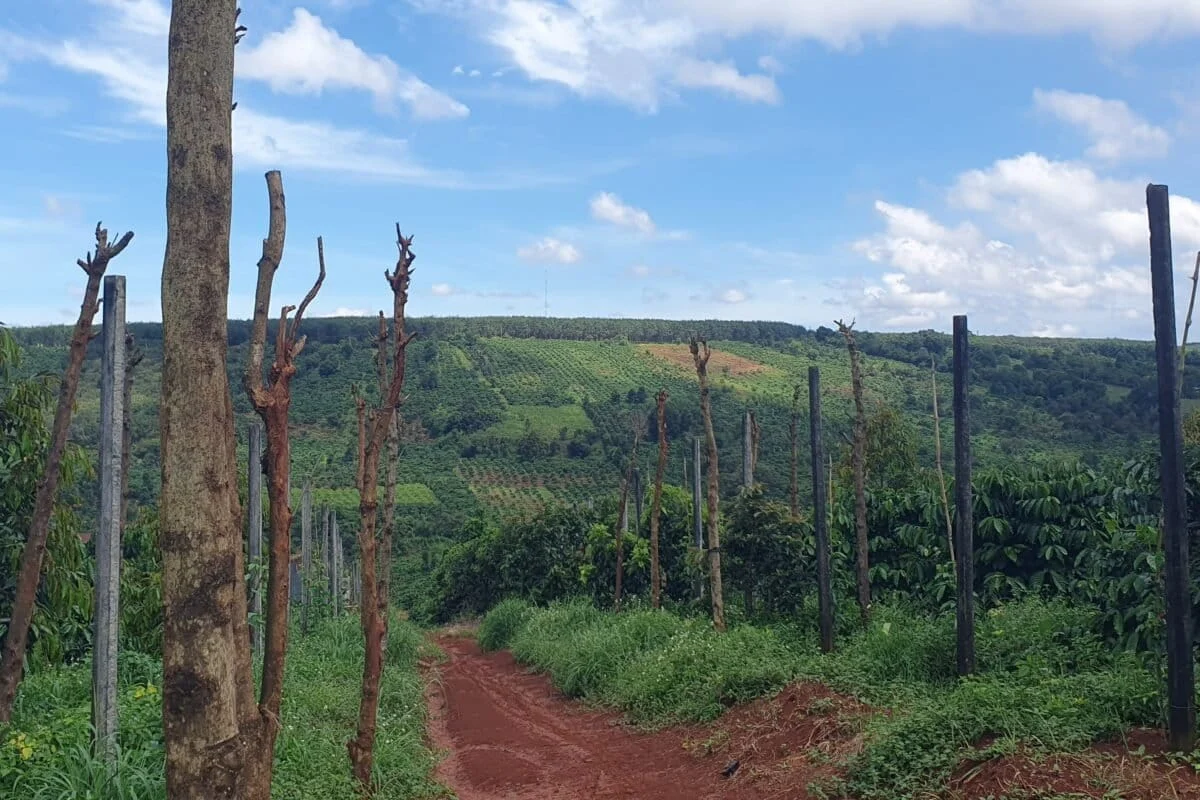
The landscape of Vietnam’s Central Highlands, the global epicenter of Robusta coffee production, has undergone a radical and destructive transformation over the past three decades. A comprehensive investigation by Coffee Watch, a Berlin-headquartered environmental watchdog, has revealed that unchecked deforestation fueled by the rapid expansion of coffee plantations has decimated the region’s primary forests. The report, which synthesizes satellite imagery, government records, and historical data, paints a sobering picture of ecological loss that now threatens the very industry that catalyzed the destruction. As the world’s second-largest coffee producer and the source of nearly 40% of global Robusta exports, Vietnam stands at a critical juncture where past environmental exploitation meets the modern realities of climate change and stringent international trade regulations.
The Statistical Reality of Forest Decline
The Coffee Watch investigation provides a stark quantitative assessment of the environmental toll in the Central Highlands. According to the report, tropical forest cover in this vital region—which accounts for 95% of Vietnam’s total coffee output—plummeted from 42.8% in 1990 to a mere 19% by 2020. This decline represents more than just a loss of acreage; it signifies the wholesale replacement of complex, biodiverse ecosystems with monoculture agricultural landscapes.
The data indicates that the most aggressive period of forest clearing occurred between 1995 and 2010. During this window, global demand for coffee surged, and Vietnam positioned itself to meet that demand through an unprecedented expansion of its agricultural frontier. While the rate of loss has stabilized at lower levels in the 2020s, the damage remains structural. The investigation highlights that the remaining tropical moist forest is largely restricted to steep, inaccessible terrains, often at higher elevations or within the confines of formally designated protected areas. These fragmented "islands" of biodiversity are under constant pressure and lack the ecological connectivity required to sustain many native species.
Historical Drivers: Policy, Finance, and the "Doi Moi" Era
The roots of the current crisis can be traced back to the late 20th century, specifically following the "Doi Moi" economic reforms of 1986. These reforms transitioned Vietnam from a centrally planned economy toward a socialist-oriented market economy, encouraging private enterprise and international trade. The government identified the Central Highlands—comprising the provinces of Dak Lak, Lam Dong, Gia Lai, Dak Nong, and Kon Tum—as a prime region for high-value export crops, particularly coffee.
Historically, government policies and international development financing played a pivotal role in incentivizing this expansion. In the 1990s, the Vietnamese government encouraged millions of people from the more densely populated northern and coastal regions to migrate to the Central Highlands. This massive internal migration, supported by state-funded infrastructure and agricultural subsidies, provided the labor force necessary for a coffee boom. International lenders and development agencies also funneled capital into the region, viewing coffee as a vehicle for poverty reduction and economic growth. However, this growth came without adequate environmental safeguards, leading to a "gold rush" mentality that prioritized short-term yields over long-term ecological stability.
The Ecological Toll and the "Nutrient Treadmill"
The conversion of diverse tropical forests into coffee monocultures has resulted in a cascade of environmental failures. One of the most significant issues identified by Coffee Watch is the "nutrient treadmill." In a natural forest ecosystem, nutrients are recycled through decaying organic matter, maintaining soil fertility. When these forests are cleared for coffee, the initial harvests are often bountiful due to the rich basaltic soils characteristic of the region. However, without the protection of the forest canopy and the natural recycling of nutrients, the soil quickly becomes exhausted.
To maintain high yields in these degraded soils, farmers are forced to apply ever-increasing amounts of chemical fertilizers. This reliance creates a vicious cycle: the chemicals further degrade soil structure and kill beneficial microorganisms, necessitating even more inputs. Furthermore, the loss of forest cover has accelerated soil erosion, particularly on the region’s sloped terrain, leading to the sedimentation of local waterways and the loss of the most fertile topsoil layers.
The hydrological impact is equally severe. Forests act as natural sponges, regulating water flow and recharging groundwater aquifers. With only 19% forest cover remaining, the Central Highlands have seen a significant disruption in water cycles. This has led to more frequent and severe seasonal droughts, as well as flash flooding during the monsoon season, both of which are detrimental to coffee cultivation.
The Looming Threat of Climate Change
The Coffee Watch report warns that the environmental degradation of the past is now amplifying the threats of the future. The combination of local deforestation and global climate change has placed the Vietnamese coffee sector in a precarious position. The report estimates that up to 50% of Vietnam’s current Robusta-growing belt could become unsuitable for cultivation by mid-century due to rising temperatures and erratic rainfall patterns.

Robusta (Coffea canephora) is generally considered hardier than Arabica, but it still requires specific climatic conditions to thrive. Excessive heat during the flowering stage can lead to crop failure, while prolonged droughts—exacerbated by the lack of forest-regulated groundwater—can kill mature trees. In recent years, the Central Highlands have experienced record-breaking heatwaves and delayed rainy seasons, leading to significant yield losses and increased production costs as farmers scramble to pump water from dwindling underground sources.
International Regulatory Pressure: The EUDR Factor
Beyond ecological and climatic threats, the Vietnamese coffee industry faces a new, immediate challenge from international markets. The European Union, a primary destination for Vietnamese coffee, has introduced the EU Deforestation Regulation (EUDR). This landmark legislation, set to be enforced in the coming years, requires companies to prove that products sold in the EU market—including coffee—were not produced on land deforested after December 31, 2020.
While the Coffee Watch report notes that the most rapid deforestation in Vietnam occurred before this cutoff date, the regulation places a heavy burden of proof on the supply chain. Vietnamese exporters must now implement sophisticated traceability systems to map the exact coordinates of every farm. For a sector dominated by hundreds of thousands of smallholder farmers, many of whom operate on the edge of protected areas, this represents a massive logistical and financial hurdle. Failure to comply could result in Vietnam losing access to one of its most lucrative export markets, further destabilizing the regional economy.
Shifting Toward Sustainability: Perspectives from the Field
Despite the grim findings of the investigation, experts within Vietnam suggest that a paradigm shift is underway. Ly Thi Minh Hai, the Vietnam country director for the international environmental nonprofit RECOFTC, acknowledged the historical role of coffee in forest loss but emphasized a change in direction.
"Coffee expansion was indeed one of the major drivers of forest loss in parts of the Central Highlands," Minh Hai stated. However, she noted that the industry is now pivoting toward "improving the productivity, resilience, and sustainability of existing coffee-growing landscapes" rather than pursuing further land expansion.
According to Minh Hai, the future of the sector depends on helping farmers adapt to climate pressures through regenerative practices. These include:
- Agroforestry and Intercropping: Moving away from monocultures by planting shade trees and intercropping with other high-value plants like durian, macadamia, or pepper. This helps regulate temperature, maintain soil moisture, and diversify farmer income.
- Water Management: Adopting climate-smart irrigation techniques to improve water-use efficiency as groundwater levels continue to drop.
- Regenerative Farming: Reducing reliance on chemical fertilizers and pesticides in favor of organic matter and biological controls to break the "nutrient treadmill."
- Securing Land Tenure: RECOFTC is working with local communities to secure forest tenure, which provides a legal and economic foundation for preventing further encroachment into natural forests.
"Vietnam’s coffee sector should not be defined by the deforestation challenges of the past," Minh Hai added. "The future of Vietnam’s coffee sector will not be measured by how much land we cultivate, but by how well we manage the landscapes we already have."
Analysis: The Path Forward for the World’s Robusta Giant
The Coffee Watch report serves as a definitive "reckoning" for an industry that has long prioritized volume over volatility. The findings suggest that the era of "easy growth" through land expansion is over. If Vietnam is to maintain its status as a global coffee powerhouse, it must transition from a model of extraction to one of restoration.
The implications of this report extend beyond the borders of Vietnam. As a dominant supplier of Robusta—the primary bean used in instant coffee and espresso blends worldwide—any significant decline in Vietnamese production will have a direct impact on global prices and supply chains. For international coffee brands, the report is a call to action to invest more heavily in the sustainability of their Vietnamese suppliers.
The Vietnamese government has already begun responding to these pressures. The Ministry of Agriculture and Rural Development (MARD) has launched various initiatives to promote "green growth" in the agricultural sector and is working closely with the EU to ensure compliance with the EUDR. However, the transition remains a race against time. With 50% of the Robusta belt at risk and only 19% of the original forest remaining, the margin for error in the Central Highlands has narrowed to a razor-thin edge. The success of Vietnam’s coffee industry in the 21st century will depend entirely on its ability to repair the ecological foundations it spent the 20th century dismantling.