In a move that has reignited a decades-old battle over the fate of the American West’s public lands, President Donald Trump has signed two executive orders drastically reducing the size of the Bears Ears and Grand Staircase-Escalante national monuments in southern Utah. The decision, which slashes the protected areas by approximately 90 percent, was presented by the administration as a victory for local sovereignty and economic development. However, a growing body of empirical data suggests a profound disconnect between the actions of political leaders and the desires of the Utahns they represent. Multiple independent polls conducted over the last two years indicate that a clear majority of Utah residents, as well as voters across the Mountain West, favored maintaining the original monument boundaries.
The executive orders, signed in a ceremony attended by Governor Spencer Cox and members of Utah’s all-Republican congressional delegation, represent a dramatic shift in federal land management policy. Under the new proclamations, Bears Ears National Monument—originally spanning 1.35 million acres—has been reduced to roughly 121,000 acres. Similarly, Grand Staircase-Escalante, which once encompassed nearly 1.9 million acres, has been pared down to just over 181,500 acres. The administration argued that the original designations were examples of federal overreach that "locked up" land, preventing the extraction of critical minerals and stifling local economic activities such as grazing and motorized recreation.
The Statistical Reality: A Majority in Favor of Protection
Despite the rhetoric from the Oval Office suggesting that the reductions were a response to the will of the people, recent data from Utah State University (USU) paints a different picture. In surveys conducted throughout 2024 and early 2025, researchers at USU’s Community and Natural Resources Institute found that 61 percent of Utah residents supported or strongly supported the preservation of Bears Ears as a national monument. In contrast, only 19 percent expressed opposition.
The discrepancy becomes even more pronounced when examining the specific proposal to shrink the monuments. According to the USU study, 53 percent of respondents were explicitly opposed to reducing the size of Bears Ears, while only 26 percent supported such a move. The remaining 21 percent remained neutral. Michaelann Nelson, a professor of environmental rhetoric at USU and a lead author of the study, noted that the findings suggest political leaders are "picking and choosing which Utahns they’re paying attention to."
This sentiment is echoed by the annual Conservation in the West Poll conducted by Colorado College, which surveys voters across eight Mountain West states, including Arizona, Colorado, Idaho, Montana, Nevada, New Mexico, Utah, and Wyoming. Their 2025 data revealed that 91 percent of voters in these states believe existing national monuments should be kept in place. This represents a steady increase in support from 80 percent in 2017. Notably, the support for monuments transcends party lines; 87 percent of self-identified Republicans and 87 percent of "MAGA" supporters expressed a desire to maintain current protections, alongside 92 percent of independents and 96 percent of Democrats.
A History of Contested Landscapes: A Timeline of Designations
The conflict over these lands is rooted in the Antiquities Act of 1906, a law that grants U.S. presidents the authority to protect "historic landmarks, historic and prehistoric structures, and other objects of historic or scientific interest" by designating them as national monuments. The core of the legal and political dispute often hinges on the Act’s instruction that such reservations be limited to the "smallest area compatible with the proper care and management of the objects to be protected."
The timeline of these specific monuments illustrates the see-saw nature of federal land policy:
- 1996: President Bill Clinton designates the Grand Staircase-Escalante National Monument, protecting 1.7 million acres (later expanded to 1.9 million). The move was met with immediate and fierce opposition from Utah’s Republican leadership.
- 2016: President Barack Obama establishes Bears Ears National Monument, covering 1.35 million acres of land sacred to several Native American tribes.
- 2017: During his first term, President Donald Trump signs orders reducing Bears Ears by 85 percent and Grand Staircase-Escalante by nearly 50 percent.
- 2021: President Joe Biden issues executive orders restoring both monuments to their original (and in the case of Bears Ears, slightly expanded) boundaries, totaling approximately 3.2 million acres.
- 2025: President Trump, returning to office, once again slashes the boundaries, citing the need for domestic mineral production and "fairness" to local communities.
Economic Rationale and the Extraction Debate
The Trump administration’s primary justification for the cuts involves the "public interest" in domestic mining. The region is rich in deposits of copper, nickel, and uranium—minerals that the administration deems "critical" for national security and the manufacturing of modern technologies. Trump’s proclamation argued that the vast size of the monuments prevented the responsible development of these resources, which could provide high-paying jobs to rural Utahns.
Historical records suggest that industrial lobbying has played a significant role in these decisions. During the 2017 reductions, it was revealed that uranium mining companies had actively lobbied the administration to redraw the boundaries of Bears Ears to exclude areas with high mineral potential. The current orders follow a similar logic, prioritizing the extraction of raw materials over the burgeoning outdoor recreation and tourism economies that have come to define towns like Kanab and Escalante.
However, the "multiple use" argument put forward by proponents of the cuts is often contested by fact-checkers. During the signing ceremony, President Trump claimed that the monument designations prevented hunting, fishing, and even walking on the land. "You can’t do anything," he stated. "You can virtually not even walk on it."
In reality, the management plans for both Bears Ears and Grand Staircase-Escalante explicitly allowed for hunting, fishing, and the use of off-road vehicles on designated trails. Furthermore, livestock grazing—a cornerstone of the local rural economy—continued under monument status, albeit with certain environmental regulations. The primary activities prohibited by the monument designations were new mining claims and large-scale industrial development.
The Impact on Tribal Sovereignty and Cultural Heritage
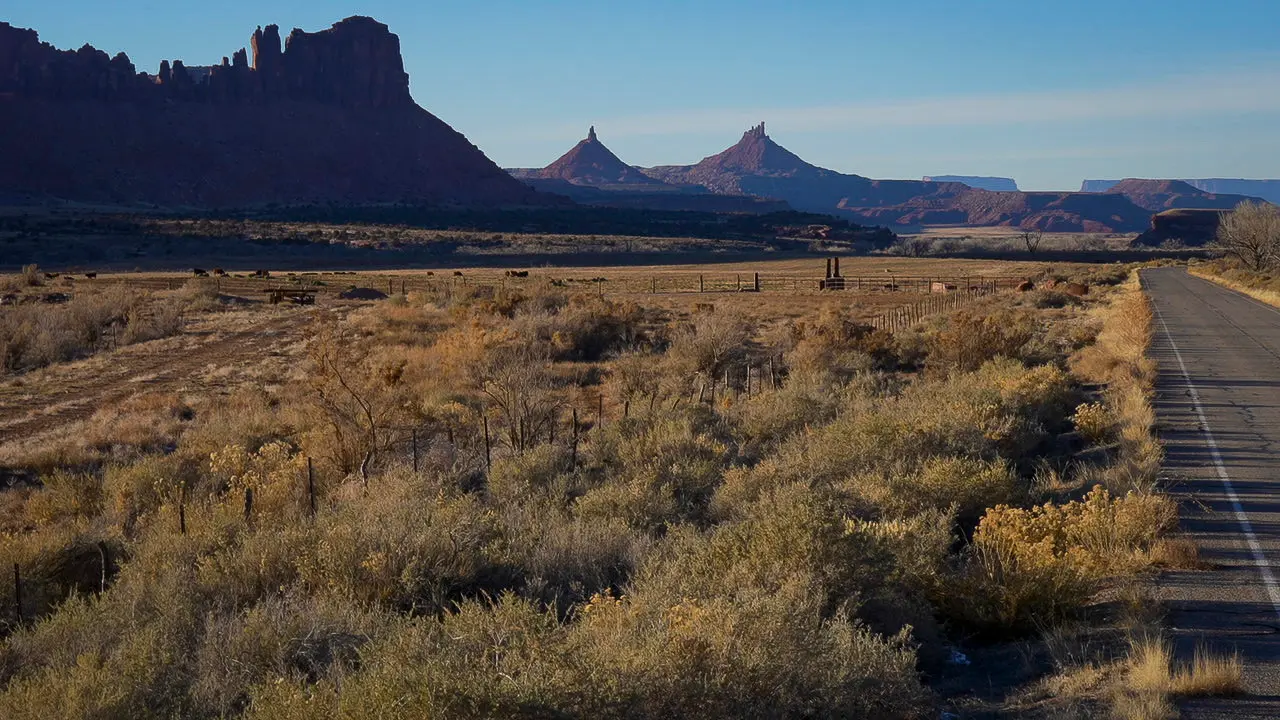
Perhaps the most significant casualty of the recent executive orders is the collaborative management structure involving Native American tribes. Bears Ears, named after two twin buttes, is home to thousands of archaeological sites and is considered ancestral land by the Hopi Tribe, Navajo Nation, Ute Indian Tribe, Ute Mountain Ute Tribe, and the Pueblo of Zuni.
When President Obama created the monument, he established the Bears Ears Commission, a first-of-its-kind intertribal body designed to ensure that federal agencies managed the land in consultation with the tribes’ traditional knowledge. President Trump’s latest order has disbanded this commission, a move that critics say ignores the sovereign rights and cultural ties of the region’s original inhabitants.
Public opinion in Utah appears to support the tribes. A December 2024 survey by New Bridge Strategies found that nearly 90 percent of Utahns believe Native American tribes should have a strong role in managing their ancestral lands. Furthermore, 81 percent of respondents believed the administration should honor existing agreements with tribes regarding the management of Bears Ears.
Broader Implications and Looming Legal Battles
The reduction of these monuments is expected to trigger a wave of litigation. Environmental groups, such as the Southern Utah Wilderness Alliance (SUWA), and tribal nations have previously argued in court that while the Antiquities Act gives presidents the power to create monuments, it does not grant them the authority to abolish or significantly diminish them—a power they argue is reserved for Congress.
The legal uncertainty creates a volatile environment for the region’s economy. While mining companies may now seek to file new claims, the threat of future restoration by a subsequent administration may deter long-term investment. Conversely, the "monument bounce"—the increase in tourism and migration to "gateway communities" near protected lands—may be threatened by the loss of the "National Monument" brand, which serves as a global draw for hikers, photographers, and outdoor enthusiasts.
Governor Spencer Cox has defended the cuts, stating that "multimillion-acre monuments that are bigger than the state of Delaware" do not fit the spirit of the Antiquities Act. He and other state leaders argue that the influx of tourists caused by the monument designations has actually led to the "degradation" of the sites, straining local law enforcement and land management resources.
Conclusion: A Landscape of Conflict
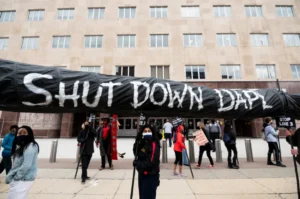
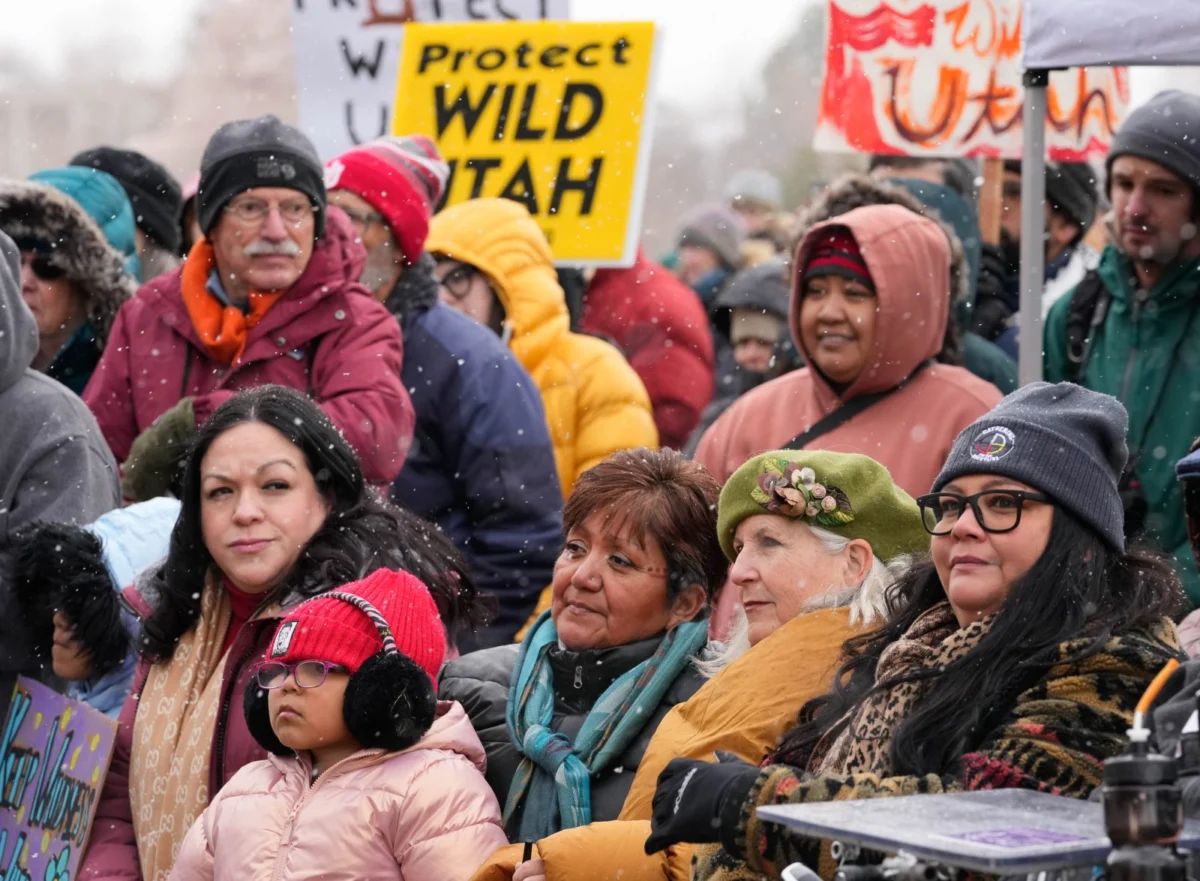
As hundreds of protesters gathered outside the Governor’s Mansion in Salt Lake City this week, the divide between the state’s political apparatus and its citizenry was on full display. The debate over Bears Ears and Grand Staircase-Escalante is no longer just about land use; it has become a symbol of the broader American struggle over environmental priorities, tribal rights, and the limits of executive power.
While the Trump administration moves forward with its plan to open these lands to industrial interests, the data suggests they are doing so without the broad mandate of the public. As the battle moves from the red rocks of southern Utah to the federal courtrooms of Washington D.C., the only certainty is that the fate of these 3.2 million acres remains as contested as ever. The tension between the immediate economic promise of mineral extraction and the long-term preservation of cultural and ecological heritage continues to shape the identity of the American West.