The concept of passive income in real estate, once marketed as a seamless path to financial freedom, is undergoing a rigorous revaluation as small-scale investors grapple with a convergence of rising interest rates, escalating maintenance costs, and a cooling rental market. For years, the narrative surrounding residential investment suggested that property ownership required little more than initial capital and a reliable tenant. However, the post-pandemic economic environment has revealed that the "passive" nature of these investments is often a misnomer, replaced by the demanding realities of property management, renovation cycles, and tightening profit margins.
The Rise and Transformation of the Passive Income Narrative
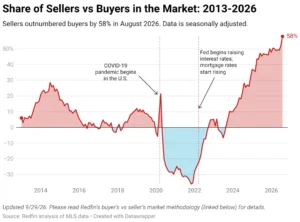
To understand the current "headache" facing many investors, one must look at the unprecedented conditions of the 2019–2022 period. During this window, the U.S. housing market experienced a unique alignment of low-cost debt and high demand. Interest rates plummeted to historic lows, often hovering around 3%, while the COVID-19 pandemic spurred a migration that drove rental demand to record highs.
According to data from Realtor.com, search interest in "passive income with real estate" nearly quadrupled between 2019 and 2022. This surge in interest was mirrored by investor activity. In 2015, small investors—those owning between one and ten properties—purchased approximately 186,592 homes. By 2022, that figure had nearly doubled to 363,434 homes. The "BRRRR" method (Buy, Rehab, Rent, Refinance, Repeat) became a staple of investment strategy, allowing individuals to recycle capital rapidly and scale portfolios at a pace rarely seen in previous decades.
In markets like Akron, Ohio, the math appeared foolproof. Investors like William and Josh Lemmon reported purchasing homes for as little as $60,000 in 2021, with the expectation of generating $1,000 per month in rent. On paper, these figures suggested a high-yield, low-effort return. However, the reality of the "passive" dream often collided with the physical demands of aging housing stock and the complexities of the renovation process.
The Chronology of Market Squeeze
The transition from "easy money" to "massive headaches" followed a distinct chronological path influenced by federal monetary policy and global supply chain disruptions.
- 2019–Early 2020 (Pre-Pandemic Stability): The rental market was characterized by steady growth. Median rents for studio through two-bedroom apartments sat at approximately $1,451. Investors focused on traditional cash flow models.
- 2021 (The Peak Boom): Stimulus measures and low interest rates created a buying frenzy. Median rents began a steep ascent, eventually reaching $1,741 by 2023—a 20% increase.
- 2022 (The Pivot): The Federal Reserve began a series of aggressive interest rate hikes to combat inflation. This immediately increased the cost of borrowing for new acquisitions and variable-rate loans, effectively ending the era of "cheap" leverage.
- 2023–2024 (The Squeeze): While rents remained high in some sectors, the rate of growth slowed significantly due to an influx of new apartment supply. Simultaneously, the costs of "holding" property—insurance, taxes, and labor—surged.
Hannah Jones, a senior economist at Realtor.com, notes that rent softness in many markets stems from this growing supply, particularly in regions that boomed during the pandemic. "At the same time, owners are feeling the squeeze from the cost side," Jones stated. "Insurance premiums, maintenance labor, materials, and turnover expenses have all been climbing, compressing margins even where rents hold steady."
The Hidden Costs: Renovation and Maintenance Realities
The primary friction point for new investors is often the "Day One" reality of property ownership. William Lemmon highlighted this during his reflection on the Akron market, noting that properties frequently became a "job right out of the gate."
Buying older homes at a discount often necessitates immediate and heavy capital expenditure. An investor purchasing a $90,000 property may find themselves spending $30,000 on essential renovations before a single rent check is collected. When factoring in the "carry costs"—the mortgage, taxes, and insurance paid while the property sits vacant during construction—the investment often begins in the negative. This period of renovation costs not only financial capital but also significant time, further eroding the "passive" nature of the endeavor.
Furthermore, the price of materials and skilled labor has remained elevated. The Consumer Price Index (CPI) for maintenance and repair services has consistently outpaced general inflation in recent years, meaning that a broken water heater or a roof replacement now represents a much larger percentage of an investor’s annual cash flow than it did five years ago.
From Cash Flow to Net Worth: A Shift in Strategy
As the "get-rich-quick" allure of monthly cash flow fades under the pressure of high interest rates, seasoned analysts are encouraging a shift toward long-term equity growth. Dave Meyer, a prominent voice in the real estate investment community and host of the BiggerPockets podcast, suggests that the primary goal for modern investors should be building a substantial equity base rather than relying on immediate rental income for lifestyle support.
Meyer posits that an investor might need to reach a threshold of $5 million in equity before cash flow becomes truly reliable for personal use. "Don’t focus on ‘Hey, I went from $500 to $600 in cash flow,’" Meyer noted. "The hard thing is building up that $5 million in equity. Once you’ve got that, it’s easy. You can just go out and buy stuff for cash."
This perspective redefines real estate as a wealth-preservation and growth vehicle rather than a monthly paycheck. It emphasizes the tax benefits of depreciation and the long-term power of amortization—where tenants pay down the debt over 30 years—rather than the immediate "mailbox money" that many novices expect.
Low-Risk Strategies in a High-Cost Environment
In response to these market shifts, investors are pivoting toward strategies that mitigate risk or maximize the utility of existing assets.
House Hacking and Tax Advantages
One of the most resilient strategies remains "house hacking," where an owner lives in one unit of a multi-family property or rents out rooms in a single-family home. This approach serves two purposes: it drastically reduces the investor’s own living expenses and ensures they are on-site to manage maintenance and tenant relations.
Additionally, this strategy leverages Section 121 of the Internal Revenue Code. If an investor lives in a property as their primary residence for at least two of the five years preceding a sale, they can exclude up to $250,000 (single) or $500,000 (married filing jointly) of capital gains from their taxable income. This remains one of the most powerful wealth-building tools available to small investors.
Short-Term and Medium-Term Rentals
To "force" higher rents and combat rising costs, some have moved toward short-term (Airbnb/VRBO) or medium-term (traveling nurse/corporate housing) rentals. While these models can yield 2x to 3x the gross revenue of a traditional 12-month lease, they come with significantly higher operational overhead and are subject to fluctuating local regulations and "STR taxes."
Private Money Lending
For those seeking true passivity, the role of the lender is becoming more attractive than the role of the landlord. By providing capital to "flippers" or developers at interest rates of 10% to 12%, individuals can earn a return backed by real estate without the burden of property management. This strategy, however, requires a high degree of due diligence to ensure the lender holds the first lien position and that the property has sufficient equity to cover a potential default.
Broader Implications and Future Outlook
The professionalization of the small investor market is a likely outcome of the current "headache" era. The "casual" landlord who entered the market during the 3% interest rate period may find it increasingly difficult to compete with institutional players or highly efficient local operators who can weather thin margins.
The broader housing market also feels the impact of this shift. As small investors slow their acquisitions due to high costs, more inventory may eventually return to the "owner-occupant" market, potentially stabilizing home prices for first-time buyers. However, for the rental market, the "supply squeeze" in the cost of labor and insurance suggests that while rent growth may slow, significant decreases in rent are unlikely as landlords attempt to maintain their break-even points.
Ultimately, real estate remains a potent asset class, but the barrier to entry—in terms of both capital and competence—has risen. The transition from a "cash flow" outlook to an "equity-growth" outlook requires patience and a return to the fundamentals of property management. As the industry moves forward, the consensus among experts is clear: the path to wealth through real estate is still open, but it is no longer a "deck chair by the pool" experience. It is a business that requires active oversight, strategic planning, and an acceptance that being "boring" and consistent is the most reliable way to avoid being broke.