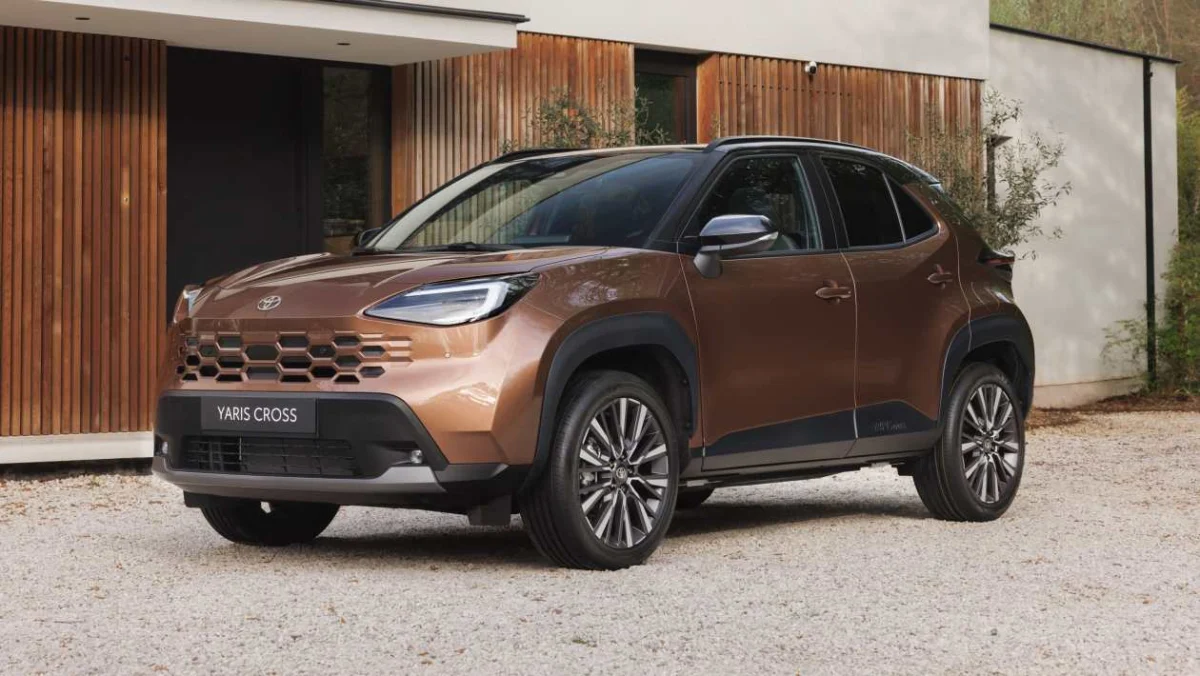
Toyota Motor Europe has officially unveiled the latest iteration of the Yaris Cross, introducing a comprehensive mid-cycle refresh for its most popular model on the continent. The updated B-segment SUV arrives with a redesigned exterior, a more premium interior environment, and a series of technical refinements aimed at consolidating its position in one of the automotive industry’s most fiercely contested segments. Set to go on sale in autumn 2026, the revised Yaris Cross is positioned as Toyota’s primary defense against a wave of both established European rivals and ambitious new entrants from the Chinese market.
Since its initial launch in 2021, the Yaris Cross has rapidly ascended to the top of Toyota’s sales charts, frequently outperforming the standard Yaris hatchback and the larger C-HR. This success is largely attributed to its blend of high-riding SUV aesthetics and the fuel-efficient hybrid technology for which Toyota is renowned. For the 2026 model year, the Japanese manufacturer has focused on "sharpening" the package, addressing customer feedback regarding interior material quality and exterior styling consistency across the brand’s SUV lineup.
Aesthetic Evolution and Exterior Refinements
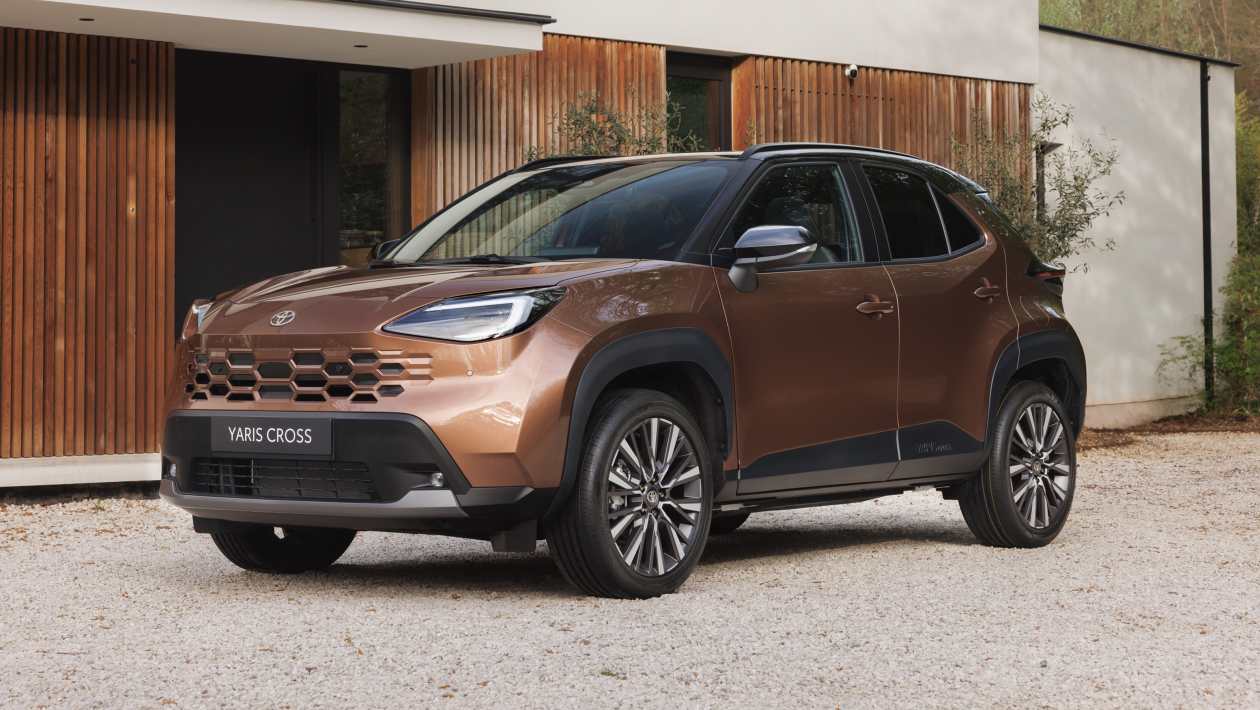
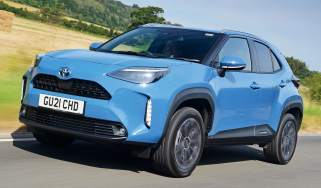
The most immediate change to the 2026 Toyota Yaris Cross is its front-end design. Toyota’s designers have moved away from the softer lines of the original model, opting for a more rugged and cohesive look that draws direct inspiration from the larger, fifth-generation RAV4. The centerpiece of this transformation is a new hexagonal grille opening that integrates more seamlessly into the front bumper and main bodywork. This "bleeding" effect creates a wider, more planted stance, moving the Yaris Cross away from its supermini roots and closer to a traditional SUV silhouette.
Further cleaning up the front fascia is the deletion of the separate, low-set LED daytime running lights that characterized the previous model. These have now been integrated into the main headlight clusters, resulting in a more modern, streamlined lighting signature. While the side profile and rear design remain largely familiar, Toyota has introduced two new exterior paint options to the palette and debuted a range of redesigned alloy wheels. Depending on the chosen trim level, customers can opt for new 17-inch or 18-inch wheels featuring machined finishes or dark-tinted designs.
Interior Upgrades and the Introduction of SakuraTouch
Inside the cabin, the focus has shifted toward perceived quality and tactile feedback. One of the primary criticisms of the B-SUV segment as a whole is the prevalence of hard plastics, a challenge Toyota seeks to mitigate with the introduction of "SakuraTouch." This new fabric insert, specifically featured on the high-specification Excel grade models, offers a softer, more premium feel to the touchpoints on the doors and dashboard.

The overall architecture of the dashboard remains intact, maintaining the ergonomic layout that has proven popular with current owners. However, the material upgrades extend to revised upholstery patterns across the range and updated trim finishes. The digital interfaces, while structurally unchanged from the late-2024 update, continue to serve as a cornerstone of the Yaris Cross’s appeal. All variants come equipped with a fully digital instrument cluster, though the size varies by trim.
The entry-level Icon trim features a nine-inch central infotainment display, while all other grades—including Design, Excel, and GR Sport—are equipped with a 10.5-inch high-definition touchscreen. Toyota’s Smart Connect system remains standard, offering cloud-based navigation, "Over-the-Air" (OTA) software updates, and wireless connectivity for both Apple CarPlay and Android Auto.
Powertrain Consistency and Efficiency Metrics
Under the hood, Toyota continues to rely on its well-proven 1.5-litre three-cylinder hybrid powertrain. In its most potent form, this system produces a combined 129bhp (marketed as the "Hybrid 130"). This specific powertrain underwent significant internal revisions in 2024, which included the fitment of a larger, more powerful electric motor-generator and a revised power control unit (PCU).

While the 0-62mph sprint time of 10.7 seconds suggests that performance is adequate rather than exhilarating, the powertrain’s strength lies in its real-world efficiency. Toyota’s fifth-generation hybrid system allows the Yaris Cross to operate in zero-emission electric mode for significant periods during urban driving. Preliminary data suggests that all variants will maintain an impressive fuel economy figure of approximately 60mpg, with CO2 emissions remaining among the lowest in the class.
To improve refinement, Toyota has retained the acoustic glass and enhanced sound insulation introduced in the previous model year. These measures are designed to combat the "thrum" often associated with three-cylinder engines under heavy acceleration, providing a quieter cabin experience at motorway speeds. The Yaris Cross remains one of the few vehicles in its segment to offer an intelligent all-wheel-drive (AWD-i) option, a feature that provides additional traction in inclement weather without the weight and fuel-economy penalties of a traditional mechanical AWD system.
A Chronology of the Yaris Cross
To understand the significance of the 2026 update, it is necessary to look at the timeline of the model’s development:
- April 2020: The Yaris Cross is officially revealed, though its launch is delayed due to the global pandemic.
- 2021: Production begins at Toyota Motor Manufacturing France (TMMF) in Onnaing. The model quickly becomes a high-volume success.
- Early 2024: Toyota introduces a significant mechanical update, debuting the 129bhp powertrain alongside the original 114bhp version and upgrading the digital cockpit.
- April 2026: The mid-cycle refresh is revealed, focusing on "sharpening" the exterior aesthetics and cabin materials.
- Autumn 2026: The refreshed model is scheduled to arrive in European showrooms.
Market Positioning and Competitive Analysis
The Yaris Cross enters a marketplace that has transformed significantly since 2021. Its primary rivals, the Ford Puma and Nissan Juke, have both undergone their own updates to remain competitive. The Ford Puma remains the segment leader for driving dynamics, while the Nissan Juke recently received a significant interior overhaul to improve its technology suite.
However, the 2026 landscape is further complicated by the arrival of new competitors from China. Brands such as Jaecoo (with the Jaecoo 5) and BYD (with the Atto 2) are entering the B-SUV segment with aggressive pricing strategies. These newcomers often offer more powerful hybrid or fully electric powertrains and a higher level of standard equipment for a similar or lower price point than the Toyota.
Industry analysts suggest that Toyota’s defense lies in its brand equity. "While Chinese manufacturers can compete on a specification-for-specification basis, Toyota holds a significant advantage in terms of residual values and long-term reliability perceptions," notes a London-based automotive market analyst. Furthermore, Toyota’s "Relax" warranty program, which can extend coverage up to 10 years or 100,000 miles through regular servicing at an authorized dealer, remains a compelling USP for retail buyers.
Pricing and Trim Structure
While official UK pricing for the refreshed model has not been finalized, Toyota sources indicate that the price list will not deviate significantly from the current structure. The range is expected to start at approximately £27,295 for the entry-level Icon trim, rising to over £33,000 for the flagship GR Sport and Excel models.
The trim hierarchy is expected to remain as follows:
- Icon: Focusing on value, featuring 16-inch alloys and a 9-inch screen.
- Design: Expected to be the best-seller, adding 17-inch wheels, LED lighting, and the 10.5-inch screen.
- Excel: The luxury-oriented choice, featuring the new SakuraTouch materials and heated seats.
- GR Sport: The sportier derivative, with unique suspension tuning, 18-inch wheels, and GR-branded interior accents.
Broader Impact and Industry Implications
The update of the Yaris Cross is a clear indicator of Toyota’s broader "Multi-Pathway" strategy. While many competitors are pivoting exclusively toward Battery Electric Vehicles (BEVs), Toyota continues to invest heavily in Hybrid Electric Vehicle (HEV) technology. The company argues that for many European consumers—particularly those without home charging access—the self-charging hybrid remains the most practical and affordable way to reduce carbon emissions.

The success of the Yaris Cross is vital for Toyota’s European carbon footprint. By selling high volumes of low-CO2 hybrids, the company can offset the emissions of its more specialized vehicles, such as the Hilux pickup or Land Cruiser. Furthermore, the decision to refine the Yaris Cross rather than replace it entirely demonstrates the longevity of the TNGA-B platform, which continues to provide a class-leading balance of safety, weight, and rigidity.
As the automotive industry moves toward 2030, the Yaris Cross represents a "steady hand" approach. It does not seek to reinvent the segment but rather to perfect a formula that has already resonated with hundreds of thousands of European buyers. With its new RAV4-inspired face and upgraded interior, Toyota is betting that reliability, efficiency, and a familiar brand name will be enough to stave off the rising tide of new competition.