The Technical Evolution of the Lamborghini Temerario
The 2026 Lamborghini Temerario serves as the successor to the Huracán, a model that defined the brand’s sales success for over a decade. While the Huracán relied on a 5.2-liter V10 engine, the Temerario introduces a 4.0-liter twin-turbocharged V8 engine paired with three electric motors. This powertrain configuration is capable of producing a combined output of 907 horsepower (920 CV). One of the most notable engineering feats of this new engine is its ability to rev to 10,000 rpm, a figure typically reserved for high-end naturally aspirated racing engines or hypercars like the Aston Martin Valkyrie.
The integration of hybridization in the Temerario is not merely an exercise in meeting tightening global emission standards; it is a strategic move to enhance performance through torque vectoring and immediate electric response. Two electric motors are located on the front axle, providing the vehicle with all-wheel-drive capabilities and the ability to operate in a fully electric mode for short distances. The third motor is positioned between the V8 engine and the eight-speed dual-clutch transmission. This setup ensures that the "turbo lag" traditionally associated with forced induction is virtually eliminated, providing a linear power delivery that mimics the characteristics of the outgoing V10 while offering significantly higher peak performance.
Geographic Context: Testing in the Northeast Pennsylvania Hills
The choice of Northeast Pennsylvania (NEPA) as a testing ground offers a stark contrast to the traditional media launch locations in Sant’Agata Bolognese or high-speed circuits in Spain. The NEPA region is characterized by undulating terrain, narrow winding roads, and varying asphalt quality, which provides a rigorous real-world test for a supercar’s suspension and chassis dynamics.
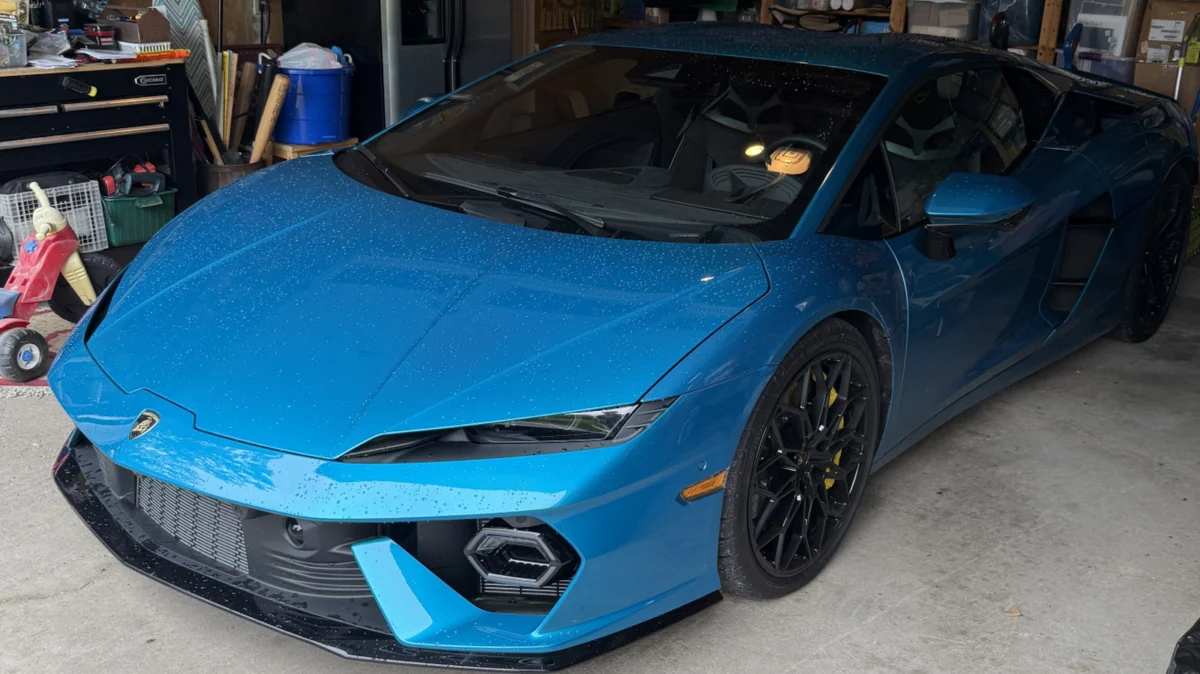
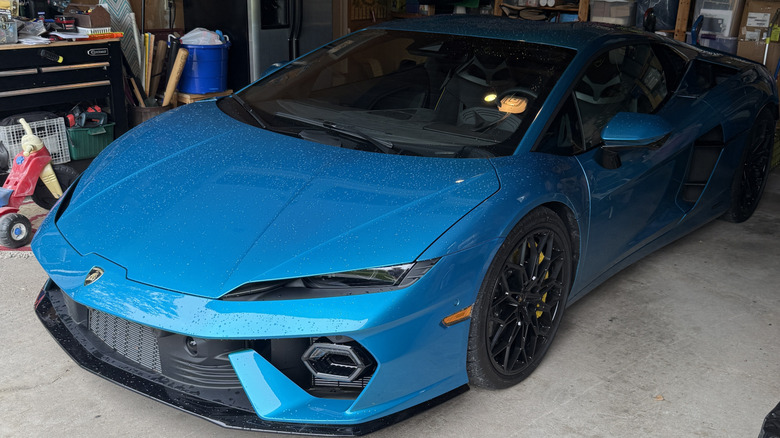
Testing a vehicle with 907 horsepower in a domestic, suburban, or rural setting—such as a relative’s garage—highlights the "usable" nature of modern supercars. Lamborghini has increasingly focused on making their vehicles more approachable for daily driving, moving away from the temperamental and physically demanding nature of their 20th-century predecessors. The Temerario features sophisticated drive modes, including "Città" (City) for low-speed urban environments and "Strada" (Street) for highway cruising, which were likely utilized during the transit through the Pennsylvania hills before engaging more aggressive settings like "Sport" or "Corsa."
The Cultural Framework: Satire and Digital Marketing
The presentation of this review purposefully mirrors the 2015 viral advertisement by internet personality Tai Lopez, titled "Here In My Garage." The original advertisement became a cornerstone of internet meme culture, criticized for its overt display of wealth—specifically a black Lamborghini Aventador—used as a hook to sell "knowledge" and financial mentorship programs. By adopting this persona, the evaluation of the Temerario serves as a meta-commentary on the current state of automotive "influencer" culture, where the prestige of the vehicle often overshadows the technical merits of the machine itself.
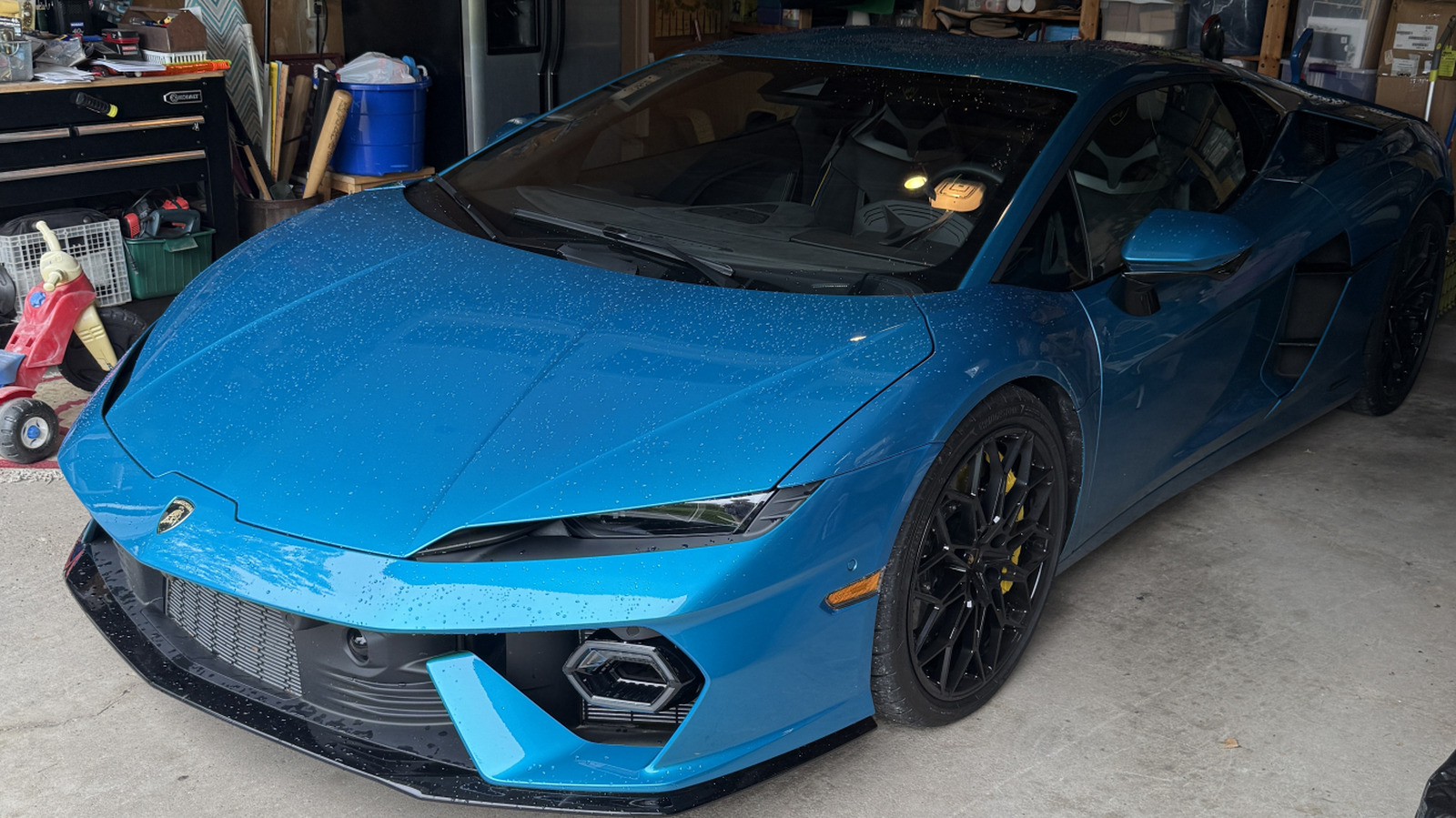
In this satirical context, the mention of "2,000 new books" and "seven new bookshelves" serves to highlight the absurdity of the "materialism vs. knowledge" dichotomy often presented by digital gurus. However, beneath the humor lies a factual observation about the changing demographic of supercar owners. As high-performance vehicles become more integrated with digital interfaces and software-defined performance, the "knowledge" required to operate and appreciate them has shifted from mechanical intuition to an understanding of complex electronic systems and hybrid energy management.
Mentorship and Editorial Collaboration in Automotive Media
The review cites several prominent figures in the automotive media landscape, including Rory Carroll, Erin Marquis, Daniel Golson, and Steve Ewing, framing them as "mentors." In a professional journalistic context, these individuals represent the editorial backbone of modern automotive criticism. Their influence on the narrative suggests a collaborative approach to vehicle testing, where collective experience is used to benchmark new technology against historical standards.
Rory Carroll, formerly the Editor-in-Chief of Jalopnik and a veteran of Autoweek, represents the traditionalist perspective that values mechanical engagement. The mention of these figures acknowledges that while the "influencer" model of car reviewing focuses on the individual, professional automotive journalism remains a collective effort involving rigorous fact-checking, comparative analysis, and a deep understanding of industry trends.
Economic Implications: "Fuel Units" and the Supercar Market
The satirical use of the term "fuel units" to describe money touches upon a broader economic reality within the luxury automotive sector. The Lamborghini Temerario is expected to carry a starting price in the neighborhood of $350,000 to $400,000, positioned as a direct competitor to the Ferrari 296 GTB and the McLaren Artura.
The market for these vehicles has remained remarkably resilient despite global economic fluctuations. Lamborghini reported record-breaking sales in recent fiscal years, largely driven by the Urus SUV, which provides the financial "fuel units" necessary to develop high-tech halo cars like the Revuelto and the Temerario. The transition to hybrid powertrains is a multi-billion dollar investment for the Volkswagen Group (Lamborghini’s parent company), aimed at future-proofing the brand against internal combustion engine bans in key markets like Europe and California.
Chronology of Lamborghini’s Hybrid Transition
The development and release of the Temerario follow a strict timeline in Lamborghini’s "Direzione Cor Tauri" (Toward the Heart of the Bull) electrification strategy:
- 2021: Lamborghini announces its roadmap for electrification, committing to hybridize its entire lineup by the end of 2024.
- 2023: The launch of the Revuelto, the brand’s first V12 HPEV (High Performance Electrified Vehicle), replacing the Aventador.
- Early 2024: The Urus SE, a plug-in hybrid version of the brand’s best-selling SUV, is unveiled.
- Late 2024: The official debut of the Temerario, completing the initial hybridization of the three-model core lineup.
- 2028 (Projected): The expected launch of Lamborghini’s first fully electric model, based on the Lanzador concept.
Broader Impact and Industry Analysis
The shift from the V10 to a twin-turbo V8 hybrid in the Temerario is a watershed moment for the brand. For many enthusiasts, the V10 was the soul of the "baby Lambo" line. However, the performance data suggests that the new platform is superior in every measurable metric. The inclusion of three electric motors allows for active torque vectoring on the front axle, which can pull the car through corners with a level of precision that a purely mechanical system cannot match.
Furthermore, the "knowledge" emphasized in the satirical review reflects the increasing importance of software in the automotive industry. The Temerario features a new Human-Machine Interface (HMI) with three displays: a digital instrument cluster, a central infotainment screen, and a dedicated display for the passenger. This "pilot-like" feel is designed to make the driver feel more connected to the car’s complex systems, emphasizing that in 2026, driving a supercar is as much about managing data as it is about managing grip.
Conclusion: The Intersection of Performance and Persona
While the review of the 2026 Lamborghini Temerario in the Northeast Pennsylvania hills uses humor to engage its audience, it ultimately highlights the serious technological leaps being made in the supercar segment. The vehicle stands as a testament to Lamborghini’s ability to adapt to a changing regulatory and cultural environment without sacrificing the "dream" of high-performance mobility.
The emphasis on "knowledge" over "materialism," while presented ironically, rings true in the sense that the modern supercar enthusiast must be more informed than ever. Understanding the nuances of hybrid regeneration, electric torque fill, and aerodynamic efficiency is now part of the ownership experience. As the Temerario begins to reach customers, it will likely be judged not just on its 0-60 mph times, but on how successfully it integrates these new technologies into the visceral, emotional experience that has defined the Lamborghini brand for over sixty years. In the end, whether in a high-tech showroom or an in-law’s garage in Pennsylvania, the vehicle remains a symbol of aspirational engineering and the persistent human desire for speed and innovation.