The shifting geography of the American household is increasingly defined by a heartwarming yet economically powerful trend: older adults picking up stakes to live down the street from their children and grandchildren. According to data released by NewHomeSource and Zonda via their highly anticipated 2026 Baby Chaser Index, Raleigh, North Carolina, has officially claimed the title of the nation’s top market for this phenomenon, frequently dubbed "baby chasing."
The annual index identifies housing markets experiencing simultaneous, robust growth among both younger generations establishing their roots and older Americans seeking to bridge the geographic divide. This trend arrives at a critical juncture in the national housing market, underscored by data indicating that roughly one in four baby boomers plan to retire in close proximity to their descendants.
As familial ties increasingly dictate real estate decisions, metropolitan areas across the American South and Intermountain West are finding themselves uniquely positioned to accommodate multi-generational migrations.
The Evolution of the Baby Chaser Trend and Methodology
To understand the mechanics of the Baby Chaser Index, one must examine the demographic pressures that have built up over the past decade and a half. The index evaluates U.S. metropolitan areas with populations of at least 750,000 residents, utilizing comprehensive data from the U.S. Census Bureau. Its methodology is twofold: it measures recent momentum through year-over-year population growth while evaluating long-term trajectories using population metrics dating back to 2010.
Historically, retirement migration was synonymous with permanent relocation to coastal Florida, Arizona, or other traditional sun-belt leisure havens. However, economic shifts, remote work flexibility, and changing cultural priorities have reshaped these patterns. Today’s retirees—particularly younger boomers who are active, healthy, and financially stable—are prioritizing family connectivity over golf-centric retirement communities.
The term "baby chasing" captures this modern migration pattern, where grandparents follow their adult children who have previously relocated for employment opportunities, lower costs of living, or lifestyle upgrades in thriving secondary metros.
Raleigh’s Ascent to the Top
Raleigh’s journey to the top of the 2026 index reflects a dramatic acceleration in multi-generational appeal, leaping from third place in the previous ranking to the number-one spot. The engine driving this success is stellar household growth across multiple age cohorts. The Raleigh-Cary region alone added an estimated 24,000 households in 2025, eclipsing high-growth competitors such as Nashville, Houston, Dallas, and Charlotte.
The full top 10 list for the 2026 Baby Chaser Index comprises:
- Raleigh, North Carolina
- Nashville, Tennessee
- Houston, Texas
- Dallas, Texas
- Charlotte, North Carolina
- Boise, Idaho
- Charleston, South Carolina
- Austin, Texas
- San Antonio, Texas
- Atlanta, Georgia
Notably absent from this year’s top tier are traditional Florida markets. In the previous year’s report, Orlando led the index while Jacksonville secured the sixth position. The complete absence of Florida metros in the 2026 top 10 highlights a geographic pivot toward the Carolinas, Texas, and parts of the Pacific Northwest and Intermountain West.
Economic Drivers and Quality of Life Factors
The success of these top-tier markets is not accidental. According to Ali Wolf, chief economist at NewHomeSource and Zonda, family connections serve as a primary catalyst, but structural market fundamentals dictate where these families ultimately land.
"Family connections are a powerful driver of where people decide to live, especially for older Americans with more freedom and flexibility to choose their new location," Wolf noted in a statement accompanying the index release. "While the life stages driving the Baby Chaser phenomenon hold strong, the markets best positioned for continued strength will be those that can meet the needs of young families settling down and the parents who want to spend time with their grandbabies."
These foundational elements include a resilient job market capable of sustaining young professionals, coupled with high-quality educational institutions, accessible and advanced healthcare systems, and diverse recreational opportunities. Furthermore, housing affordability remains a critical variable. While younger buyers require accessible entry points for homeownership, older households are acutely focused on managing long-term savings, property taxes, and overall living costs as they transition into fixed-income or semi-retirement stages.
Regional Analysis: The Carolinas and Texas Dominate
The Carolinas and Texas have effectively solidified their status as the epicenter of multi-generational migration. Charleston and Charlotte demonstrated strong upward momentum, climbing two and three positions respectively in the latest rankings.
Shaun McCutcheon, a Charlotte-based vice president at Zonda Advisory, emphasized the symbiotic relationship between young job seekers and relocating retirees. "Our consumer research reveals that the number one reason retirees choose to relocate is to be close to family," McCutcheon said. "The Carolinas’ ability to attract young professionals and working families, while offering housing options for older buyers who follow, helps explain why the region continues to dominate the Baby Chaser index."
In Texas, Houston and Dallas outpaced Austin, which experienced a slight cooling in demand among older households. While Austin remains a magnet for tech talent and young professionals, shifting price points and inventory constraints have altered its appeal for retirees seeking lower-density, cost-effective options.
Current Housing Market Realities: Inventory, Pricing, and Opportunity
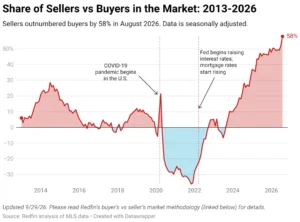
While population growth metrics paint a picture of relentless demand, current market data suggests that prospective buyers—including older adults looking to relocate near grandchildren—may find themselves in a surprisingly advantageous position.
According to HousingWire Data, buyers entering these fast-growing metropolitan areas are encountering increased housing inventory, longer selling times, and a high frequency of price reductions. This disconnect between scorching population growth and softening immediate market conditions offers a unique window of flexibility for seniors navigating a move.
A closer look at specific markets reveals distinct pricing and inventory landscapes:
- Raleigh-Cary: Recorded a median list price of $484,069 with 5,134 single-family homes listed for sale. Properties spent an average of 102 days on the market, with 48% of active listings experiencing price cuts.
- Charlotte: Showed a median list price of $479,000, supported by 5,843 available homes. Listings spent a median of 63 days on the market, and 54% of properties saw price reductions.
- Texas Metros: San Antonio emerged as the most affordable among the top markets, boasting a median list price of $334,599. Houston recorded a median price of $370,000 alongside the largest inventory of any metro on the list, featuring 36,718 single-family properties and an average of 128 days on the market. Dallas posted a median price of $440,000 with 30,709 homes available and an average 108 days on market. Austin maintained a median list price of $450,000, though 53% of its listings featured price reductions.
- Higher-End Markets: Boise, Idaho, stood as the most expensive market on the index with a median list price of $594,990. Nashville followed closely at $585,000, while Charleston registered a median price of $499,000.
Implications for Older Homebuyers and the Broader Economy
For older adults weighing the logistical and emotional complexities of a cross-state or cross-country move, these market dynamics provide a buffer against the hyper-competitive conditions of previous years. Extended marketing times and widespread price reductions mean that relocating buyers can afford to be deliberate in their search. Rather than rushing into a competitive bidding war, seniors have room to shop, negotiate terms, and carefully select properties that accommodate multi-generational living arrangements—such as homes with dual master suites, accessible main-floor living, or proximity to local amenities.
Beyond individual family decisions, the concentration of multi-generational growth in markets like Raleigh, Charlotte, and Houston carries profound macroeconomic implications. Municipalities must adapt their infrastructure to cater to a dual-demographic influx. This requires balancing investments in top-tier school districts and youth recreational facilities with expansions in specialized healthcare networks, senior-friendly community planning, and accessible public transportation.
As the baby boomer generation continues to age into retirement, the "baby chaser" trend is poised to remain a dominant structural force in American real estate. Cities that successfully harmonize the needs of career-focused millennials, growing Gen Alpha children, and comfort-seeking grandparents will define the next era of urban and suburban prosperity.