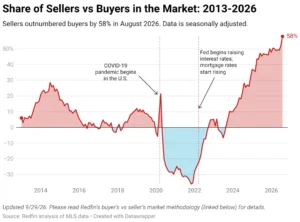
JPMorgan Chase has announced a strategic capital allocation of $750 billion toward the housing market, representing a massive shift in institutional sentiment during a period of significant economic uncertainty. As the Federal Reserve maintains a cautious approach to interest rates and prospective homebuyers grapple with elevated mortgage costs, the nation’s largest financial institution is signaling a long-term commitment to real estate lending and investment. This capital injection arrives at a critical juncture in the 2026 fiscal year, as recent data from July indicated a cooling trend in home sales, prompting industry experts to evaluate whether the market has finally reached its peak.
The Scope of the Investment
The $750 billion figure underscores a profound confidence from JPMorgan Chase in the resilience of American residential real estate. While the bank has not detailed the exact distribution of these funds across various housing sub-sectors, industry analysts suggest the commitment will likely span mortgage originations, construction financing, and institutional investments in multi-family housing. By aggressively expanding its lending capacity, the bank is positioning itself to capture significant market share as the housing sector undergoes a necessary, albeit painful, recalibration.
This investment occurs against a backdrop of conflicting economic signals. While high interest rates have historically dampened buyer demand, a persistent lack of housing inventory continues to support property valuations. By deploying such a substantial amount of capital, JPMorgan Chase is essentially betting that the current volatility is a temporary hurdle and that the long-term fundamentals of the U.S. housing market remain robust.
Market Dynamics: The 2026 Cooling Trend
The current fiscal year has been marked by a distinct shift in momentum. Throughout the first half of 2026, the housing market exhibited signs of exhaustion following years of unprecedented price appreciation. July saw a notable decline in existing home sales, a metric often used by economists to gauge the health of the broader economy.
Interestingly, while the demand for turnkey, newly renovated homes has softened due to price sensitivity, there has been a counterintuitive surge in interest for properties requiring significant rehabilitation. Real estate investors are increasingly targeting "outdated" or distressed assets. This trend suggests that buyers are looking for value-add opportunities to circumvent the high entry prices of move-in-ready homes. By purchasing properties at a discount and renovating them, investors can create equity that is often unavailable in the current high-interest rate environment.
Inflation and the Federal Reserve
Central to this housing market narrative is the role of the Federal Reserve and its ongoing battle against inflation. The most recent Consumer Price Index (CPI) report showed that while inflationary pressures have begun to stabilize, they remain above the Fed’s target threshold. The core question for both institutional investors and retail buyers is whether this moderation in CPI is sufficient to persuade the Federal Reserve to pivot toward interest rate cuts.
If the Fed chooses to maintain current rates, the cost of borrowing will continue to weigh heavily on the housing market. Conversely, a signal of rate cuts could act as a catalyst, reigniting demand and potentially driving prices upward once again. JPMorgan Chase’s massive bet on the sector suggests they are operating under the assumption that regardless of short-term policy fluctuations, the structural demand for housing in the United States will persist.
Evaluating Risk: The "Big Five" Metrics
For the individual investor looking to navigate this complex environment, professional real estate practitioners emphasize the importance of rigorous due diligence, particularly regarding the "Big Five" structural systems of a home: roofing, foundation, plumbing, electrical, and HVAC. These components represent the highest potential liabilities for any property owner.
1. Structural Roofing Integrity
Roofs are categorized primarily by material: three-tab shingles, architectural shingles, and metal. While three-tab shingles are the most affordable, they offer the shortest lifespan—typically 15 to 20 years. Architectural shingles, the current industry standard, offer enhanced durability, while metal roofing serves as a long-term investment with lifespans extending up to 70 years. Investors are advised to look for signs of wear, such as the loss of granular texture or "waviness" in the roofline, which often indicates water damage to the underlying decking.
2. Foundation Stability
Foundation issues remain the most significant financial risk in real estate acquisition. Signs of failure include uneven flooring, large cracks in drywall (often wide enough to insert a finger), and doors that stick within their frames. Because estimating foundation repair costs is notoriously difficult—often requiring specialized engineering assessments—investors are cautioned against attempting to perform these valuations themselves. Instead, engaging a licensed foundation specialist for multiple, competitive bids is considered the only prudent course of action.
3. Plumbing Systems
Plumbing risks are frequently hidden, making them difficult to assess during a walk-through. Common indicators of necessary repair include discolored water, low pressure, or the presence of older materials like galvanized piping. If a property requires a full re-plumbing, costs can range from $7,000 to $15,000. Investors should inspect under sinks for signs of previous leaks, such as water-stained or warped cabinetry, and observe drainage speeds to determine if systemic blockages exist.
4. Electrical Safety
Modern electrical systems utilize breaker panels, whereas older homes may still rely on outdated fuse boxes. A fuse box is a significant red flag that often necessitates a complete system upgrade. Furthermore, flickering lights, warm outlets, or the presence of two-prong receptacles indicate the need for a professional inspection. A full electrical rewire can cost between $4,000 and $15,000, depending on the complexity and local labor rates.
5. HVAC Systems
Heating, Ventilation, and Air Conditioning (HVAC) systems are often evaluated by their physical condition and age. Investors should check for the presence of existing ductwork, as installing a new system where none previously existed is exponentially more expensive than replacing an existing unit. In cases where a property lacks central air, costs for installation can range from $15,000 to $25,000, making it a critical factor in any purchase offer.
Broader Economic Implications
The strategic decision by JPMorgan Chase to commit $750 billion is not merely a corporate milestone; it is a signal to the broader financial market. When the nation’s largest bank makes a bet of this magnitude, it influences credit availability and investor confidence across the country.
If the housing market continues to cool, this capital could provide the necessary liquidity to prevent a sharp contraction in home values, effectively acting as a stabilizer. However, it also introduces risks. If the economic climate worsens significantly, the bank’s exposure to the residential sector will be substantial.
For the average consumer and the individual real estate investor, this development highlights the necessity of cautious, data-driven decision-making. As the market navigates the remainder of 2026, the intersection of institutional capital, Federal Reserve policy, and the practical realities of property maintenance will determine the trajectory of the U.S. housing sector. Whether this period is viewed as a peak or a foundation for future growth will likely be defined by the ability of stakeholders to manage these significant, high-stakes variables.