The Federal Emergency Management Agency (FEMA) is currently navigating one of the most turbulent periods in its 45-year history as the Trump administration attempts a fundamental restructuring of how the United States prepares for and responds to natural disasters. Following a year defined by internal purges, frozen budgets, and a contentious leadership transition, the agency remains in a state of operational limbo. While the appointment of former Oklahoma Senator Markwayne Mullin as Secretary of Homeland Security has signaled a potential shift away from some of the more restrictive policies of his predecessor, Kristi Noem, FEMA officials and emergency management experts warn that the agency’s core functions remain compromised as the nation approaches a high-risk hurricane and wildfire season.
The Noem Era: A Period of Operational Paralysis
The first year of the current administration saw FEMA undergo a radical transformation characterized by what critics described as a "hollowing out" of the federal civil service. Under the direction of former Secretary of Homeland Security Kristi Noem, the agency faced a series of administrative blows that shifted its focus from active disaster management to fiscal austerity. One of the most significant actions taken during this period was a comprehensive freeze on almost all disaster recovery and response spending. This freeze, intended to audit federal expenditures, effectively paralyzed the agency’s ability to distribute billions of dollars in allocated funds to communities recovering from previous catastrophes.
The real-world implications of this spending freeze became evident during the July 4 floods in Central Texas. As historic rainfall inundated the region, local authorities reported significant delays in federal support, with emergency managers claiming that the DHS-mandated freeze prevented the timely deployment of resources and personnel. Furthermore, the agency’s long-term efforts to prepare for future disasters were largely dismantled. Programs such as the Building Resilient Infrastructure and Communities (BRIC) initiative, which provides grants for proactive mitigation projects, saw their funding cycles stalled or canceled.
Internal tensions were further exacerbated by allegations of political bias in aid distribution. Data analyzed during the first half of the administration suggested that disaster aid requests from Democrat-controlled states were slow-walked or denied at a higher rate than those from Republican-led states. Leaked memos from the Department of Homeland Security later revealed plans to slash FEMA’s on-the-ground response staffing by approximately 50 percent, a move that agency veterans warned would leave the federal government incapable of managing concurrent major disasters.
Leadership Transition and the Appointment of Markwayne Mullin
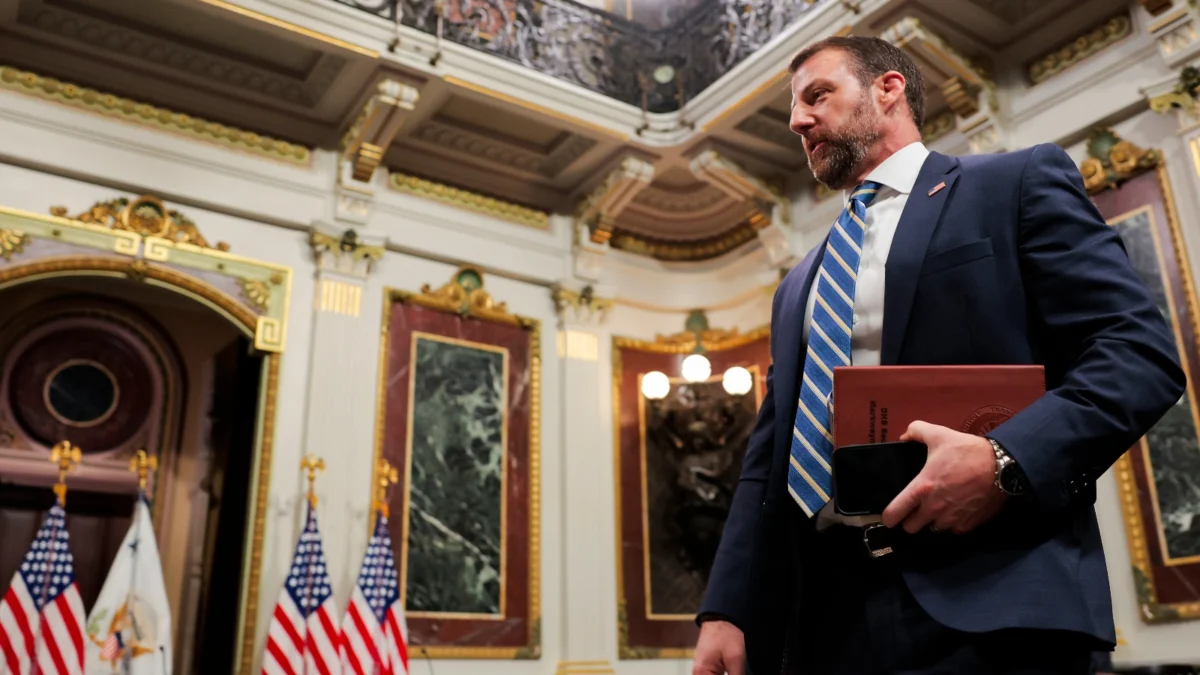
The firing of Kristi Noem last month marked a turning point for the agency. Her departure followed a string of controversies, including allegations of improper personal spending and misleading testimony before Congress regarding her handling of immigration enforcement. To replace her, President Trump selected Markwayne Mullin, a former U.S. Senator from Oklahoma with a background in the private sector and a reputation for a more pragmatic, albeit still conservative, approach to governance.
Secretary Mullin has moved quickly to distance himself from some of Noem’s most criticized policies. He publicly dismissed the previous spending freeze as "micromanaging" and vowed to restore the flow of reconstruction payments to cities and states. According to internal sources, Mullin has already dismissed several of Noem’s top deputies and is currently vetting a permanent administrator to lead the agency—a position that remained unfilled by a Senate-confirmed official throughout Noem’s tenure.
However, the transition has not yet resulted in a full restoration of FEMA’s capabilities. Karen Evans, an interim administrator appointed by Noem, continues to oversee daily operations until a permanent pick is confirmed. Reports from within the agency suggest that while some funds have been unfrozen, many large-scale expenses still require high-level approval from Evans, maintaining a bottleneck that prevents the rapid disbursement of aid.
Technical Failures and the Erosion of Flood Protections
Beyond the high-level policy shifts, FEMA is grappling with technical and contractual failures that have direct financial consequences for millions of Americans. A primary concern is the current status of the National Flood Insurance Program (NFIP), which provides essential coverage to approximately five million households.
The NFIP utilizes a Community Rating System (CRS) to reward cities and counties that implement proactive flood-plain management and mitigation strategies. These rewards come in the form of insurance premium discounts for local residents. However, the contract with the private firm responsible for managing the CRS rating system recently lapsed and was not renewed. As a result, the discount program has been suspended.
This suspension means that the federal government is no longer monitoring whether local governments are adhering to flood-protection standards. For homeowners in flood-prone areas, this could lead to the loss of significant discounts on their annual premiums, while also removing the incentive for municipalities to invest in resilient infrastructure. The lapse in the CRS program is seen by experts as a symptom of a broader administrative neglect that has plagued FEMA’s specialized departments.
The Push for De-federalization and State Autonomy
Despite Secretary Mullin’s promises to end "micromanaging," his public statements suggest he shares the President’s vision of a diminished role for the federal government in disaster response. During a recent visit to North Carolina to inspect damage from previous storms, Mullin emphasized that FEMA should not be viewed as a "first responder." Instead, he argued that states should shoulder the primary burden of disaster management, with the federal government acting only in a "supporting role."
"The state is much more equipped," Mullin stated, "but we can be there to get them past the first heavy lift."
This philosophy of "balkanized" emergency response is a significant departure from the centralized model established by the Stafford Act of 1988, which governs how the federal government assists state and local governments during disasters. Proponents of this shift argue that states like Florida and Texas, which maintain robust, well-funded emergency management departments, are better positioned to handle local crises than a federal bureaucracy.
However, disaster response experts, including Andrew Rumbach of the Urban Institute, caution that a rapid transition to state-led recovery could leave poorer or less-prepared states in a vulnerable position. States like Mississippi, Louisiana, and West Vermont, which may lack the budgetary reserves or the specialized personnel of larger states, rely heavily on federal reimbursements and expertise. A reduction in federal resources without a corresponding increase in state capacity could lead to prolonged recovery times and increased economic instability in these regions.
Case Study: Maryland and the Rise of State Disaster Funds
The reality of this new "austerity era" is already being felt in states that have had their aid requests denied. Last year, western Maryland suffered devastating river floods that caused tens of millions of dollars in damage to public infrastructure. Despite documenting that the damage far exceeded the traditional thresholds for federal assistance, the Trump administration denied Maryland’s request for $30 million in reconstruction funds.
In response, Maryland Governor Wes Moore and state lawmakers have begun the process of building a self-reliant disaster recovery apparatus. The Moore administration launched the state’s first-ever "state disaster recovery fund," providing an initial $500,000 to the hardest-hit counties. While this move was praised as a proactive step toward independence, local officials pointed out the massive gap between state capacity and federal resources; the $500,000 provided by the state represents only a fraction of the $30 million needed for road and bridge repairs.
Maryland is now workshopping legislation to establish a permanent grant fund for climate resilience projects, such as shoreline erosion control. This trend toward state-funded resilience is expected to accelerate as more governors realize that federal "backstops" are no longer guaranteed.
Broader Implications and the Road Ahead
As FEMA enters the mid-point of the administration’s second year, the agency finds itself at a crossroads. The internal morale remains at historic lows, with many long-term employees expressing fear of retaliation or further purges. The "Review Council" of governors and state emergency managers, convened by the administration last year to chart the future of the agency, is expected to release a final report in May. Preliminary indications suggest the report will formally recommend shifting the majority of disaster costs and responsibilities to the states.
The immediate concern for the American public is the agency’s readiness for the upcoming weather season. With staffing levels reduced and many resilience programs still inactive, the federal government’s ability to respond to a catastrophic Category 5 hurricane or a multi-state wildfire event is currently unproven.
The transition from a federal-centric model to a state-led model represents a fundamental change in the social contract regarding disaster protection. While some states may use this newfound autonomy to innovate and create localized solutions—such as Hawaii’s interest in modular housing for fire survivors—the lack of a federal standard could lead to significant inequities in how disaster victims are treated based on their geographic location and their state’s fiscal health.
For now, the emergency management community remains in a state of "wait and see." Whether Secretary Mullin can bridge the gap between the administration’s desire for a smaller federal footprint and the practical necessity of a functional national disaster agency will be the defining challenge of his tenure. As the first shoe has dropped with the exit of Kristi Noem, the nation remains watchful for the next phase of FEMA’s evolution.